

Electric wheelchairs have become an indispensable tool in the daily lives of many individuals with mobility impairments. They not only enhance mobility but also foster greater independence. However, operating an electric wheelchair safely is not as simple as it might appear. Improper use can lead to hazardous situations—such as tipping over, sliding, collisions, or equipment damage.
This expert guide provides a detailed answer to the question: What should you never do when operating an electric wheelchair? Which actions must be strictly avoided? And how can you protect yourself in various environments and conditions?
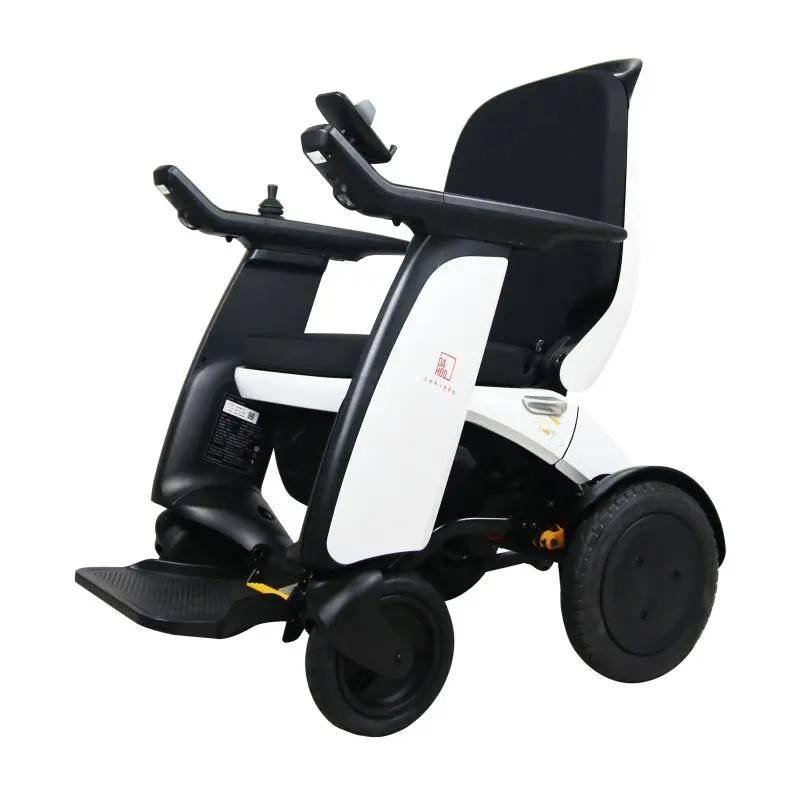
Why Does Operating an Electric Wheelchair Require Special Caution?
An electric wheelchair is a motorized device that relies on an electric motor for propulsion and a control system to regulate speed and direction. Therefore, when operating one, it is essential to understand the dynamics of shifting weight distribution, vehicle stability, and environmental hazards.
Disregarding safety principles not only endangers the user but may also pose risks to surrounding pedestrians and the public environment.
The primary hazards associated with electric wheelchairs include:
• Slippery surfaces leading to skidding;
• Excessively steep ramps causing backward tipping or loss of forward control;
• Excessive speed resulting in increased braking distances;
• High obstacles causing damage to the wheelchair's chassis or impact;
• Unstable weight distribution leading to lateral tipping.
To minimize these risks as much as possible, understanding "what you should never do when operating an electric wheelchair" is of paramount importance.
Can Electric Wheelchairs Be Driven on Steep Slopes?
You should never operate an electric wheelchair on steep slopes.
Electric wheelchairs are not designed for use on steep ramps. Whether ascending or descending, excessive gradients can lead to an imbalance in the vehicle's center of gravity, insufficient motor power, or brake failure.
1. Why shouldn't you drive a power wheelchair up a steep slope?
• The motor has limited torque, which may cause the wheelchair to stall halfway up;
• The center of gravity shifts backward, making it prone to tipping over backward;
• Tire slippage can result in a complete loss of directional control.
2. Why shouldn't you drive a power wheelchair down a steep slope?
• Downhill acceleration can lead to a loss of control;
• Braking distances become significantly longer;
• The user's body may lurch forward due to inertia, potentially leading to a fall;
• The wheelchair itself may be unable to maintain its intended path, particularly on slippery ramp surfaces.
3. What should you do if you must traverse a ramp?
• Reduce speed;
• Hold onto handrails on both sides;
• Be assisted by a caregiver;
• Maintain vehicle stability and avoid sharp turns.
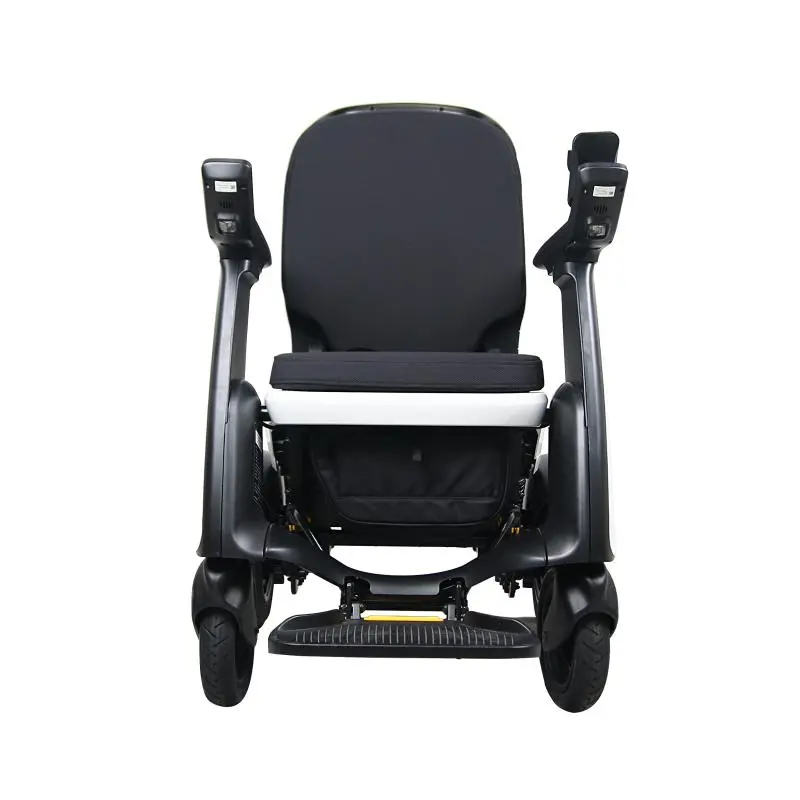
Can an electric wheelchair be used on uneven surfaces?
Do not operate an electric wheelchair on severely uneven surfaces.
Although most electric wheelchairs feature some degree of shock absorption, their fundamental design is primarily intended for use on smooth, level surfaces. Severely uneven terrain—such as cobblestone paths, pothole-ridden roads, gravel ground, or broken pavement—can pose significant hazards.
1. Why are uneven surfaces dangerous?
• The wheelchair chassis may get stuck on obstacles;
• The center of gravity shifts violently, creating a risk of tipping over;
• Bouncing tires lead to unstable control;
• Prolonged use on such surfaces can damage the motor and suspension components.
Wet or waterlogged surfaces should also be avoided.
Wet surfaces compromise tire traction, leading to skidding. Standing water can even damage the electrical system.
Electric wheelchairs are not waterproof devices; therefore, you must avoid:
• Slippery ground;
• Driving in the rain;
• Traversing areas with standing water;
• Driving at high speeds over floors that have just been cleaned and are still damp.
Should I accelerate suddenly or brake abruptly while operating a power wheelchair?
Never accelerate suddenly or brake abruptly.
Although power wheelchairs are responsive, their control systems are designed for smooth, steady movement. Sudden acceleration or abrupt braking generates strong inertial forces, which can cause body instability or cause the wheelchair to tilt precariously.
Dangers of sudden acceleration:
• The front wheels may lift off the ground, causing the chair to tip backward;
• The body may lurch backward, potentially causing neck injuries;
• The chair may surge forward and collide with nearby obstacles or other people.
Dangers of abrupt braking:
• The body may lurch forward and strike the controller or footrests;
• The center of gravity shifts forward, creating a risk of tipping over;
• The wheelchair body may easily skid or slide sideways.
Correct Practice:
• Control the joystick smoothly;
• Increase speed gradually;
• Maintain a safe braking distance;
• Gradually reduce speed before coming to a complete stop.
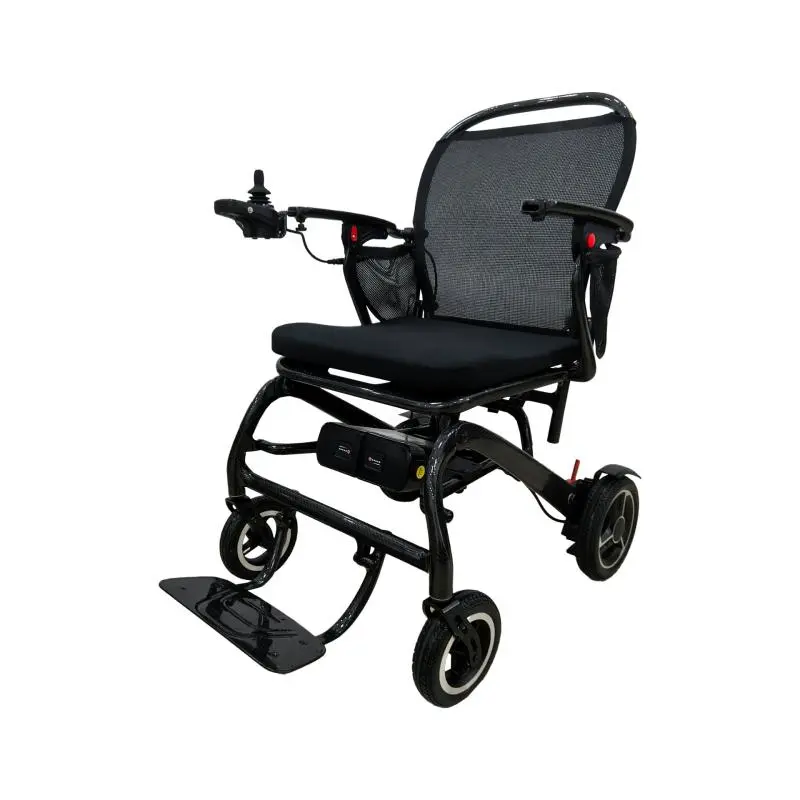
Can I carry additional passengers or items while operating a power wheelchair?
Never allow more than one person to ride the power wheelchair at the same time.
The weight capacity of a power wheelchair is established through rigorous testing; overloading it will not only damage the motor but also create hazardous conditions.
The risks associated with carrying additional passengers include:
• A shift in the center of gravity, leading to tipping or overturning;
• Excessive load on the motor, resulting in a loss of control;
• Increased braking distances;
• The seat being unable to support the additional weight;
• Accelerated wear and tear on the axles and tires.
Overloading the wheelchair with objects is equally dangerous.
Even when carrying objects, do not haphazardly pile them on:
• The armrests;
• The area near the controller;
• The footrests;
• The top of the backrest.
Placing objects in these locations can obstruct your line of sight while driving or even jam the control joystick, potentially leading to accidents.
If you need to carry items, you should utilize:
• Dedicated storage bags;
• Under-seat storage baskets;
• Hooks (subject to weight limits).
Can I operate the controller with just one hand while driving the power wheelchair?
Never attempt to control the power wheelchair using only one hand or while in an unstable posture.
The power wheelchair's controller requires steady, consistent hand pressure to maintain direction and speed. Using only one hand, pushing with the back of your hand, or adopting an incorrect posture can result in drifting, swaying, or even collisions.
Reasons why single-handed operation of a power wheelchair is not recommended include:
• Unstable control;
• Steering deviations;
• Inability to make timely adjustments when encountering obstacles;
• Increased risk of losing control when fatigued.
Correct Practice:
• Maintain a firm, steady grip on the controller;
• Keep your wrist in a neutral position;
• Do not hold objects or answer phone calls while driving.
Can the electric wheelchair be driven at night in unlit conditions?
Never drive the electric wheelchair in dark environments without adequate lighting.
Many electric wheelchairs do not come equipped with high-intensity lighting as a standard feature; driving at night or in poorly lit environments without lights significantly increases the risk of accidents.
Potential hazards include:
• Failure to detect obstacles in time;
• Difficulty for pedestrians or vehicles to spot the electric wheelchair;
• Misjudging ramps, steps, or uneven terrain;
• Collisions occurring on narrow pathways. Correct Practice:
• Choose an electric wheelchair equipped with LED headlights and taillights;
• If the device lacks built-in lighting, attach mountable auxiliary lights;
• Whenever possible, avoid driving in unlit areas at night.
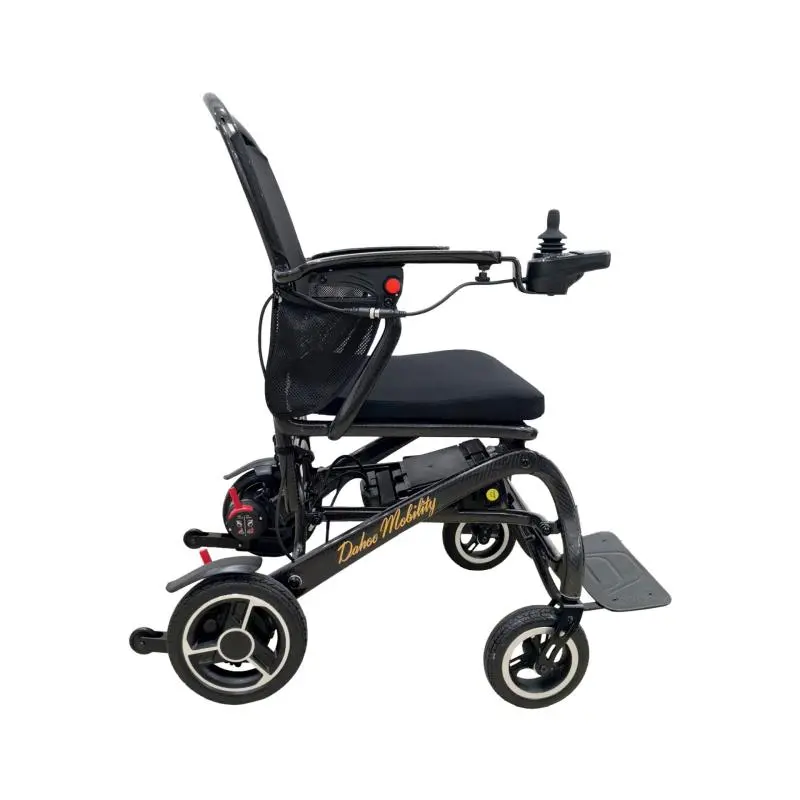
Can a power wheelchair be driven over steps, curbs, or uneven terrain?
Never drive the power wheelchair over areas with significant height differences.
Electric wheelchairs are not designed for steps or large drops.
Even a height difference of just a few centimeters can result in the front wheels striking an obstacle, the chair tipping over, or damage to the vehicle body.
The following actions must be strictly avoided:
• Driving directly off a curb;
• Striking steps or protrusions on the ground;
• Attempting to climb over obstacles that exceed the wheelchair's specified clearance height;
• Using non-ramp areas to ascend to or descend from a raised surface.
Correct Practice:
• Use accessible ramps;
• Seek assistance from a caregiver when navigating height differences;
• Slow down and observe the ground conditions when the terrain is unfamiliar.
Can a power wheelchair be driven at high speeds in environments with vehicles or heavy pedestrian traffic?
Never drive at high speeds in crowded or complex traffic environments.
The faster the power wheelchair travels, the higher the risk—particularly in the following environments:
• Supermarkets and shopping malls;
• Hospital corridors;
• Park pathways;
• Areas where children are playing;
• Parking lots or areas with frequent vehicle traffic.
Driving at high speeds can lead to:
• Increased braking distances;
• Difficulty making timely turns;
• Inability to avoid sudden hazards;
• Collisions with pedestrians or objects.
Can one disregard the battery level while driving a power wheelchair?
Never continue using the power wheelchair when the battery level is critically low.
A low battery level can result in:
• Insufficient motor power;
• Instability in the control system;
• Stalling halfway up a ramp;
• Difficulty performing emergency maneuvers;
• Safety hazards caused by the chair stopping unexpectedly mid-journey.
Correct Practice:
• Ensure the battery is fully charged before leaving;
• Monitor the battery indicator during long-distance travel;
• Do not wait until the battery is completely depleted before recharging.
Is it permissible to relax one's body or shift one's seating position while driving a power wheelchair?
Never Change Your Seating Posture or Shift Your Position While Driving
Shifting your body while operating a power wheelchair alters the vehicle's center of gravity, thereby increasing the risk of tipping over.
Avoid the following actions:
• Leaning forward to adjust or retrieve items while in motion;
• Leaning your body to the side;
• Lifting your feet off the footrests;
• Standing up from or shifting your position within the seat;
• Removing your hands from the armrests to reach for objects.
These actions may lead to:
• Drifting or collisions;
• Loss of balance resulting in a rollover;
• Slipping out of the seat.
What Hazardous Behaviors Must Be Avoided When Operating an Electric Wheelchair?
It is imperative to avoid the following behaviors when operating an electric wheelchair:
1. Driving the wheelchair on steep slopes, wet surfaces, or uneven terrain;
2. Accelerating or braking abruptly;
3. Carrying additional passengers or overweight items;
4. Operating the wheelchair with only one hand, or attempting to multitask while driving;
5. Driving at night without proper lighting;
6. Driving the wheelchair near steps, curbs, or sudden drops in elevation;
7. Driving at high speeds in complex or congested environments;
8. Continuing to use the wheelchair when the battery charge is low;
9. Changing your seating posture while the wheelchair is in motion.
Exercising caution and adhering to safety guidelines are essential to ensuring the optimal performance and safe operation of your electric wheelchair.