

With the rapid popularization of foldable, lightweight, and intelligent mobility devices, "carbon fiber electric wheelchairs" have gradually become a product type of interest for many users. Many users, when first learning about this product, ask a core question—are carbon fiber electric wheelchairs easy to push?
This involves both the effort required to push with manual assistance and the dexterity of the device in electric mode.
This blog post will delve into this topic, answering this core question from multiple perspectives, including lightweight structure, material mechanics advantages, performance in various usage scenarios, mechanical transmission efficiency, and control system design.
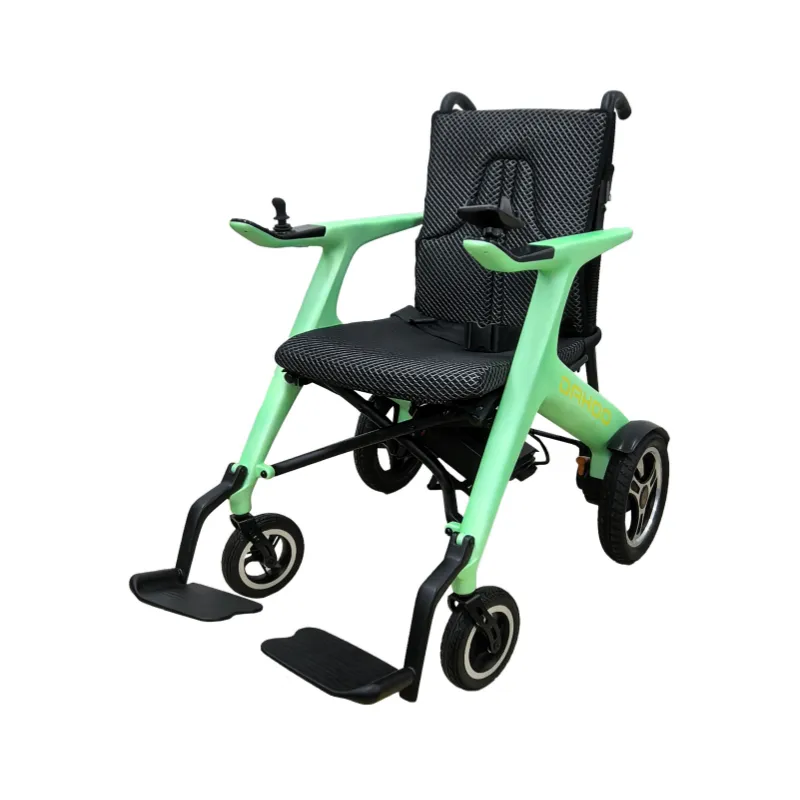
Why are carbon fiber power wheelchairs easier to push than ordinary aluminum alloy wheelchairs?
Before discussing whether carbon fiber electric wheelchairs are easy to push, it's necessary to understand the basic mechanism of their "effort-saving" nature. Carbon fiber is a high-strength, low-density composite material, with a density only about 1/5 that of steel and 2/3 that of aluminum alloy, but its strength is far superior to both.
Why do carbon fiber power wheelchairs make pushing easier?
The main reasons are as follows:
1. Extremely low overall weight results in less rolling resistance
Traditional metal wheelchairs typically weigh 23–28 kg, with lightweight models weighing 17–20 kg, while many carbon fiber power wheelchairs weigh only 12–16 kg.
The lighter the weight, the less ground pressure on the wheels, reducing friction loss and making pushing easier.
2. High material rigidity effectively reduces force loss
Carbon fiber has extremely high structural rigidity and is not easily bent or deformed. When a pushing force is applied:
• Force is transmitted more directly to the wheels.
• The structure is not "compressed" or "deformed," affecting efficiency.
• There is almost no energy loss in pushing force.
High rigidity makes carbon fiber power wheelchairs more responsive when pushed by hand.
3. More stable center of gravity and easier steering
The lightweight structure of carbon fiber power wheelchairs allows designers to distribute the weight of the motor, battery, and frame more scientifically. A more stable center of gravity means:
• Less swaying when pushing
• Quicker response when turning
• Stable seating posture, reducing manual adjustments
All of these make the experience easier for the pusher or user.
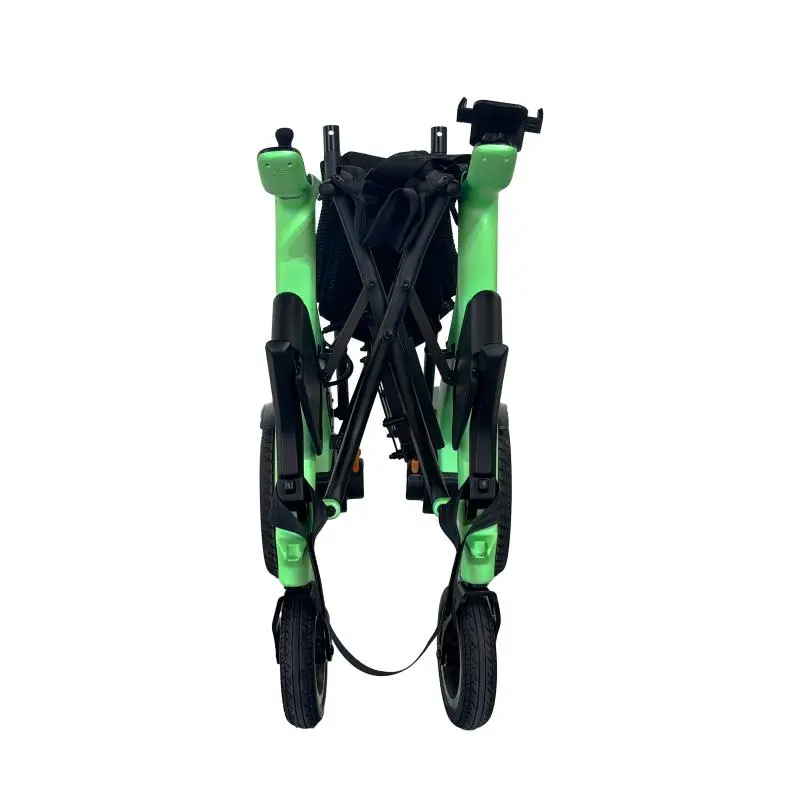
Is the carbon fiber power wheelchair equally easy to control in "electric mode"?
Many people mistakenly believe that "easy" only applies to manual pushing, but in reality, the lightweight structure of the carbon fiber power wheelchair also makes electric mode easier to control.
1. Lighter weight, less motor load
The lighter the device, the less effort the motor needs to drive it, so:
• More responsive start-up
• Faster hill-climbing response
• Smoother speed adjustment
• Longer battery life
The user's control burden in electric mode is naturally reduced.
2. Better braking performance, more stable stopping
The lighter weight allows for faster braking and a shorter braking distance, making it safer for users, especially the elderly and those with weak hand strength.
3. More Sensitive Steering, Easier to Operate in Confined Spaces
Carbon fiber electric wheelchairs typically feature:
• More compact body proportions
• Lower inertial drag
• Lighter body rotational mass
Therefore, when turning in small rooms, shopping mall aisles, or elevators, they feel significantly more maneuverable than steel or aluminum wheelchairs.
What are the differences in actual experience when manually pushing a carbon fiber power wheelchair?
To determine whether a carbon fiber power wheelchair is easy to push, further observation from a practical experience perspective is needed.
1. Is pushing a ramp more strenuous or easier?
The lightweight body allows for:
• Less effort required to go uphill
• More controlled drag downhill, less prone to lurching
Overall superior safety.
2. Is pushing a wheelchair on carpet or grass easier?
Traditional metal wheelchairs tend to sink into soft surfaces, while carbon fiber electric wheelchairs, being lighter, have a lower total pressure with the same contact area, thus:
• Don't sink deeply
• Smoother pushing
• More stable power output
3. Significantly reduced carrying burden
When needed:
• Lifting into the trunk of a car
• Carrying up stairs
• Crossing small thresholds
The lightweight advantage of carbon fiber electric wheelchairs makes these actions easier for anyone (even the elderly or women).
How does the weight characteristics of carbon fiber electric wheelchairs affect pushing force?
Weight is a key factor affecting the ease of pushing, and carbon fiber electric wheelchairs have a natural advantage in weight.
Materials | Density | Strength-to-weight ratio | Pushing feel |
| Steel | High | Low | Heavy and dull |
| Aluminum alloy | Medium | Medium | Relatively light |
| Carbon fiber | Lightest | Highest | Effortless and easiest |
Carbon fiber electric wheelchairs are not only lightweight, but their frame structure also remains stable and undeformed, maximizing the utilization of pushing force.
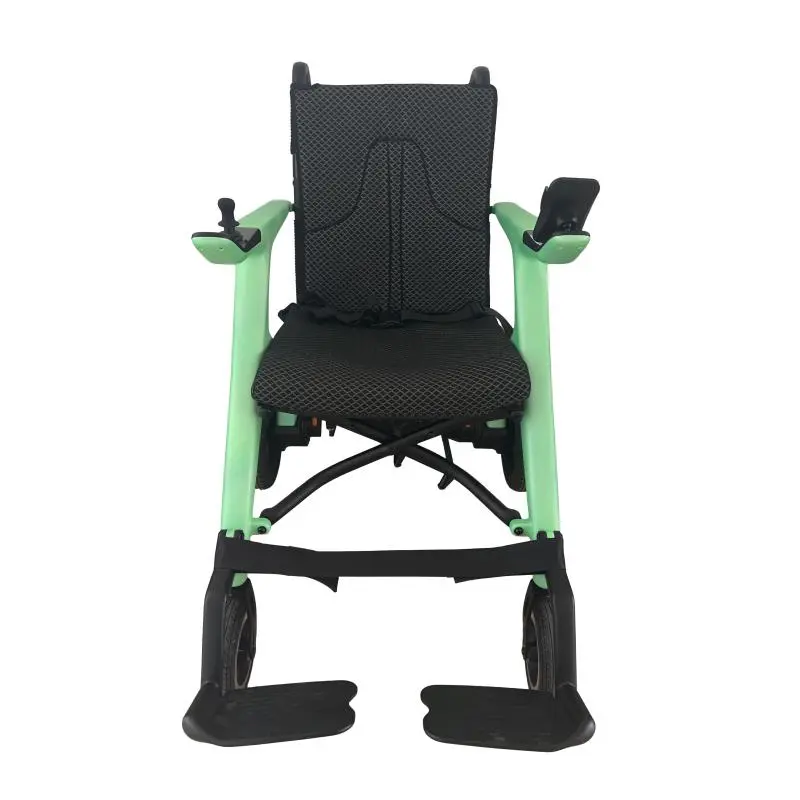
Do the motor and control system affect the pushing feel of a carbon fiber power wheelchair?
While material weight has a significant impact, motor and system design are equally important.
1. Does electromagnetic resistance increase the difficulty of pushing?
Some electric wheelchairs experience slight electromagnetic resistance when powered off or pushed manually. However, high-quality carbon fiber power wheelchairs are typically designed with a "freewheel mode":
• Release the electromagnetic brake
• Disconnect the motor drive
• Smooth and unobstructed pushing
Therefore, high-quality carbon fiber electric wheelchairs are generally not more difficult to push than ordinary wheelchairs.
2. Does tire type affect pushing?
Whether it's pneumatic tires, solid tires, or puncture-resistant tires, rolling resistance will affect the pushing feel.
However, due to the lighter overall weight, carbon fiber electric wheelchairs, even with solid tires, are significantly easier to push than traditional wheelchairs.
Is a carbon fiber power wheelchair equally easy to push in different usage scenarios?
Different ground conditions will produce different pushing experiences for users, and the advantages of carbon fiber power wheelchairs are consistently demonstrated across various scenarios.
1. Pushing on flat ground: The most effortless scenario
On smooth surfaces, the lightweight characteristics make pushing almost effortless.
2. Ramp Propulsion: Easier with Less Load
Ramps best showcase the advantages of lightweight design:
• No sinking uphill
• No lurching downhill
• No veering on side slopes
Non-carbon fiber materials often struggle noticeably uphill.
3. Indoor Propulsion: Lightweight is the Biggest Advantage
In confined spaces like bedrooms, kitchens, and meeting rooms:
• Easier small-amplitude steering
• Lightweight body reduces collision risk
• Effortless repositioning
4. Propulsion on Soft Surfaces: Less Pressure, Less Sinking
Carbon fiber electric wheelchairs naturally possess superior mobility.
Do the wheel and bearing systems of carbon fiber power wheelchairs improve propulsion efficiency?
The wheel structure also plays a crucial role in ease of propulsion.
1. Large-Diameter Wheels, Less Rolling Resistance
Many carbon fiber power wheelchairs feature:
• Large-diameter rear wheels
• Lightweight rims
• High-strength spokes
This structure makes propulsion easier.
2. Improved Bearing Smoothness Enhances Propulsion Experience
High-quality bearings make it easier for the wheels to maintain movement, eliminating the need for repeated force application during propulsion.
3. Optimized Tire Material Improves Smoothness
A lightweight frame paired with highly elastic tires allows for more responsive movement, preventing dragging and slippage.
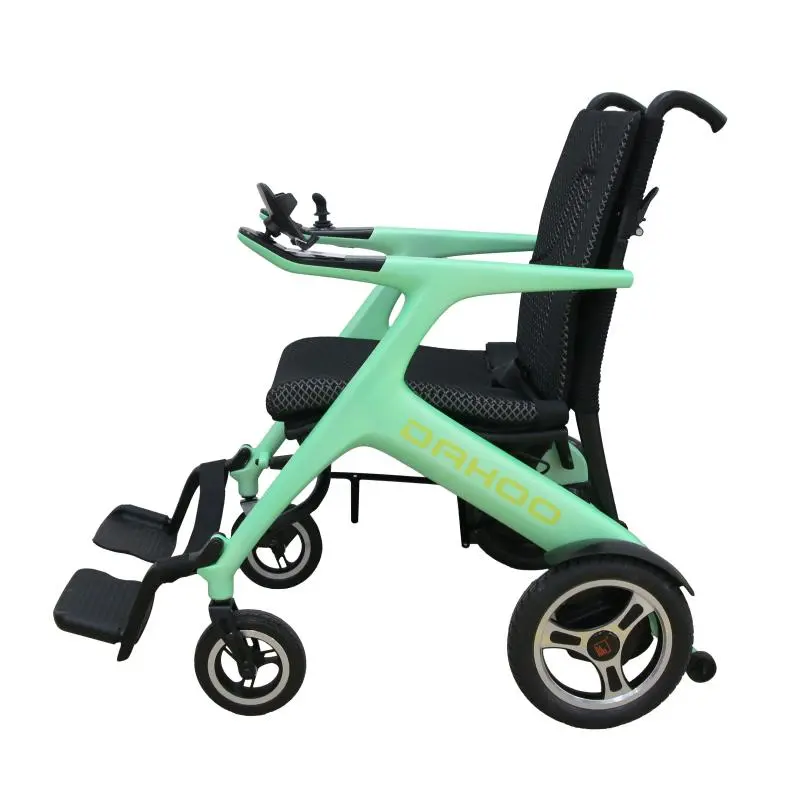
Are carbon fiber power wheelchairs easier to push than traditional steel/aluminum electric wheelchairs?
The conclusion is clear:
Yes, carbon fiber power wheelchairs are generally easier to push.
The reasons can be summarized as follows:
• Lighter frame
• Less propulsion loss
• Higher steering flexibility
• Better performance on inclines
• Lower motor load
• Lower tire rolling resistance
• More robust structure
Lightweight + High Rigidity = Easier to push by hand, more responsive by electric power.