

Among the many electric wheelchair products available, more and more consumers are noticing that carbon fiber electric wheelchairs are often significantly more expensive than ordinary metal models. This phenomenon is not only reflected in brand differences, but is also determined by the properties of the carbon fiber material itself, the manufacturing process, structural design, and performance.
So, why are carbon fiber electric wheelchairs more expensive than ordinary electric wheelchairs?
This article will provide a systematic and professional analysis of the structural reasons for the higher price of carbon fiber power wheelchairs.
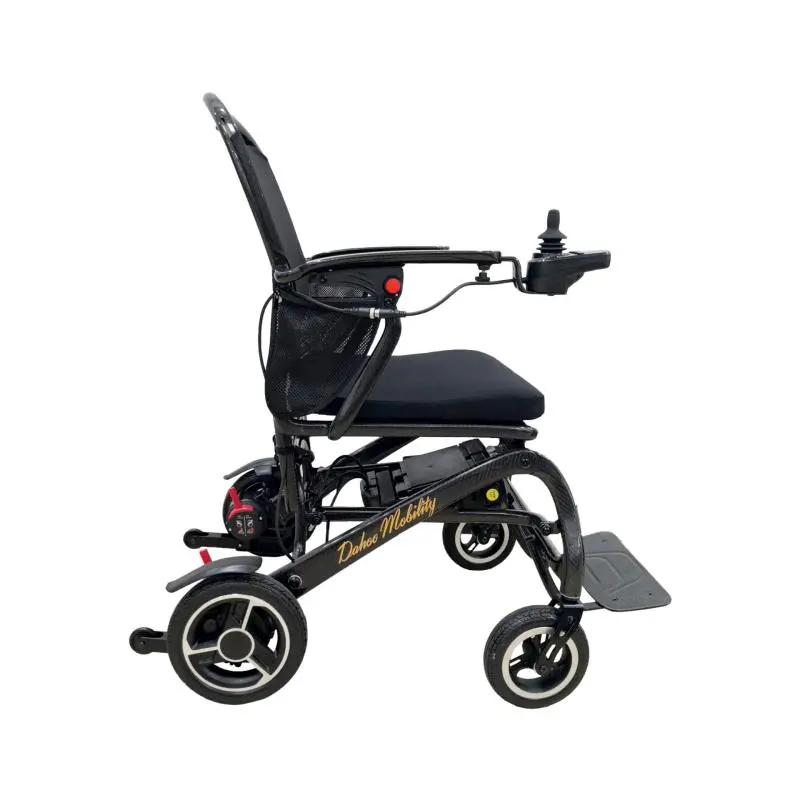
Why are carbon fiber electric wheelchairs more expensive than regular models?
What are the core reasons?
Carbon fiber is not just a material; it represents a high-cost, high-performance, and high-requirement system engineering project. The high price of carbon fiber electric wheelchairs stems from multiple aspects, not a single factor.
Is the carbon fiber material itself more expensive?
Why does it drive up the cost of electric wheelchairs?
This is the most fundamental reason.
1. Carbon fiber raw material prices are far higher than aluminum alloys and steel
Ordinary electric wheelchairs primarily use:
• Aluminum alloys
• Steel (carbon steel)
• Simple metal welded parts
Carbon fiber, however, is an aerospace-grade lightweight material, and its price is completely different from the raw material itself.
The high price of carbon fiber is due to:
• High cost of raw material polyacrylonitrile (PAN)
• The manufacturing process requires long periods of oxidation and carbonization
• High-temperature, high-precision equipment is required at every step
• Excellent mechanical properties, classifying it as a high-end composite material
Therefore, for the same volume, carbon fiber costs far more than ordinary metals.
2. Material characteristics dictate special processing techniques
Carbon fiber cannot be processed like metals:
• Conventional bending
• Welding
• Simple stamping
It must employ:
• Compression molding technology
• Precision mold manufacturing
• Layered fiber laying
• Resin impregnation
• High-temperature hot pressing
These processes are extremely expensive and have high technical barriers.
Therefore, from a material perspective alone, the high price of carbon fiber power wheelchairs is inevitable.
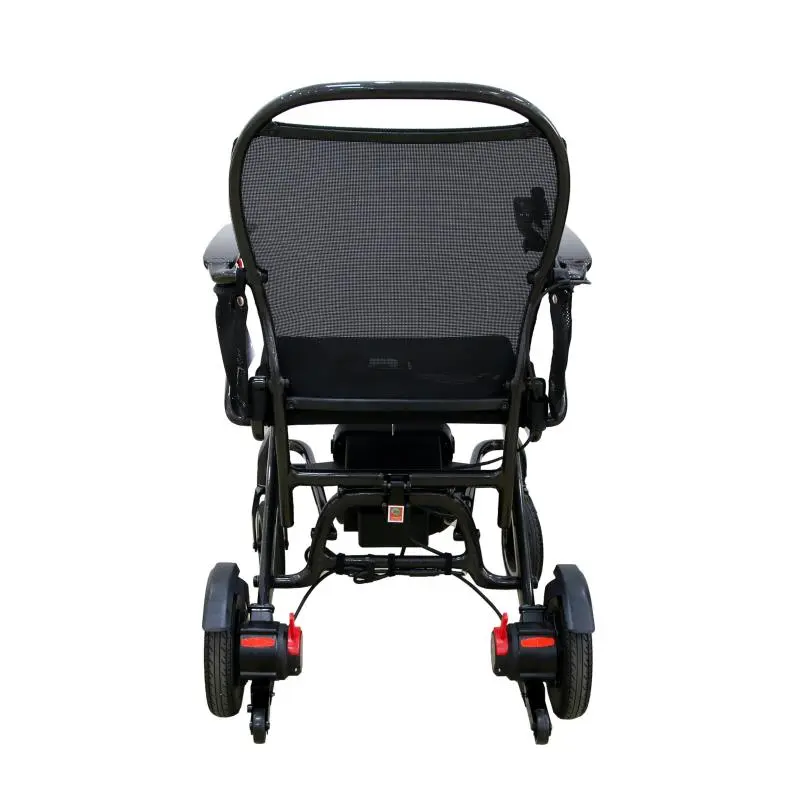
Is the manufacturing process of carbon fiber powerc wheelchairs more complex?
How does this affect the price?
The processing of carbon fiber involves a significant amount of manual labor and specialized equipment, which is a major factor driving up costs.
1. Complex and Time-Consuming Manufacturing Steps
The production of a carbon fiber component typically requires:
• Precise mold design
• Manual or automated fiber lay-up
• Resin infiltration and curing
• High-pressure thermoforming
• CNC precision cutting
• Structural bonding and assembly
Each step demands a higher level of skill than metal processing.
2. Higher Mold Costs
The structural parts of metal electric wheelchairs are typically produced through:
• Welding
• Tube bending
• Aluminum profile extrusion
Carbon fiber requires expensive molds; every change to the structure necessitates the manufacture of a new mold, resulting in extremely high costs.
3. Significant Equipment Investment in Carbon Fiber Factories
Producing carbon fiber products requires:
• High-temperature curing ovens
• Autoclaves
• High-precision CNC cutting equipment
• Composite material layup equipment
These are high-end equipment not found in ordinary metal wheelchair factories, significantly increasing production costs.
Why does the lightweight value of carbon fiber power wheelchairs increase their price?
Lightweighting not only brings portability but also increases technological costs.
1. Lighter Weight Means Higher Materials Engineering Challenges
Carbon fiber power wheelchairs are generally 40%–60% lighter than ordinary models, but still need to maintain:
• High load-bearing capacity
• High structural strength
• Fatigue-resistant structural design
• High stability
This means more engineering optimization, more testing, and more material processing assurance during the design phase.
2. Lightweight Design Improves Transportation and User Experience
Carbon fiber electric wheelchairs offer:
• Easier to fold
• Easier to move
• Better fits in a car trunk
• More user-friendly for women and the elderly
• Better suited for air travel or ground transport
These improvements in user experience often require greater investment in materials research and development.
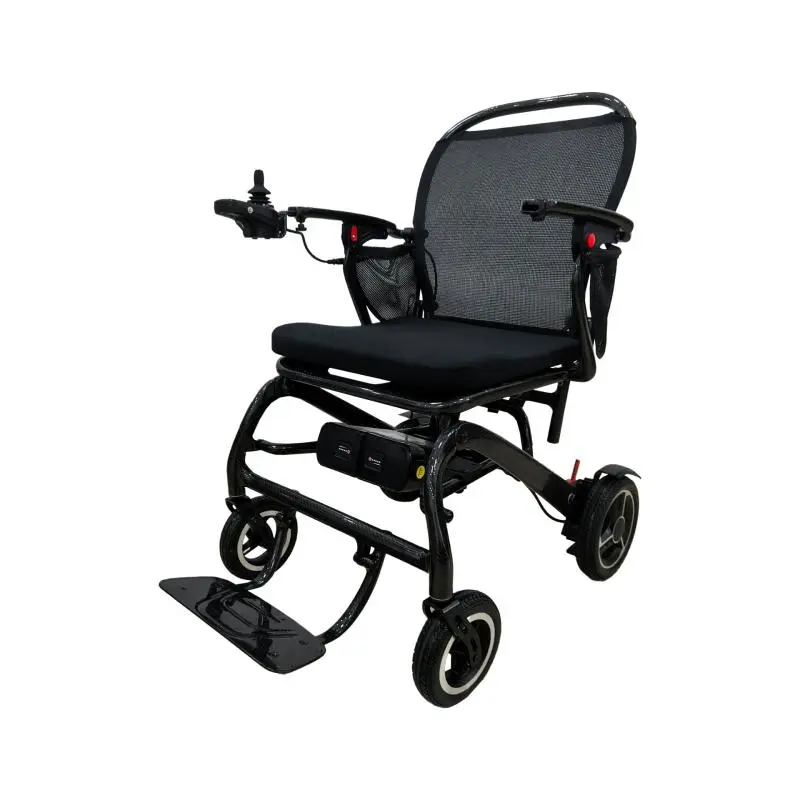
Are carbon fiber power wheelchairs superior in terms of durability and performance?
Do these advantages affect the price?
Carbon fiber is not only lightweight but also highly durable.
1. Stronger resistance to corrosion, fatigue, and impact
Compared to aluminum alloys:
• Less prone to deformation
• Less prone to rust
• Less affected by environmental factors
• Higher impact toughness
This stability requires higher material and structural costs.
2. Lower long-term operating costs, but higher initial investment
Carbon fiber has a long lifespan and requires less maintenance, so the total cost of ownership may not be higher, but a higher initial price is normal.
3. Superior Performance in High-Intensity Use Scenarios
Carbon fiber electric wheelchairs are better suited for:
• Frequent folding and transport
• Travel
• Frequent car transfers
• Intercity or long-distance use
This durability is itself a value characteristic of high-end products.
Is the structural design of carbon fiber power wheelchairs more complex than that of ordinary models?
Yes. Carbon fiber structural design is more complex than metal structures.
1. Design Must Consider Fiber Orientation and Stress Mechanisms
Carbon fiber strength is "directional," requiring calculations during design:
• Fiber Laying Direction
• Stress Angle
• Sequence of Multi-Layer Stacking Structures
• Reinforcement Locations at Stress Points
Each fiber affects the overall strength, meaning higher design costs.
2. Balancing load-bearing capacity and lightweight design requires significant R&D investment
Carbon fiber electric wheelchairs need to be lightweight while supporting a weight of 100-150kg. The R&D team needs to conduct:
• Finite element analysis (FEA)
• Field strength testing
• Dynamic fatigue testing
• Structural optimization
These R&D and testing processes are very expensive.
Are the accessories and small parts of carbon fiber power wheelchairs also more expensive?
Not only the frame, but other components are often more expensive than standard models.
1. Requires specialized components to match the lightweight design
For example:
• Lightweight motor
• Lightweight battery
• High-strength connectors
• Specialized carbon fiber interfaces
• Small control system
These components must be compatible with the carbon fiber frame to avoid damage caused by structural mismatch.
2. Higher processing precision requirements
Carbon fiber cannot tolerate:
• Drilling errors
• Over-cutting
• Surface scratches
Therefore, assembly standards are high, and labor costs are also high.
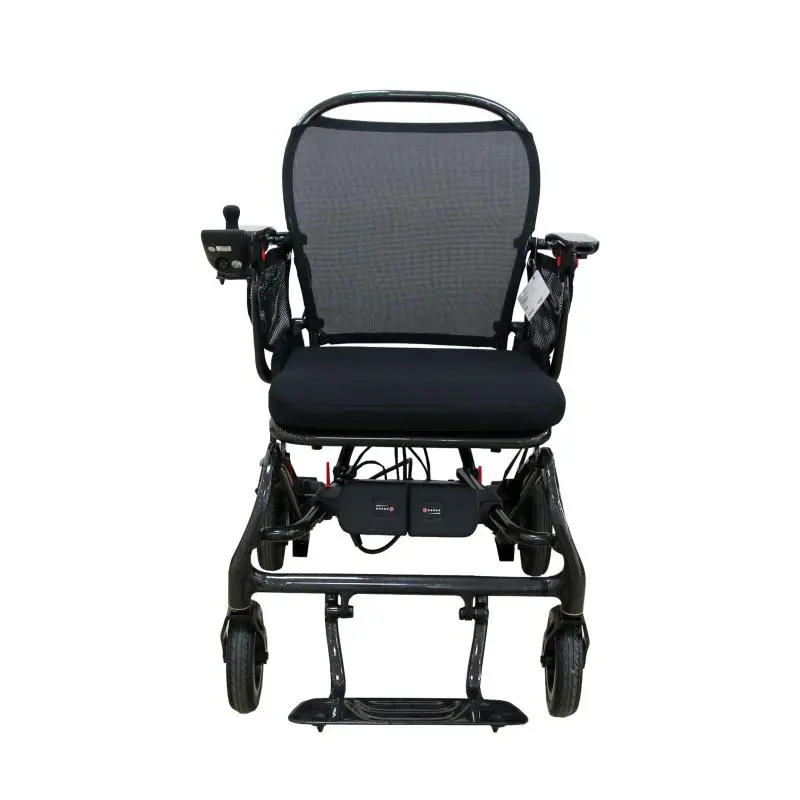
Do carbon fiber power wheelchairs undergo more rigorous testing?
Does this drive up prices?
Yes.
1. Must meet medical device standards
Carbon fiber electric wheelchairs are medical devices and require:
• Static load testing
• Dynamic load testing
• Foldability lifespan testing
• Drop testing
• Salt spray resistance testing
These tests are far more numerous than for ordinary household devices.
2. Lightweight design requires more verification
Lightweight products are prone to structural fatigue if they are not rigorously tested. Therefore, the number of verifications is greater and the cycle is longer.
Is a carbon fiber electric wheelchair a high-end product?
Does its positioning affect the price?
Carbon fiber itself symbolizes a high-end engineering material.
1. Used in aviation, sports, aerospace, and other fields
Carbon fiber is used in:
• Aircraft wings
• Car racing chassis
• Professional sports equipment
• Aerospace components
This indicates that carbon fiber is a high-grade composite material, and it also holds the same position in the electric wheelchair field.
2. High-end materials naturally lead to higher prices
The high-end market also means:
• More stringent quality management
• More rigorous quality control processes
• Higher-grade components
• Higher craftsmanship requirements
All of these drive up the final selling price.
Why do carbon fiber power wheelchairs offer a better user experience?
Are these experiences part of the price?
User experience is the core value of carbon fiber electric wheelchairs.
1. Easier folding and unfolding experience
Compared to ordinary models:
• Less effort
• Smoother operation
• Better balance
• More stability
These experiences stem from higher manufacturing costs.
2. Easier travel and transportation
Carbon fiber electric wheelchairs are suitable for:
• Airplane transport
• Train transport
• Car travel
• Daily commuting
These portability advantages are also included in the higher price structure.
Does the target user of carbon fiber electric wheelchairs affect the price?
Yes, different target users lead to different product positioning.
Carbon fiber power wheelchairs are typically targeted at:
• People with frequent travel needs
• Users seeking a lightweight experience
• Families who need to manually move the wheelchair
• Users with high demands for quality and durability
The purchasing needs of this target consumer group necessitate that manufacturers invest more in quality and technology to meet these high-end demands.