

With the evolution of modern nursing concepts and the deepening trend of an aging population, patient lifts have gradually become essential assistive devices in hospitals, rehabilitation centers, nursing homes, and home care settings. For patients who are bedridden long-term, hemiplegic, or suffering from conditions such as cerebral palsy, spinal cord injuries, or muscle weakness—as well as for frail elderly individuals—patient lifts not only facilitate care tasks like transfers (bed-to-chair, toileting, bathing) and rehabilitation exercises but also significantly reduce the physical strain on caregivers and minimize the risk of secondary injuries caused by manual lifting.
Data from international nursing research organizations indicates that under traditional manual handling methods, the incidence of lower back strain among caregivers exceeds 50%; however, the proper use of patient lifts can reduce the risk of such occupational injuries by more than 60%. Consequently, an increasing number of medical institutions are incorporating patient lifts into their standard nursing equipment systems.
Yet, while many focus on the lift's main unit, motor, chassis, and control system, they often overlook a critical component that directly impacts patient safety and comfort: the sling. In reality, the sling is the primary interface between the lift and the patient's body; its design, material, support method, and intended use directly influence the effectiveness of the transfer and the overall user experience.
Given the significant variations in patients' physical conditions, medical needs, and care requirements, patient lift hoist slings have been developed in a wide range of styles and structural designs. Selecting the right sling not only improves transfer efficiency but also effectively prevents safety issues such as excessive pressure, slipping, pain, or even falls.
So, what are the common sling designs available? Which patients are suited for specific types of slings? How does one choose the right sling based on actual care needs? This article provides a comprehensive analysis.
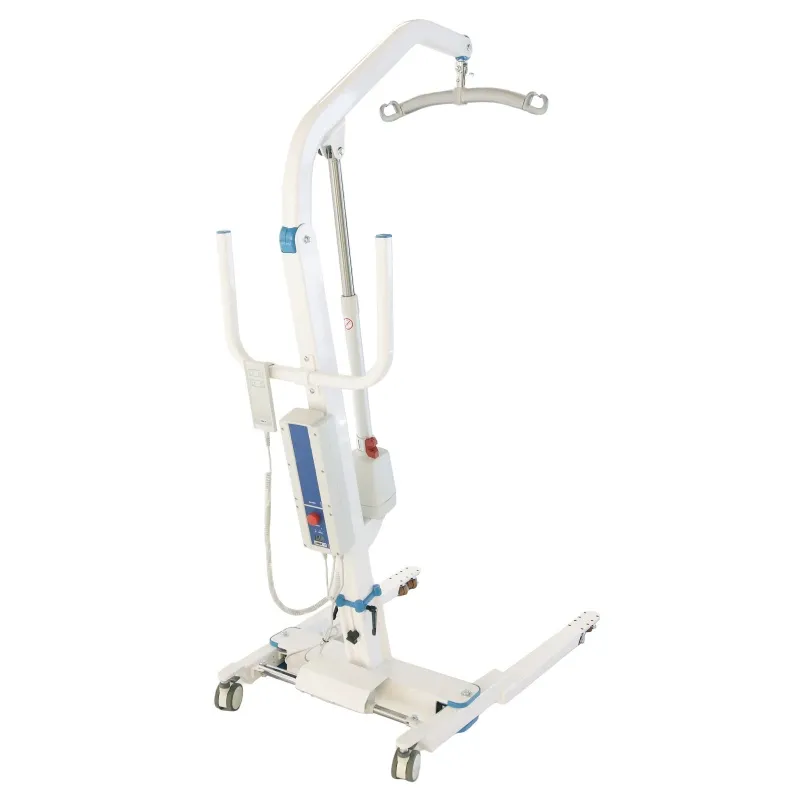
Why are patient lift slings so important?
Users encountering patient lifts for the first time often make the mistake of viewing the sling merely as a simple piece of load-bearing fabric—assuming that as long as it can lift the patient, it suffices. In reality, the sling is just as crucial to the overall patient lift system as the main unit itself. Structurally, while the patient lift hoist provides the power and lifting mechanism, the sling is responsible for supporting the patient's weight, securing the body, maintaining posture, and distributing pressure. If the sling design is flawed, achieving a safe and comfortable transfer becomes difficult, regardless of the lift's performance.
Research indicates that over 70% of patient comfort ratings during the use of a patient lift hoist are directly linked to the sling's design. Furthermore, issues such as slipping, localized pressure points, and postural instability during transfers are frequently caused by the selection of an inappropriate sling.
For instance, using a standard sling for a patient with poor trunk control could lead to the patient leaning forward or even slipping out; conversely, using a standard fabric sling for bathing care might hinder efficiency due to poor drainage. Therefore, patient lift slings are not "one-size-fits-all" products; they must be selected based on the patient's functional status and specific care objectives.
Full-Body Support Slings: The Most Common Type of Patient Lift Sling
Among the various styles of patient lift slings, the full-body support sling is the most widely used.
These slings typically feature a large-surface-area design that supports the patient's head, back, pelvis, and thighs simultaneously, ensuring a stable posture during suspension. Their extensive coverage offers a high level of safety, making them ideal for individuals with limited body control.
Full-body support slings are widely used for the following patient groups:
•Stroke patients with hemiplegia;
•Patients with high-level spinal cord injuries;
•Severely ill, bedridden patients;
•Disabled elderly individuals;
•Patients with muscular atrophy;
•Patients with severe cerebral palsy.
For these patients, the lift must not only facilitate relocation but also maintain body stability during the process; full-body support slings excel at minimizing body sway.
Modern full-body slings often utilize a multi-point suspension design, distributing weight evenly across several connection points to reduce localized pressure concentration. Some high-end models even incorporate head support panels and lateral stabilization structures to further enhance safety. In clinical practice, full-body support slings are among the standard slings most frequently purchased alongside patient lifts by hospitals and elderly care facilities.
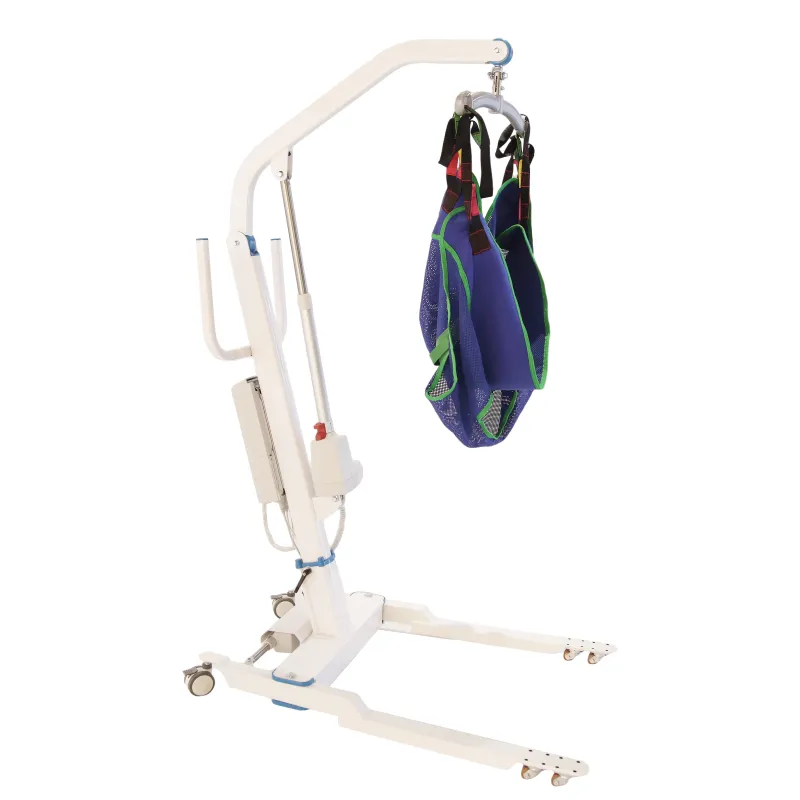
High-back slings: Suitable for patients with limited head and neck control
In the practical use of patient lifts, many patients are not only unable to stand independently but also suffer from significantly impaired head control.
Examples include:
•Patients with ALS (Amyotrophic Lateral Sclerosis);
•Patients with high-level paraplegia;
•Patients with severe cerebral palsy;
•Patients with neurodegenerative diseases;
•Patients with advanced Parkinson's disease.
For these patients, standard full-body slings may fail to provide adequate support for the neck and head.
Consequently, high-back slings were developed.
High-back slings are a key category of slings designed for patient lifts; they are characterized by an upper edge that extends significantly higher than standard models, reaching up to the head or even the back of the skull.
When the patient lift hoist raises the patient off the ground, the high-back sling supports the weight of both the cervical spine and the head, preventing discomfort caused by the head tilting backward or to the side.
Data indicates that among patients with severe neurological conditions, the use of high-back slings reduces head and neck fatigue during transfers by over 40% and significantly improves patient comfort.
Therefore, for patients unable to maintain head stability, high-back slings are often the preferred choice when configuring patient lift equipment.
Split-leg slings: Balancing comfort and versatility
Split-leg slings are a widely used design in the field of patient lifts.
Unlike traditional one-piece slings, split-leg slings feature independent support structures for the thigh area, with support straps wrapping around each leg separately to create a more ergonomic weight-distribution pattern.
This type of patient lift hoist sling offers several advantages.
First, it offers superior comfort. Because the weight is distributed more evenly across the legs, patients do not experience significant pinching or squeezing sensations while suspended.
Second, it is highly versatile. Whether transferring between a bed and a chair, a wheelchair, or a sofa, split-leg slings effectively meet the requirements.
Third, it is easy to apply. Caregivers can usually position the sling while the patient is in a seated position, eliminating the need for frequent turning or rolling of the patient. Many hospitals currently equip their patient lifts with standard split-leg slings, as this design balances safety, comfort, and versatility.
Toileting Slings: Designed Specifically for Toileting Care
For bedridden patients and the elderly with limited mobility, toileting is one of the most frequent scenarios requiring the use of portable patient lifts.
However, standard slings have significant limitations during toileting; their large surface area tends to cover the buttocks, hindering access for toileting care.
Consequently, the patient lift hoist industry has developed specialized toileting slings.
The defining feature of these slings is an open design in the buttock area; once the patient is lifted, caregivers can easily assist with toileting, change adult diapers, and perform necessary cleaning.
To compensate for the reduced buttock support and potential loss of stability, toileting slings typically feature reinforced chest and torso support systems.
Toileting slings have become an essential accessory for portable patient lifts in both nursing homes and home care settings.
Statistics from care facilities indicate that the proper use of toileting slings can reduce the time required for a single toileting session by over 30% on average, while also significantly lowering the physical strain on caregivers.
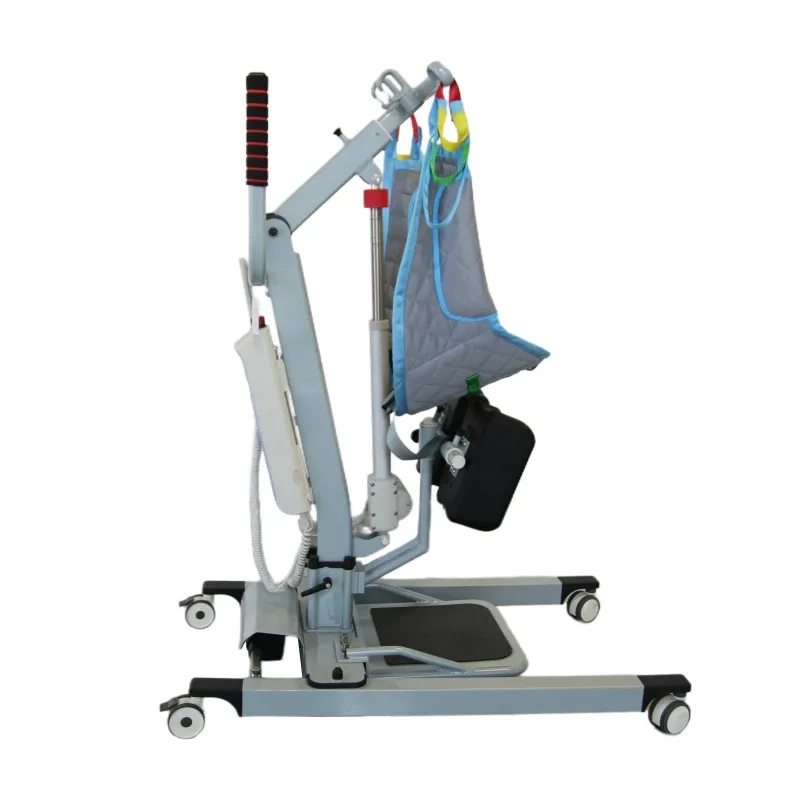
Bathing Slings: Suitable for Wet Environments
With the growing emphasis on accessible bathing, patient lifts are increasingly being used to transfer patients for bathing.
Standard fabric slings tend to absorb water and become heavy in wet environments; they dry slowly and can harbor bacteria.
Therefore, bathing slings for patient lifts are typically made from specialized mesh materials.
These materials offer the following characteristics:
•Rapid water drainage;
•Good breathability;
•Resistance to water pooling;
•Ease of cleaning;
•Short drying time.
After a patient is transferred for bathing using the lift, water drains quickly through the mesh structure, thereby enhancing care efficiency.
Many rehabilitation centers and elderly care facilities now include bathing slings as standard equipment for their portable patient lifts to meet daily bathing care needs.
Standing Training Slings: Essential Tools for Assisted Rehabilitation
Patient lifts are used not only for transfer care but are increasingly applied in the field of rehabilitation training.
For patients who retain some weight-bearing capacity in their lower limbs, standing training is a crucial component of the rehabilitation process.
In this context, traditional full-body slings are clearly unsuitable.
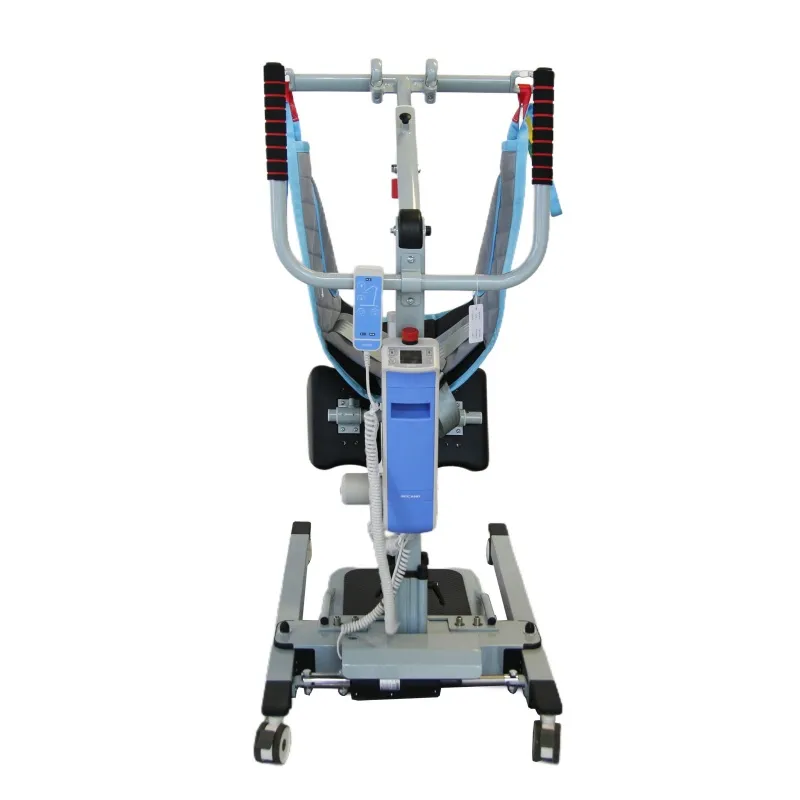
Standing training slings are typically designed with support structures for the waist and pelvis; their primary function is not to fully suspend the patient, but rather to provide necessary protection and supplementary support while the patient actively stands.
Commonly suitable patient groups include:
•Stroke patients;
•Patients recovering from spinal cord injuries;
•Post-operative fracture patients;
•Patients undergoing rehabilitation after prolonged bed rest.
Studies show that conducting rehabilitation training with a portable patient lift hoist and a standing training sling helps patients gradually regain standing endurance while reducing the risk of falls.
Pediatric Slings: Meeting Unique Body-Size Requirements
Patient lifts also play a vital role in pediatric rehabilitation.
Due to children's smaller body sizes and specific conditions—such as cerebral palsy or muscular dystrophy—adult slings often fail to meet their needs.
Pediatric patient lift slings typically feature:
•Smaller dimensions;
•Enhanced body wrapping/support;
•Improved head support;
•Softer materials.
For children with cerebral palsy, specialized slings help maintain proper posture and minimize discomfort during transfers.
In recent years, driven by the growing demand for pediatric rehabilitation, an increasing number of portable patient lift hoist manufacturers have launched sling series specifically designed for children of various age groups.
How to Choose the Right Patient Lift Sling?
Faced with a wide variety of patient lift slings, users often struggle to make a choice. In reality, several key factors should be considered when selecting a sling.
First is the patient's physical functional status. If the patient lacks head control, a high-back sling should be prioritized; if the patient has some standing ability, a standing training sling may be considered.
Second is the care objective. If the primary use is for bed-to-chair transfers, a full-body sling or a split-leg sling will suffice; if bathing care is frequently required, a specialized bathing sling should be chosen; if toileting assistance is needed, an open-design toileting sling is more suitable.
Next, consider the patient's body size and weight. Patient lift hoist slings are typically categorized by weight capacity and size; a sling that is too large or too small will compromise effectiveness.
Finally, consider material properties, cleaning methods, and institutional management requirements. For example, hospitals might prefer materials that withstand high-temperature disinfection, whereas home users may prioritize comfort and durability.
FAQ
FAQ 1: Are portable patient lift slings universal?
Not necessarily. Different brands and models of portable patient lifts may use different attachment point designs, meaning some slings are not fully interchangeable. Compatibility should be verified before purchase.
FAQ 2: How often should patient lift slings be replaced?
Replacement is usually determined by usage frequency and wear and tear. In high-frequency use environments, slings are typically evaluated and replaced every 1 to 3 years. If damage, deformation, or loose stitching is detected, use should be discontinued immediately.
FAQ 3: What is the difference between a bathing sling and a standard sling?
Bathing slings are made of quick-drying mesh material that offers superior drainage and breathability, making them suitable for wet environments, whereas standard slings are primarily used for daily transfer care.
FAQ 4: Are toileting slings safe?
Properly designed toileting slings for portable patient lifts are engineered to maintain patient stability via chest and torso support systems while leaving the hip area open; they offer a high level of safety when used correctly.
FAQ 5: Can children use adult patient lift slings?
This is generally not recommended. Due to their smaller body size, children using adult slings risk inadequate support, postural instability, or even slipping out; slings specifically designed for children should be used instead.
FAQ 6: What is the typical weight capacity of a portable patient lift sling?
Capacity varies significantly by model. Common portable patient lift slings support weights ranging from 100 kg to 300 kg, while heavy-duty slings can support over 400 kg; the appropriate specification should be selected based on the patient's weight.