

Carbon fiber electric wheelchairs are renowned for their lightweight, high strength, and portability, and their core power source is the motor. So, what type of motor does a high-performance carbon fiber electric wheelchair use? What aspects does motor performance affect? Why can it still ensure a stable, safe, and smooth driving experience despite its lightweight structure?
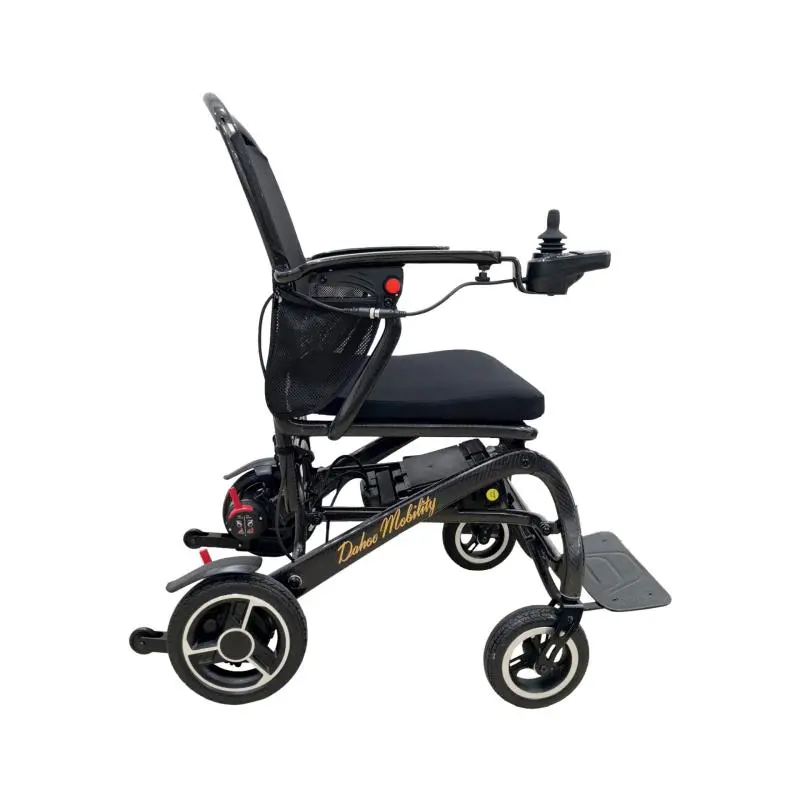
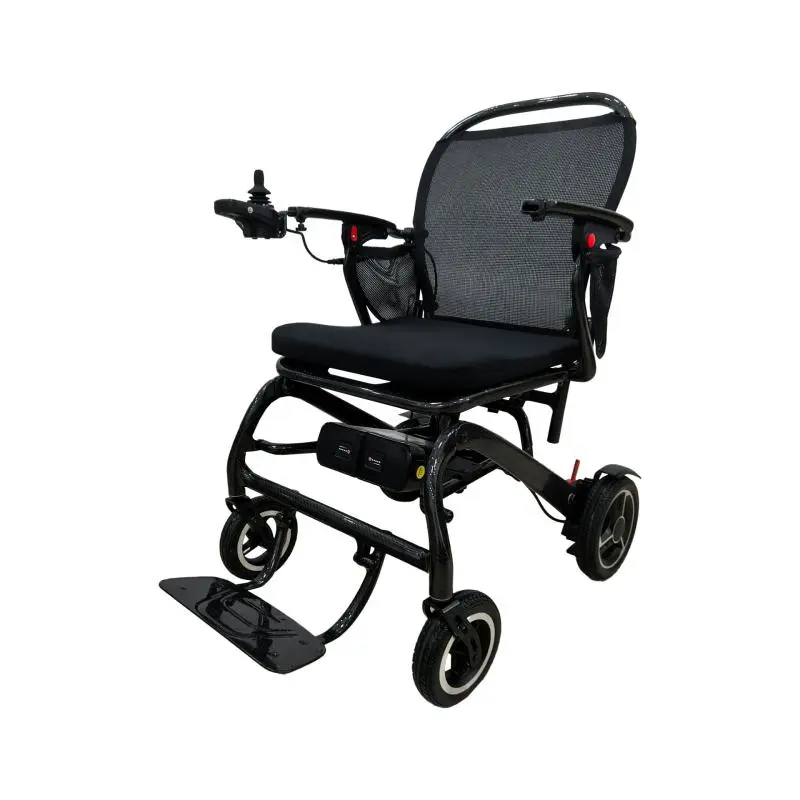
Taking Dayang Medical's ultralight carbon fiber power wheelchair as an example, these high-specification products typically use:
—A brushless motor with an electromagnetic braking system.
This type of motor is not only efficient, quiet, and durable, but also has significant advantages in safety, maneuverability, battery life, and speed control.
Why Do Carbon Fiber Electric Wheelchairs Generally Use Brushless Motors?
Many users ask, "Do carbon fiber electric wheelchairs require special motors?" The answer is yes.
The lightweight body structure dictates that carbon fiber electric wheelchairs must use high-efficiency, low-maintenance, long-life, and smooth-running motors. Brushless motors happen to possess these advantages.
Here is a comprehensive analysis:
1. Brushless motors are highly efficient and consume less energy, making them suitable for lightweight vehicle bodies.
Brushless DC motors (BLDC) offer significant advantages over traditional brushed motors:
• Higher energy efficiency
• Lower frictional losses
• More precise speed control
• Less heat generation
• Longer lifespan
• Lower noise
For lightweight products like carbon fiber electric wheelchairs: High efficiency allows smaller capacity lithium batteries (e.g., 6Ah/10Ah) to still provide stable power.
2. Brushless motors require virtually no maintenance
Traditional brushed motors require regular maintenance due to carbon brush wear, while brushless motors:
• Do not produce carbon dust
• Do not require carbon brush replacement
• Have a stable and durable internal structure
This allows carbon fiber power wheelchairs to maintain long-term lightweight and stable performance without frequent repairs.
3. Suitable for low-speed, stable-speed, and controllable medical assistive devices
Carbon fiber power wheelchairs typically have a top speed of around 4.5 km/h, such as high-end products like Dayang Medical. Brushless motors enable precise low-speed control, resulting in:
• Smooth starts
• Stable cornering
• Smooth uphill driving
• Sensitive stopping response
This is especially important for the elderly and those with mobility impairments.
4. Simple structure, suitable for carbon fiber frame installation
Carbon fiber electric wheelchairs require a lightweight, durable, and compact motor structure, and brushless motors are smaller than brushed motors of equivalent power.
Therefore, they are particularly suitable for:
• Narrow wheel frames
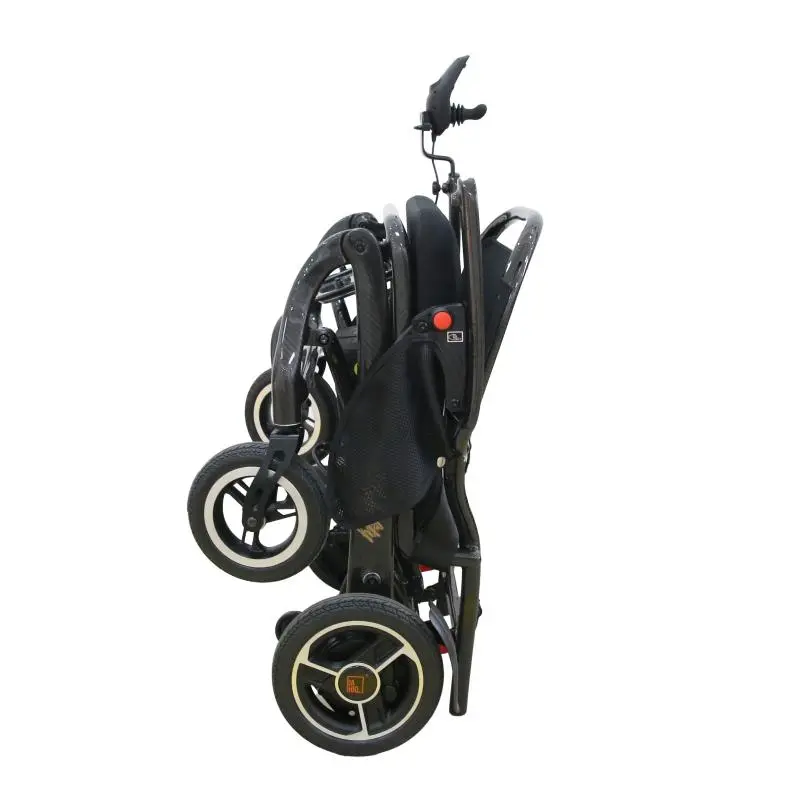
• Folding structures
• Lightweight drive systems
This is a key reason why brushless motors are widely used in carbon fiber electric wheelchairs.
What role does the electromagnetic braking system play in carbon fiber electric wheelchairs? Is it safe?
Many users ask:
"What is the principle behind the electromagnetic braking system used in carbon fiber power wheelchairs? Is it reliable?"
The electromagnetic braking system is one of the most important safety mechanisms in electric wheelchairs. Its functions are as follows:
1. Automatic braking upon releasing the controller
As soon as the joystick is released, the motor immediately enters braking mode:
• No slipping
• No gliding
• No forward lurching
• No backward sliding
This is faster and safer than mechanical brakes.
2. Uphill protection, preventing backward sliding
Electromagnetic braking allows the carbon fiber electric wheelchair to:
• Stop and lock immediately when going uphill
• Prevent backward movement due to a shift in the center of gravity
• Improve uphill stability
Important for outdoor use or environments with many slopes.
3. Safe parking, avoiding the risk of sliding
Electromagnetic braking protects the user under any slope conditions:
• Stable parking
• No sliding
• No drifting
This allows carbon fiber power wheelchairs to be lightweight while maintaining high safety.
What is the commonly used motor power for carbon fiber power wheelchairs?
While variations exist between brands, high-end carbon fiber power wheelchairs generally use:
• 150W–250W power per motor
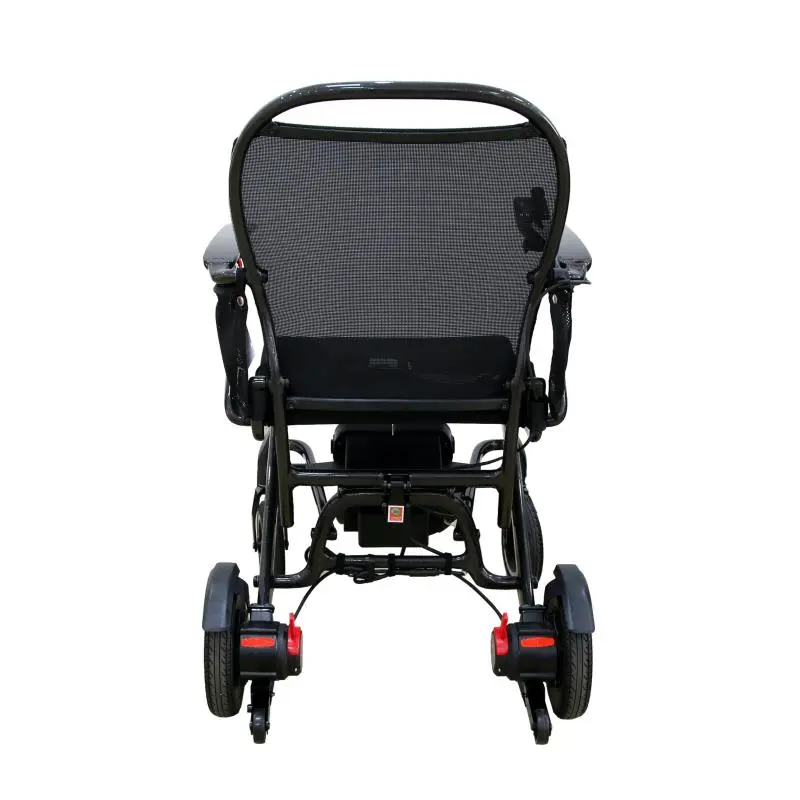
• Dual-motor drive (one on each side)
Mainstream manufacturers like Dayang Medical typically employ:
• High-efficiency brushless motors
• Dual-side drive structure
• Built-in electromagnetic brakes
• Stable speed control system
These features ensure the lightweight body delivers sufficient driving force and excellent maneuverability.
Is the matching between the carbon fiber electric wheelchair motor and battery important?
Very important.
The performance of a brushless motor depends heavily on the battery, and carbon fiber electric wheelchairs typically use:
• 6Ah lithium batteries
• Or 10Ah lithium batteries
Advantages of lithium batteries include:
• Lightweight
• Stable output voltage
• High energy density
• Excellent compatibility with brushless motors
The motor and battery must achieve:
• Voltage matching
• Current capacity matching
• Unified control system parameters
• Consistent braking system response
In other words: The power system of a carbon fiber power wheelchair is not a single component, but a complete and matched drive system.
Is using a brushless motor in a carbon fiber power wheelchair more energy-efficient?
The answer is yes.
Brushless motors are typically 20%–30% more energy-efficient than brushed motors, which means:
• Longer range with the same battery capacity
• Less heat generation and lower energy loss
• Smoother cold starts
• More stable driving on inclines
For lightweight carbon fiber power wheelchairs:
Energy saving means longer battery life and more reliable operation.
Does a brushless motor make a carbon fiber electric wheelchair lighter?
While the motor itself doesn't significantly reduce the wheelchair's weight, the brushless design offers several advantages over brushed motors:
• More compact size
• Lighter magnet structure
• Simpler mechanical layout
These advantages allow for the design of carbon fiber electric wheelchairs with:
• Lighter drive modules
• Thinner wheel axle designs
• More space for folding wheel frames
Therefore, the type of motor indirectly contributes to overall weight reduction.
Does a brushless motor affect the speed of a carbon fiber power wheelchair?
The speed of carbon fiber power wheelchairs is typically strictly limited to a safe range, for example:
* Maximum speed of approximately 4.5 km/h (e.g., the Dayang Medical model).
Brushless motors play a crucial role here:
• Precise speed control
• No sudden acceleration or deceleration
• Smooth acceleration
• Stable current response
Users will not experience unsafe situations due to excessively high or low speeds.
Are the brushless motors used in carbon fiber power wheelchairs durable?
Very durable.
Brushless motors typically have a lifespan of:
• Over 5000-10000 hours of stable operation
• No internal friction parts
• No mechanical wear
• Withstands prolonged low-speed use
For carbon fiber electric wheelchair users, this means:
• Less maintenance required
• Fewer malfunctions
• More stable safety performance
• Lower operating costs
Does a carbon fiber frame require a special motor structure?
Yes, which is why brushless motors are standard.
The advantages of a carbon fiber electric wheelchair frame are:
• High strength
• High compressive strength
• Very lightweight
To match the motor with the carbon fiber frame, the following conditions must be met:
1. Compact motor size
2. Moderate weight
3. Low vibration
4. Smooth output
5. Mounting structure that does not damage the carbon fiber
Brushless motors fully meet these requirements.
What is the driving experience like using a carbon fiber electric wheelchair with a brushless motor?
Compared to traditional metal wheelchairs with brushed motors, carbon fiber electric wheelchairs using brushless motors offer a significantly improved driving experience:
• Smooth start-up
• Smooth acceleration
• No shaking
• No noise
• Quick stopping response
This is a major advantage for elderly users, those recovering from surgery, or those with mobility issues.