

In long-term care, hospital care, and home care, "patient transfer lifter" is a frequently used professional term. Many caregivers, family members, or equipment purchasers often ask:
What is a patient transfer lifter? What is it used for? Why do many patients who cannot move independently need it?
To help you understand this device more systematically, this article will provide a comprehensive analysis of patient transfer lifters from aspects such as definition, structure, types, applicable populations, safety points, and purchasing recommendations.
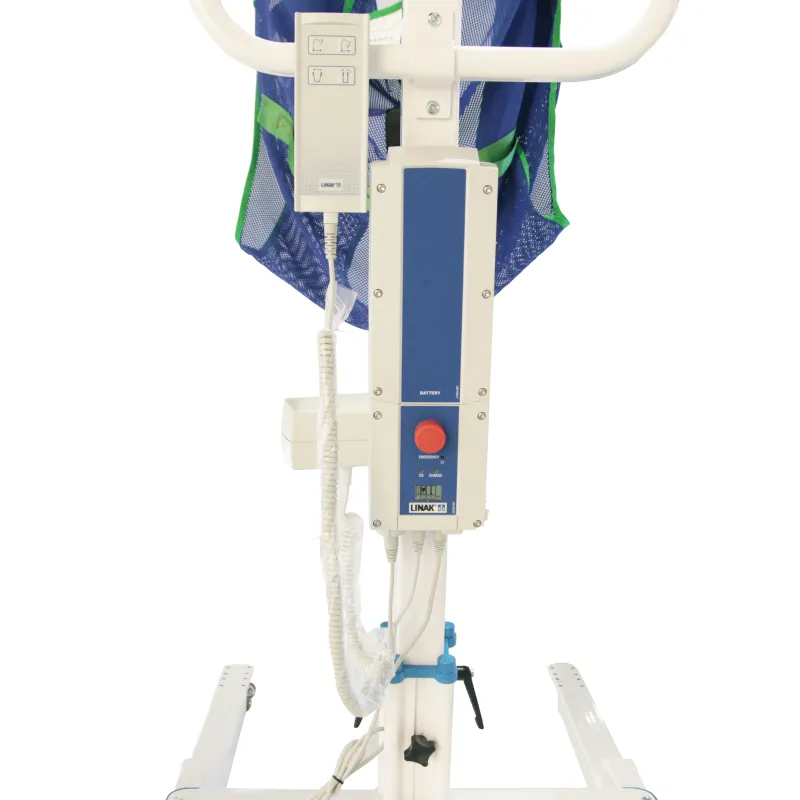
What is a patient transfer lifter?
A patient transfer lifter is a nursing device specifically designed for transferring patients with limited mobility. It uses a mechanical support and sling system to safely move the patient from one location to another, such as:
• From bed to wheelchair
• From wheelchair to commode chair
• From the floor to bed
• From bed to shower chair
The fundamental purpose of patient transfer lifter design is to provide a safe and smooth transfer process for patients who cannot sit up, stand, or move independently, while reducing the physical burden on caregivers.
It is particularly suitable for situations where:
• The patient cannot sit up independently
• The patient is overweight
• There is a high risk involved in moving the patient
• Caregivers cannot physically transfer the patient alone
• The patient requires multiple, extensive transfers
In short:
A patient transfer lifter is a mechanized transfer aid for users who cannot move safely and independently.
Why do patients need to use a patient transfer lifter?
In which situations is a patient transfer lifter necessary?
Many people ask, "Is a patient transfer lifter absolutely necessary? Can't I transfer the patient manually?"
In fact, a patient transfer lifter is not optional, but essential equipment in many situations because:
The patient cannot sit up or stand independently, lacks the physical strength to move, and caregivers cannot safely transfer the patient without the equipment.
Here are some common situations where it's needed:
1. Patients with severe muscle weakness
For example:
• Prolonged bed rest
• Paralysis
• Severe weakness
• Neurological disorders
• Inability to exert force independently in the early stages of recovery
Patients unable to sit or stand steadily are highly susceptible to falls, dislocations, or sprains if moved manually.
2. Patients with large body weight
For patients who are large or heavy, caregivers often struggle to transfer them safely using their own strength. Using a patient transfer lifter can effectively:
• Reduce back injuries for caregivers
• Improve the stability of the transfer
• Reduce the risk of patient falls
3. Patients with frequent movement needs
Many patients need to change positions at least several times a day:
• Getting out of bed
• Sitting in a chair
• Bathing
• Turning over
• Using the toilet
A patient transfer lifter makes these movements smoother and safer.
4. Insufficient home caregivers
Many families have only one caregiver, but most transfers actually require two people working together. A patient transfer lifter helps a single person transfer patients, avoiding danger.
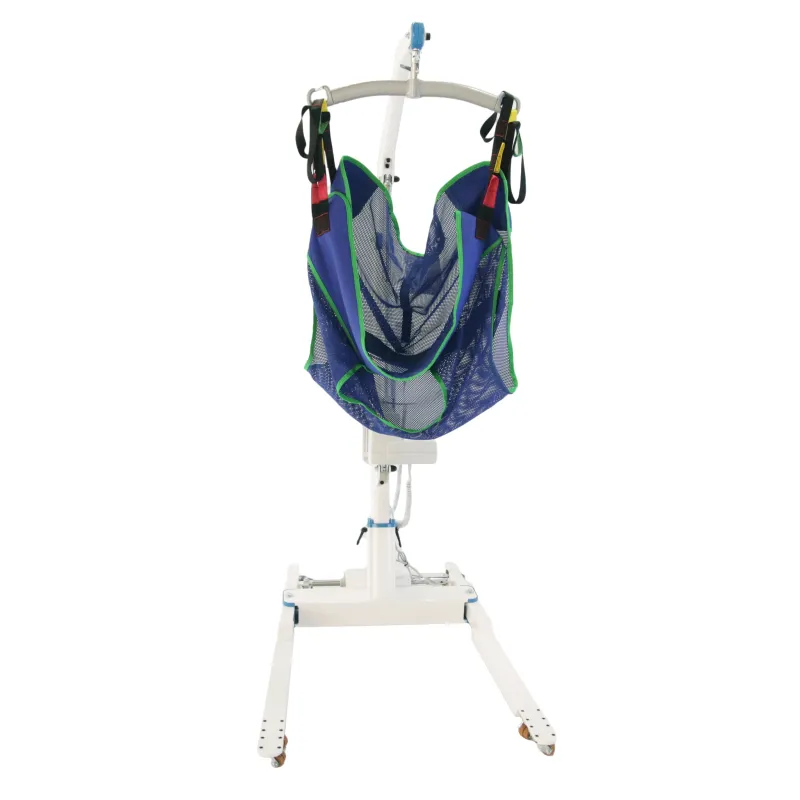
How does a patient transfer lifter work?
Although its structure looks technical, its basic working principle is quite clear: Using a mechanical lifting device and support straps, the patient is lifted, moved to a new location, and then safely lowered.
It typically consists of the following core components:
1. Lifting Arm
• Used to support the straps and lift the patient.
• Electric lifting arm is driven by a motor.
• Manual lifting arm is driven by a hydraulic system.
2. Sling System
The sling is crucial for the comfort and safety of the transfer.
• Wraps the patient
• Distributes force
• Provides stable support
• Suitable for users of different body types
3. Base and Casters
The base keeps the equipment stable, and the casters allow for flexible movement.
• Widened base for improved stability
• Casters with brakes to prevent slippage
4. Control System (Electric Model)
Electric patient transfer lifters typically include:
• Hand controller
• Electrical control panel
• Battery powered system
Enabling caregivers to easily lift and lower without physical exertion.
5. Safety Locking Device
Prevents accidental slippage during handling or lifting.
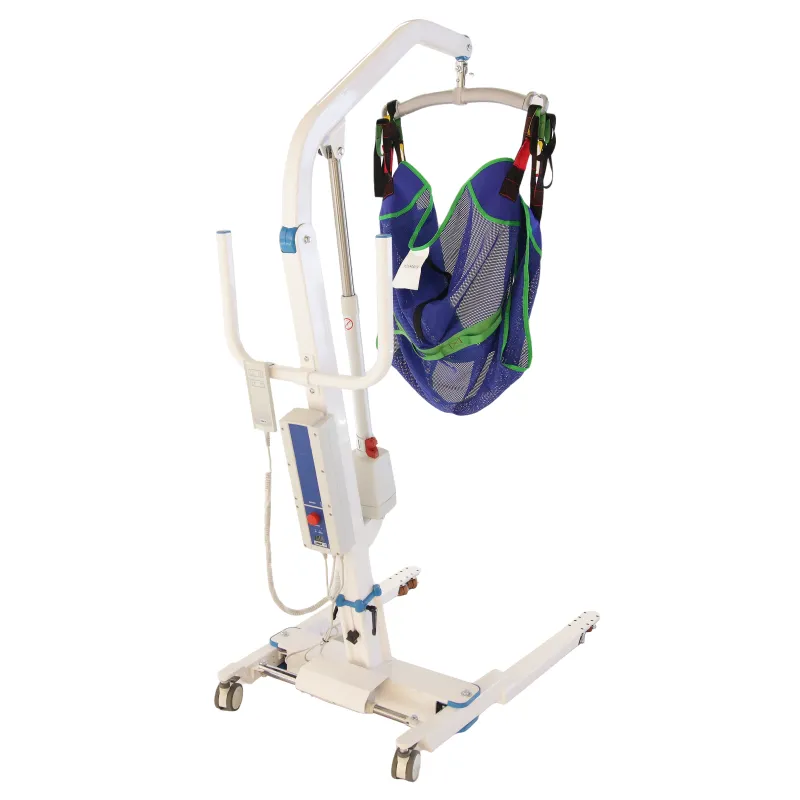
What types of patient transfer lifters are available?
What are the differences between different types of patient transfer lifters?
To meet the needs of various scenarios and patients, patient transfer lifters are available in several types.
1. Mobile Patient Transfer Lifter (Mobile Hoist)
• Most common
• Equipped with casters for easy movement
• Suitable for homes and hospitals
• Capable of transferring patients between beds, chairs, toilets, and other locations
• Suitable for most users.
2. Sit-to-Stand Lift
• For patients who can sit but cannot stand steadily.
• Assists with the transfer from sitting to standing.
• Commonly used in rehabilitation and training settings.
However, it is not suitable for patients who are completely unable to sit up.
3. Ceiling Lift
• Installed on a ceiling track.
• Unaffected by ground obstacles.
• Suitable for long-term bedridden care or severely ill patients.
Typically used in hospitals and long-term care facilities.
4. Bathroom Lift
• Waterproof design.
• For showering or bathing.
• Ensures patient safety.
Suitable for users requiring bathing assistance.
What are the advantages of a patient transfer lift?
Why are more and more caregivers choosing to use patient transfer lifts?
The advantages of patient transfer lifters are significant and comprehensive:
1. Enhanced Patient Safety
• Reduced risk of falls
• Prevention of secondary injuries caused by incorrect posture
• Smooth and controllable transfer process
2. Reduced Burden on Caregivers
The most common occupational injuries to caregivers are:
• Lower back strain
• Shoulder sprain
• Muscle damage from excessive exertion
Patient transfer lifters significantly reduce physical exertion.
3. Increased Care Efficiency
Caregivers do not need to spend a lot of time and energy moving patients, allowing them to focus more on other care tasks.
4. Enhanced Patient Dignity and Comfort
The smooth lifting and lowering motion of mechanical equipment reduces discomfort caused by manual handling.
5. Expanded Patient Range
Patient transfer lifters still provide stable transfer capabilities for larger, weaker, and less mobile patients.
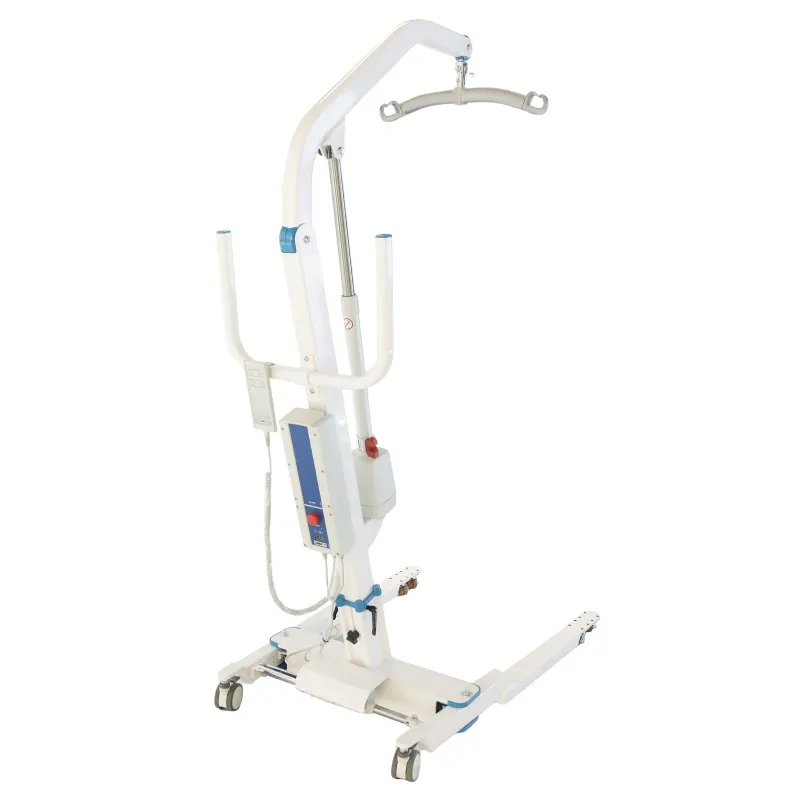
Which patients are best suited to use a patient transfer lifter?
Based on functional requirements, the following situations are particularly suitable for use:
1. Patients unable to sit up independently
For example, patients unable to maintain a sitting posture, prone to leaning forward or falling.
2. Patients unable to stand or bear weight
For example, those with muscle atrophy, paralysis, or paraplegia.
3. Patients who are overweight or tall
Manual transport poses safety risks.
4. Insufficient home caregivers
For example, elderly caregivers or single caregivers.
5. Patients requiring frequent transfers
For example, multiple bed changes, bathing, or toilet breaks per day.
How to use the patient transfer lifter correctly and safely?
1. The sling must be worn correctly
Improper sling wearing is the most common safety hazard, which may lead to:
• Falling
• Tilt
• Skin compression
It must be worn correctly according to the instructions.
2. Ensure the base is wide enough
Ensure the base is wide enough before transfer to improve stability.
3. Check the brakes before use
Prevent the equipment from slipping during transfer.
4. Always raise and lower slowly
Rapid raising and lowering can affect the patient's balance and comfort.
5. Do not operate on uneven terrain
Uneven ground increases the risk of the equipment tipping over.
6. Do not overload
Each patient transfer lifter has a rated load capacity, which must be adhered to.
What factors should be considered when choosing a patient transfer lifter?
How to choose the most suitable patient transfer lifter?
1. Patient's physical condition
• Can the patient sit?
• Can the patient stand?
• Is the patient completely paralyzed?
• Does the patient require bathing assistance?
Different types are suitable for different situations.
2. Usage scenario
• Is there enough space in the home?
• Is bathing assistance required?
• Is a mobile design required?
3. Caregiver's ability
If the caregiver has limited strength, it is recommended to choose:
• Electric type
• Ceiling-mounted type
4. Budget range
Different types have significantly different prices; choose according to your needs.
5. Equipment quality and after-sales service
include:
• Material
• Motor life
• Warranty service
• Accessory compatibility
How does Dayang Medical customized support hospital equipment needs?
Guangdong Dayang Medical Technology Co., Ltd. specializes in customized hospital equipment for healthcare providers worldwide. Founded in 2009, we are a professional manufacturer and supplier in China, offering electric wheelchairs, manual wheelchairs, sports wheelchairs, hospital beds, shower chairs, commodes, walking aids, and canes. With two R&D and production bases, we provide tailored designs, fast production, and reliable delivery. All products meet ISO13485, ISO9001, FDA, TUV, and CE standards.