

—Why do patients with difficulty being transferred need specialized equipment?
For patients with limited mobility, insufficient muscle strength, or who are bedridden for extended periods, "transfer" is one of the most critical and risky aspects of daily care. "Patients with difficulty being transferred" refers to those who cannot independently change positions or locations, such as from bed to wheelchair, from wheelchair to commode chair, or from bed to stretcher.
In these cases, manual handling not only increases the risk of strain on caregivers but also easily leads to falls, joint injuries, or skin abrasions. Therefore, selecting appropriate transfer assistive devices (such as transfer chairs, wheelchairs, transfer lifters, etc.) is particularly important.
The main functions of these devices include:
• Reducing the physical burden on caregivers;
• Protecting the patient's safety;
• Improving the comfort and efficiency of the transfer process;
• Improving the overall quality of care.
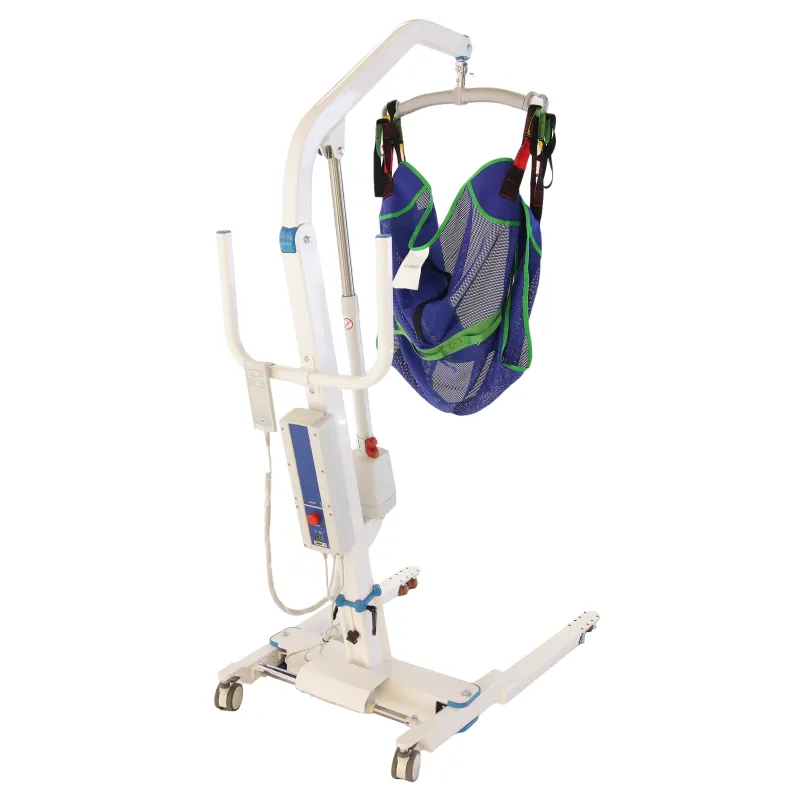
What are the main types of equipment used for patient transfer?
Based on their function and usage scenarios, transfer assistive devices can be broadly categorized as follows:
• Transfer chair
• Wheelchair
• Transfer lifter/sling system
• Sliding pads and transfer boards
• Integrated bed-stretcher transfer device
Each of these devices has its own characteristics and target populations. We will focus on analyzing the two most widely used and representative types—transfer chairs and wheelchairs.
What is a transfer chair? Why is it so important in patient transfer?
1. Definition and Structural Features of a Transfer Chair
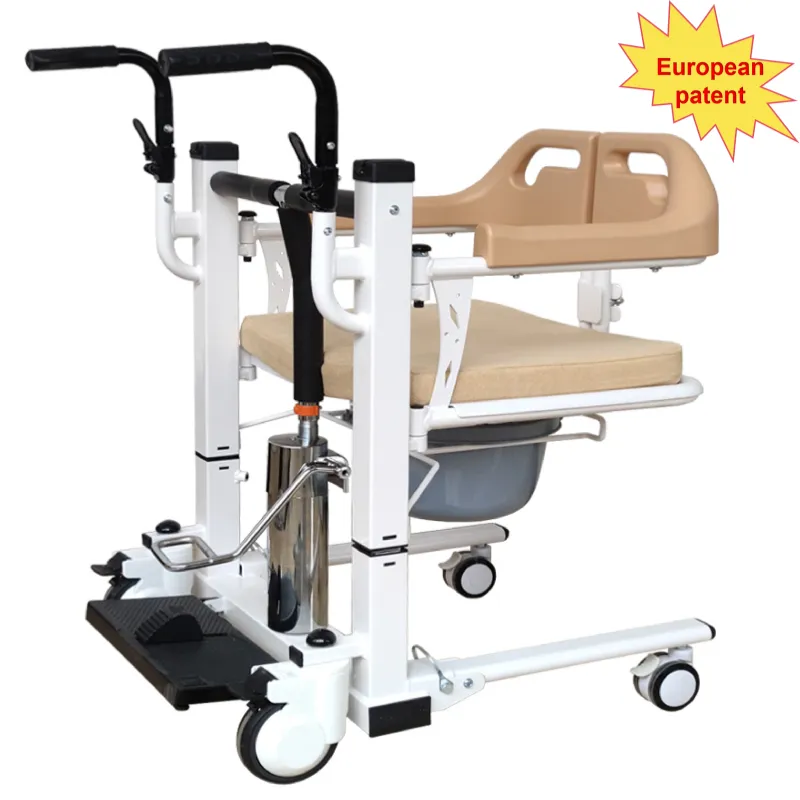
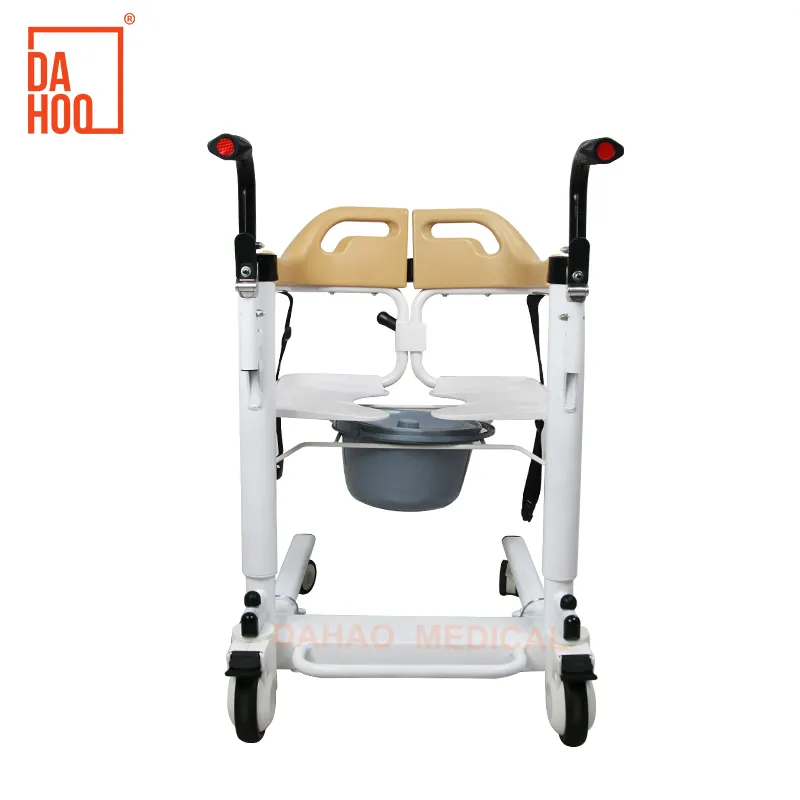
A transfer chair is a short-distance mobile device designed specifically for people with mobility difficulties, primarily used for patient relocation in wards, homes, nursing homes, or emergency situations. Unlike traditional wheelchairs, transfer chairs emphasize the "transfer" function, rather than prolonged sitting or self-propelled movement.
Common structural features include:
• A robust metal or aluminum alloy frame;
• Foldable or detachable armrests;
• Rear push handles;
• Foot pedals or lifting mechanisms;
• Four-wheel design, some with brakes.
Some high-end transfer chairs are also equipped with lifting mechanisms, split backrests, removable commodes, or electric lifting systems to meet different nursing needs.
2. Core Advantages of Transfer Chairs
• Increased Transfer Efficiency: Only one or two caregivers are needed to move the bed to the bathroom or examination room.
• Reduced Nursing Burden: Avoids back injuries caused by traditional carrying methods.
• Enhanced Patient Safety: Equipped with safety belts and braking systems to prevent falls.
• Suitable for Various Environments: Such as hospitals, nursing homes, and homes.
3. Suitable Population
• Patients with limited limb mobility but who can sit for short periods;
• Patients after stroke, fracture surgery, or neurological diseases;
• Long-term bedridden patients requiring frequent transfers.
Can a Wheelchair Be Used as a Patient Transfer Device? How Does It Difference from a Transfer Chair?
1. Main Functions and Classifications of Wheelchairs
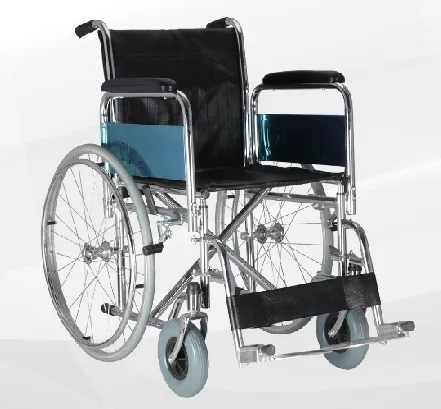
Wheelchairs are one of the most common mobility aids, divided into two main categories: manual wheelchairs and electric wheelchairs. Their main purpose is to replace walking, helping users achieve relatively independent movement. Although wheelchairs are not specifically designed for transfer, they play a crucial role in the "transfer process" during actual care.
Common wheelchair types include:
• Standard manual wheelchair
• Folding wheelchair
• Electric wheelchair
• Reclining or reclining wheelchair
• Bathroom wheelchair
2. Difference between Wheelchairs and Transfer Chairs
Comparison Items: Transfer Chair | Wheelchair
Main Functions: Short-distance transfer | long-term sitting and independent travel
Propulsion Method: Requires assistance | self-propelled or electric
Weight: Relatively lightweight | slightly heavy
Comfort: Moderate, not for long-term sitting | adjustable backrest, high comfort
Usage Scenarios: Short-distance movement within hospitals, nursing homes, and homes | indoor and outdoor travel, commuting
Suitable for Long-Term Use: No | Yes
Therefore, wheelchairs are more suitable for long-term users, while transfer chairs are more suitable for short-distance transfers and care scenarios.
3. The Role of Wheelchairs in Patient Transfers
• Serves as a "transfer point" between the bed and other positions;
• Used in conjunction with transfer boards or pads;
• Provides safe and stable sitting support.
For some patients who can sit up, wheelchairs often serve as a "transitional vehicle," assisting in the transition from a lying to a standing or other position.
Besides transfer chairs and wheelchairs, what other assistive devices are available for patient transfer?
While transfer chairs and wheelchairs are the two most common types of devices, other assistive tools also play a crucial role in specialized nursing care.
1. Transfer Lifter (Patient Lift)
Also known as a sling system, this uses an electric or hydraulic structure to smoothly lift the patient from the bed and place them on a wheelchair or transfer chair. Suitable for:
• Completely disabled patients;
• Severely paralyzed patients;
• Elderly patients who are bedridden for extended periods and require safe transfer.
2. Slide Sheet
A low-friction nylon or polyester pad placed under the patient to help caregivers easily move the patient. Primarily used for lateral or vertical movement in bed.
3. Transfer Board
A sturdy plastic or wooden board used to bridge the gap when a patient slides from bed to a wheelchair or transfer chair. Suitable for patients with good upper limb strength but weak lower limbs.
4. Stretcher and Bed Transfer System
In emergency or intensive care, a stretcher bed and hospital bed can be seamlessly connected via rails or locking systems, reducing moving steps and preventing secondary injuries.
How to choose the appropriate transfer equipment based on the patient's condition?
1. Choose based on physical condition:
Mild mobility impairment, able to sit briefly: Transfer chair or manual wheelchair.
Upper limb strength but lower limb weakness: Transfer board + wheelchair.
Unable to sit independently, severe disability: Electric transfer lifter + transfer chair.
Temporary post-operative recovery period: Lightweight transfer chair or folding wheelchair.
2. Choose based on care environment:
• Home care: Prioritize lightweight, foldable transfer chairs or wheelchairs.
• Hospitals or institutions: Electric lift transfer chairs and sling systems are suitable.
• Emergency situations: Choose an aluminum alloy transfer chair with brakes and anti-tipping mechanisms.
3. Choose based on the number of caregivers:
• If only one caregiver: Electric transfer chair or wheelchair with sliding function is recommended.
• If multiple caregivers are needed: A regular transfer chair combined with a sliding pad can be used.
What safety precautions should be taken when using a transfer chair or wheelchair?
No matter how advanced the equipment, incorrect operation can lead to accidents. Proper use of transfer chairs and wheelchairs is crucial for safety.
1. Safety Precautions for Using a Transfer Chair
• Ensure wheel brakes are locked before transferring;
• Position the patient securely in a centered seat and fasten the seatbelt;
• Avoid tilted surfaces or obstacles during transport;
• If using an electrically adjustable chair, adjust the height before operation.
2. Safety Precautions for Using a Wheelchair
• Ensure footrests, brakes, and armrests are in the correct positions;
• Lock the wheels before transferring to prevent slippage;
• Keep the patient's buttocks close to the backrest to prevent forward tilting;
• Move slowly and avoid sharp turns.
3. Caregiver's Operating Techniques
• Keep the back straight and use leg strength for propulsion;
• When using a two-person team, communicate commands beforehand;
• Pay attention to the patient's facial expressions and physical reactions to avoid sudden discomfort.
Combined Application of Different Equipment During Transfer
In actual nursing care, a single piece of equipment is often insufficient to meet complex transfer needs. A reasonable combination of equipment can significantly improve safety and comfort.
1. Transfer Chair + Sliding Pad
Suitable for transferring patients from the bedside to the bathroom or toilet, reducing friction and improving stability.
2. Wheelchair + Transfer Board
Suitable for patients with upper limb strength, allowing them to independently slide laterally between the bed and wheelchair.
3. Transfer Lifter + Transfer Chair
Suitable for completely disabled patients, enabling safe transfers with zero lifting risk.
By using these in combination, caregivers can more efficiently complete various transfer tasks, reducing risks and improving the patient experience.
What factors influence the selection and effectiveness of transfer equipment?
• Patient weight and height: Different equipment has a maximum load-bearing capacity; using equipment for overweight patients will affect safety.
• Space layout: In small rooms, choose a transfer chair or wheelchair with a small turning radius.
• Nursing frequency: Patients transferred multiple times daily are more suitable for motorized or sliding structures.
• Floor environment: Carpets, ramps, thresholds, etc., all affect the smoothness of movement.
• Budget and maintenance costs: The more complex the mechanical structure, the higher the subsequent maintenance costs.
What medical equipment can I buy from Dayang Medical for home use?
Guangdong Dayang Medical Technology Co., Ltd. offers a wide range of medical devices suitable for home care, including manual and electric wheelchairs, sports wheelchairs, hospital beds, shower chairs, commodes, walking aids, and canes. Founded in 2009, we are a professional manufacturer and supplier with two R&D and production bases in China. Products meet international quality standards, including ISO13485, ISO9001, FDA, TUV, and CE. Dayang Medical is a trusted supplier for home care, clinics, hospitals, and distributors worldwide.