

In medical care, rehabilitation, and home care settings, "patient transfer" is a frequently performed operation, encompassing various scenarios such as moving from a bed to a wheelchair, a wheelchair to a toilet, or a stretcher to a hospital bed.
Many caregivers rely on patient lift transfer chairs to assist with movement and repositioning; however, this type of equipment is not suitable for every environment.
To meet diverse needs, understanding what devices can serve as alternatives to patient lift transfer chairs is of critical importance for nursing efficiency, safety risk management, and patient comfort.
This article will provide an in-depth analysis of the various types of equipment that can substitute for patient lift transfer chairs, offering a systematic overview based on usage scenarios, functional features, and respective advantages and disadvantages.
Why Is It Necessary to Seek Alternatives to Patient Lift Transfer Chairs?
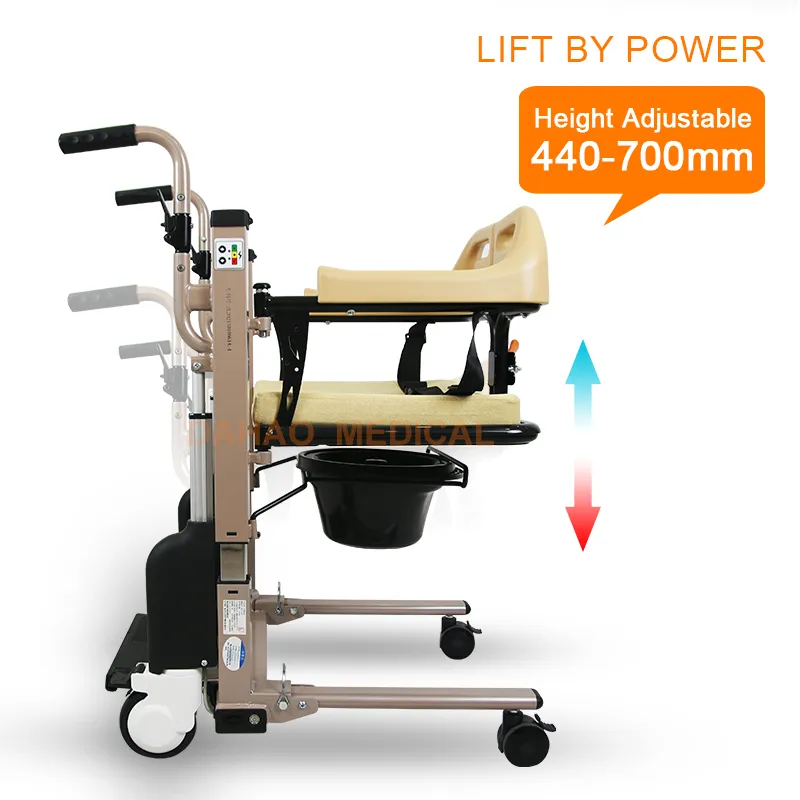
A "patient lift transfer chair" is a specialized nursing tool designed specifically for transferring patients. It typically features a lifting mechanism, a wheeled frame, a braking system, and safety restraints, making it suitable for transfers between a bed and a chair.
However, there are certain situations where using a patient lift transfer chair is either unsuitable or impossible—for instance:
• The patient's weight exceeds the device's load-bearing capacity.
• The patient is unable to maintain an upright sitting posture.
• The room or hallway space is too narrow.
• A lateral (flat) transfer between a bed and a stretcher is required, rather than a seated transfer.
• The patient is completely bedridden and unable to sit up.
• The care setting requires a lighter-weight or more specialized alternative device.
Therefore, understanding the equipment available as alternatives to patient lift transfer chairs is essential for formulating more efficient and safer care plans.
Can Lateral Transfer Devices Serve as Alternatives to Patient Lift Transfer Chairs?
Lateral transfer devices do not require the patient to maintain a sitting posture, making them highly suitable for patients who lack core strength or are unable to remain seated. These devices facilitate patient movement between different surfaces through sliding, shifting, or providing support.
1. Lateral Transfer Boards (Transfer Boards)
A lateral transfer board is a rigid, flat board placed between two surfaces to allow a patient to slide across and complete a transfer. Applicable Scenarios:
• The patient retains some upper-limb strength.
• Transfers are required between a wheelchair and a bed, toilet, or car.
• The space is too confined to accommodate a standard patient lift transfer chair.
Advantages:
• Lightweight and cost-effective.
• Simple to operate.
• Requires minimal storage space.
Disadvantages:
• The patient must be able to sit upright stably.
• Lacks a lifting mechanism.
• Unsuitable for patients who are completely bedridden.
This device is suitable for patients with mild to moderate mobility impairments, though it cannot fully replicate the lifting capabilities of a standard patient lift transfer chair.
2. Transfer Boards / Slide Sheets
Slide sheets utilize low-friction materials to allow patients to "slide" during movement, significantly reducing the physical strain on caregivers.
Suitable for:
• Patients requiring lateral transfers or repositioning within a bed.
• Patients capable of assisting with turning but unable to move independently.
Advantages:
• Significantly reduces friction.
• Minimizes physical burden on caregivers.
• Ultra-thin design is ideal for in-bed maneuvers.
Disadvantages:
• Requires the assistance of at least two caregivers.
• Unsuitable for seated transfers.
• Lacks a lifting mechanism.
This tool is ideal for in-bed repositioning in hospitals and nursing homes; while it cannot directly replace a patient lift transfer chair for seated transfers, it effectively meets the requirements for bed-to-bed transfers.
3. Transfer Slings / Transfer Belts
Transfer slings (or belts) can be used to assist with seated transfers, standing maneuvers, or short-distance movements, offering a flexible and lightweight alternative solution.
Advantages:
• Easy to carry and transport.
• Can be used to assist patients in standing up.
• Facilitates assisted transfers between a bed and a wheelchair.
Disadvantages:
• Requires the assistance of two caregivers.
• Lacks a lifting mechanism.
• Unsuitable for patients with significant body weight or those completely unable to stand.
This device is suitable for patients who retain some ability to participate in the movement process, though it cannot fully replicate the independent support and lifting power provided by a patient lift transfer chair.
Can Mechanical Assistive Devices Serve as Substitutes for Patient Lift Transfer Chairs?
Mechanical assistive devices offer superior load-bearing capacity and stability, making them—in certain scenarios—ideal alternatives to patient lift transfer chairs.
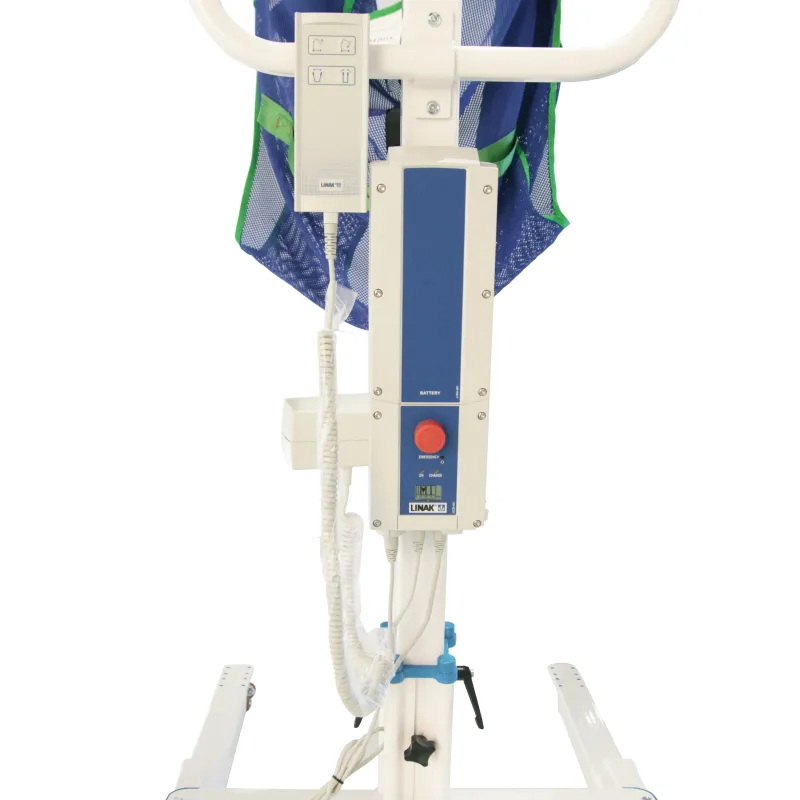
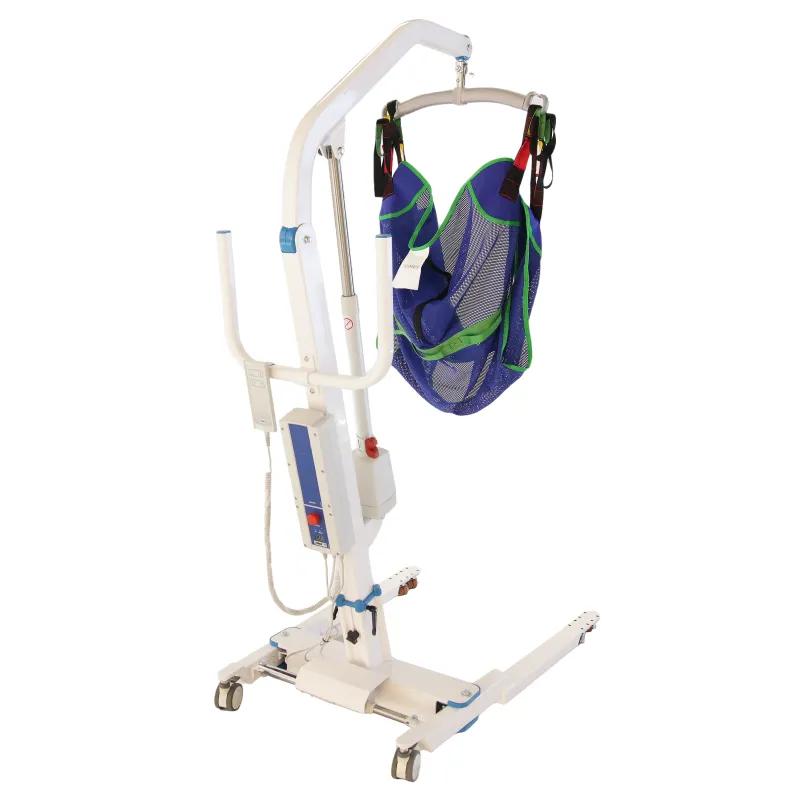
1. Electric Patient Lifts (Patient Hoists) — Can They Fully Replace Patient Lift Transfer Chairs?
These are "overhead-style" lifting tools commonly utilized in hospitals and care facilities, available in both electric and manual models.
Key Features:
• Capable of lifting patients directly from a bed
• Can facilitate transfers to wheelchairs, commode chairs, or stretchers
• Fully capable of supporting patients who are unable to maintain a seated position
Degree of Substitutability: ★★★★★ (Almost a complete substitute)
In the following scenarios, a powered patient lifter is more suitable than a patient lift transfer chair:
• The patient is completely unable to sit up
• The patient has a heavy body weight
• Frequent transfers between a bed and a stretcher are required
• The caregiver lacks sufficient physical strength
Advantages:
• Extremely high safety factor
• Can be used for patients unable to sit
• Reduces the risk of lower back injuries for caregivers
Disadvantages:
• Requires a significant amount of storage space
• Higher cost
• Involves more operational steps than a patient lift transfer chair
2. Sit-to-Stand Lift
A sit-to-stand lift is suitable for patients who retain some ability to stand; it assists patients in performing transfers such as:
• Bed to commode chair
• Bed to wheelchair
• Transfers within the bathroom/restroom
Degree of Substitutability: ★★★★☆ (Partial substitute)
Advantages:
• Rapid transfer process
• Highly suitable for rehabilitation care
• More lightweight and portable than a standard patient lift
Disadvantages:
• Requires the patient to retain some ability to stand
• Cannot be used for patients who are completely unable to stand
When a patient retains some leg strength but cannot stand independently, a sit-to-stand lift is more efficient than a patient lift transfer chair.
3. Folding Stretchers or Aluminum Alloy Stretchers
Stretchers are suitable for patients who cannot maintain a seated position; they are also used in accident situations, emergency rescue operations, or for transporting patients up/down stairs.
Degree of Substitutability: ★★☆☆☆ (Limited substitute)
Advantages:
• Suitable for patients who are completely bedridden
• Can be used in outdoor emergency situations
• Facilitates transport by multiple people
Disadvantages:
• Requires coordination among multiple people
• Not suitable for routine daily care
• Lacks lifting/raising functionality
Stretchers are suitable for short-distance transfers but are not appropriate as a long-term substitute for a patient lift transfer chair.
Can sliding aids serve as a substitute for a patient lift transfer chair?
Sliding aids are designed for "short-distance, localized" transfers, rather than for complete transfers between a bed and a chair.
1. Swivel Transfer Disc
This device assists patients in easily rotating their body direction while in a standing position.
Degree of Substitutability: ★★☆☆☆
Suitable Situations:
• The patient is able to stand.
• Assistance is needed to turn around.
Unsuitable Situations:
• Lifting/hoisting is required.
• Transfers between a bed and a chair are required.
This device functions primarily as a tool to assist with standing and turning; it cannot replicate the comprehensive transfer capabilities of a patient lift transfer chair.
2. Sliding Transfer Cushion (Swivel Seat Cushion)
Helps patients turn around easily while seated in a car seat or wheelchair, reducing friction.
Degree of Substitutability: ★☆☆☆☆ (Extremely Limited)
These devices assist patients in turning or changing direction, but they cannot facilitate a transfer from one surface level to another; therefore, they cannot serve as a substitute for a lift transfer chair.
Can Manual Assistive Tools Serve as a Transitional Substitute?
Certain simple manual tools can serve as temporary substitutes for patients with mild mobility impairments, but they lack the inherent safety features found in mechanical equipment.
1. Gait Belt (Transfer Belt)
Used to assist patients in standing up, walking, and moving short distances.
Degree of Substitutability: ★☆☆☆☆ (Mild Assistance)
Suitable for:
• Patients with mild mobility impairments.
• Short-distance transfers.
• Situations involving caregiver assistance.
Unsuitable for:
• Patients with moderate to severe mobility impairments.
• Situations requiring lifting/hoisting.
• Single-caregiver situations.
It cannot fulfill the majority of the application scenarios typically handled by a patient lift transfer chair.
2. Grab Bars, Bed Rails, and Toilet Safety Rails
These tools assist patients in standing up but cannot facilitate the actual transfer of the patient's body.
Degree of Substitutability: ★☆☆☆☆
They function as aids for standing and cannot perform the task of transferring a patient.
In common usage scenarios, which devices serve as the best substitutes for a patient lift transfer chair?
1. Patient Unable to Sit Up → Electric Patient Lift (Hoist) is the Best Substitute
If a patient is completely bedridden or unable to maintain a seated position, a patient lift transfer chair is no longer suitable; in such cases, an electric patient lift (hoist) is the optimal choice.
2. Patient Able to Partially Stand → Standing Lift (Stand-Aid) is a Viable Substitute
During rehabilitation or semi-care phases, a standing lift offers a more efficient and safe solution.
3. Limited Space Precludes Use of a Lift Transfer Chair → Transfer Board / Sliding Sheet
Particularly suitable for small bedrooms in private homes.
4. Requires only turning or changing direction → Transfer Disc / Sliding Cushion
Can be accomplished without the need for complex equipment.
5. Requires lateral transfer (Bed ↔ Stretcher) → Sliding Sheet or Stretcher
These devices reduce friction and are suitable for bedridden patients.
How to select an alternative to a patient lift or transfer chair based on specific needs?
Before selecting a device, the following factors should be evaluated:
1. Patient's Functional Level
• Can the patient sit up?
• Can the patient stand?
• Can the patient cooperate with the movements?
2. Caregiver's Capabilities
• Is care provided by a single person or multiple people?
• Has the caregiver received professional training?
3. Environment of Use
• Is the room narrow or confined?
• Is the floor level and suitable for wheeled movement?
4. Budget and Safety Requirements
• Is mechanical lifting required?
• Is the device intended for long-term use?
What types of hospital beds does Dayang Medical produce?
Dayang Medical manufactures both electric and manual hospital beds designed for comfort and functionality. As a reliable supplier, it ensures high-quality construction and compliance with medical standards. Buyers can choose from various models suitable for hospitals, clinics, and home care use.