

In the fields of medical care, elderly care, and home care, the "patient lift transfer chair" is an extremely important assistive device. It is widely used to assist people with limited mobility in safely transferring from bed to wheelchair, from wheelchair to bathroom, and from the floor to bed in various scenarios.
Many purchasers, caregivers, or family members often encounter confusion when searching for related products—they are looking for a "patient lift transfer chair," but see many different names online: patient transfer chair, transfer machine, lifting nursing chair, transfer lifting chair, nursing lift, assisted transfer chair, etc.
So, "What are some other names for a patient lift transfer chair?" This article will systematically explain its various common alternative names from a professional perspective, the reasons for the naming differences, and the usage characteristics of each name in the industry, thereby helping readers to more accurately understand, select, and search for this type of product.
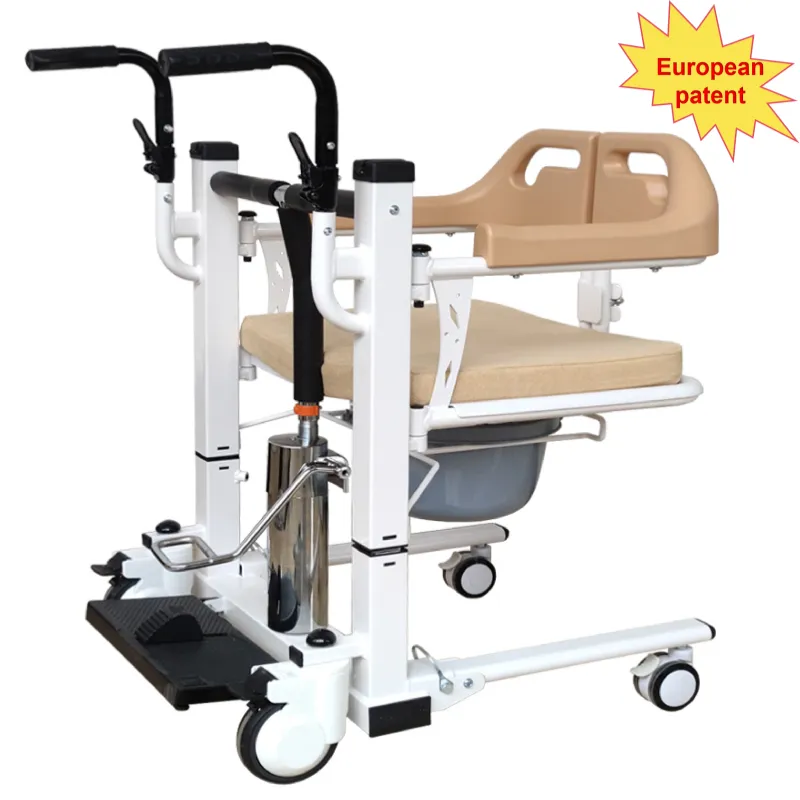
What is a "patient lift transfer chair"?
A patient lift transfer chair is a care device that integrates lifting, transfer, transportation, and seating support. Its core function is to raise and lower the patient using a mechanical structure (hydraulic, electric, or manual), followed by sliding, rotating, or moving functions to transfer the patient between different positions. Compared to traditional manual lifting, the patient lift transfer chair effectively reduces the risk of back injury, improves transfer efficiency, and significantly enhances patient safety and comfort.
Typical functions of a patient lift transfer chair include:
• Height adjustment: Adjustable height via a mechanical structure.
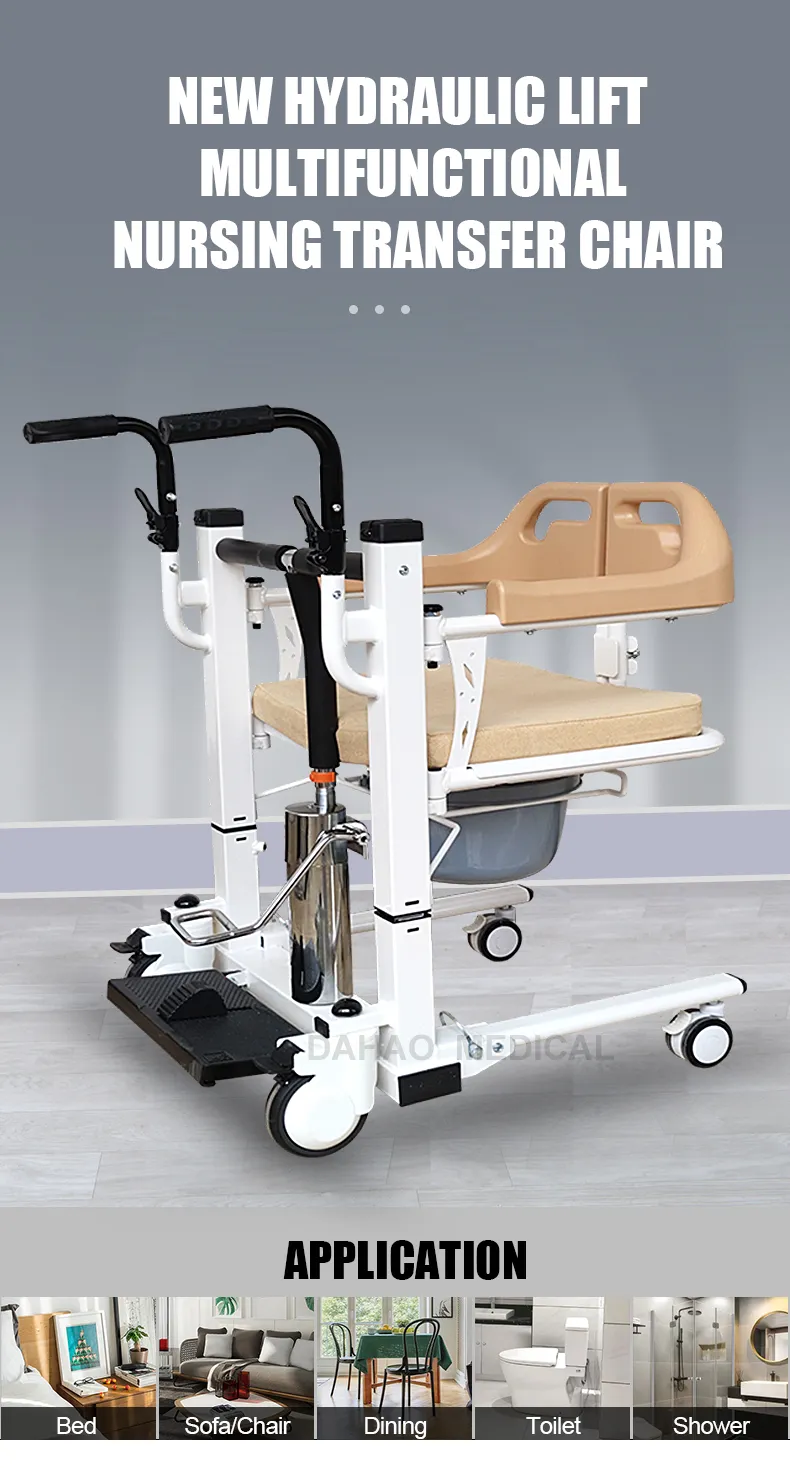
• Transfer function: Smooth transfer between beds, wheelchairs, toilets, etc.
• Transfer function: Equipped with casters for moving the patient.
• Seating support function: Provides a stable and safe sitting support system for the patient.
Due to its complex functions and wide range of applications, this type of product has spawned many different names in the industry.
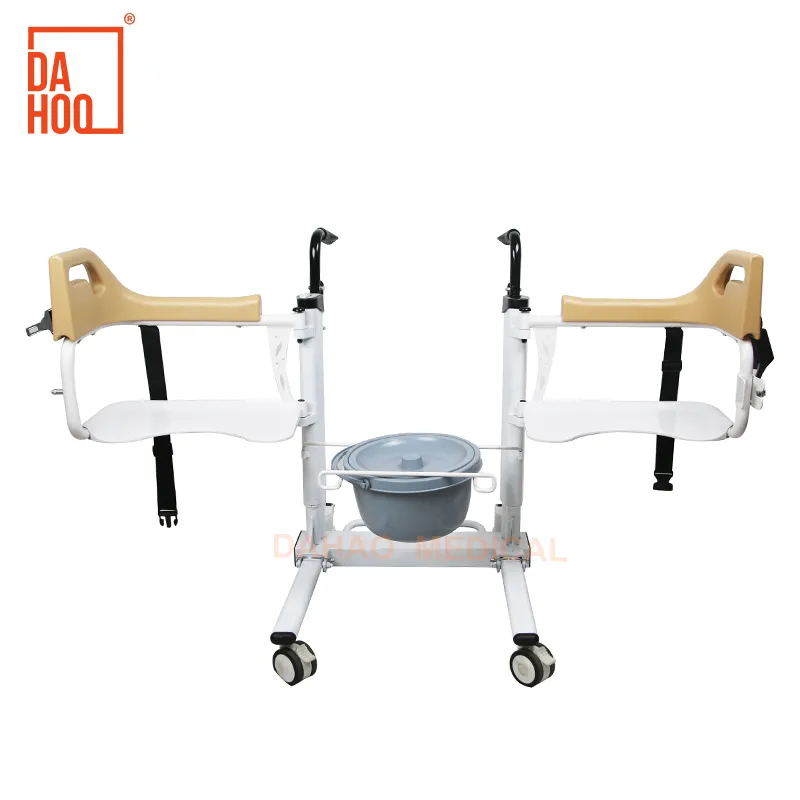
What are the main alternative names for a patient lift transfer chair?
This section systematically reviews common alternative names for different categories of patient lift transfer chairs, explaining the reasons for their appearance, focusing on the core question, "What other names does a patient lift transfer chair have?"
1. Alternative Names Focusing on "Transfer"
Many names emphasize the "transfer" function, hence the common industry and user terms:
• Patient Transfer Chair
• Transfer Chair with Adjustment
• Transfer Transport Chair
• Assisted Transfer Chair
• Electric Transfer Chair
• Nursing Transfer Chair
• Elderly Transfer Chair
These names mostly emphasize the product's key role in achieving lateral or vertical transfer.
For example, "patient transfer chair" is more suitable for searching for those seeking transfer care "from bed to wheelchair"; while "transfer chair with adjustment" emphasizes both lifting and transfer equally.
2. Names Emphasizing "Lifting"
Some nursing equipment suppliers use the lifting mechanism as a selling point, resulting in names like:
• Lifting Nursing Chair
• Electric Lifting Transfer Chair
• Lifting Transfer Machine
• Manual Lifting Transfer Chair
These names emphasize the device's mechanical lifting function, suitable for scenarios requiring "lifting" or "raising," such as transferring patients from the ground or from a low to a high position.
3. Names Emphasizing "Nursing" or "Caring"
When the product's use case focuses on elderly care or long-term bedridden patient care, the industry sometimes uses names more focused on the nursing field:
• Nursing Lifting Chair
• Elderly Nursing Transfer Chair
• Caring Lifting Transfer Chair
• Nursing Transfer Chair
These names are more readily accepted by home users, nursing homes, and nursing care centers because their meaning is closer to "care solutions."
4. Names Preferring "Equipment Model"
Some equipment is designed with a "rack-like structure" and is therefore often called:
• Patient transfer machine
• Patient lift
• Assistive transfer machine
• Transfer assistive machine
These names are often used in large hospitals, rehabilitation and nursing centers, and other specialized institutions, as they prefer to name medical assistive devices with "machine" rather than "chair."
5. Chinese Translations of Commonly Used International English Names
Since many products originate from the European and American markets, some names are derived from English translations:
• Patient transfer machine (Patient Transfer Lift)
• Patient lift (Patient Lift)
• Transfer chair with Lift (Transfer Chair with Lift)
These names are often used by cross-border buyers or foreign trade companies, emphasizing the international standardization of the product category.
Why are there so many different names for "patient lift transfer chair"?
Understanding the reasons for diverse naming helps in better using keywords and accurately searching for equipment. The following are some of the main reasons for this difference:
1. Differences in naming due to the multi-dimensional nature of product functions
The patient lift transfer chair integrates lifting, shifting, transporting, and support functions. Different manufacturers choose to emphasize different functions, leading to inconsistent naming.
For example:
• Emphasizing "movement" → Transfer chair
• Emphasizing "lifting" → Lifting chair
• Emphasizing "nursing" → Nursing chair
• Emphasizing "equipment nature" → Transfer machine
Therefore, the naming differences are essentially a difference in the interpretation of function.
2. Industry standards are not yet fully unified
Inconsistent standardized naming for this type of nursing equipment in different countries and regions results in multiple commonly used names existing in the industry.
3. Different Terminology for Different User Groups
Different groups have different focuses, resulting in various names. For example:
• Medical staff often call it a "patient transfer machine."
• Elderly care workers often call it a "senior transfer chair."
• Home users are more likely to accept "adjustable nursing chair."
• Foreign trade buyers often search for "patient lift transfer chair."
4. Marketing Factors Drive Naming Diversification
Manufacturers often optimize names based on market demand to better align with search habits, thereby gaining higher exposure and SEO benefits, which also contributes to name differences.
What is the difference between "patient lift transfer chair," "transfer machine," and "transfer chair"?
Many users are curious: "Is 'patient lift transfer chair' a transfer machine? Is it a transfer chair?"
These concepts are closely related but not entirely equivalent.
1. Patient lift transfer chair ≈ Transfer chair + lifting function + transport function
A "patient lift transfer chair" is a highly comprehensive product category, typically possessing:
• Lifting function
• Transfer function
• Mobility and transport function
• Seating support
Therefore, it is more advanced and multifunctional than a "transfer chair".
2. Transfer machines focus on the equipment frame and may not have a "chair structure"
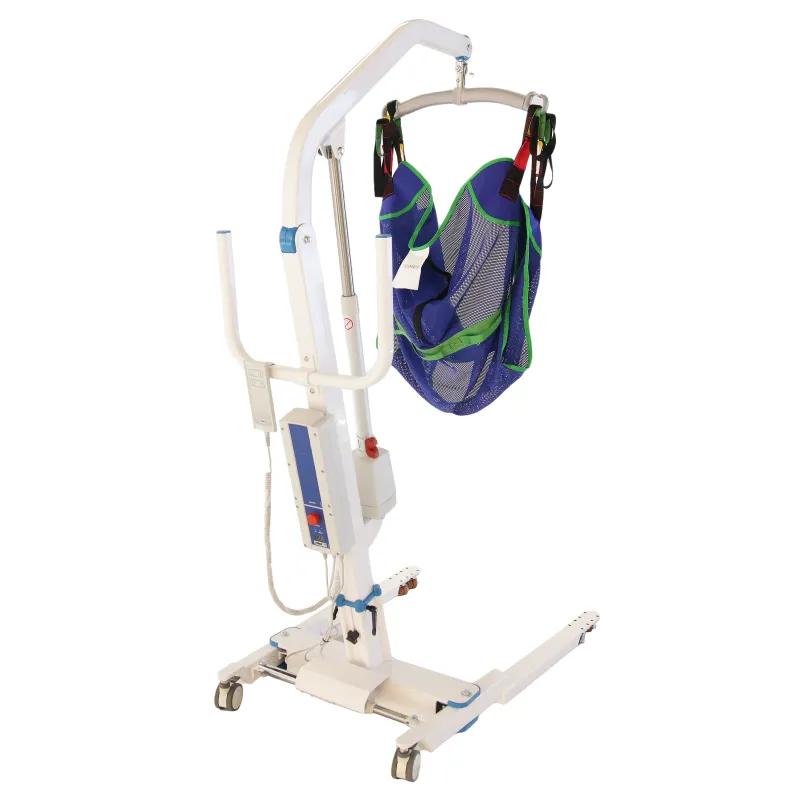
Transfer machines are usually "sling-type structures," achieving transfer through slings and a lifting frame, and may not have a chair structure.
3. Transfer chairs emphasize the "chair structure"
Transfer chairs usually include a seat, but may not have a complete lifting system.
In summary, the "patient lift transfer chair" has the strongest comprehensive capabilities, making it suitable for hospitals, nursing homes, and homes.
What is the difference between a patient lift transfer chair and a wheelchair?
While both allow patients to move while seated, they are fundamentally different:
• Wheelchairs are primarily for movement.
• Patient lift transfer chairs are primarily for transfer and elevation.
• The latter has a more comprehensive nursing assistance system, such as lifting, lowering, and obstacle crossing.
• Wheelchairs cannot perform bed-to-chair transfers, while patient lift transfer chairs can.
Therefore, patient lift transfer chairs far surpass ordinary wheelchairs in terms of nursing functionality.
Can a patient lift transfer chair replace caregivers?
It cannot completely replace them, but it can significantly reduce the burden on caregivers.
A patient lift transfer chair can:
• Reduce the lifting burden on caregivers.
• Improve the safety of patient transfers.
• Reduce the risk of lumbar spine injury for caregivers.
However, the operator still needs to be present to operate the equipment.
Which patients are suitable for a patient lift transfer chair?
Common suitable groups include:
• Stroke patients with hemiplegia
• Elderly patients with mobility impairments
• Patients who are bedridden for extended periods
• Post-operative rehabilitation patients
• Patients whose muscle strength has declined, rendering them unable to care for themselves.
Whenever a patient needs transfer assistance, a patient lift transfer chair can be useful.
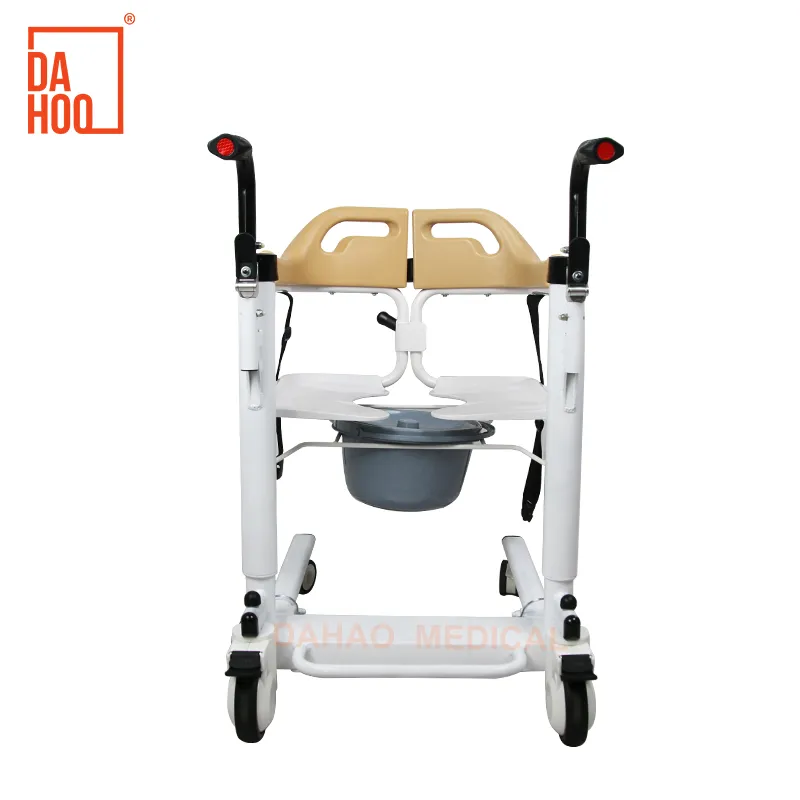
What are the common structural types of patient lift transfer chairs?
To help users distinguish between different types, here is an overview of several common structural designs.
1. Electric Lifting Patient Lift Transfer Chair
• Easy lifting and lowering
• More suitable for elderly care
• Effortless operation
2. Manual Hydraulic Patient Lift Transfer Chair
• Lower price
• Smooth lifting and lowering
• Commonly used for short-term hospital use
3. Multi-Scene Adaptable Patient Lift Transfer Chair
• Can be used with beds, toilets, and bathrooms
• Features an open base frame
• High practicality
How to choose the right patient lift transfer chair?
A suitable patient lift transfer chair needs to consider:
• Lifting method (manual/electric)
• Usage scenario (bedroom, toilet, bathroom)
• Seat structure (split/integrated)
• Load-bearing capacity
• Adjustable base frame
Correct selection can significantly improve nursing efficiency.
What makes Dayang Medical a top choice for buying medical equipment?
Guangdong Dayang Medical Technology Co., Ltd., established in 2009, is a leading manufacturer and supplier of medical devices in China. Our company produces a wide range of high-quality products, including electric wheelchairs, manual wheelchairs, sports wheelchairs, hospital beds, shower chairs, commodes, walking aids, and canes. We operate two advanced R&D and production bases, ensuring precise manufacturing and reliable supply. With certifications like ISO13485, ISO9001, FDA, TUV, and CE marks, we guarantee that every product meets international standards.