

In the process of caring for individuals with limited mobility, the question of "how to safely and effectively transfer a patient" is a central issue that simply cannot be avoided.
Whether moving from a bed to a wheelchair, a wheelchair to a toilet, or a room to a bathroom, every single movement carries potential risks.
Among the many assistive care devices available, the patient lifter and the patient transfer chair are two of the most frequently mentioned products.
While both appear to "help patients move," they actually differ fundamentally in terms of their functional purpose, method of use, safety mechanisms, and the specific populations they serve.
So, the question arises:
What exactly is the difference between a patient lifter and a patient transfer chair?
And—whether for home care or institutional care—which one do you actually need?
This article will address this question by providing a systematic analysis from a professional caregiving perspective, helping you make a clear and informed decision regarding your choice.
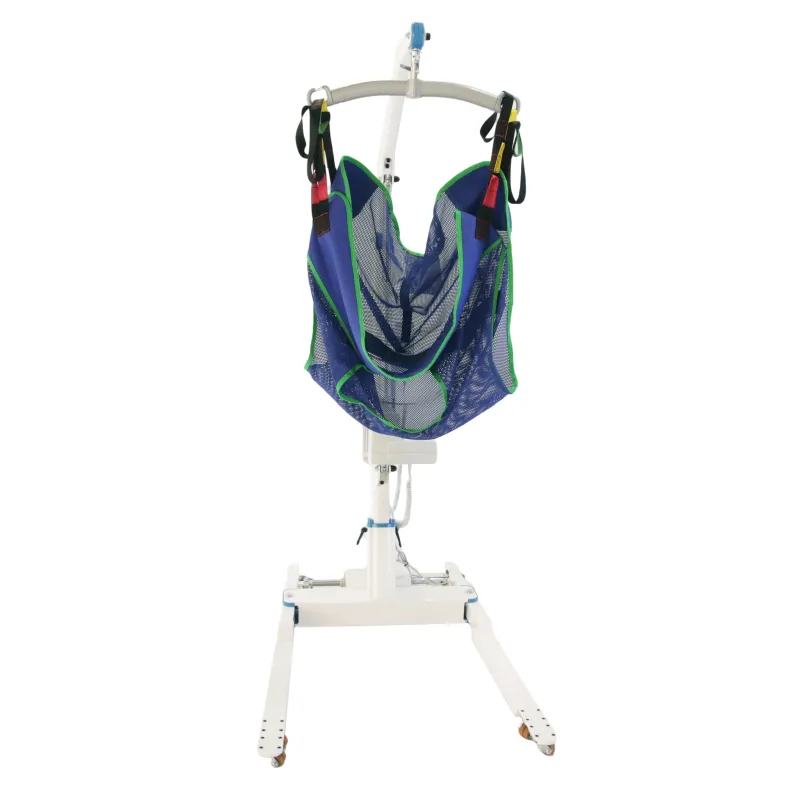
What is a Patient Lifter?
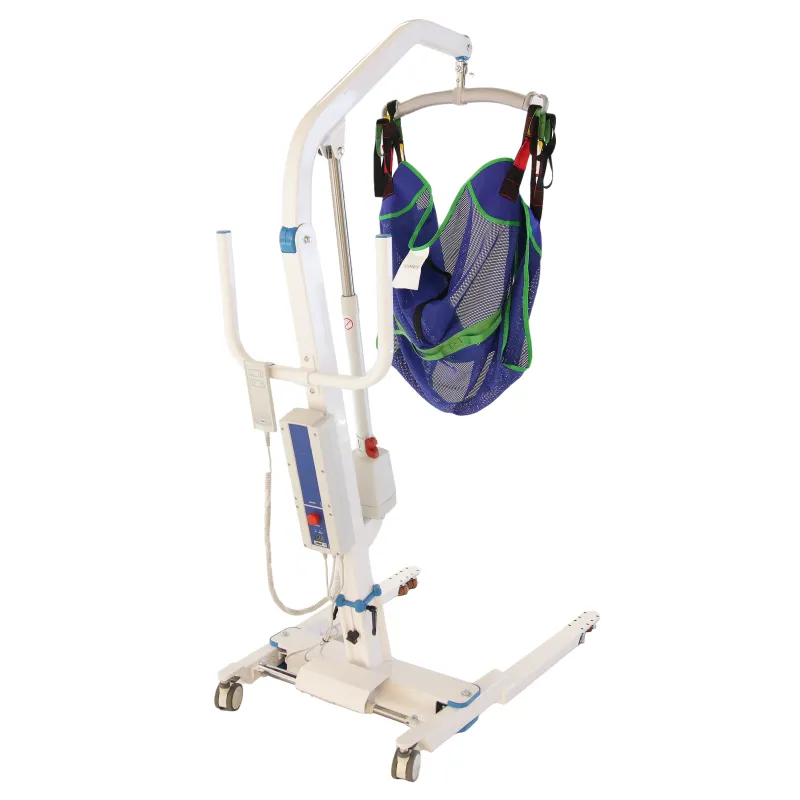
A patient lifter is an assistive care device designed to lift, suspend, and transfer patients who are unable to stand or walk independently.
Utilizing a sling system, it lifts the patient's body to facilitate a safe transfer from one location to another.
The core characteristics of a patient lifter are:
•It lifts the patient.
•The patient remains in a suspended or semi-suspended state during the transfer process.
•It requires no active physical exertion from the patient.
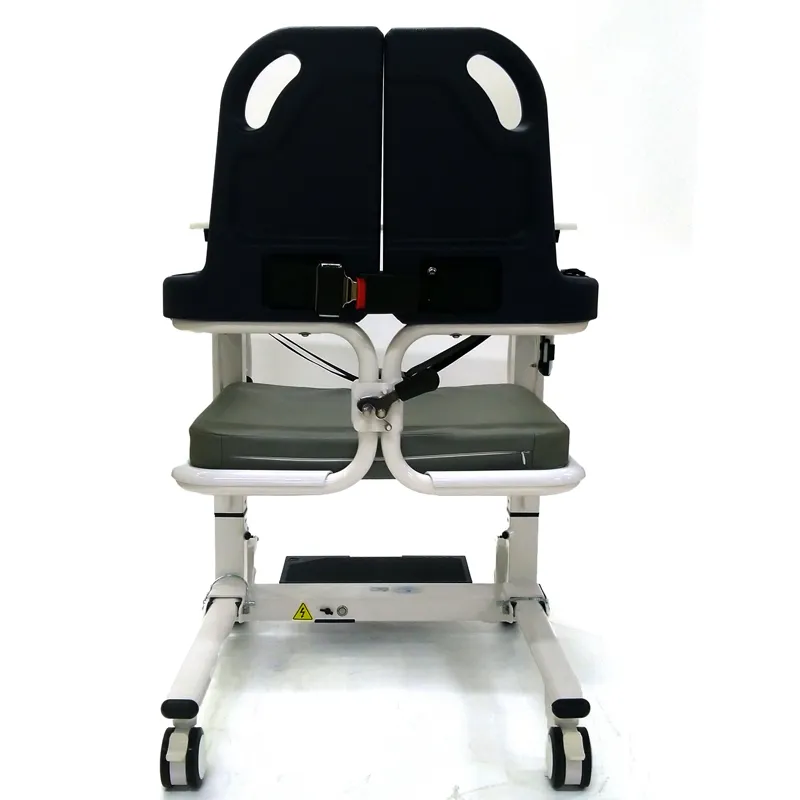
What is a Patient Transfer Chair?
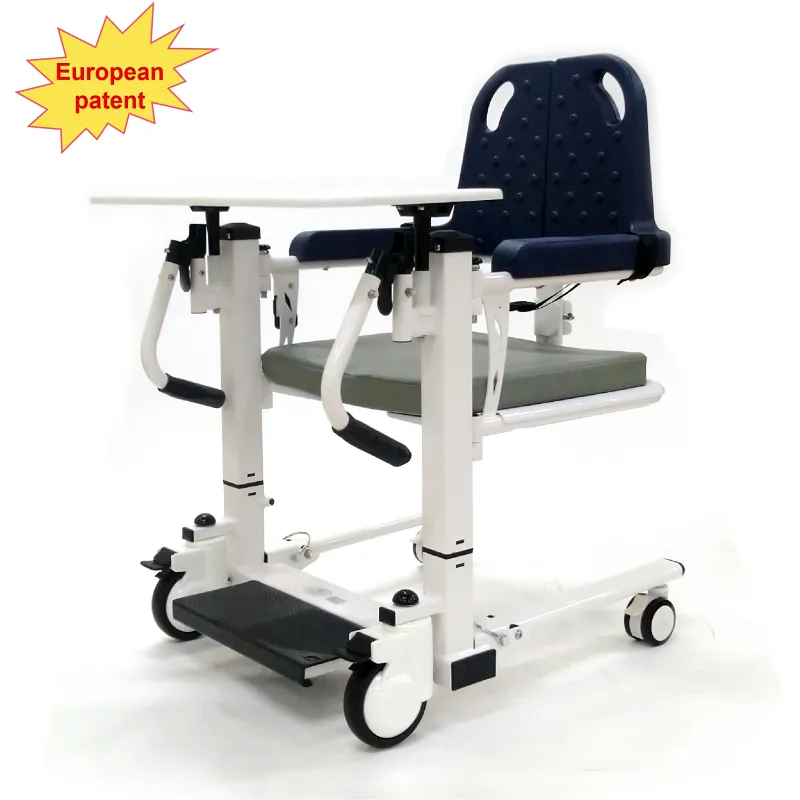
A patient transfer chair is a mobility aid designed around a "seated" posture.
It typically resembles a wheelchair in appearance, but its design focuses specifically on short-distance transfers rather than prolonged sitting.
The core characteristics of a patient transfer chair are:
•The patient must be seated in the chair.
•It does not possess a suspension or lifting capability.
•It typically requires the patient to possess some ability to sit upright or to cooperate with the transfer process.
What is the Core Functional Difference Between a Patient Lifter and a Patient Transfer Chair?
Although both devices are used to "move patients," they address entirely different problems.
1. The Patient Lifter Solves the Problem of "How to Lift"
The primary objective of a patient lifter is this:
When a patient is unable to stand up, sit up, or cooperate with a transfer on their own, how can they be safely lifted and moved?
Therefore, the primary focus of a patient lift is:
•Load-bearing capacity
•Lifting stability
•Sling support structure
•Operational safety for caregivers
2. Patient Transfer Chairs Address the Question: "How to Move the Patient While Pushing?"
The focus of a patient transfer chair lies in:
Once the patient is seated, how can they be rapidly transported between different spaces?
Consequently, it prioritizes:
•Maneuverability
•Smoothness of movement
•Braking and directional control
•Spatial clearance (ability to pass through tight spaces)
Can a patient lift replace a patient transfer chair?
The answer is: No, it cannot fully replace it.
The reasons are as follows:
•Patient lifts are designed for "lifting + transferring," but are not suitable for being pushed over long distances.
•Patient transfer chairs are designed for "pushing + transporting," but are unable to perform lifting actions.
From a functional perspective, these two devices are not in competition; rather, they represent distinct solutions tailored to different care scenarios.
Can a patient transfer chair replace a patient lift?
Similarly, the answer to this question is also: No.
If a patient presents with any of the following conditions:
•Inability to stand independently
•Inability to cooperate with a seated transfer
•Significant body weight
•Severe lack of muscle strength
Then, a safe transfer cannot be accomplished using a patient transfer chair alone.
In such instances, attempting to force the use of a transfer chair would actually increase the risk of falls or muscle strains.
Which patients are best suited for a patient lift?
Based on their functional characteristics, patient lifts are best suited for the following groups:
•Patients who are completely or almost completely unable to stand
•Individuals who are bedridden for extended periods
•Patients undergoing rehabilitation for critical illnesses
•Elderly individuals with significantly diminished muscle strength
•Situations during caregiving that specifically require "lifting"
The key advantage of a patient lift is:
It does not require the patient to exert any physical effort, thereby minimizing human-related risks.
Which patients are best suited for a patient transfer chair?
Patient transfer chairs are best suited for patients who possess a certain level of basic physical capability—for example:
•Patients who can sit stably
•Individuals capable of standing briefly or cooperating with the act of sitting down
•Patients requiring short-distance transfers within a room or corridor
The primary emphasis of a patient transfer chair is:
Transfer efficiency, rather than lifting capability.
In terms of safety, what are the differences between a patient lift and a patient transfer chair?
1. The Safety Logic of Patient Lifts
The safety of a patient lift is established on the following foundations:
•Multi-point load-bearing support from the sling
•Controllable lifting speed
•The patient remains fully supported by the device at all times
Provided that the sling is correctly positioned and securely fastened, the patient lift relies almost entirely on the device itself—rather than the patient's own physical capabilities—during the transfer process.
2. The Safety Logic of Patient Transfer Chairs
The safety prerequisites for a patient transfer chair are:
•The patient must be able to maintain a stable seated posture
•Assistance from a caregiver is required during the process of getting into or out of the chair
•The brakes must be promptly engaged and locked during use
If the patient is unable to sit steadily or cannot cooperate with the caregiver, the safety level of the transfer chair is significantly compromised.
In terms of operational complexity, which device is easier to use?
This depends on "who is using it."
For caregivers:
•Patient lifts involve more operational steps but require less physical exertion.
•Patient transfer chairs are simpler to operate but rely more heavily on manual effort.
For patients:
•Patient lifts require almost no active cooperation from the patient.
•Patient transfer chairs require the patient to actively participate by maintaining a seated posture.
Therefore, "ease of use" alone should not be the sole criterion for making a selection.
Do spatial constraints and the surrounding environment influence the choice between a patient lift and a patient transfer chair?
Yes, and the impact is significant.
1. Spatial Requirements for Patient Lifts
•Require a certain amount of open space for operation
•The base must be able to maneuver close to a bed or wheelchair
•Have a relatively large turning radius
2. Spatial Requirements for Patient Transfer Chairs
•Better suited for narrow passageways
•Allow for flexible turning and maneuvering
•Easier to navigate in and out of elevators and corridors
Consequently, in environments with limited space, a patient transfer chair offers distinct advantages;
Conversely, in bedside care scenarios, a patient lift is often indispensable.
Regarding the physical burden on caregivers, what are the differences between the two devices?
From the caregiver's perspective:
Patient Lifts
•Significantly reduce physical strain
•Lower the risk of lower back and spinal injuries
Patient Transfer Chairs
•Place higher demands on physical strength
•Still require manual assistance during the process of getting the patient into or out of the chair
If the patient is heavy or requires frequent transfers, a patient lift is a more caregiver-friendly option.
In a home care setting, should priority be given to a patient lift or a patient transfer chair?
There is no absolute answer to this question, but you can make an informed decision based on the following logic:
Is lifting required?
•Yes → Patient Lift
•No → Patient Transfer Chair
Can the patient sit upright stably?
•Yes → Patient Transfer Chair
•No → Patient Lift
Is the caregiver's physical strength limited?
•Yes → A Patient Lift is more suitable
Can a Patient Lift and a Patient Transfer Chair be used in combination?
In many care settings, the answer is: Yes—and it is a highly practical approach.
The common usage logic is as follows:
•Use the Patient Lift to perform the lift from bed to chair
•Then use the Patient Transfer Chair to facilitate short-distance movement
This combination strikes an optimal balance between safety and efficiency.
Patient Lift vs. Patient Transfer Chair: Which one do you need?
Based on the systematic analysis above, a clear conclusion emerges:
Patient Lift
•Solves the problem of "being unable to lift" the patient
•Safer and requires less physical effort
•Suitable for individuals with severe mobility impairments
Patient Transfer Chair
•Solves the problem of "pushing and moving" the patient
•More flexible and efficient
•Suitable for individuals capable of maintaining a seated posture
If the patient is unable to stand independently or cooperate with the transfer process, a Patient Lift is an essential piece of equipment. If the patient is already seated stably and only requires short-distance movement, a Patient Transfer Chair is the more appropriate choice.
The key to making the right choice lies not in asking "which one is better," but rather in determining—which one best aligns with the patient's actual physical capabilities and the specific care environment.