

In medical care, long-term care, rehabilitation care, nursing homes, and home care, the patient lift transfer chair is an indispensable assistive device for improving transfer efficiency and ensuring patient safety.
However, when actually purchasing a patient lift transfer chair, many people encounter a crucial question: is a seated patient lift transfer chair more suitable, or is a sling-style patient lift more appropriate?
While both types of patient lift transfer devices can help transfer people with limited mobility, their operation methods, structural designs, target populations, safety features, and user experience differ significantly.
To help readers understand and choose correctly, this article will systematically analyze the differences between patient lift transfer chairs and patient lifters from multiple perspectives and provide a complete professional discussion on the topic.
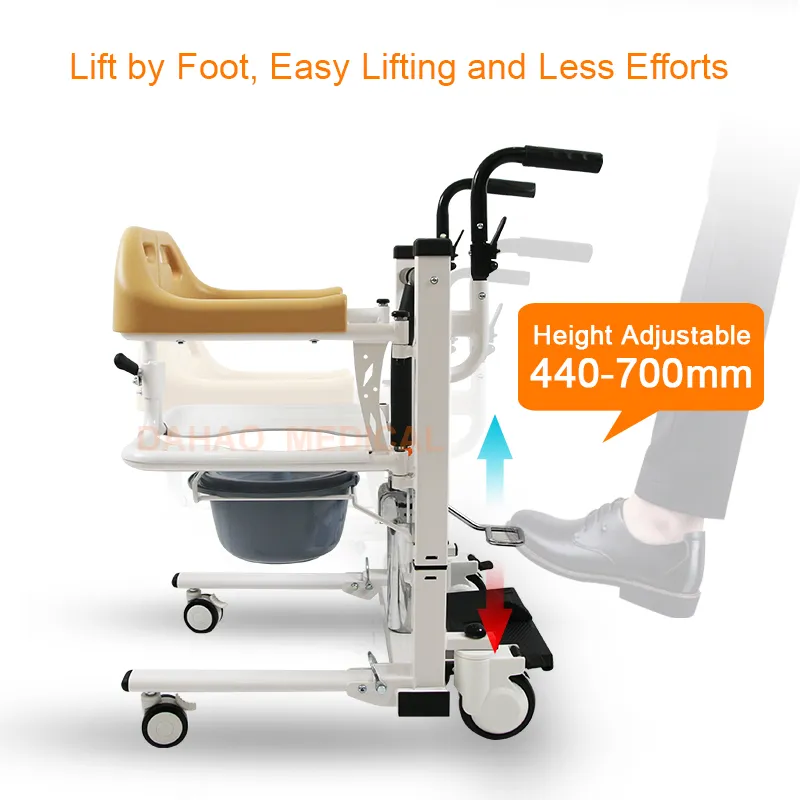
What is a patient lift transfer chair?
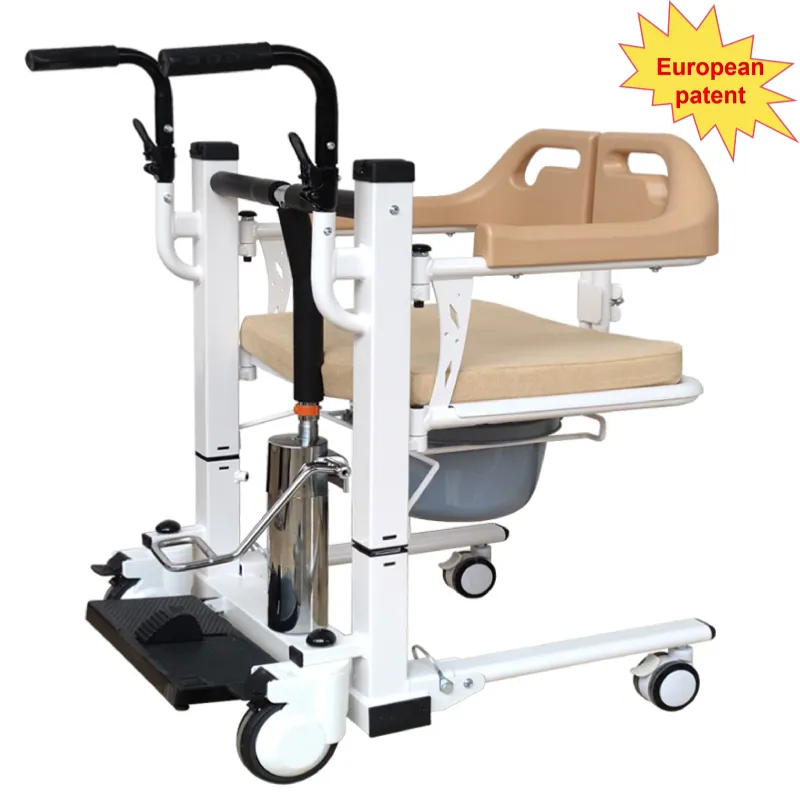
A seated patient lift transfer chair typically refers to a device with a complete seating structure, where the patient remains seated and supported by the chair throughout the transfer.
It typically features the following characteristics:
• A sturdy seat
• Armrests or safety railings on both sides
• Lifting mechanism (electric or hydraulic)
• An expandable or adjustable base suitable for bedside, toilet, and other locations
• Wheels for short-distance transport
A seated patient lift transfer chair is typically used for:
• Moving patients from bed to wheelchair
• Moving patients from wheelchair to toilet or bathroom seat
• Lifting support from low to high positions
• Moving patients across areas during routine care
Its design is more like a "multi-purpose nursing chair with lifting function," especially suitable for patients with relatively stable upper limbs who can maintain a seated posture.
What is a sling patient lifter?
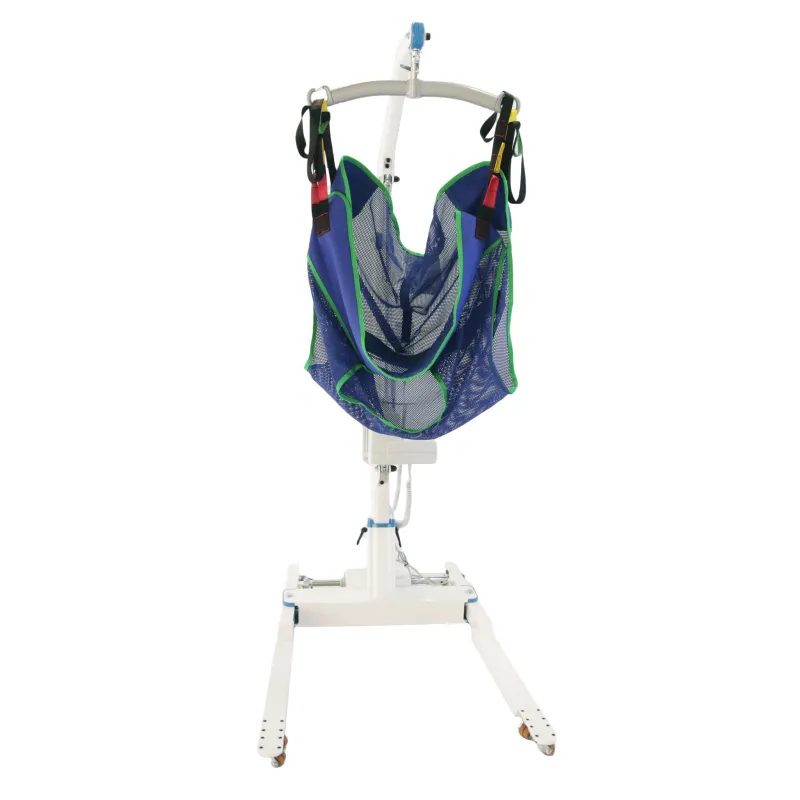
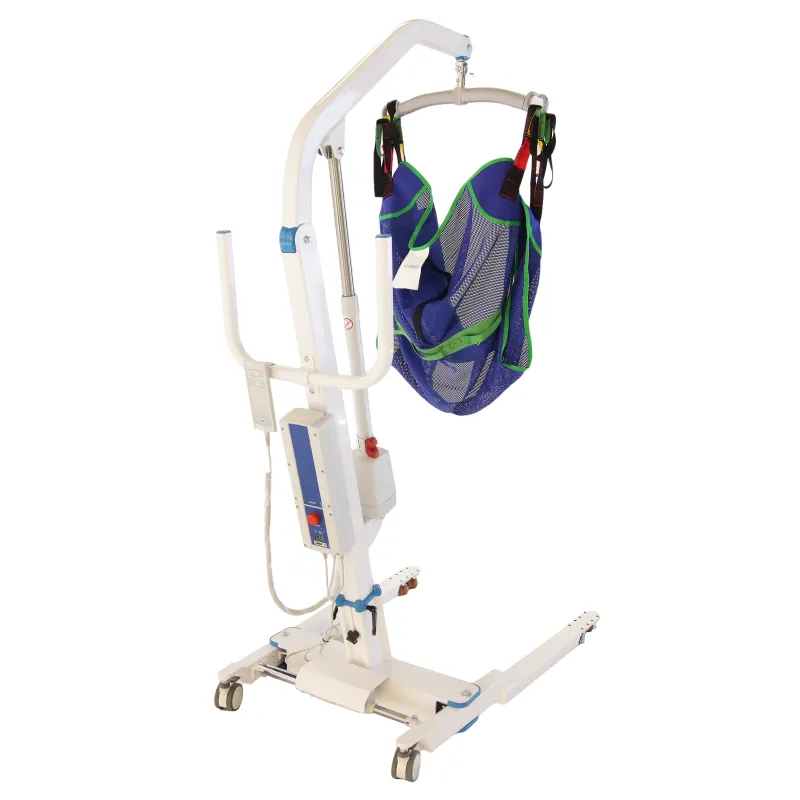
A "sling patient lifter" is often referred to as a sling-type patient lifter, sling transfer machine, etc.
Its structural components include:
• Lift arm
• Lifting motor or hydraulic pump
• Slings or slings
• Wheeled base
In use, the patient is wrapped or supported by the slings, lifted by the lift arm, and then moved to the destination position at the bottom.
The sling-type patient lift is suitable for:
• Patients who are completely unable to stand
• Patients with extremely weak muscles
• Users who need to be transferred from different heights such as beds, the ground, and wheelchairs
• Severely disabled patients or long-term bedridden patients
The suspended structure allows for transfer with almost no active effort from the patient, making it a very powerful nursing aid.
Transfer chair vs. sling-type transfer machine: What's the difference?
The main structure of a lift transfer chair is a "chair," including the seat, backrest, safety rails, and adjustable base. Its working mode allows the patient to be transferred while seated and supported.
The core structure of a suspended patient lift is the "sling system." The patient is suspended in the air by the slings, and the transfer is completed by the lifting and moving of the lift arm.
Structurally, a seated patient lift transfer chair is more like a "mobile lifting chair," while a suspended patient lift is more like a "nursing hoist."
What are the differences in user experience between the two for patients?
Differences in patient experience are a primary concern for many families when purchasing a patient lift transfer chair.
Characteristics of a Seated Patient Lift Transfer Chair:
• Natural posture, less likely to cause fear
• Almost no feeling of swaying
• More friendly to patients with mild upper limb weakness
• More stable, comfortable, and safe
• More suitable for frequent daily transfers
Patients generally find it more in line with their daily routines.
Characteristics of a Suspended Patient Lift:
• The patient is completely suspended, resulting in slight swaying
• May be uncomfortable for people who are psychologically unstable or anxious
• But very safe for disabled patients
• Enables highly flexible posture support
• Can be used for re-lifting after a fall
If the patient cannot sit steadily, the suspended device is significantly more suitable.
Which patient lift transfer device is more labor-saving for caregivers?
The physical exertion during transfers is crucial for caregivers and family members.
Labor-saving advantages of a seated patient lift transfer chair:
• Patients need some ability to sit upright.
• Caregivers may need assistance when seating the patient.
• Suitable for cooperative users.
• Very easy to use when the bed height is similar.
Overall, a seated patient lift transfer chair is very labor-saving in most home care scenarios.
Labor-saving advantages of a sling-type patient lift:
• Can transfer completely powerless patients.
• Caregivers do not need to lift or carry the patient.
• Can be easily transferred from the floor, bed, wheelchair, sofa, etc.
Its advantage is that it "almost completely replaces the manual lifting action."
If the patient is severely disabled, a sling-type patient lift further reduces the burden of care.
Which patient lift transfer device is more suitable for the elderly?
When choosing equipment, consider the patient's condition:
1. What equipment is more suitable for the elderly?
If the elderly person can still maintain some sitting ability and is not completely disabled:
→ A seated patient lift transfer chair is more suitable.
If the elderly person cannot sit steadily, has extremely weak muscles, or is paralyzed:
→ A sling-style patient lift is safer.
2. What about patients in the rehabilitation phase?
Rehabilitation patients usually require highly involved and active mobility methods, therefore:
→ A seated patient lift transfer chair is more practical, comfortable, and natural.
Lift transfer chair vs. Patient Lifter: What are the differences in safety?
This is one of the factors that many users are most concerned about.
Safety features of a seated lift transfer chair:
• Equipped with safety railings
• The patient is fully enclosed by the chair
• High stability in sitting position
• No swaying or floating
More suitable for users sensitive to stability.
Safety Features of the Sling-Type Patient Lifter:
• The sling provides all-around support for the patient.
• Suitable for those completely unable to sit upright.
• No risk of falling (when the sling is used correctly).
• Can be safely lifted from the ground without causing secondary injury.
The sling type is more suitable for patients who cannot manage their own sitting posture.
Two Types of Patient Lift Transfer Equipment: What are the differences in applicable scenarios?
Seated Lift Transfer Chair Applicable Scenarios
• Bed ↔ Wheelchair
• Bed ↔ Toilet
• Bedroom ↔ Bathing Area
• Daily care in nursing homes
• Long-term home care
Suitable for daily short-distance, high-frequency movements.
Sling-Type Patient Lifter Applicable Scenarios
• From the ground to the bed
• From the bed to the chair
• Patients who are almost unable to sit upright
• Nursing homes or hospitals
• Nursing scenarios involving multiple angles and heights
The sling type is the preferred solution for patients who are completely unable to sit.
Which type of transfer device is more readily accepted by users?
In terms of psychological acceptance and ease of operation:
• Seated transfer chairs are more in line with daily life and are more easily accepted by the elderly.
• Patient lifters with straps are more like professional care equipment and may cause anxiety.
Most family caregivers prefer the seated structure when using lift transfer devices for the first time.
What are the differences in maintenance and cleaning between the two?
• Seated transfer chairs mainly require cleaning the seat, armrests, and base.
• Patient lifters with straps require cleaning the straps and checking for wear and tear.
Shoulders are consumables and need to be replaced regularly. The maintenance cost of seated structures is generally lower.