

In a home care setting, assisting individuals with limited mobility with transfers is a frequent and high-risk nursing task. Whether transferring from bed to a wheelchair, or assisting with toileting, cleaning, or repositioning, relying solely on manual lifting poses a risk of injury not only to caregivers but also to the user, who may fall or slip.
Therefore, patient lifters have gradually become an indispensable piece of equipment in home care. However, many families still have questions after purchasing a patient lifter:
• What precautions should be taken when using a patient lifter at home?
• Are the operating procedures complicated?
• How can a patient lifter be used safely and correctly?
This article will systematically explain how to use a patient lifter correctly at home from a practical perspective, helping caregivers establish standardized, repeatable, and low-risk operational knowledge, allowing the patient lifter to truly realize its intended value.
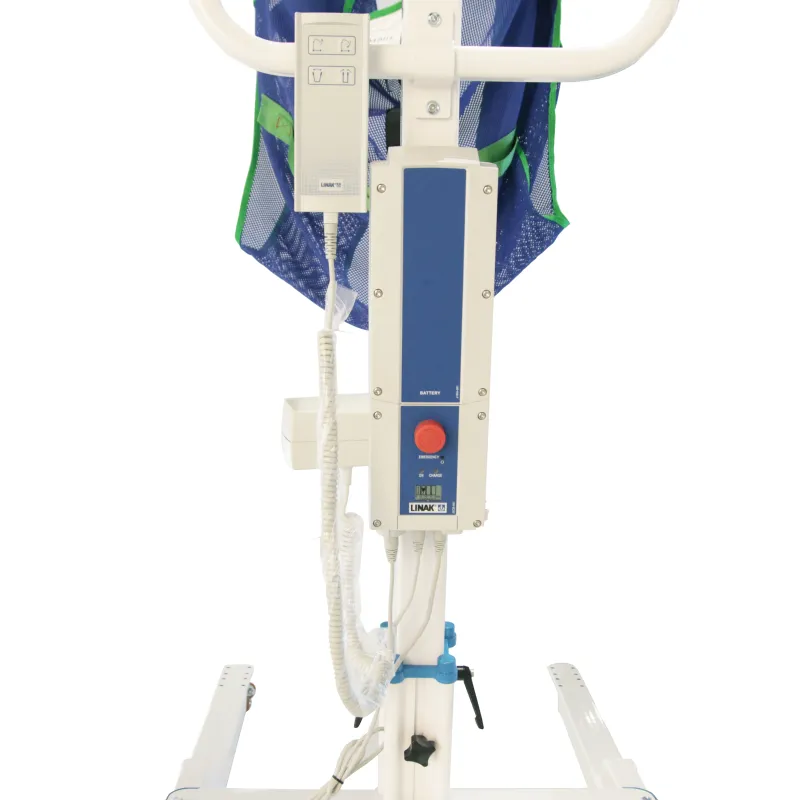
Why must patient lifters be used "correctly" at home?
Many people believe that simply having a patient lifter will automatically solve the transfer problem. However, from a professional nursing perspective, the equipment itself cannot guarantee safety; correct use is key.
In a home environment, caregivers are usually not professional nurses. If they lack a systematic understanding of the patient lifter's structure, operating logic, and precautions, new risks may arise, such as:
• Improper sling installation
• Incorrect center of gravity judgment
• Disorganized operating sequence
• Failure to assess ground or space conditions
Therefore, "knowing how to use it" and "using it correctly" are equally important for patient lifters.
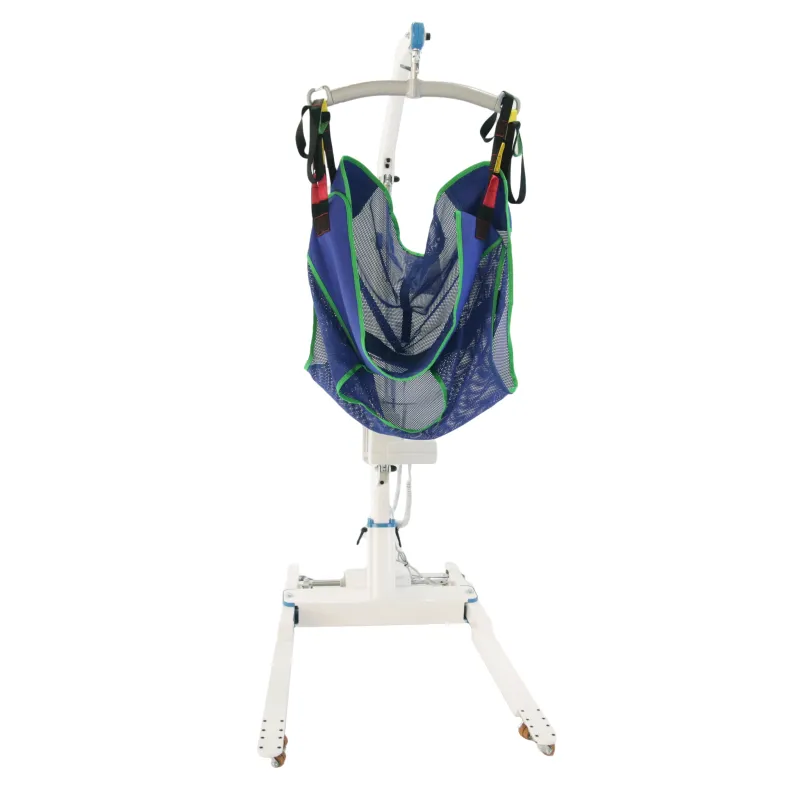
What are the main operating scenarios for patient lifters in the home?
Before formally explaining how to use a patient lifter correctly, it's essential to clarify its primary purpose in the home.
In a home setting, patient lifters are typically used for the following procedures:
• Bed to wheelchair transfer
• Bed to toilet or commode transfer
• Bed to sofa transfer
• Assisted transition from lying to sitting position
• Posture adjustment during nursing care, cleaning, and bed changing
These procedures share a common characteristic: high weight-bearing capacity, significant shifts in center of gravity, and high risk of manual operation. This is precisely the purpose of a patient lifter.
What preparations are needed before using a patient lifter at home?
Using a patient lifter correctly doesn't begin with "pressing a button," but with preparation before use.
1. Is it necessary to check the patient lifter's condition before use?
Yes, this is a crucial step.
Before each use of the patient lifter, it is recommended to check the following:
• The frame is stable.
• The base is fully extended and locked.
• The lifting mechanism operates smoothly.
• The slings are intact, without tears or wear.
• The sling hooks are secure.
These checks help avoid risks caused by equipment malfunctions.
2. Is a home environment assessment necessary before using the patient lifter?
Yes, an assessment is necessary.
The home environment differs from a medical facility, and space conditions directly affect the safe use of the patient lifter.
Before use, confirm the following:
• The floor is level and non-slip.
• The transfer path is unobstructed.
• The height of the bed, wheelchair, and toilet is suitable.
• There is sufficient turning space.
Good environmental preparation is an important prerequisite for the correct use of the patient lifter.
What is the correct sequence for using a patient lifter?
In home care, a fixed and clear operating sequence can significantly reduce the probability of misoperation. The following is a general basic logical flow.
How to correctly put on the patient lifter sling for the user?
The sling is the most crucial connection between the patient lifter and the user; its proper wearing directly affects safety and comfort.
Basic principles for wearing a sling include:
• The sling must be fully extended.
• The weight distribution on the body should be even.
• The lower edge of the sling should support the groin area.
• The back area should fit snugly but not excessively.
During wear, avoid twisting, folding, or uneven weight distribution in the sling, as this can easily cause instability during lifting and lowering.
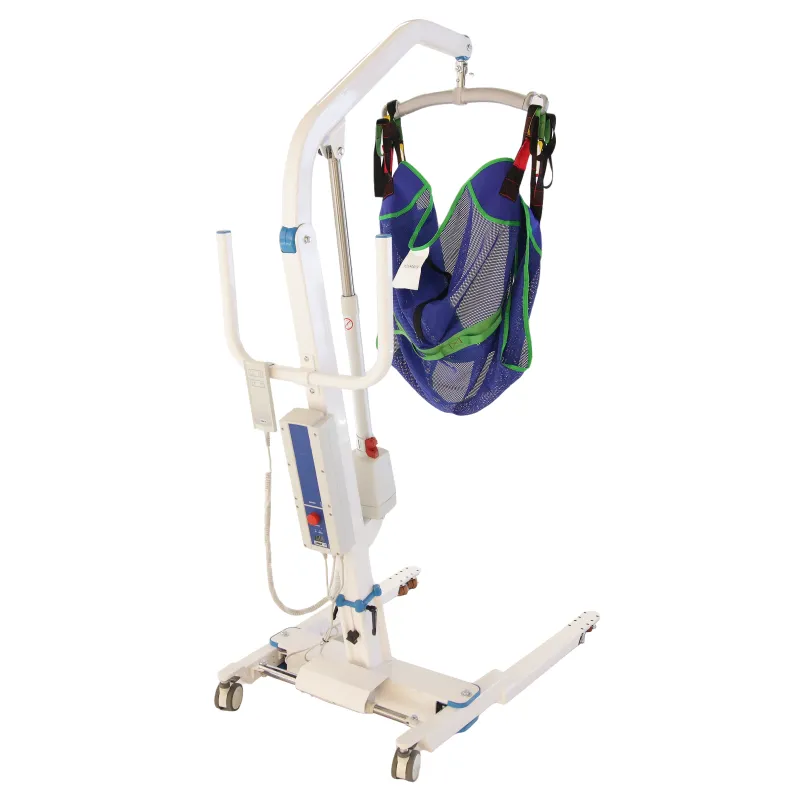
What should be noted during patient lift lifting and lowering?
1. Is faster lifting and lowering better?
No. The lifting and lowering of the patient lift should be smooth and controllable. Excessive lifting and lowering speed can easily cause:
• User tension
• Sudden changes in center of gravity
• Abnormal weight distribution in the sling
In home care, a stable and slow lifting and lowering rhythm should always be chosen.
2. What details should be observed during lifting and lowering?
When operating a patient lifter, pay close attention to:
• Whether the user's body is tilted
• Whether the harness is slipping
• Whether the attachment points are symmetrically stressed
• Whether the user shows any signs of discomfort
If any abnormality is detected, stop lifting and readjust immediately.
How to maintain the stability of the patient lifter during transfer?
The stability of the patient lifter depends on several factors:
• The extent to which the base is extended
• Ground friction
• The user's center of gravity
• The rhythm of operation
In home use, ensure that:
• The base is fully extended
• Do not operate on slopes or in carpet folds
• Avoid sudden movement of the device during lifting.
Stability is crucial for the safe use of a patient lifter.
How should the patient lifter be operated when transferring to the target location?
When transferring a user to a target location (e.g., above a wheelchair), follow these steps:
1. Ensure the target location is secured (e.g., wheelchair brakes)
2. Lower slowly
3. Ensure the user's buttocks are fully in contact with the target seat surface
4. Completely release the weight from the harness
5. Then remove the harness.
Avoid removing the harness or moving the equipment before the user is fully seated.
Is a post-use inspection necessary?
Many people overlook the "post-use inspection," but it's equally important.
After use, it is recommended to:
• Check the harness for any signs of pulling
• Ensure the hooks are not deformed
• Return the patient lifter to its original position, avoiding obstruction of passage
• Ensure the equipment is stored safely
These habits help maintain the long-term stability of the patient lifter.
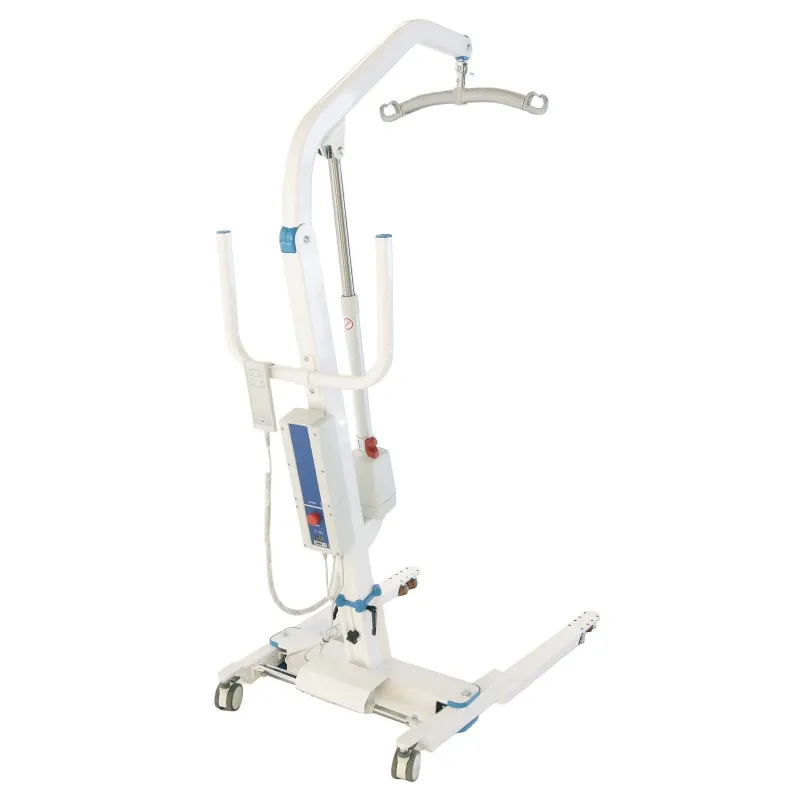
What are some common mistakes when using a patient lifter at home?
To help you better understand "correct use," here are some common but avoidable practices in the home:
• Operating by feel, not following the steps.
• Starting to lift or lower without fully extending the sling.
• Using the patient lifter on uneven ground.
• Using an incompatible sling size.
• Being distracted or leaving the machine unattended during operation.
Avoiding these mistakes is crucial for safe use of the patient lifter.
Can a patient lifter be operated by one person?
In a home care environment, many patient lifters are designed for single-person operation. However, this is contingent on:
• The user's weight being within the machine's load-bearing capacity.
• The operator being familiar with the complete operating procedure.
• Home environment conditions permitting.
If unfamiliar with operation, it is recommended to have two people operate the lifter to increase safety margins.
How to extend the lifespan of a patient lifter through proper use?
Correct use of the patient lifter is not only related to safety but also directly affects the lifespan of the equipment.
Good usage habits include:
• Avoid overloading
• Avoid rapid, impactful operations
• Regularly check the straps and connection points
• Keep the equipment clean and dry
These practices help the patient lifter maintain stable performance over the long term.
What is the role of the patient lifter in home care?
It needs to be clear that: The patient lifter is not a substitute for caregivers, but rather an important auxiliary tool in the care process.
Its functions include:
• Bearing weight
• Stabilizing the center of gravity
• Reducing physical exertion
• Improving operational controllability
Proper use of the patient lifter is an important manifestation of professionalization in modern home care.