

In the contexts of medical care, rehabilitation, and long-term bedridden care, the question of "how to safely transfer patients who cannot stand" remains a highly challenging issue. When patients have completely lost the ability to stand—or are unable to cooperate with transfer movements—traditional manual lifting methods are not only inefficient but also carry extremely high safety risks.
Precisely for this reason, patient lifts have gradually become an indispensable core piece of equipment within professional care systems. They provide a safer, more stable, and more controllable method of transfer for patients who cannot stand, while simultaneously significantly reducing the physical strain on caregivers.
Focusing on the central question of "how to transfer patients who cannot stand," this article will approach the subject from the perspective of professional care equipment. It will systematically and in-depth analyze the critical role that patient lifters play in meeting such transfer needs, helping readers gain a scientific and clear understanding of the subject.
Why Is Transferring Patients Who Cannot Stand More Difficult?
In nursing practice, a patient's ability to stand serves as a crucial dividing line in determining the difficulty of a transfer.
For patients who cannot stand, the transfer process typically presents the following characteristics:
•The patient is unable to bear their own body weight.
•They cannot execute the transition from a sitting to a standing position.
•They are unable to maintain their body balance during the transfer process.
•They are highly dependent on caregivers for assistance.
Under these circumstances, if one continues to rely on manual lifting or dragging methods, it not only increases the risk of the patient falling or slipping but also makes caregivers highly susceptible to occupational injuries—particularly to the lower back, shoulders, and neck.
Therefore, for patients who cannot stand, it is imperative to adopt transfer methods that are more professional and safer.
What Is a Patient Lifter?
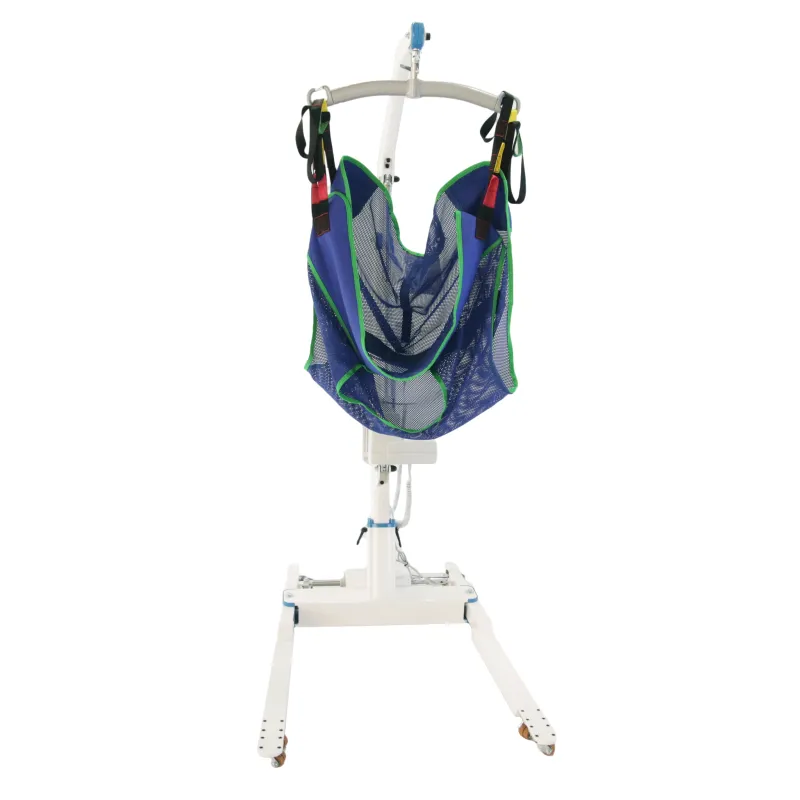
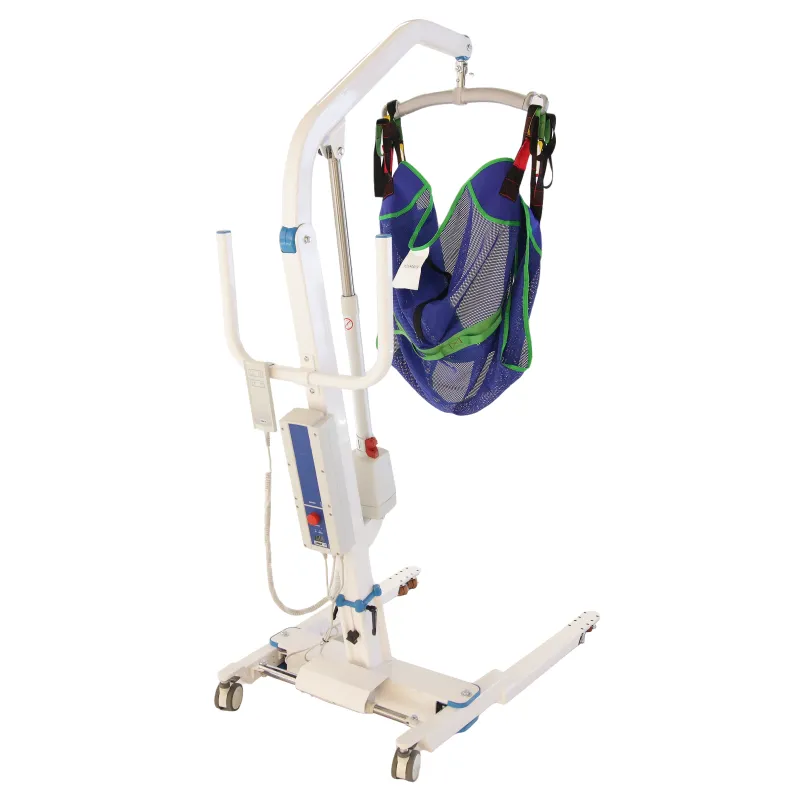
A patient lifter is a piece of care equipment that utilizes mechanical or electric mechanisms—in conjunction with a boom arm and sling structure—to lift a patient from one position and transfer them to another. Its core functions include:
•Providing vertical lifting capabilities.
•Enabling the safe transfer of a patient while they are suspended.
•Minimizing the need for manual lifting by caregivers.
Within the classification of professional care equipment, patient lifts are regarded as specialized transfer tools designed specifically for individuals with severe mobility limitations.
Are Patient Lifts Suitable for Patients Who Cannot Stand?
This is often the first question raised by many caregivers and family members. From a professional nursing perspective, patients who are unable to stand are precisely one of the primary target groups for patient lifters. The reasons are as follows:
•Patient lifters do not rely on the patient's ability to stand or walk.
•During the transfer process, the patient's body is fully supported by a sling.
•The patient's body weight is borne by the equipment, rather than by the caregivers.
When a patient is unable to perform any form of standing or weight-bearing using their own strength, a patient lift offers a transfer method that does not presuppose the patient's ability to cooperate.
How does a patient lift perform the transfer?
Understanding the working principles of a patient lifter helps to better appreciate its advantages when transferring patients who cannot stand.
A patient lift typically completes the transfer process through the following steps:
1.Using a sling to wrap around and support the patient's body.
2.Slowly lifting the patient away from their original position using a lifting mechanism.
3.Adjusting the patient's position while they remain suspended.
4.Gently lowering the patient into the target position.
The entire process centers on vertical lifting, thereby avoiding the risks of dragging, tilting, and loss of balance often associated with manual lifting.
Why are patient lifters safer than manual lifting?
1.More Even Weight Distribution
Patient lifters distribute the patient's body weight across multiple support points via the sling, preventing excessive pressure on any single area.
2.Greater Center of Gravity Stability
During the transfer, the patient's center of gravity remains consistently within the control range of the equipment, reducing the likelihood of sudden instability.
3.Controllable Pace of Operation
The lifting speed of a patient lift is typically adjustable, making the entire transfer process smoother and more controlled.
Are patient lifts suitable for patients who are completely unable to cooperate?
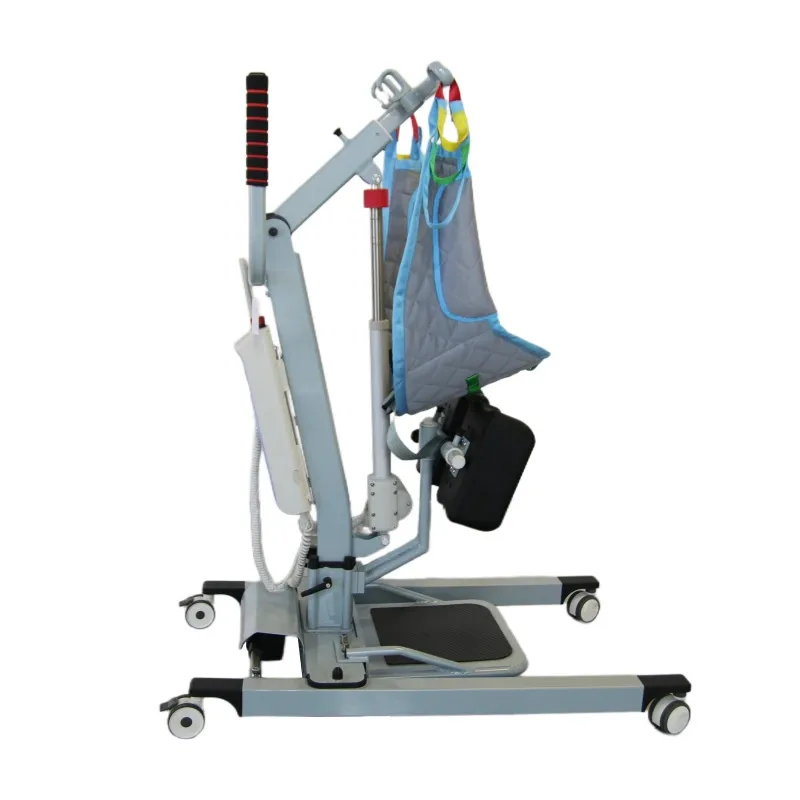
Among nursing aids, a standout advantage of the patient lifter is that it enables safe transfers even when the patient is almost entirely unable to actively cooperate. This is because:
•The patient does not need to stand up or grasp anything.
•The sling can be positioned underneath the patient while they are lying in bed.
•The lifting process is performed entirely by the equipment.
Consequently, when dealing with patients who are completely unable to stand or possess very limited cooperative abilities, a patient lift is often the most sensible choice.
What prerequisites or considerations should be kept in mind when using a patient lift to transfer patients who cannot stand?
Although patient lifts are functionally well-suited for patients unable to stand, a basic assessment is still required prior to use.
This assessment primarily covers the following aspects:
•Is the patient's weight within the device's load-bearing capacity?
•Does the sling size match the patient's body type?
•Does the operating environment provide sufficient space for maneuverability?
•Is the floor surface level and stable?
Verifying these prerequisites helps ensure that the patient lifter performs its intended safety functions effectively during the transfer process.
Can a patient lift replace all methods of patient transfer?
From a professional nursing perspective, the answer is no.
The primary advantage of a patient lift lies in handling high-risk transfers or those involving patients with limited ability to cooperate; it is not intended to replace every transfer method. For some patients who still retain the ability to stand—or partially stand—other transfer aids may be more efficient.
However, given the specific premise that a patient is "unable to stand," a patient lift is typically the choice that best aligns with safety principles.
Why is it inadvisable to force a patient to stand when transferring those unable to do so?
This constitutes a fundamental principle of nursing safety.
Attempting to force a patient to stand carries the following risks:
•The patient's lower limbs may be unable to bear weight, leading to a sudden, uncontrolled collapse.
•Caregivers are at risk of injury due to loss of balance.
•The transfer process becomes unpredictable and difficult to control, concentrating the associated risks.
In contrast, a patient lifter executes the transfer through a mechanical mechanism, thereby bypassing the high-risk phase of "standing."
What is the significance of patient lifts in the context of long-term bedridden care?
For patients who are bedridden over the long term and unable to stand, transfers are not a one-time event but rather a recurring task within their care regimen.
In this context, the value of a patient lifter is demonstrated by:
•Reducing the cumulative risks associated with repetitive transfers.
•Enhancing the long-term sustainability and feasibility of caregiving tasks.
•Alleviating the physical strain placed on caregivers over time.
This is a primary reason why patient lifters are widely utilized in long-term care environments.
From a nursing safety perspective, how does one determine whether to use a patient lift?
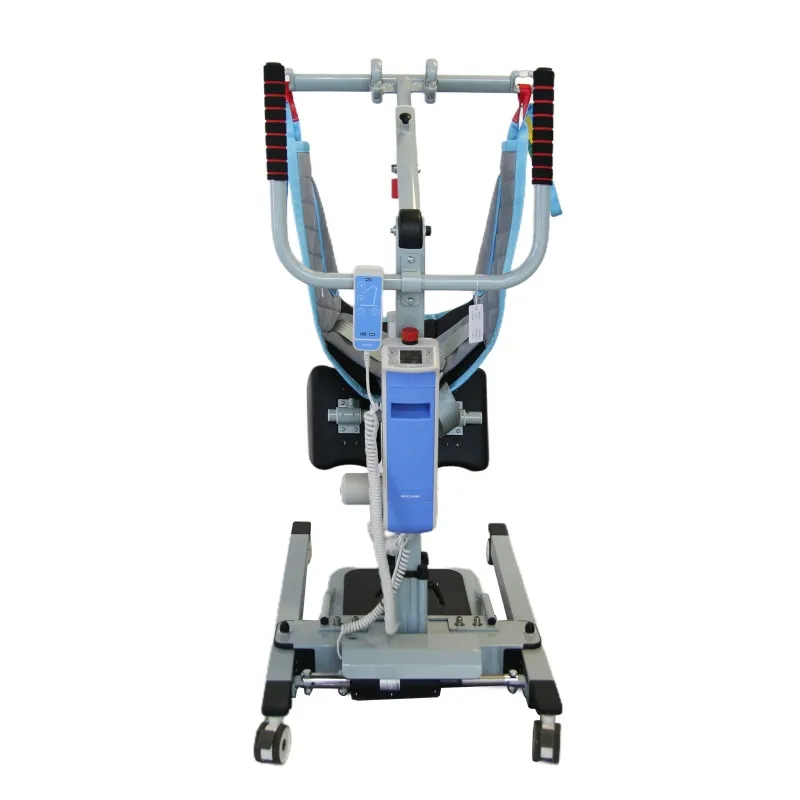
In the nursing profession, there is a fundamental principle: whenever manual handling presents a significant risk, mechanical assistance should be prioritized. A patient lift is typically the safer option when the patient meets the following criteria:
•Unable to stand
•Unable to cooperate with weight shifting
•Manual lifting makes risk management difficult
•Transfers are required frequently
In these situations, the use of a patient lifter helps minimize risks to the lowest possible level.