

Do all children with cerebral palsy use wheelchairs? Which ones do, and which ones don't?
In the public imagination, the image of a child with cerebral palsy is often linked to a wheelchair. Consequently, one of the primary concerns for parents after their child is diagnosed with cerebral palsy is: "Will my child definitely need a wheelchair in the future?" In reality, this is a common misconception that is not entirely accurate.
Cerebral palsy (CP) is a syndrome characterized by permanent disorders of movement and posture development, resulting from brain injury occurring in the fetus or infant. Global data indicates an incidence rate of approximately 2 to 3 cases per 1,000 newborns. In China, tens of thousands of new cases are diagnosed annually. Although cerebral palsy affects a child's motor abilities, the severity of the condition varies significantly from child to child. Some children can walk, run, and even participate in sports at mainstream schools independently, while others may be unable to stand unaided and require long-term reliance on a wheelchair for mobility.
Therefore, the answer to the question "Do all children with cerebral palsy use wheelchairs?" is no. The need for a wheelchair depends not simply on the diagnosis of cerebral palsy, but on a range of factors, including the extent of brain injury, level of motor function, muscle tone, balance, walking ability, and the effectiveness of rehabilitation training.
This article provides a detailed analysis covering the classification of motor function in children with CP, the target users for CP-specific wheelchairs, situations where wheelchairs are not required, principles for selecting a wheelchair, and common parental misconceptions. The aim is to help families better understand the role of wheelchairs in the rehabilitation process.
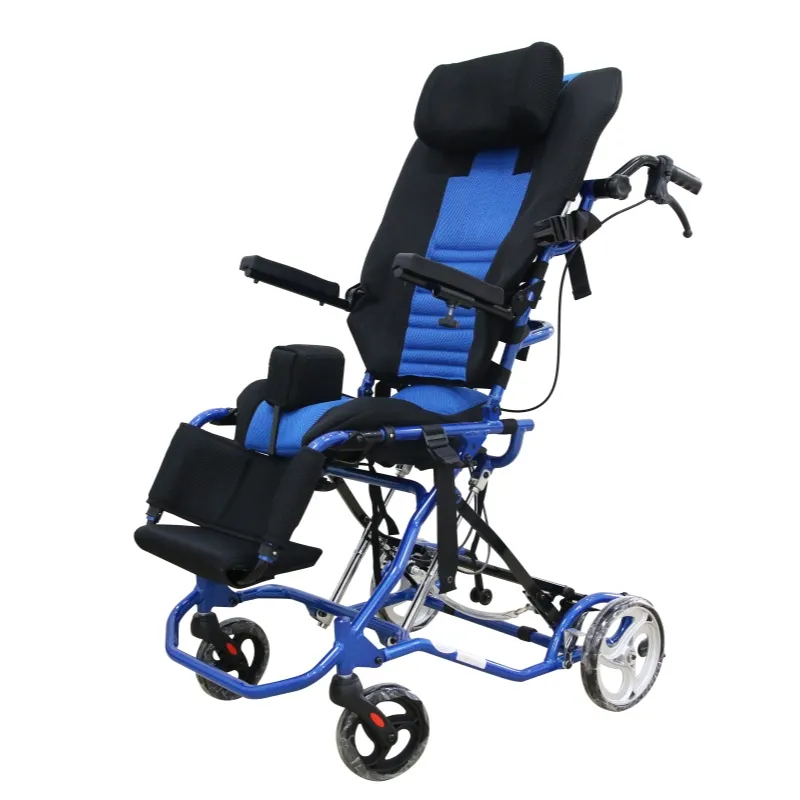
Cerebral palsy does not mean an inability to walk, nor does it mean a wheelchair is mandatory
Cerebral palsy is not a single disease but a syndrome encompassing a variety of motor impairment manifestations.
Symptoms in children with cerebral palsy may include abnormal muscle tone, impaired motor coordination, difficulties with postural control, poor balance, and limited joint mobility. However, the severity of these issues varies markedly among affected children.
The international cerebral palsy research community commonly uses the Gross Motor Function Classification System (GMFCS) to assess the functional abilities of children with cerebral palsy. This system categorizes children into five levels. Children classified as Level I and Level II can usually walk independently. Those at Level I have motor abilities close to those of typically developing children, with only slight limitations in speed, balance, or the execution of complex movements. While Level II children can walk independently, their mobility is somewhat compromised during long-distance activities, stair climbing, or when running and jumping.
Children at Level III typically require mobility aids—such as walkers, crutches, or other assistive devices—to move around; in some instances, they may use a wheelchair designed for children with cerebral palsy for longer distances.
Children at Levels IV and V often experience significant motor impairments, with their ability to walk independently severely limited or completely lost; these children constitute the primary user group for pediatric cerebral palsy wheelchairs.
Global research data indicates that approximately 40% to 50% of children with cerebral palsy are capable of independent walking, while about 20% to 30% require assistive devices to walk. Roughly 20% rely on wheelchairs for long-term mobility. This means that the vast majority of children with cerebral palsy do not spend their entire lives dependent on a wheelchair.
Therefore, upon receiving a cerebral palsy diagnosis, parents should not simply equate the condition with wheelchair use; instead, they should seek a professional assessment to understand their child's actual level of motor function.
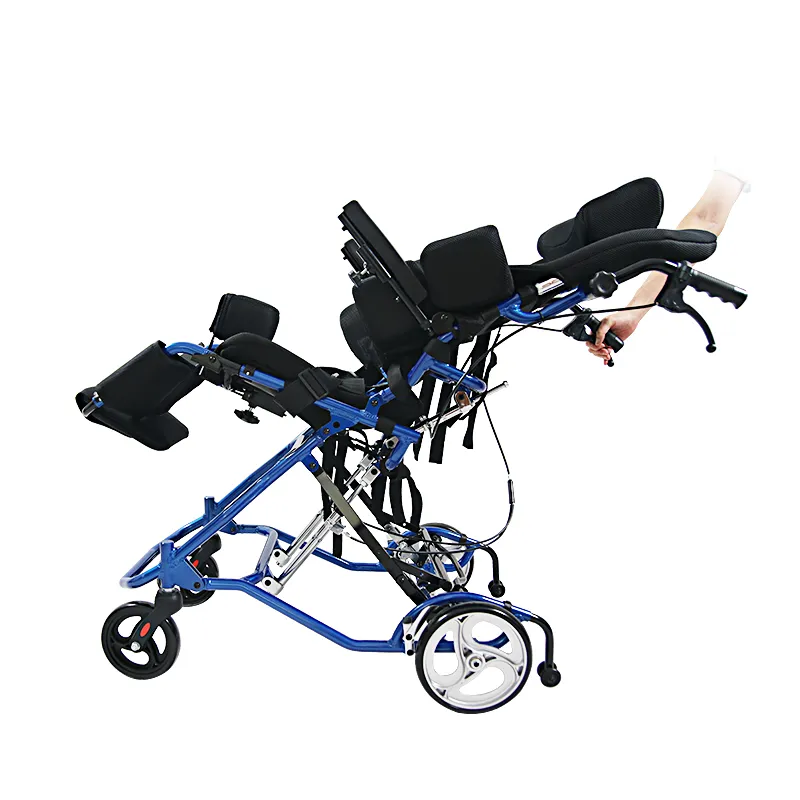
Which children with cerebral palsy require a pediatric wheelchair?
Although not every child with cerebral palsy needs a wheelchair, it serves as a crucial assistive tool for those with severe motor impairments.
First, children unable to walk independently often rely on pediatric wheelchairs for mobility. If a child cannot stand unaided—or if their standing time is very brief and their walking distance is less than a few meters—a wheelchair becomes an essential tool for participating in daily life and social activities.
Second, children with severe muscle tone abnormalities may also require a pediatric wheelchair. For instance, children with spastic cerebral palsy often experience continuous muscle tension in their lower limbs, leading to issues such as a "scissoring" gait, walking on tiptoes, and knee flexion. As they grow older, if walking efficiency is extremely low and energy expenditure excessive, they may need a wheelchair for mobility support, even if they are technically capable of walking with great difficulty.
A third group of children who require pediatric wheelchairs are those with severely impaired balance. Some children with ataxic cerebral palsy possess a certain degree of muscle strength but face a high risk of injury due to balance control issues and frequent falls. In such cases, a wheelchair serves not merely as a means of transport but as a vital safety device.
Additionally, children with cerebral palsy who have undergone procedures such as hip surgery, Achilles tendon lengthening, or spinal correction may temporarily use specialized wheelchairs during their recovery period to reduce weight-bearing on the lower limbs and facilitate rehabilitation.
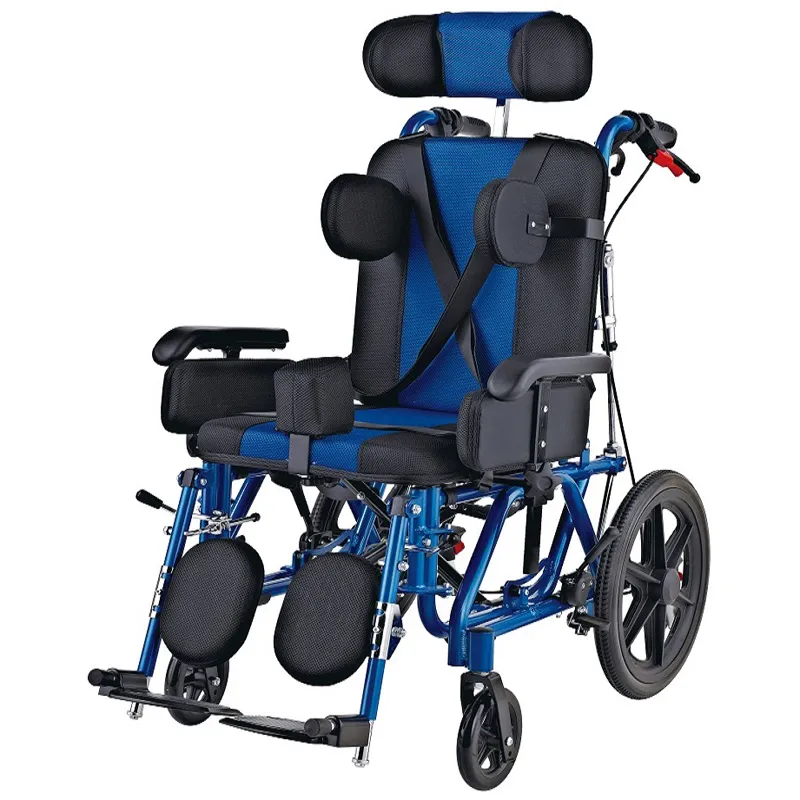
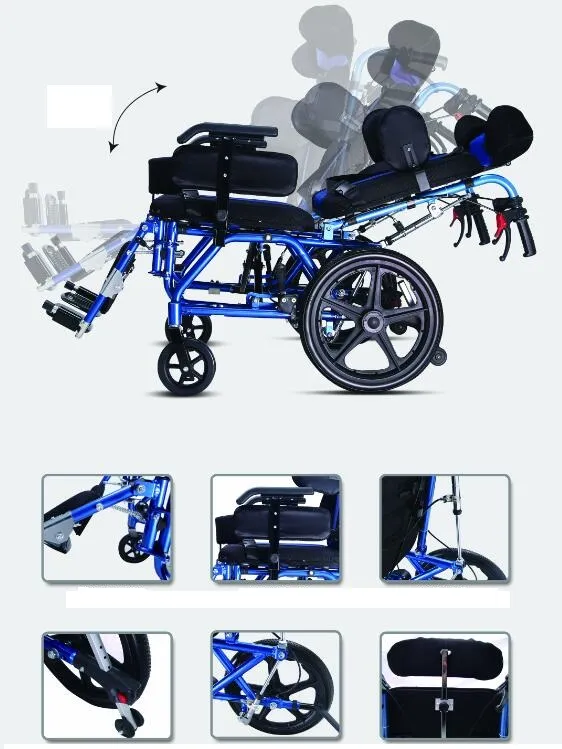
It is worth noting that modern wheelchairs designed for children with cerebral palsy are far more than simple mobility aids. Many specialized rehabilitation wheelchairs feature head support systems, trunk stabilization systems, pelvic stabilizers, and pressure-distributing cushions; these help children maintain proper posture and reduce the risk of complications such as scoliosis, hip dislocation, and pressure ulcers.
Which children with cerebral palsy generally do not require long-term wheelchair use?
In contrast to the scenarios mentioned above, many children with cerebral palsy do not need to rely on wheelchairs in the long term.
Children classified as GMFCS Level I or II typically possess good motor abilities. They are capable of walking independently in their daily lives, navigating stairs, and participating in school activities; while their motor performance may differ from that of their peers, their condition does not necessitate the use of a wheelchair.
In clinical rehabilitation, one often sees children with mild cerebral palsy who not only attend school regularly but also ride bicycles, swim, and even participate in adaptive sports. Forcing such a child to rely on a wheelchair prematurely could actually diminish their existing motor capabilities.
Some children with GMFCS Level III cerebral palsy may be able to walk indoors with the aid of a walker but require a wheelchair for long-distance activities outdoors. This constitutes functional wheelchair use rather than total reliance.
For instance, a child might use a walker to move around the classroom at school but utilize a wheelchair for trips to the zoo, a shopping mall, or a tourist attraction; because these outings involve longer distances and greater physical exertion, parents might choose a wheelchair to assist with mobility. This approach effectively balances rehabilitation training with social participation.
Therefore, the question of whether a child with cerebral palsy needs a wheelchair cannot be answered with a simple "yes" or "no"; rather, the decision requires a comprehensive assessment based on specific situations and actual needs.
Do wheelchairs for children with cerebral palsy hinder rehabilitation training?
Many parents share a common concern regarding wheelchairs for children with cerebral palsy: the fear that once a child starts using a wheelchair, they will become increasingly reluctant to walk, thereby compromising the effectiveness of rehabilitation training.
In reality, this concern is both valid and based on a misunderstanding.
If a child with cerebral palsy who possesses good walking ability relies on a wheelchair for an extended period, it can indeed reduce opportunities for active movement, leading to decreased muscle strength, reduced endurance, and a decline in motor skills.
However, for children who already have significant motor impairments, the appropriate use of a wheelchair does not hinder rehabilitation; instead, it can actually foster overall development.
This is because excessive fatigue severely limits a child's ability to participate in learning and social activities. If a child must expend a vast amount of energy simply to move around, there is less energy left for cognitive learning, verbal communication, and social engagement.
Studies have shown that with the proper provision of wheelchairs, many children with severe cerebral palsy spend significantly more time participating in school, family, and community activities, leading to improvements in their mental health and quality of life.
Consequently, the international rehabilitation community increasingly emphasizes the concept of "function-oriented rehabilitation." The goal of a wheelchair for a child with cerebral palsy is not to replace walking, but to provide necessary support when efficient walking is not possible, thereby enabling greater participation in social life.
How do you determine if a child needs a wheelchair?
It is not necessarily better to purchase a wheelchair as early as possible, nor is a single type of wheelchair suitable for every child with the condition.
Before deciding whether to use a wheelchair, a comprehensive assessment is typically conducted by a team that includes rehabilitation physicians, physical therapists, occupational therapists, and assistive technology specialists.
This assessment usually covers various aspects, such as walking and standing abilities, trunk control, upper-limb function, cognitive level, and the home environment.
For instance, a child who can walk independently for 100 meters but cannot manage longer distances might be suited for a lightweight wheelchair; conversely, a child unable to maintain a seated balance independently would require a specialized postural wheelchair equipped with head support and trunk stabilization features.
Future growth needs must also be taken into consideration. Children grow rapidly, so many high-quality wheelchairs designed for children with cerebral palsy feature adjustable sizing; this allows the chair to be adapted as the child grows, thereby extending its service life.
Practical factors—such as the school environment, home living conditions, elevator availability, and modes of transportation—also influence the choice of wheelchair.
Evolving Wheelchair Designs Are Improving the Quality of Life for Children with Cerebral Palsy
In the past, wheelchairs were often perceived as bulky, inconvenient, and limited in function. However, advancements in assistive technology have revolutionized wheelchairs for children with cerebral palsy.
A wide range of high-performance models is now available, including manual and electric wheelchairs, postural rehabilitation wheelchairs, standing wheelchairs, and smart wheelchairs.
Some advanced models even feature sit-to-stand capabilities, enabling children to perform standing exercises safely. This not only supports skeletal development and blood circulation but also improves the child's eye-level view, enhancing social interaction.
Furthermore, developments in smart control technology are granting independent mobility to more children with severe cerebral palsy. For instance, systems utilizing head controls, eye-tracking, or touch interfaces allow children with limited upper-limb function to operate their wheelchairs independently.
The World Health Organization has noted that the appropriate use of assistive devices can increase educational participation rates among children with disabilities by over 50%, and wheelchairs for children with cerebral palsy are among the most critical of these devices.
Common Misconceptions Parents Should Avoid Regarding Wheelchairs for Children with Cerebral Palsy
In reality, many families adopt one of two extreme attitudes toward these wheelchairs.
The first is excessive resistance. Some parents believe that using a wheelchair signifies a loss of hope for rehabilitation; consequently, they refuse to provide one even when their child can no longer walk safely. This approach can lead to frequent falls, excessive fatigue, and even secondary injuries.
The second is over-reliance. Some children actually possess some walking ability, but parents—seeking convenience in caregiving—have them use the wheelchair full-time. This results in reduced physical activity and hinders the development of motor functions.
The correct approach is to develop an individualized plan based on the child's current abilities, under the guidance of a professional team. A wheelchair is neither a symbol of failure nor the only solution; rather, it is a vital tool that helps children achieve a higher quality of life and greater social participation.
FAQ
FAQ 1: Do children with cerebral palsy still need rehabilitation training after using a specialized wheelchair?
Yes. A specialized wheelchair for cerebral palsy cannot replace rehabilitation training. Regardless of wheelchair use, physical therapy, occupational therapy, speech therapy, and postural management remain essential components of cerebral palsy rehabilitation.
FAQ 2: When should a specialized wheelchair be considered for a child with cerebral palsy?
You should consider a professional assessment to determine the need for a specialized wheelchair if the child cannot move around safely on their own, has extremely low walking efficiency, is prone to falls, or faces significant limitations during long-distance activities.
FAQ 3: Do children with mild cerebral palsy need to purchase a specialized wheelchair?
Most children with mild cerebral palsy do not require long-term use of a specialized wheelchair. However, they may use one for short periods based on actual needs during scenarios involving long distances, such as traveling, hospital visits, or large-scale events.
FAQ 4: What is the difference between a specialized wheelchair for cerebral palsy and a standard pediatric wheelchair?
Specialized wheelchairs for cerebral palsy typically feature additions such as headrests, lateral supports, pelvic belts, postural correction systems, and pressure management systems, making them better suited for children with postural control issues and abnormal muscle tone.
FAQ 5: Will using a specialized wheelchair make the child less inclined to walk?
It depends on how the wheelchair is used. If it completely replaces existing mobility, it could indeed affect motor development; however, when used appropriately under professional guidance, it can reduce fatigue and increase participation without necessarily causing a decline in motor ability.
FAQ 6: Is an electric wheelchair for cerebral palsy suitable for all children with the condition?
It is not suitable for every child. Electric wheelchairs are generally appropriate for children who have good cognitive abilities, possess the necessary operational skills, and have a high need for independent mobility; suitability should be determined through a professional assessment.