

Patient lifters have become indispensable equipment for transfer and care in hospitals, nursing homes, rehabilitation centers, and home care settings. For the bedridden, those with mobility impairments, post-operative patients, and the elderly, patient lifters facilitate safe transfers between locations—such as from a bed to a wheelchair, bathroom, toilet, or rehabilitation equipment. As the population ages, the market demand for patient lifters continues to grow.
However, whether they are administrators of care facilities, medical professionals, or family caregivers, people often ask the same question during procurement or use: "Can a patient fall from the lifter?"
This concern is well-founded, as the consequences of a fall can be severe. While a fall might result in only soft-tissue injury for an average adult, for elderly individuals with osteoporosis, post-operative hip patients, or those with neurological disorders, a fall from a patient lifter could lead to fractures, head trauma, spinal injuries, or even fatal complications.
So, are patient lifters actually safe? Is there a high probability of a patient falling? What factors contribute to such accidents, and how can the risks be mitigated?
This article provides a systematic analysis of patient lifter safety, covering aspects such as equipment structure, safety design, industry data, causes of accidents, and preventive measures.
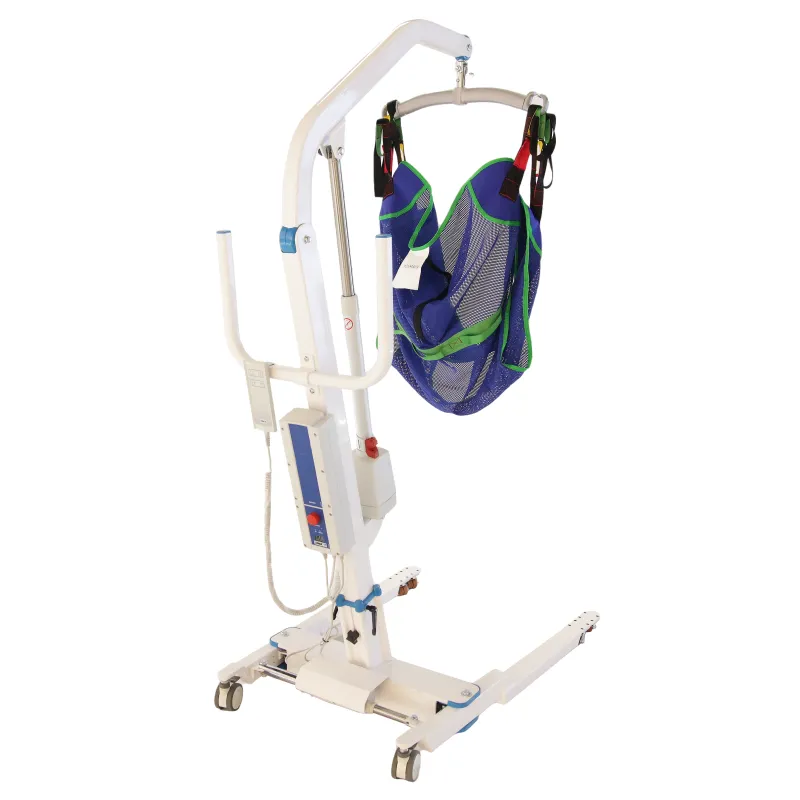
What is a patient lifter, and why has it become essential in caregiving?
A patient lifter is essentially a medical assistive device designed to help patients with limited mobility transfer safely. Traditional manual transfers often require two or three caregivers working in tandem; this not only involves high physical exertion and a risk of back injuries for the staff but also increases the likelihood of the patient falling. The introduction of patient lifters has significantly alleviated these issues.
A standard patient lifter typically consists of a base support structure, a lifting system, a spreader bar (or hanger), and a sling. The base provides stable support, the lifting system raises or lowers the patient, the spreader bar bears the weight, and the sling—which directly cradles the patient's body—serves as the critical connection point between the patient and the equipment. Modern patient lifters generally fall into two main categories: manual hydraulic models and electric models. Hydraulic lifters rely on manual pumping to raise and lower the patient and are lower in cost, whereas electric lifters use a motor for operation, making them easier to use and better suited for high-frequency care settings.
Patient lifters are particularly valuable for the following groups:
•Elderly individuals who are bedridden for extended periods
•Patients with hemiplegia
•Patients with spinal cord injuries
•Patients with muscle weakness
•Post-operative rehabilitation patients
•Obese patients
As the care industry evolves, patient lifters are shifting from being "optional equipment" to becoming an essential component of standardized care.
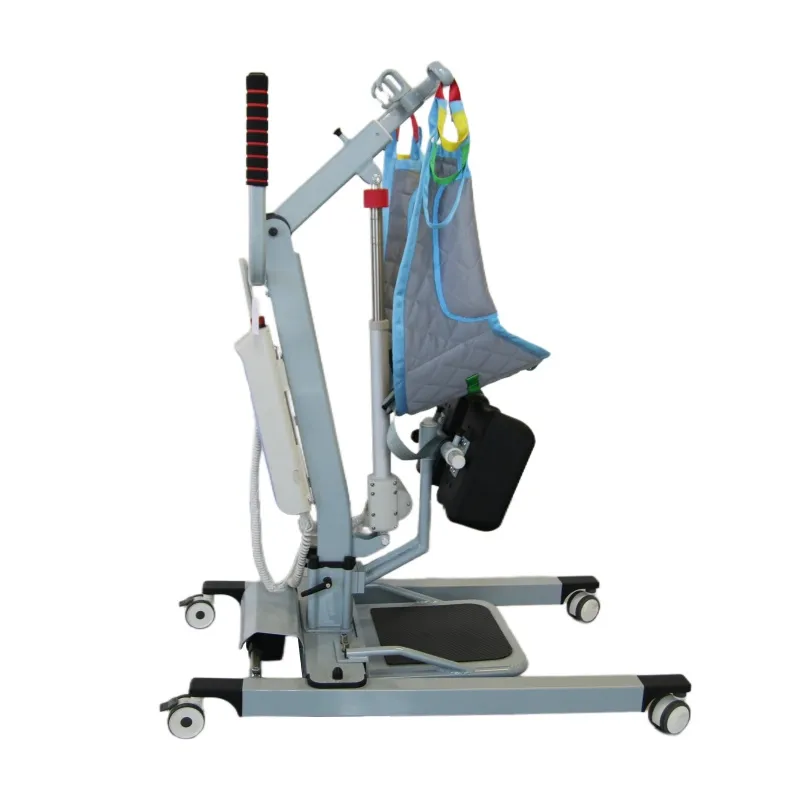
Can a patient actually fall from a patient hoist?
Yes, but the likelihood is far lower than most people imagine.
It is important to distinguish between the possibility of a fall and the safety of the equipment itself. A patient falling from a lifter does not necessarily imply a design flaw in the device. In fact, most falls are not caused by mechanical failure but rather by operational errors, incorrect sling usage, or environmental factors.
Data on care safety indicates that approximately 60% to 70% of patient-transfer accidents are linked to human error—such as improper sling attachment, incorrect patient positioning, or inadequate caregiver training. In contrast, accidents caused by actual mechanical failure of the lifter account for less than 10% of cases.
Statistically speaking, this means that patient lifters are inherently highly safe; the primary factor influencing safety is usually how the device is used.
Just how safe are modern patient lifters?
From an engineering perspective, modern patient lifters feature highly mature safety mechanisms. Reputable manufacturers typically incorporate multiple layers of safety redundancy during product development to minimize the risk of equipment failure.
1. Load-bearing designs typically include a safety margin
Standard patient lifters on the market usually have a rated load capacity of 150 to 200 kg, while bariatric lifters designed for severely obese patients can support loads exceeding 300 kg.
It is important to note that the rated load capacity is not the same as the absolute maximum load limit. Most patient lifters are validated during the design and testing phase using a safety factor of 1.25 to 1.5 times their rated capacity. In other words, a lifter with a rated capacity of 180 kg is often tested with a structural load exceeding 225 kg.
This design redundancy means that, provided the device is used within its normal load limits, the likelihood of a structural failure is extremely low.
2. Anti-tip structures significantly reduce the risk of tipping over
Patient hoist bases typically feature a widened design and a low center of gravity. Some high-end models even support automatic leg expansion to increase the support footprint. Such designs significantly reduce the risk of tipping caused by a shift in the center of gravity during the lifting process.
3. Emergency lowering systems improve safety margins
Electric patient lifters are usually equipped with emergency stop buttons and emergency lowering functions. Even in the event of a sudden power failure, caregivers can use a mechanical override to slowly lower the patient, preventing a sudden drop.
These design features demonstrate that the safety level of standard patient lifters is far higher than many people realize.
Why do patients still fall from patient lifters?
If patient lifters are inherently so safe, why do accidents still occur in real-world settings? The answer is simple: accidents often happen during the interaction between the user and the equipment.
1. Incorrect sling attachment is the primary cause
Issues involving the sling are among the most common causes of patient hoist accidents. Although a sling may appear simple, it is actually the most critical safety component in the entire transfer process.
Common errors include failing to fully secure the sling hooks, uneven attachment heights on the left and right sides, incorrect crossing of leg support straps, or even using a worn-out sling. These issues can cause the patient to gradually slide out of the support area while suspended.
Many caregivers underestimate the importance of the sling, assuming that simply "hooking it up" is sufficient; in reality, every detail of the sling's attachment affects the safety of the patient hoist.
2. Incorrect sling size selection
There is no such thing as a "one-size-fits-all" sling for patient lifters. Slings are typically categorized by body size into specifications such as XS, S, M, L, and XL. If the sling is too large, the patient may experience sagging hips or torso slippage after being lifted; if it is too small, the support area may be insufficient to securely cradle the body.
The risks associated with incorrect sling sizing are particularly pronounced for obese patients, those with scoliosis, and individuals with unique body proportions.
Which patients are at higher risk when using a patient hoist?
Not all patients face the same level of risk. Certain groups require a higher level of supervision when using a patient hoist.
1. Obese patients
For patients with high body weight, the greatest challenge when using a patient hoist is controlling the center of gravity. A larger body size generates greater inertia; once swaying begins, stability drops significantly. Additionally, the stress placed on specific parts of the sling increases.
2. Patients with neurological disorders
For example, patients with Parkinson's disease may experience tremors, rigidity, or sudden movements, while stroke patients often suffer from hemiplegia and poor trunk control. Such patients are more prone to losing their balance during the lifting and lowering process.
3. Patients with cognitive impairments
Patients with Alzheimer's disease may not understand what the caregiver is doing. While suspended, they may experience fear and instinctively struggle, lean forward, or grab at the equipment, significantly increasing the risk of a fall.
4. Environmental factors can also lead to patient hoist accidents
Many people focus solely on the equipment while overlooking the environment. In fact, accidents involving patient lifters occur more frequently in home settings than in hospitals, largely due to complex flooring conditions.
Common hazards include carpet edges, door thresholds, changes in floor level, bathroom slopes, tangled electrical cords, and narrow passageways. If the lifter's wheels suddenly get stuck, inertia can cause the suspended patient to sway.
If the patient has already been lifted to a significant height, the amplitude of the sway increases, thereby raising the risk of a fall. Therefore, the safe use of a patient hoist is not merely a matter of equipment, but also of spatial management.
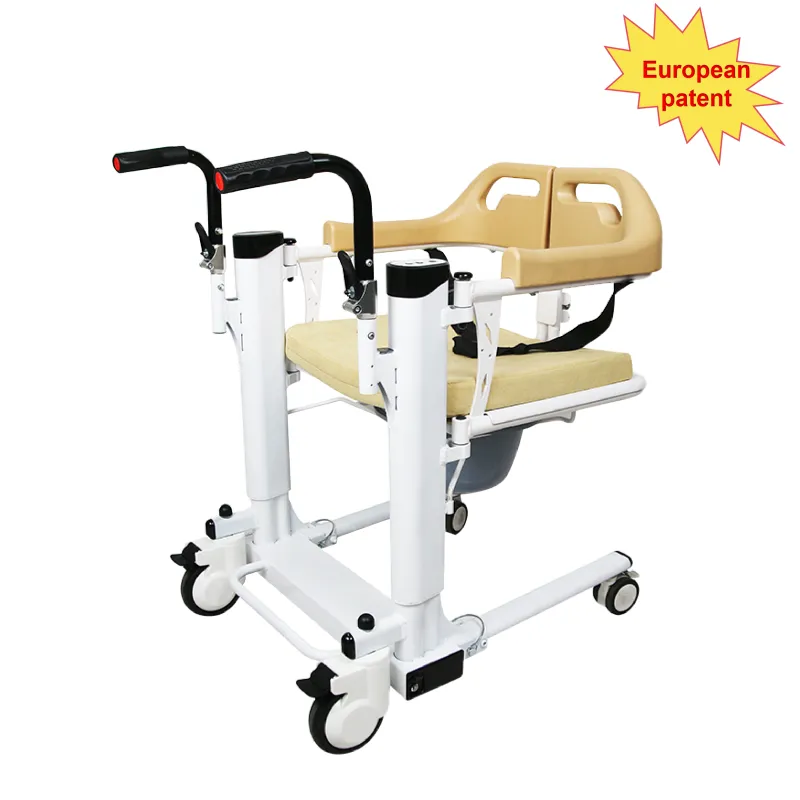
Are electric patient lifters safer than manual ones?
In most usage scenarios, electric patient lifters are generally safer than manual models.
The primary advantage of an electric patient lifter is its smooth lifting and lowering action. Hydraulic equipment may experience slight jerking during operation due to the rhythm of the pump, whereas electric patient lifters provide a smoother, more continuous lifting motion.
Additionally, electric patient lifters typically offer precise speed control and emergency braking functions, effectively reducing the risk of human error.
However, this does not mean manual patient lifters are unsafe; high-quality hydraulic models remain highly reliable. Ultimately, safety depends on proper equipment maintenance, the quality of the sling, and adherence to operational protocols.
How can falls from a patient hoist be prevented?
Preventing accidents requires managing three key areas: the equipment, the personnel, and the environment.
1. Perform equipment checks before use
Before each use, inspect the following:
•Sling condition (check for wear and tear)
•Hook integrity
•Battery level
•Wheel mobility
•Emergency stop button functionality
Do not ignore any minor cracks, loose stitching, or unusual noises.
2. Choose the right type of sling
Select the appropriate sling for the specific care task. Full-body slings are suitable for patients with total dependency; toileting slings are designed for bathroom transfers; and standing slings are appropriate for patients with partial weight-bearing ability. Using the wrong type of sling significantly increases the risk of accidents.
3. Enhance caregiver training
Data shows that caregivers who have received systematic training have significantly lower error rates when operating patient lifters compared to those who have not.
Training should cover equipment mechanics, sling attachment methods, risk identification, and emergency response procedures.
4. Use a two-person team for high-risk patients
Although some patient lifters are designed for single-operator use, a two-person team is safer when handling patients who are heavy, undergoing their first transfer, or have poor cooperation. Having one person control the equipment while the other stabilizes the patient significantly reduces the risk of accidents.
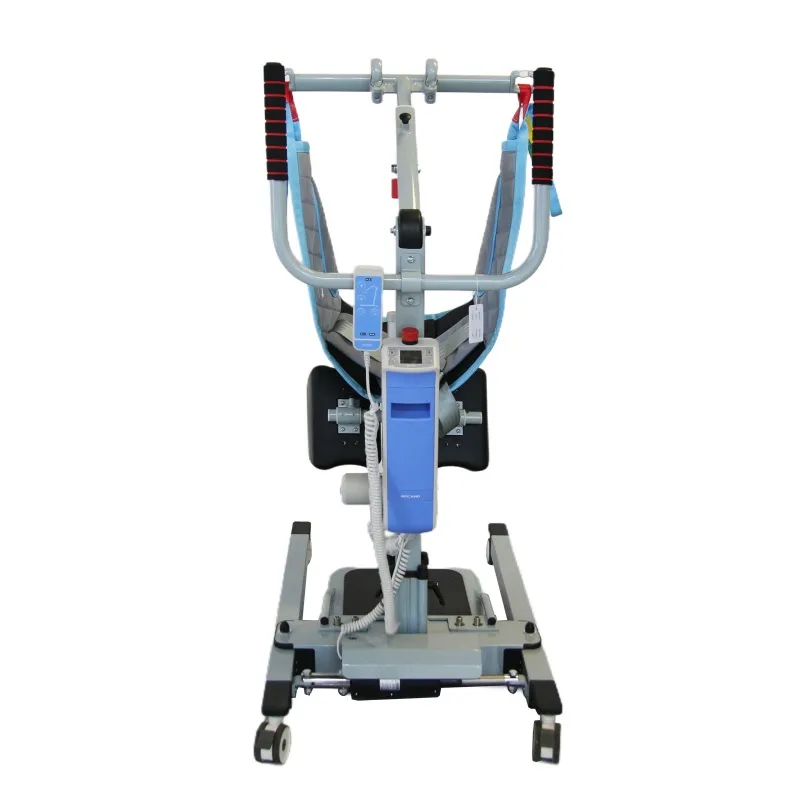
FAQ
Can a patient lifter suddenly break?
Structural failure in patient lifters from reputable brands is extremely rare when used within rated weight limits, unless there is severe overloading or a lack of long-term maintenance.
Are home-use patient lifters safe?
Yes, provided the operator has received proper training and the home environment is suitable for maneuvering the equipment.
Can a single caregiver operate a patient hoist?
It is possible, but for high-risk patients, a two-person operation is recommended.
How often should the patient lifter sling be replaced?
A thorough inspection is generally recommended every 1 to 3 years; however, it should be replaced immediately if there is significant wear and tear.
Is a patient lifter worth buying?
For families caring for long-term bedridden patients, a patient hoist is usually a worthwhile investment, as it ensures the safety of both the patient and the caregiver.