

In today's globalized and highly mobile world, more and more wheelchair users want to travel easily by plane, enabling them to conduct business trips, visit family and friends, or travel internationally without obstacles. Especially with the increasing popularity of carbon fiber power wheelchairs, many users are starting to focus on a core question: can carbon fiber electric wheelchairs be checked as baggage on airplanes?
This question seems simple, but it involves many factors, including airline regulations, battery specifications, material characteristics, folding methods, and safety restrictions.
This blog post will help you fully understand the key points of checking carbon fiber electric wheelchairs as baggage, providing you with solid reference information for your air travel.
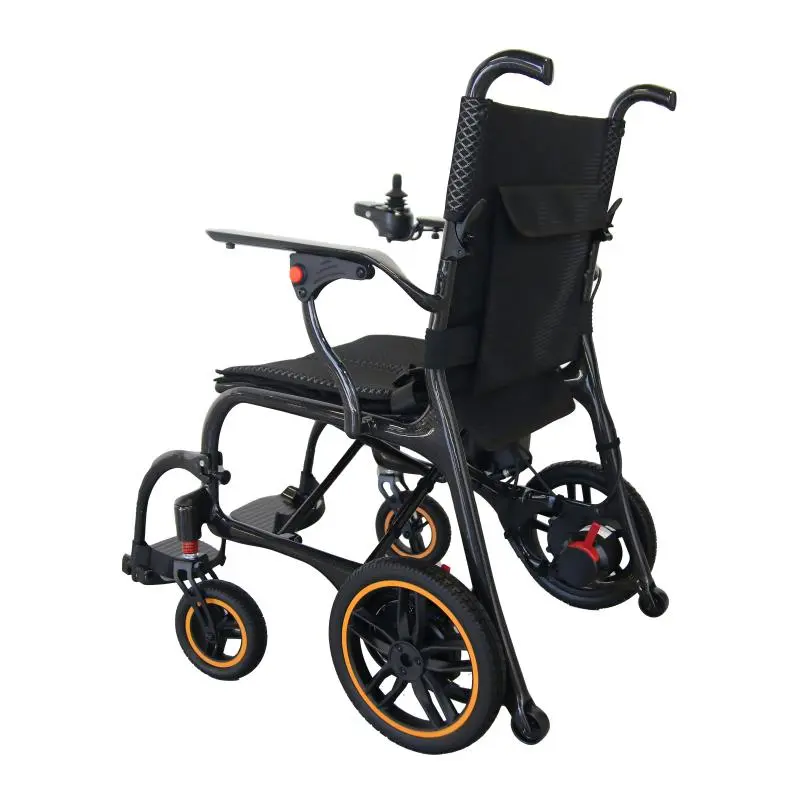
Can carbon fiber electric wheelchairs be checked as baggage on most airlines?
From an air transport perspective, whether a wheelchair can be checked as baggage does not depend on the material, but on the battery type, size, and folding method.
This means that even with a lightweight carbon fiber structure, carbon fiber electric wheelchairs must still undergo baggage check procedures according to airline and international regulations.
In most cases, carbon fiber power wheelchairs can be checked as baggage.
The reasons are as follows:
• Carbon fiber is a safe, stable, and durable composite material and is not considered a hazardous material.
• Carbon fiber electric wheelchairs generally use a detachable battery structure, which is highly compatible with aviation requirements.
• Electric wheelchairs, as assistive devices, enjoy policies such as free baggage allowance and priority handling on most airlines.
The key point is not "carbon fiber," but rather:
• Whether the battery is an airline-approved type of lithium battery
• Whether it is detachable
• Whether the battery capacity meets the restrictions
• Whether the dimensions of the wheelchair after folding meet the specifications for cabin or cargo hold transportation
Therefore, the issue of checking carbon fiber electric wheelchairs as baggage is not about "whether the material determines whether it can be taken on the plane," but rather "whether the specifications meet aviation requirements."
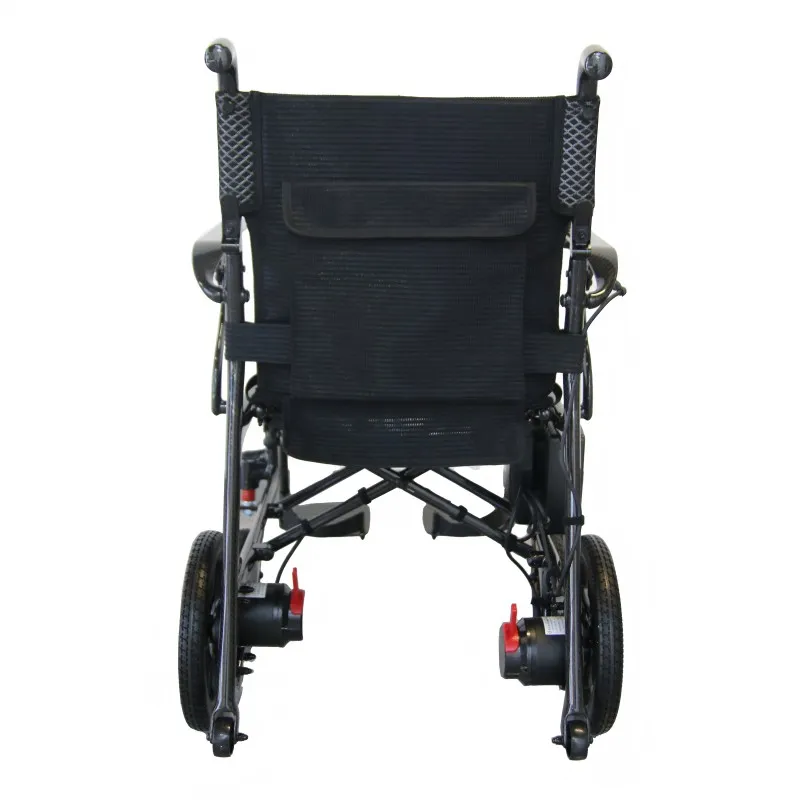
Why do airlines allow carbon fiber electric wheelchairs to be checked as baggage?
The main reasons why carbon fiber electric wheelchairs are generally accepted by airlines include:
1. Carbon fiber structure is stable and safe, and does not belong to the category of hazardous materials
Air transport primarily focuses on safety risks, and carbon fiber is:
• Corrosion-resistant
• Non-conductive (before surface treatment)
• Does not release chemical components
• Has extremely high strength and impact resistance
These characteristics fully meet the physical requirements of air transport.
2. Carbon Fiber Electric Wheelchairs are Lightweight and Easy to Load
Lightweight design is a core advantage of carbon fiber power wheelchairs:
• The body weight is usually lower than traditional aluminum alloy wheelchairs.
• Easier to handle, transport, lift, and secure.
• Safer, less likely to cause injury to staff or damage to equipment.
For airlines, this helps reduce operational difficulties and transportation risks.
3. Compact Structure, Folded Size More Suitable for Air Transport
Many carbon fiber electric wheelchairs feature:
• Folding structure for international travel
• Quick-release joints
• Compact body design
The smaller folded volume better meets airline standards for storing assistive devices.
Therefore, carbon fiber electric wheelchairs are often easier to pass air cargo inspection than traditional steel electric wheelchairs.

Do the lithium batteries of carbon fiber electric wheelchairs meet air transport requirements?
The battery is the key to air transport, not the wheelchair material.
All airlines, the International Air Transport Association (IATA), and civil aviation authorities stipulate that:
The maximum restrictions for electric wheelchair transportation focus on the lithium battery, not the vehicle body material.
Carbon fiber electric wheelchairs typically use:
• Lightweight lithium-ion batteries (Li-ion)
• 24V voltage
• Capacity 6Ah–12Ah (144Wh–288Wh)
Air Transportable Lithium Battery Rules (Core Requirements)
General international regulations are as follows:
• ≤ 100Wh: Almost all airlines allow carrying and checked baggage.
• 100–160Wh: Most airlines allow checked baggage, but require declaration.
• >160Wh: Usually prohibited from checked baggage or must be transported as cargo.
Most carbon fiber electric wheelchair batteries are below 160Wh, thus complying with air transport regulations.
Common Airline Requirements
• The battery must be removable.
• The battery must be carried in the passenger cabin (not checked baggage).
• Battery terminals must be insulated.
• The wheelchair must be switched off before checked baggage.
• Battery parameter labels, instructions, or certification documents must be provided.
Therefore, if the battery parameters of the carbon fiber electric wheelchair meet these requirements, it can be successfully transported by air.
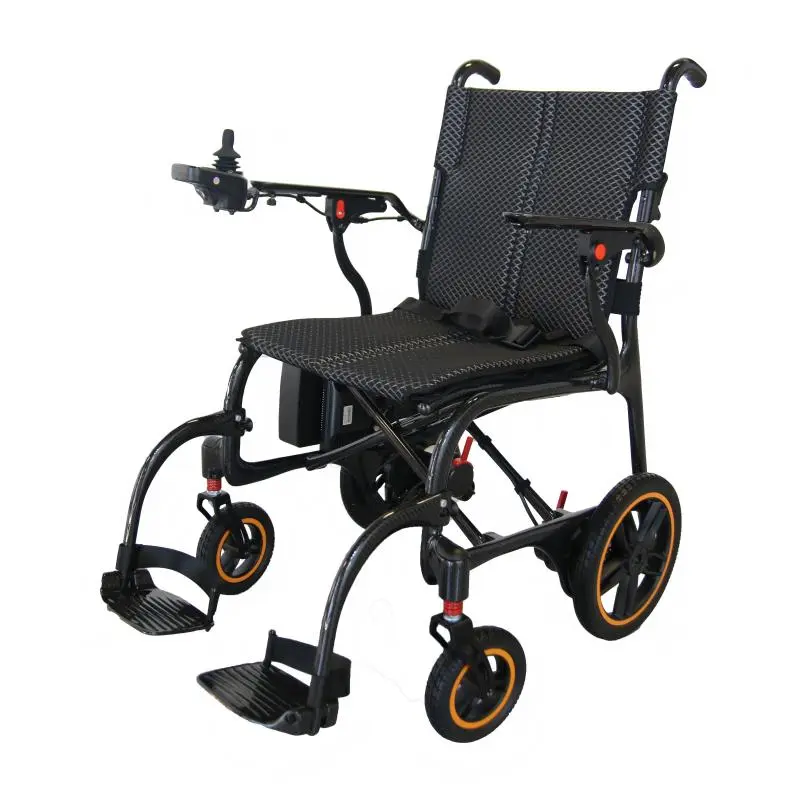
What documents are needed before transporting a carbon fiber power wheelchair?
To reduce communication barriers at the airport and improve the success rate of transporting your wheelchair, we recommend preparing the following:
1. Battery Specifications Certificate (Wh value)
Airlines usually require:
• Voltage (V)
• Current (Ah)
• Capacity (Wh)
• Battery cell type certificate
Most carbon fiber electric wheelchair manufacturers provide this information.
2. User Manual or Battery Safety Data Sheet (MSDS)
Although not mandatory, it is strongly recommended to carry this.
3. Wheelchair Folding and Power Disconnection Instructions
Briefly describe:
• How to turn off the power
• How to remove the battery
• How to fold the wheelchair
This facilitates handling by ground staff.
4. Airline Pre-declaration Form (if applicable)
Some airlines require pre-declaration of:
• Electric wheelchair model
• Battery specifications
• Whether it is foldable
Following these procedures will ensure smooth transportation of your carbon fiber electric wheelchair.
Is it necessary to remove the battery when checking in a carbon fiber power wheelchair?
Most airlines require:
• The battery must be removed
• The battery must be carried on board
Reasons:
• Cabin crew can promptly handle safety incidents
• Avoids battery damage due to physical impact during baggage handling
• Complies with international lithium battery transportation regulations (DGR)
Why are carbon fiber power wheelchairs easier to remove batteries from?
Due to the emphasis on lightweight design and convenience, carbon fiber power wheelchairs usually feature:
• One-button battery removal structure
• Snap-on battery interface
• Lightweight carrying handle
Making the entire "battery removal → boarding → baggage check-in" process easier and safer.
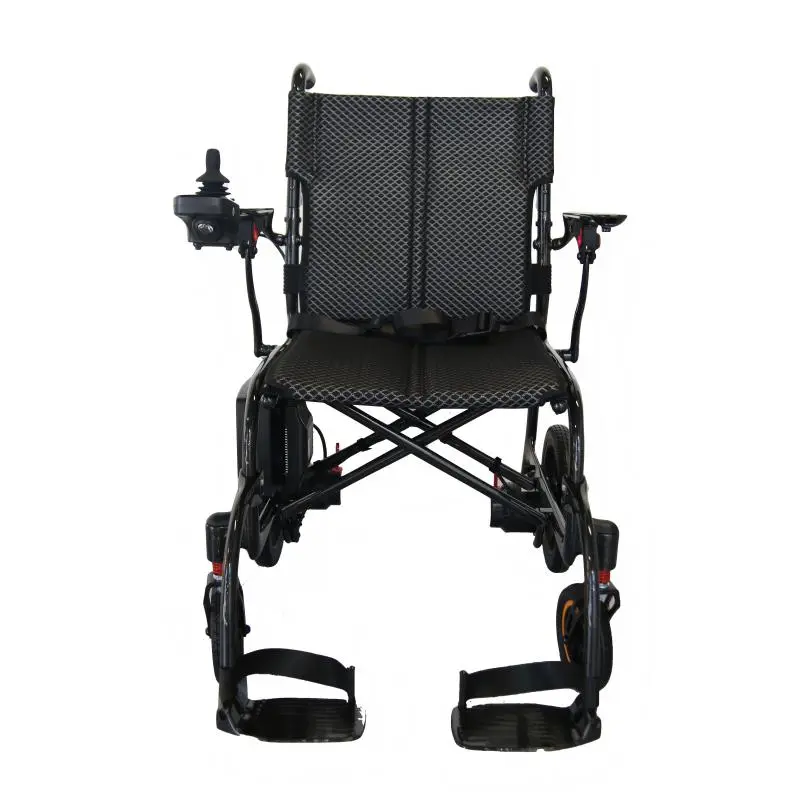
What precautions should be taken when checking in a carbon fiber power wheelchair at the airport?
To ensure smooth transportation of your carbon fiber power wheelchair, we recommend following these steps:
1. Contact the airline in advance
Notify the airline 48 hours in advance of:
• Wheelchair model
• Foldability
• Battery specifications
• Dimensions and volume
This is an internationally accepted rule and can avoid communication difficulties at the airport.
2. Register as a passenger with disabilities at the counter upon arrival at the airport
The airline will arrange for:
• Assistance with boarding
• Dedicated personnel to handle the wheelchair
• Arrangement for handover at the boarding gate
This is especially important for protecting the structural integrity of the carbon fiber electric wheelchair.
3. Remove the battery and insulate the contacts in advance
Prepare the following tools:
• Insulating tape (to cover the battery's metal contacts)
• Turn off the wheelchair's power
• Remove the controller (if necessary)
4. Fold the wheelchair to reduce the risk of damage during transport
Although the carbon fiber frame is strong, folding it can:
• Reduce the chance of bumps and impacts
• Reduce the volume
• Facilitate securing it in the aircraft cargo hold
• Increase the likelihood of successful transport
Is the carbon fiber power wheelchair body suitable for handling during transportation?
1. Carbon fiber has high strength and is very impact-resistant
Carbon fiber is 7-10 times stronger than steel and is not easily bent or crushed.
For potential issues encountered during transportation, such as:
• Impacts
• Stacking
• Pushing and pulling
• Pressure
The carbon fiber frame can maintain a stable structure.
2. The body is lightweight and will not be damaged due to excessive weight
Traditional steel electric wheelchairs can weigh up to 40–60kg.
Carbon fiber electric wheelchairs usually weigh only 13–20kg, making them easier to:
• Be lifted by transport personnel
• Be easily placed during unloading
• Avoid falls caused by excessive weight
Lightweight means safety, which is a natural advantage of carbon fiber electric wheelchairs.
Why are carbon fiber power wheelchairs more suitable for people who frequently travel by air?
1. Ultra-lightweight – reducing risk points in air transport
The lighter the wheelchair, the less likely it is to be damaged during transportation:
• Damaged by impact
• Crushed
• Dropped
• Causing structural damage to the body
Compared to steel and aluminum alloy materials, carbon fiber electric wheelchairs have a significant weight advantage.
2. Compact folding – easier to meet the transport standards for assistive devices
The smaller the volume after folding:
• The easier it is to secure in the aircraft cargo hold
• The less likely it is to be incorrectly stacked
• The more it reduces transportation risks
Carbon fiber electric wheelchairs naturally possess this advantage.
3. High strength – not easily deformed during transportation
The structural stability of carbon fiber is very suitable for long-distance air transport.
Can carbon fiber electric wheelchairs be taken on an airplane?
—Yes, and they are very suitable for transport. Considering all factors:
• Carbon fiber material itself has no restrictions on checked baggage.
• Most carbon fiber power wheelchairs meet airline requirements for folding, batteries, and dimensions.
• As long as the battery is removable and its capacity meets regulations, it can be checked in without problems.
• The stable and lightweight carbon fiber structure makes it one of the most suitable types of electric wheelchairs for air travel.
Therefore, if you are preparing for air travel, you can confidently check in your carbon fiber electric wheelchair.
Why choose a carbon-fiber electric wheelchair for frequent travel?
A carbon-fiber electric wheelchair is specifically engineered for users who travel often and need a mobility solution that combines ultra-light weight with robust performance. As a manufacturer and factory supplier based in China, Dayang Medical has optimized this product to weigh approximately 13.5 kg with battery (12 kg without battery), making it easy for passengers to handle at airports and during ground transport.
Buyers and purchasing teams looking to source high-quality mobility products will find the carbon-fiber chassis advantageous: it reduces handling costs, simplifies logistics, and lowers freight fees when purchased in wholesale quantities.