

Carbon fiber, as a modern high-end lightweight material, is widely used in aerospace, medical devices, and transportation. In the electric wheelchair industry, carbon fiber electric wheelchairs are favored by users due to their advantages such as lightweight, high strength, and corrosion resistance.
However, many consumers raise a practical question when choosing a carbon fiber electric wheelchair: Are carbon fiber electric wheelchairs suitable for use at the beach?
The high humidity, high salinity, frequent sandstorms, and complex terrain at the beach—will these factors affect the user experience and durability of carbon fiber electric wheelchairs?
This blog post will provide a comprehensive analysis from the aspects of material properties, overall vehicle structure, motor system, and usage precautions to help you clearly understand the performance of carbon fiber electric wheelchairs in a beach environment.
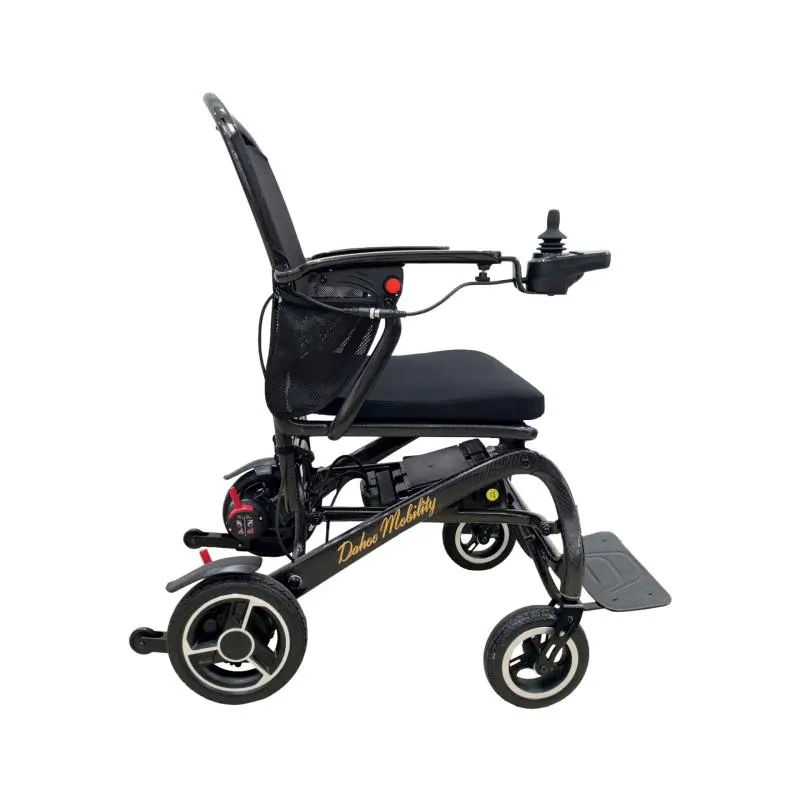
Are carbon fiber electric wheelchairs easily damaged at the beach?
To answer this question, we must start with the characteristics of carbon fiber material itself. Carbon fiber is a high-strength material composed of carbon elements. It inherently does not contain any metallic components, therefore it will not undergo oxidation reactions as easily as iron or steel in humid or saline environments.
1. Carbon fiber does not corrode in the traditional sense
Traditional metal wheelchairs, especially steel ones, are prone to corrosion when used at the beach, but carbon fiber has no such problem.
• Does not rust
• Not corroded by salt
• Unaffected by humid air
This means that the frame of a carbon fiber electric wheelchair is ideal for use in beach environments.
2. Surface protective layer further enhances durability
The carbon fiber surface of carbon fiber electric wheelchairs is typically treated with a resin protective layer or clear varnish, making it more resistant to salt spray.
Therefore, from a material perspective, the beach will not cause substantial damage to the carbon fiber frame.
Will salt spray affect the strength of a carbon fiber power wheelchair?
Many users worry that the salt in sea breezes might puncture, corrode, or weaken the carbon fiber material.
The answer is: No.
1. Carbon fiber exhibits stability in salt spray environments
Studies show:
• Carbon fiber maintains structural stability in salt spray tests.
• It does not absorb water or swell.
• It exhibits strong acid and alkali stability.
In contrast:
• Ordinary aluminum will experience pitting corrosion in long-term salt spray exposure.
• Steel (including some stainless steel) may still corrode after long-term exposure.
The inertness of carbon fiber makes it more suitable for areas with high salt spray, such as the seaside.
2. Structural strength does not decrease with environmental changes
Even when exposed to humid air for extended periods, the rigidity and strength of carbon fiber hardly decrease, meaning that the lifespan of carbon fiber electric wheelchairs is unaffected by the seaside environment.
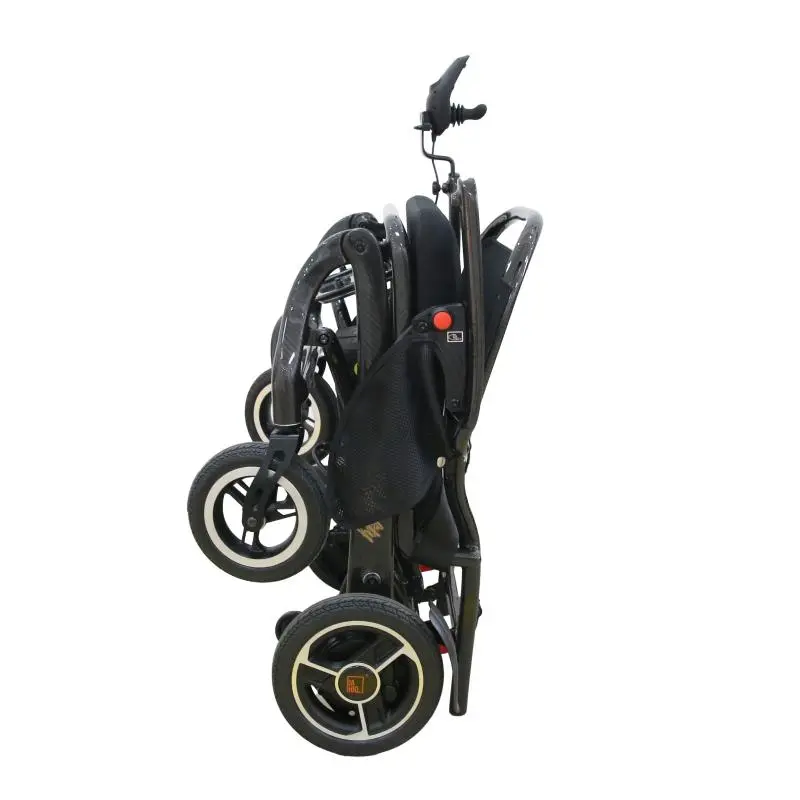
Can the motor system operate stably at the seaside?
While carbon fiber itself has excellent corrosion resistance, electric wheelchairs, in addition to the frame, also include key components such as the motor, controller, and battery.
So, can the motor of a carbon fiber power wheelchair adapt to the seaside environment?
1. Most carbon fiber power wheelchairs use brushless motors, making them more suitable for humid environments
Compared to brushed motors, brushless motors offer:
• A more sealed structure
• Less contact wear
• Stronger moisture resistance
• Less performance degradation due to changes in air humidity
Especially brushless motors equipped with electromagnetic brakes, which offer even higher reliability and are better suited for high-humidity areas like the seaside.
2. Direct contact between the motor and seawater must be avoided
While brushless motors are moisture-resistant, they are not suitable for immersion in seawater because:
• Salt may affect the motor bearings
• The control system is not suitable for water immersion.
Therefore, walking on boardwalks or stone paths at the beach is fine, but it is not recommended to drive the wheelchair into the sea.
Will the humidity at the beach affect the lifespan of carbon fiber electric wheelchairs?
The humidity at the beach is consistently high.
Will this environment shorten the lifespan of carbon fiber electric wheelchairs?
1. Moisture will not weaken the carbon fiber structure
Carbon fiber has an extremely low moisture absorption rate and absorbs almost no water. Its resin matrix is also not prone to moisture absorption. Therefore:
• It will not soften
• It will not expand
• It will not break due to high humidity
Humidity has almost no effect on the carbon fiber frame.
2. Some metal parts require minor maintenance
Although the frame is made of carbon fiber, there are still a few metal parts in the system, such as:
• Screws
• Bearings
• Motor housing
These parts may more easily accumulate salt in the sea air, so light cleaning is recommended.
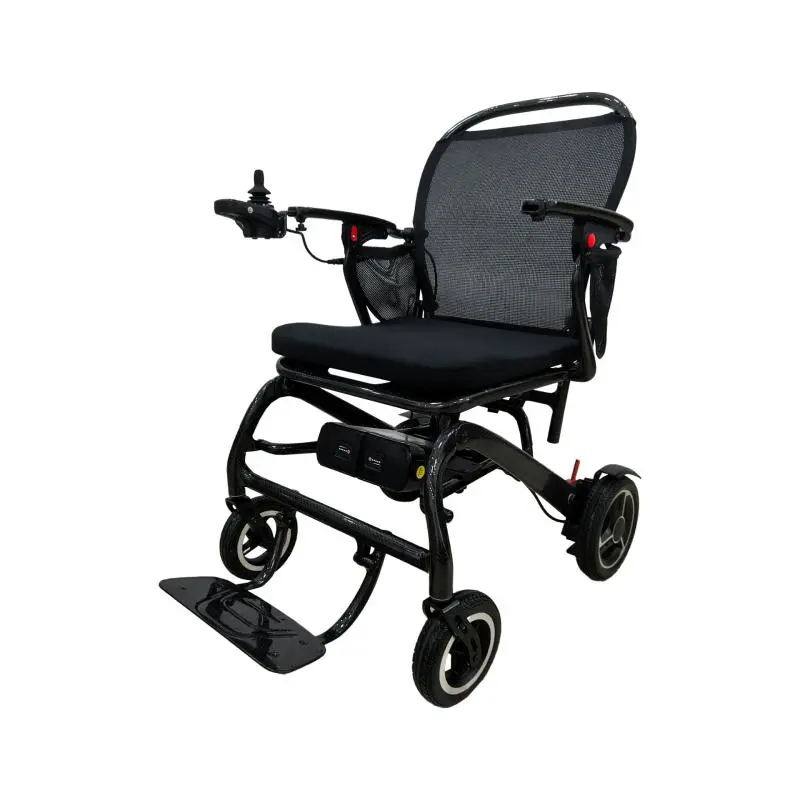
Can a carbon fiber power wheelchair travel normally on the beach?
Many users are most concerned about whether they can walk on the sand when going to the beach, rather than the air humidity.
The answer depends on the situation:
1. It can travel on hard sand (compacted sand)
In areas that have been compacted, have higher hardness, and are suitable for pushing a wheelchair, the riding experience of a carbon fiber power wheelchair is relatively stable.
2. Soft sand is unsuitable for electric wheelchairs
Soft sand provides significant resistance, causing the motor to slip easily. Most wheelchairs are unsuitable, including:
• Carbon fiber electric wheelchairs
• Aluminum alloy electric wheelchairs
• Steel electric wheelchairs
The issue with soft sand is not structural, but rather a surface problem, not a material issue.
What precautions should be taken when using a carbon fiber power wheelchair at the beach?
To ensure optimal performance of your carbon fiber power wheelchair at the beach, please pay attention to the following operational details:
1. Avoid contact between the motor and seawater
While the air at the beach won't damage the motor, seawater immersion can damage the motor housing.
2. Perform a simple wipe-down after returning to the hotel
Prior cleaning areas include:
• Motor housing
• Rear wheel bearing area
• Armrest edges
• External control stick
This prevents long-term salt buildup.
3. Avoid prolonged exposure to direct sunlight
The sun is strong at the beach; avoid prolonged exposure of your carbon fiber electric wheelchair to direct sunlight to reduce aging of the seat, tires, and plastic parts.
4. Avoid contact with salt water
Lithium batteries should not come into contact with seawater and must be kept dry.
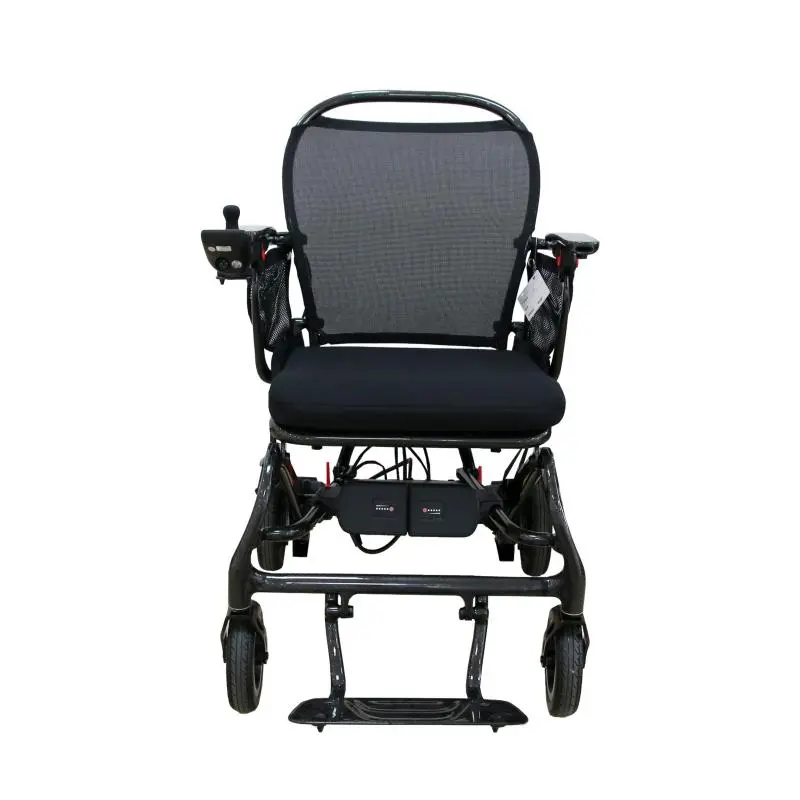
Is a carbon fiber electric wheelchair suitable for the beach?
Considering the characteristics of the materials, structural design, motor system, and actual environmental factors, the answer is clear:
✔ Carbon fiber electric wheelchairs are very suitable for use at the beach.
Reasons include:
• Carbon fiber is completely insensitive to salt spray and moisture.
• It does not rust or corrode.
• The brushless motor adapts to humid air.
• The lightweight structure makes it easier to navigate boardwalks and seawall paths.
• Simple wiping is all that's needed for maintenance.
Important notes:
• Do not drive into seawater.
• Soft sand is not an ideal surface.
• Keep the motor and battery dry.
For frequent travelers, residents of coastal cities, or those who enjoy beach walks, carbon fiber power wheelchairs are a reliable, safe, and durable choice.
Can I buy carbon-fiber electric wheelchairs with private-label branding?
Yes—many manufacturers and factories in China, including Dayang Medical, offer private-label (OEM) services for carbon-fiber electric wheelchairs. Private-label arrangements allow brands and wholesalers to purchase high-quality mobility products and market them under their own brand names.
The carbon-fiber wheelchair’s attributes—lightweight at approximately 13.5 kg with battery, removable 6AH/10AH battery options, 136 kg load capacity—make it a compelling private-label product for travel retailers, medical equipment brands, and online marketplaces.