

—What is a 4-wheel rollator? What was its design purpose?
A 4-wheel rollator is an assistive device to help people with walking difficulties or insufficient physical strength maintain balance and stability. It is typically made of lightweight metal and equipped with four wheels, a handbrake, a support frame, and an adjustable handle. Some models also include a small seat for temporary rest.
However, it's important to clarify that a 4-wheel rollator walker is not a means of transportation, nor is it a "seat that can be pushed around." Its core function is "assisting walking," not "carrying your weight while moving."
It helps users maintain balance, reduce joint stress, and increase confidence in walking, but it does not have the structural strength to support the entire body weight and maintain stability during movement.
In other words, the "safe load-bearing" function of a 4-wheel rollator walker is limited to support during walking and short periods of stillness, not "being pushed" or "glide while seated."
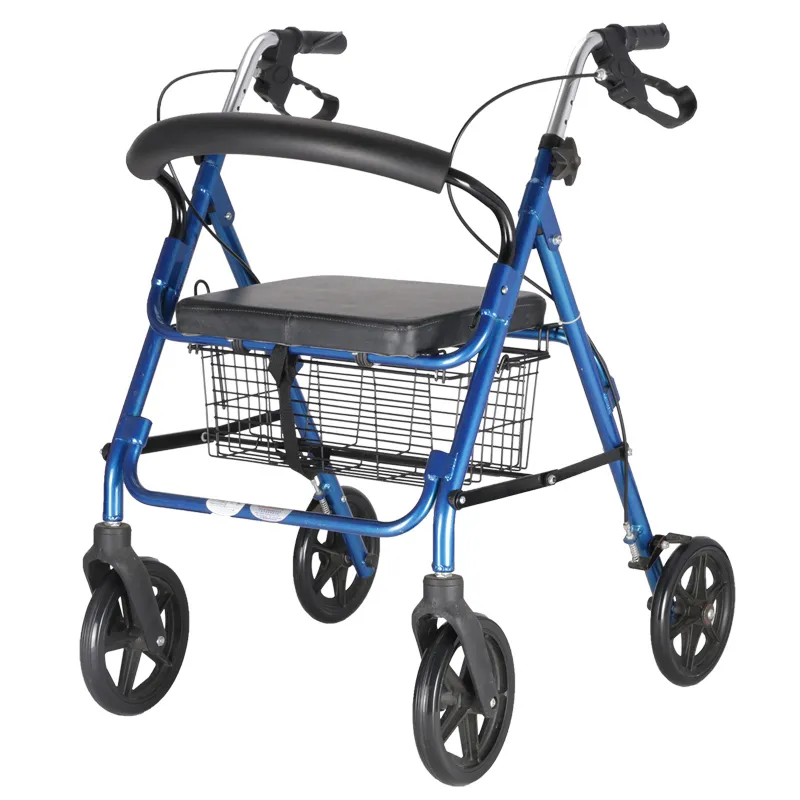
Why can't you sit on a 4-wheel rollator and be pushed around?
This is a common mistake many users make—seeing that a 4-wheel rollator has a seat, they mistakenly believe it can be used as a simple wheelchair.
However, from a structural, safety, stability, and design perspective, being pushed while seated on a 4-wheel rollator walker is extremely dangerous.
The following points explain why:
1. The 4-wheel rollator is not designed for carrying a person
While the four wheels of a 4-wheel rollator walker can smoothly touch the ground, their bearings and supports primarily bear weight vertically downwards, supporting only part of the body's weight during walking.
When you sit down and are pushed by someone else, the direction of force changes:
• The vehicle experiences a horizontal thrust;
• The force distribution between the rear and front wheels is uneven;
• The structure is prone to tipping over.
Therefore, at slightly higher speeds or on uneven ground, the rollator may lose balance and tip over.
2. Lack of a "push handle" structure
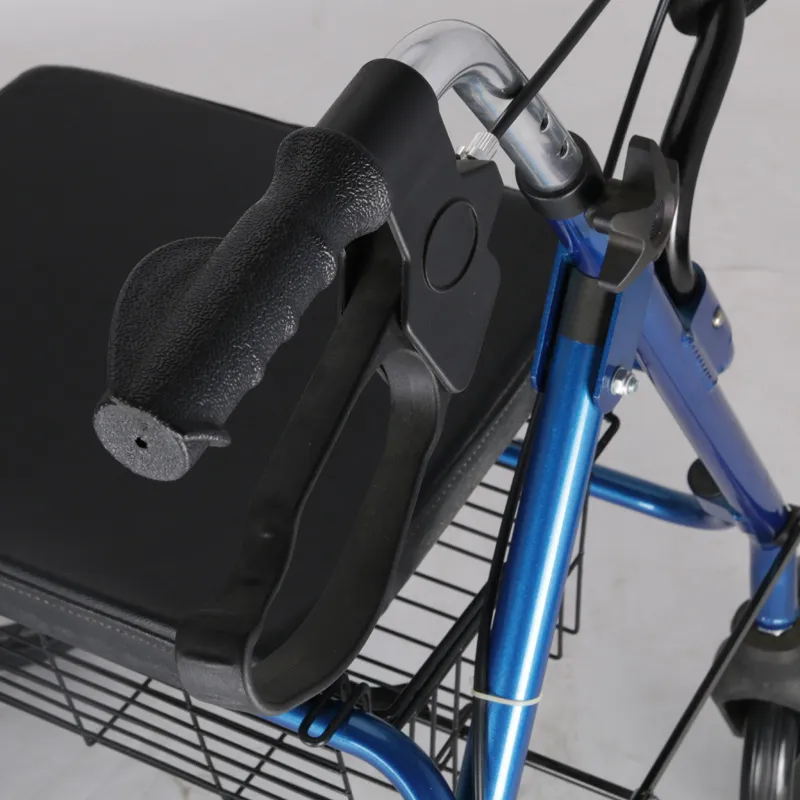
While 4-wheel rollators come with handles, these are designed for the user's own support, not for pushing.
Wheelchair push handles are located at the rear, ergonomically designed in terms of height and angle;
However, the handles of a 4-wheel rollator walker are located at the front or upper side. If someone pushes from behind, it results in extremely poor control and even difficulty in maintaining direction.
3. Braking System Unsuitable for Pushing
4-wheel rollator braking systems are typically manual cable-operated brakes, designed for brief stops or stationary use while walking.
When external forces push the vehicle, these brakes do not provide sufficient braking force, and the pusher cannot directly control the brakes.
This means that in the event of a downhill slope, slippage, or accidental collision, it is impossible to stop in time, greatly increasing the risk of falls.
4. High Center of Gravity, Prone to Tipping Over
Unlike wheelchairs, 4-wheel rollator walkers typically have a higher seat position, allowing the user to easily stand up and continue walking.
However, the high center of gravity makes the 4-wheel roller very dangerous when pushed. If the front wheel encounters an obstacle, the entire 4-wheel roller may tip forward, easily causing injury to the user.
In summary:
A 4-wheel rollator is a "walking aid," not a "transportation vehicle."
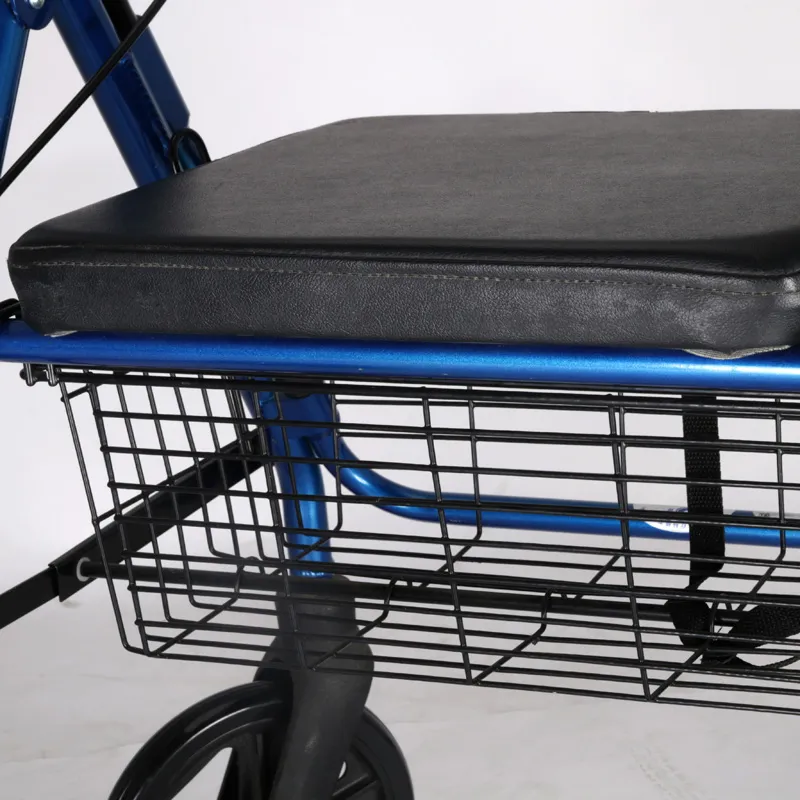
Can you sit on the seat that comes with a 4-wheel rollator?
This is another common misconception: many 4-wheel rollator walkers do come with a "seat," but this doesn't mean you can sit on it while moving.
In fact, the seat is only for "resting when stationary," not for "riding while moving."
1. Brief Use for Rest
When you feel tired after walking for a long time, you can lock the brakes, ensure all four wheels are firmly in contact with the ground, and then sit on it for a short rest.
At this time, the seat only bears vertical static weight and will not experience additional thrust, which is a safe way to use it.
2. Never Sit While Moving
Once the vehicle is in motion, the structural force on the seat changes, the support points shift, and the stress on welded or bolted joints increases, making it prone to damage or even breakage over time.
Therefore, whether you are on flat ground or outdoors, remember:
The seat on a 4-wheel rollator walker is for "resting" only, not for "riding while moving."
If you can't be pushed while seated, why can a wheelchair?
Understanding this question helps in correctly distinguishing the fundamental differences between a 4-wheel rollator and a wheelchair.
1. Different Design Purposes
• 4-wheel rollator walker: Aids balance while walking, assists in standing or moving.
• Wheelchair: A walking alternative, specifically designed for seated movement.
2. Different Structural Strength
The frame, bearings, and rear wheel structure of a wheelchair are specially reinforced to withstand the full weight of a person and the impact forces generated during movement; while a 4-wheel rollator walker uses lightweight aluminum alloy or steel tubing, supporting only a portion of the body weight.
3. Different Control Systems
Wheelchairs are equipped with push handles, brakes, pedals, and a center of gravity control system; the handlebars of a 4-wheel rollator walker are only for the user to grip and are not suitable for outsiders to control the direction.
4. Different Safety Standards
Wheelchairs are medical mobility devices with clearly defined safety load-bearing standards and structural tests; 4-wheel rollator walkers, on the other hand, are classified as walking aids, and their safety standards only address support stability, not movement or carrying a person.
Therefore:
If you want to be pushed while seated, please select "Wheelchair"; if you want to assist with walking, please use "4-wheel rollator".
What safety principles should be observed when using a 4-wheel rollator?
To ensure walking safety, the following operating procedures should be followed when using a 4-wheel rollator:
1. Always maintain self-control
The rollator is designed for "self-use." Others should not push it from behind to prevent loss of control or deviation.
2. Proceed slowly and carefully on inclines and declines
The 4-wheel rollator walker is suitable for use on flat surfaces. When encountering slopes or steps, slow down or ask for assistance; do not attempt to "slide down".
3. Lock the brakes before sitting down
If you need to rest briefly, ensure the rollator's brakes are fully locked before sitting down to prevent slipping.
4. Avoid carrying too many items
Shopping bags or heavy objects hanging at the front of the rollator will shift the center of gravity forward, affecting balance.
5. Do not use on wet or slippery surfaces
Wet or slippery surfaces can easily cause slipping, especially with rubber wheels, significantly reducing braking effectiveness.
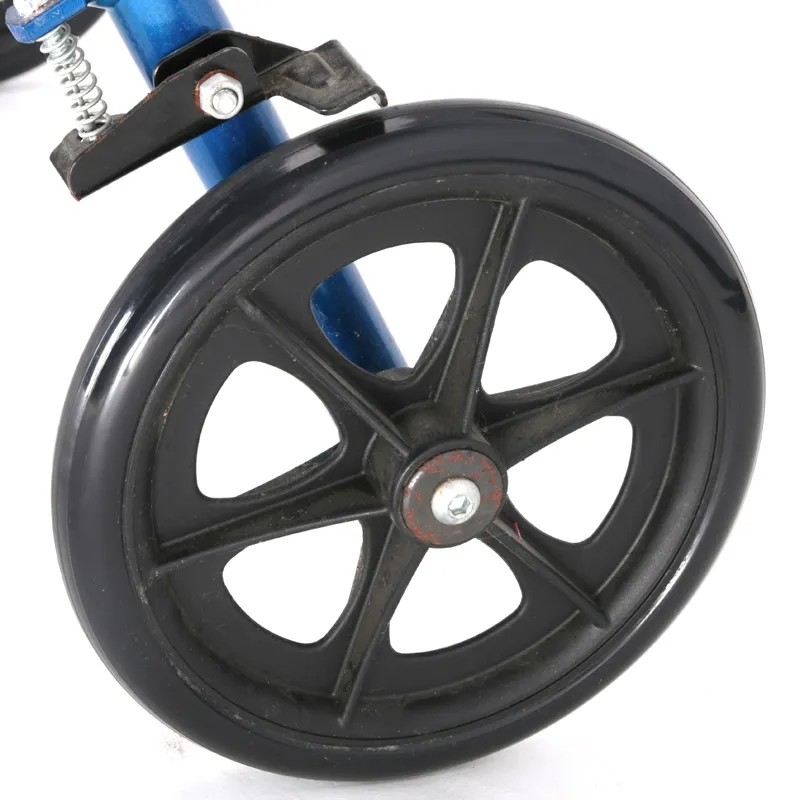
Why do many people mistakenly believe that a 4-wheel rollator can be used as a wheelchair?
This mainly stems from two visual misconceptions and one psychological misconception:
1. Visual Misconception: Both have wheels and a seat
Many people, upon first seeing the appearance of a 4-wheel rollator, will subconsciously confuse it with a wheelchair. In fact, it is only for the user to take short breaks while walking.
2. Functional Misconception: Both can move
While a 4-wheel rollator walker can "glide," it is to reduce friction during walking, not to allow the user to sit and glide.
3. Psychological Misconception: Saving energy
Some elderly people or caregivers, for the sake of saving energy, will have someone push them, but this actually increases the risk of injury.
The correct approach is—if walking is truly difficult, please switch to a suitable wheelchair, rather than forcing the use of a 4-wheel rollator.
What are some safe alternatives?
When users are unable to walk for extended periods or have unstable balance, the following alternative devices can be considered:
1. Manual Wheelchair
Sturdy structure, suitable for short-distance mobility, high safety, and can be pushed by caregivers.
2. Electric Wheelchair
Suitable for users with insufficient upper limb strength or who need to go out frequently. Simple to operate and highly comfortable.
3. Assisted Walking Vehicle with Seat (Special Models)
Some products are equipped with reinforced seat cushions and dual brakes, designed for "short-term sitting and rest," but are still not recommended for use while moving.
Why You Can't Sit on a 4-Wheel Rollator Walker?
Based on the above analysis, we can draw clear conclusions:
• The structure of a 4-wheel rollator walker is only suitable for walking assistance and does not have the function of carrying passengers while moving.
• Being pushed while seated poses an extremely high risk, including tipping over, sliding, and structural damage.
• Its seat is only for short rests and should not be used while moving.
• If you need to be pushed while seated, please choose a professional wheelchair, not a 4-wheel rollator walker.
Remember: A 4-wheel rollator walker is a "walking aid," not a "moving chair."
Used correctly, it allows you to walk more safely and independently; used incorrectly, it can be dangerous.
Can Dayang Medical supply hospital beds and walking aids globally?
Yes. Guangdong Dayang Medical Technology Co., Ltd. is a leading manufacturer and supplier in China, providing hospital beds, walking aids, shower chairs, commodes, and electric and manual wheelchairs. Founded in 2009, we operate two R&D and production bases, ensuring high-quality manufacturing and timely delivery. All products comply with ISO13485, ISO9001, FDA, TUV certifications, and CE marks. Buyers can purchase customized or standard models, taking advantage of wholesale pricing, promotions, and direct factory sourcing.