

In the fields of elderly care, post-operative rehabilitation, long-term bedridden care, and rehabilitation for mobility impairments, the toilet wheelchair is a highly practical assistive device.
It is not only a mobility tool but also a composite care device combining toileting and wheelchair functions, significantly improving the quality of life and self-care ability of people with mobility impairments.
Many people, upon first hearing the term "toilet wheelchair," often have the following questions:
Why use a toilet wheelchair?
Who truly needs a toilet wheelchair?
What is the difference between it and a regular wheelchair or commode chair?
This article will systematically and professionally answer these questions from multiple perspectives, including structural features, functional applications, target populations, usage environments, and selection considerations.
What is a Toilet Wheelchair?
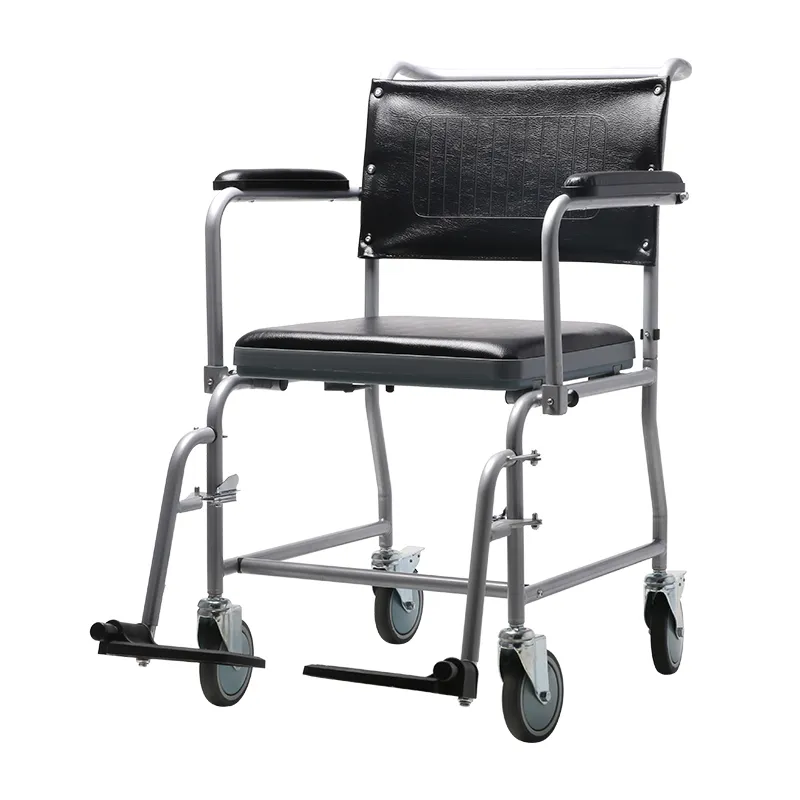
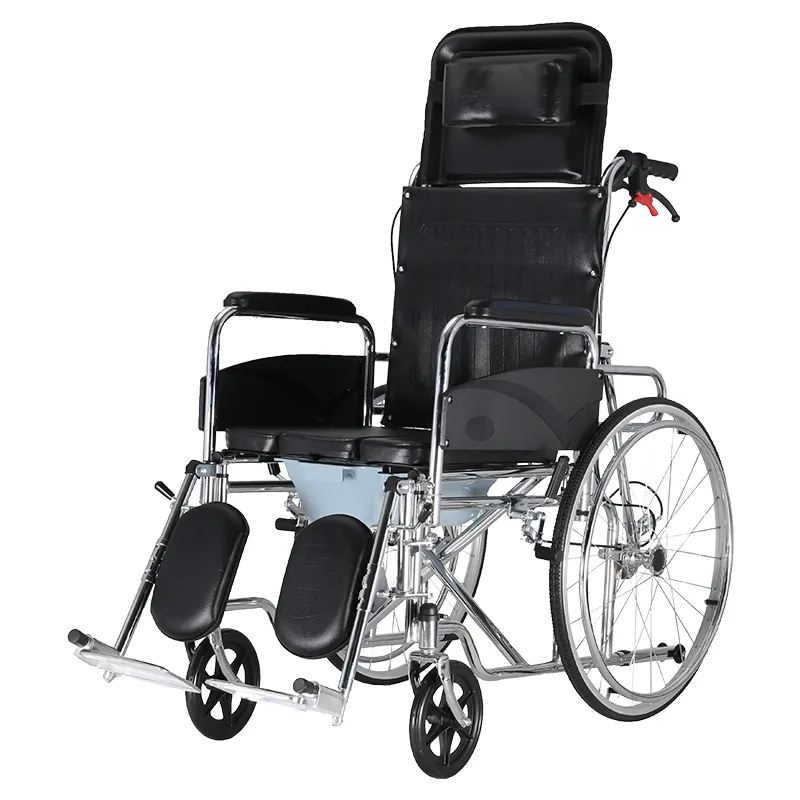
A toilet wheelchair, also known as a commode wheelchair or a wheelchair with a toilet function, is a multifunctional care device that combines the functions of a wheelchair and a commode chair. It assists the user in movement and can also be used directly for toileting or bathing.
These products are typically made of a metal or aluminum alloy frame and are equipped with a toilet seat, a removable commode, and a wheel system. Some models can be pushed directly into the bathroom or used at the bedside, greatly facilitating use for people with mobility impairments.
Basic components of a toilet wheelchair:
• Sturdy wheelchair frame: Strong load-bearing capacity, providing safe support;
• Seat ring with opening: Convenient for toilet use;
• Removable bedpan: For collecting excrement, easy to clean;
• Non-slip footrests: Ensure safe use;
• Braking system and push handle: Convenient for caregivers to operate and secure.
In short, a toilet commode wheelchair is an assistive device that combines "mobility + toileting" functions, widely used in home care, elderly care institutions, and rehabilitation centers.
Why use a toilet wheelchair?
Many people think that toilet wheelchairs are just tools for convenient toileting, but in reality, their function goes far beyond that.
The following are the main benefits of toilet wheelchairs:
1. Solving the toileting problem for people with mobility impairments
For bedridden patients, post-operative recoveries, or the elderly, the process of getting up, walking to the bathroom, and transferring to the commode is very difficult.
The core value of the toilet commode wheelchair lies in making toileting safe, convenient, and independent.
Using a toilet wheelchair, users can sit directly in the wheelchair to use the toilet, or be pushed to the bathroom by caregivers, eliminating the need for multiple body transfers and reducing the risk of falls.
2. Improved Quality of Life and Self-Esteem
Toileting is one of the most basic self-care behaviors in daily life.
When a person with mobility impairments completely relies on others for toileting, they may experience embarrassment and psychological stress.
The toilet commode wheelchair is designed to allow this group of people to maintain their self-care ability and dignity as much as possible.
Even in bed or during rehabilitation, users can still complete toileting tasks relatively independently, thus significantly improving their quality of life.
3. Reduced Workload for Caregivers
For caregivers, assisting those with limited mobility to use the toilet is a time-consuming, laborious, and potentially dangerous task.
The toilet wheelchair effectively reduces physical labor; its integrated design for mobility and defecation makes care more efficient and safer.
For example, caregivers can directly push the toilet commode wheelchair to the bathroom, eliminating the need to repeatedly lift the patient and reducing the risk of lumbar strain.
4. Improved Home Safety and Convenience
Many family bathrooms have limited space and slippery floors, posing a significant safety hazard for the elderly or disabled.
Using a toilet wheelchair avoids frequent transfers, reduces the risk of slips and falls, and features non-slip footpads and locking brakes to ensure stable use.
5. Support for Rehabilitation Training and Transition Phases
For post-operative patients (such as those undergoing hip replacement, lower limb fractures, or neurological rehabilitation), the toilet wheelchair is not only an aid to toileting but also a crucial part of rehabilitation training.
It allows users to gradually regain confidence in independent sitting, transfers, and walking in a safe environment, serving as an important transitional device from bedridden to walking.
Who Needs a Toilet Wheelchair?
The reasons and needs for using toilet commode wheelchairs vary among different groups. The following are the main categories of applicable groups.
1. Should elderly people with mobility issues use a toilet wheelchair?
As people age, their muscle strength and balance decline, especially in the legs, making it difficult to stand up, turn around, and walk to the toilet.
At this time, a toilet wheelchair can provide the following assistance:
• Reduce the risk of falls;
• Prevent accidents caused by darkness or slippery floors when using the toilet at night;
• Allow seniors to use the toilet independently at the bedside, improving their convenience.
For seniors aging at home, a toilet wheelchair is almost an essential safety aid.
2. Is a toilet wheelchair suitable for post-operative rehabilitation patients?
Post-operative patients, such as those who have undergone hip replacement, knee replacement, or spinal surgery, often need to restrict their activity during the recovery period.
They may not be able to manage a full movement from bed to toilet or safely transfer to the toilet.
A toilet wheelchair allows them to:
• Use the toilet safely at the bedside or in the bathroom;
• Reduce the risk of falls and wound aggravation;
• Gradually regain the ability to sit and transfer.
Therefore, for patients in the rehabilitation period, using a toilet commode wheelchair is not only convenient but also helps with a safe transition in rehabilitation training.
3. Why do long-term bedridden or semi-bedridden patients need toilet wheelchairs?
For patients who are bedridden for extended periods due to illness, accident, or frailty, ordinary bedpans are inconvenient and difficult to care for.
Toilet wheelchairs can:
• Allow patients to use the toilet without straying too far from the bed;
• Avoid odors and infection risks associated with bedpan use;
• Reduce the workload of caregivers and improve hygiene.
In this case, a toilet wheelchair is not only a convenient device but also a nursing necessity.
4. Do people with disabilities and mobility impairments need toilet wheelchairs?
For people with lower limb disabilities, paraplegia, or difficulty with mobility coordination, toilet wheelchairs are an important tool for maintaining independent daily life.
They can move around, use the toilet, and clean themselves independently without relying entirely on others.
This not only improves their self-care ability but also greatly enhances their psychological confidence and dignity.
5. Why are toilet wheelchairs commonly provided in rehabilitation facilities and nursing homes?
In professional institutions, toilet wheelchairs are almost standard nursing equipment. The reason is simple: It simultaneously meets the needs of mobility, toileting, and cleaning, significantly improving care efficiency and safety.
For facility managers, it also standardizes care procedures, reduces the risk of accidents, and improves service quality.
What types of toilet wheelchairs are there?
Based on design and purpose, toilet wheelchairs can be broadly categorized as follows:
1. Standard Toilet Wheelchair
Equipped with basic toileting functions and a removable bedpan, suitable for home use.
2. With Footrests and Armrests
Increased comfort and safety, suitable for the elderly or users who need to be pushed.
3. Pushable Toilet Wheelchair
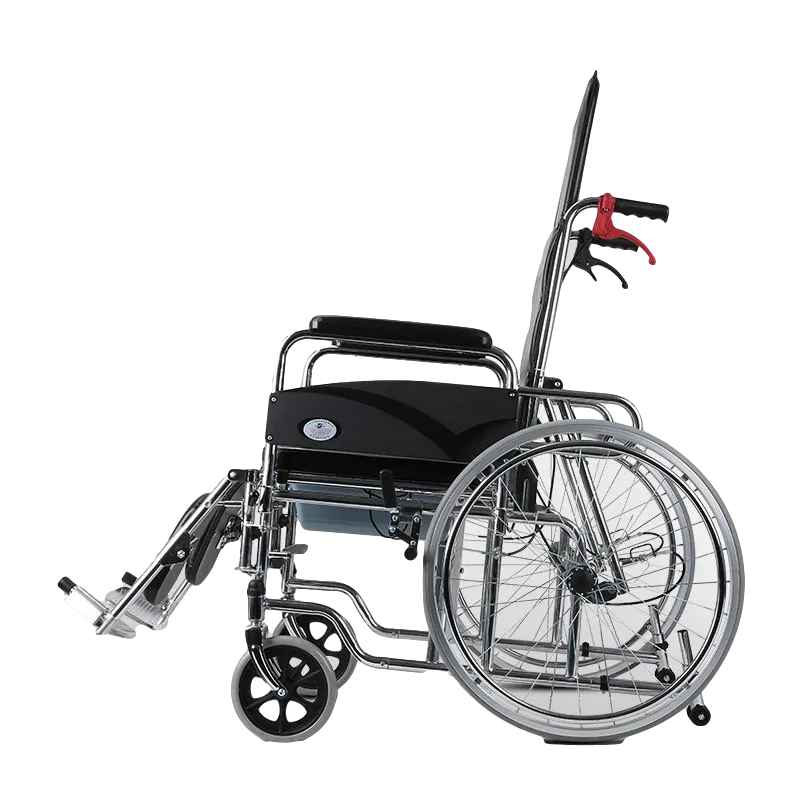
Equipped with a rear push handle and braking system, allowing caregivers to push it for movement; often used in nursing homes.
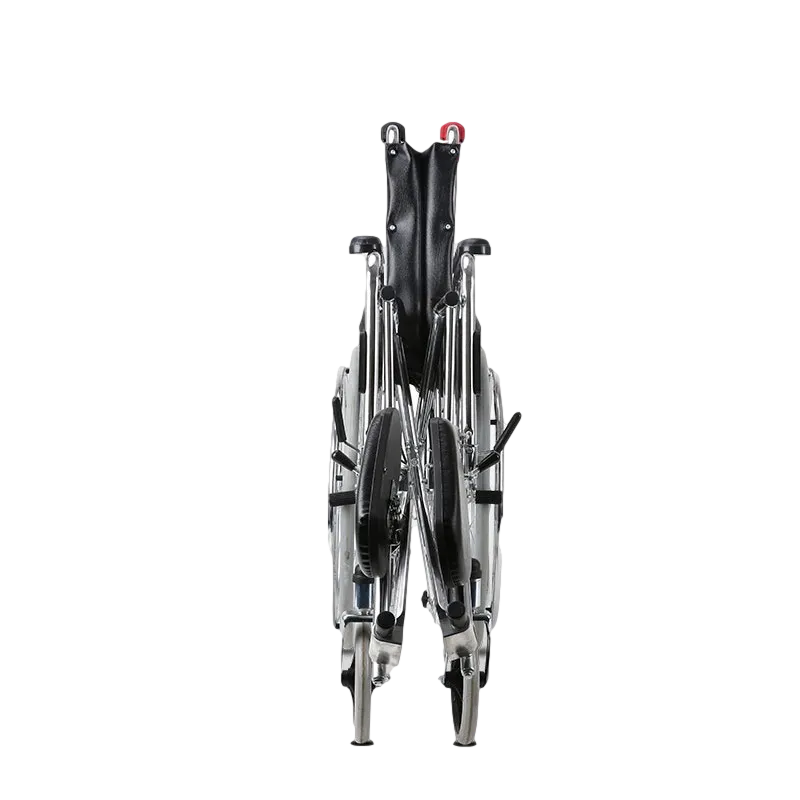
4. Folding Toilet Wheelchair
Easy to store and carry, suitable for families with limited space or those needing to use it outdoors.
5. Direct Toilet Access Wheelchair
The seat height matches a standard toilet, allowing direct access to the bathroom without needing to be moved.
What are the advantages of using a toilet wheelchair?
Benefits of a Toilet Wheelchair:
1. Multifunctional and space-saving:
2. Improved safety
3. Enhanced user independence
4. Improved quality of life
5. Reduced care intensity
1. Multifunctional and space-saving: The toilet commode wheelchair combines the functions of a wheelchair and a commode chair, meeting multiple needs in one device.
2. Improved safety: Equipped with non-slip footrests, a braking system, and a stable support structure, effectively preventing falls.
3. Enhance user independence: Users can operate the toilet independently or with minimal assistance, reducing dependence on others.
4. Improve quality of life: Reduces embarrassment and psychological burden, making toileting natural, safe, and private.
5. Reduce care intensity: Caregivers do not need to repeatedly move the user; the wheelchair can be directly pushed to the toilet or bedside.
What precautions should be taken when using a toilet wheelchair?
To ensure safety and hygiene, the following points should be observed when using a toilet wheelchair:
• Secure brakes: The wheels must be locked before each use to prevent slipping;
• Check that the bedpan is properly installed: Prevent leaks;
• Maintain cleanliness and disinfection: Clean and disinfect the bedpan after daily use;
• Avoid overloading: Adhere to the maximum weight-bearing capacity;
• Ensure the floor is dry: Prevent slips and falls;
• Regularly check screws and foot pads: Maintain structural stability.
What factors should be considered when choosing a toilet wheelchair?
Factors to consider when choosing a toilet wheelchair:
1. User's physical condition
Weight, upper limb strength, and mobility will all affect model selection.
For example, heavier users should choose a reinforced toilet commode wheelchair with strong load-bearing capacity.
2. Usage environment
If primarily used in the bedroom, a model with a built-in bedpan is suitable; if the bathroom space is sufficient, a push-in toilet commode wheelchair is more appropriate.
3. Material selection
Aluminum alloy is lightweight and durable, stainless steel has better rust resistance, and plastic structures are suitable for short-term use.
4. Seat comfort
High-quality PU cushions can reduce discomfort during prolonged use.
5. Bedpan cleaning design
Removable structures make cleaning easier and ensure hygiene.
In which scenarios are toilet wheelchairs suitable?
1. Home bedrooms and bathrooms: Provide convenient daily toileting;
2. Nursing homes and rehabilitation centers: Meet the needs of centralized care and relocation;
3. Hospital wards: Convenient for post-operative patients;
4. Temporary rehabilitation environments: Suitable for post-operative patients or those with short-term mobility limitations.
Can a toilet wheelchair be used directly in the toilet?
Yes, most models can be pushed directly into the bathroom or placed on top of the toilet.
Can a toilet wheelchair be used long-term?
Yes. Sturdy and durable toilet commode wheelchairs can be used for a long time, requiring only regular maintenance.
Can a toilet wheelchair be used for showering?
Some waterproof models can be used for showering, but it should be confirmed that the rust prevention and drainage design are adequate.
Does every elderly person need a toilet commode wheelchair?
Not necessarily. It is only recommended when there is limited mobility or difficulty using the toilet.
Can Dayang Medical support large-scale wholesale orders?
Yes, with two production and R&D bases, Dayang Medical has the capacity to handle large-scale wholesale orders efficiently. As a professional factory and supplier, it ensures stable production output and timely delivery. This makes it an ideal partner for distributors, retailers, and healthcare providers looking for reliable supply and competitive prices.