

Among the elderly or those with limited mobility, "4-wheel rollator" and "wheelchair" are often mentioned together. Many people wonder:
"I can still walk, should I just use a wheelchair?"
"Is a 4-wheel rollator really better than a wheelchair?"
In fact, when a user still has some ability to walk, a 4-wheel rollator walker is usually more helpful in maintaining physical activity and independence than a wheelchair. This article will analyze this from multiple perspectives, including ergonomics, psychological factors, safety, and ease of use, to help you understand why choosing a 4-wheel rollator is often a better decision when you can still walk.
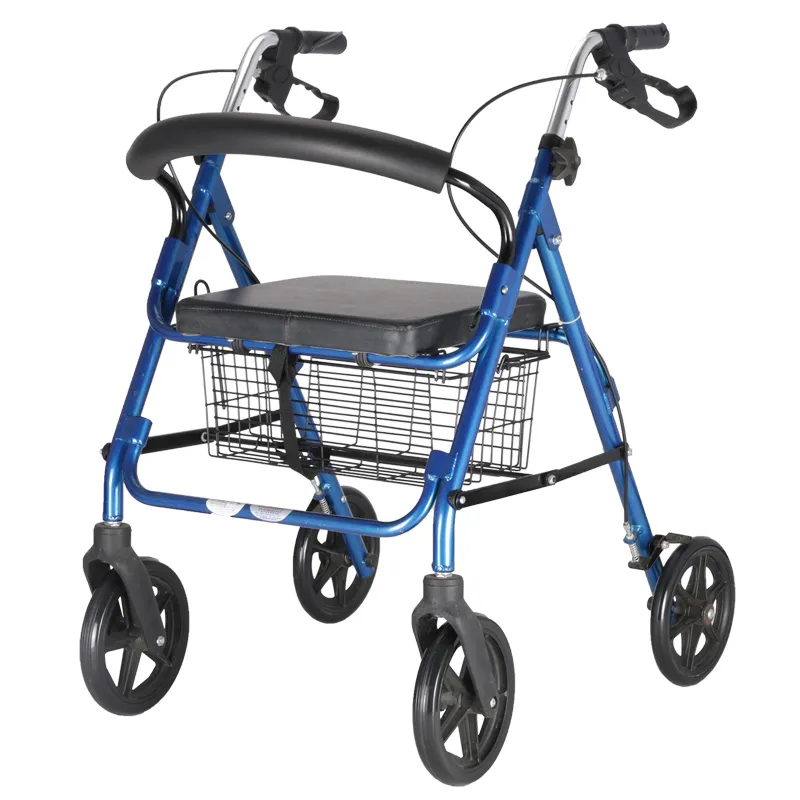
Basic Definitions of 4-wheel rollators and Wheelchairs
1. What is a 4-wheel rollator walker?
A 4-wheel rollator walker is a mobility aid designed to help walkers maintain balance and stability.
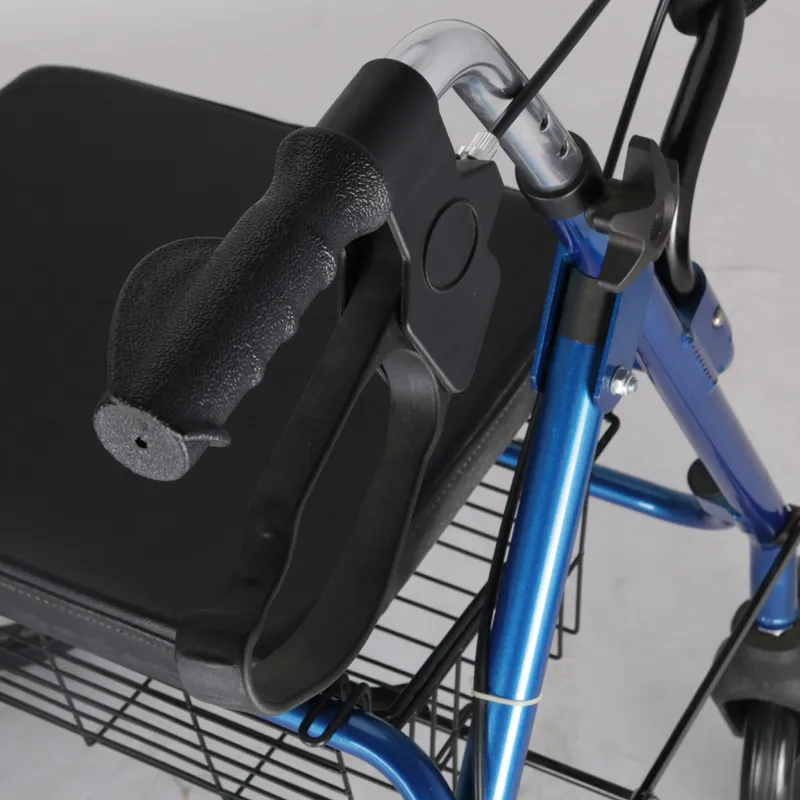
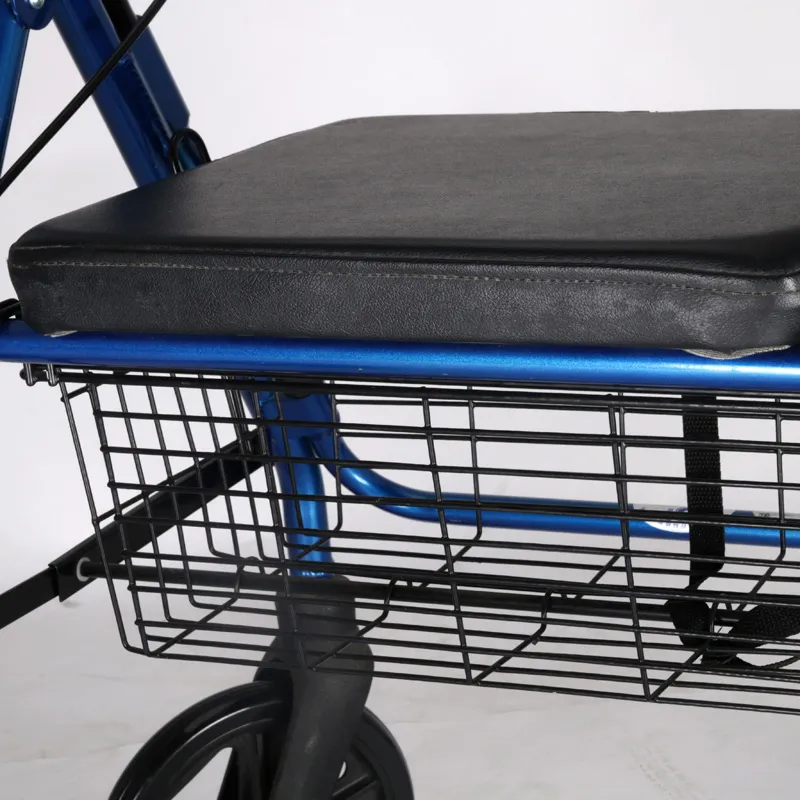
It typically includes four wheels, a height-adjustable handle, a braking system, and a seat for the user to rest briefly. Some models also include a basket for placing personal belongings.
Its core purpose is to:
• Support walkers in maintaining gait stability;
• Reduce the burden on the lower limbs;
• Extend the time spent walking independently.
In other words, a 4-wheel rollator walker doesn't allow you to "walk while sitting," but rather "helps you continue walking."
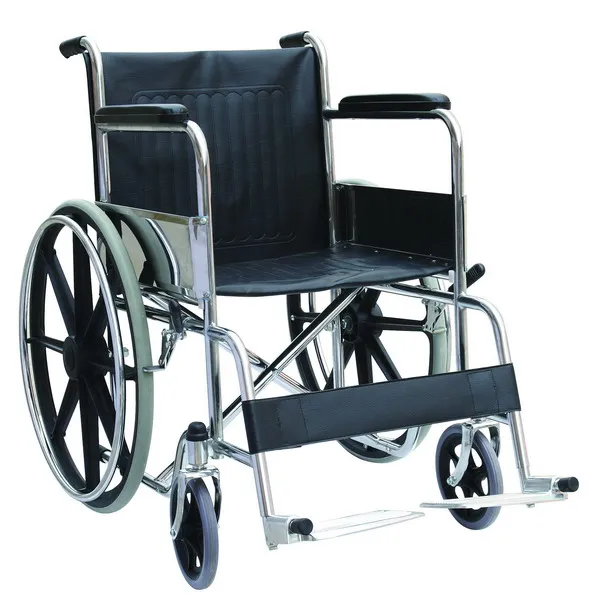
2. What is a wheelchair?
A wheelchair is a mobile device designed for people who have completely or partially lost the ability to walk.
Users move manually or electrically, relying on a seat for body support, without needing to walk on their legs.
Wheelchairs are extremely important in medical rehabilitation and long-term care, but for people who can still walk, premature use of a wheelchair may accelerate muscle atrophy and a decline in balance.
The Fundamental Difference Between a 4-Wheel Rollator and a Wheelchair
Comparison Dimensions | 4-Wheel Rollator | Wheelchair |
| Purpose | Assists walking and enhances stability | Alternative to walking, provides full body support |
| Usage Method | User actively walks to assist the vehicle's movement | User is seated and pushed or propelled |
| Physical Engagement | High – requires involvement of both legs and core muscles | Low risk – primarily relies on upper limbs or motor propulsion |
| Target Audience | Suitable for those who can walk but tire easily or have poor balance | Suitable for those unable to walk or at high risk of walking |
| Psychological Impact | Encourages independence, confidence, and a sense of participation | Prone to dependency and passive mentality |
| Health Benefits | Maintains muscle activity and blood circulation | Long-term use may cause lower limb atrophy |
Portability | Foldable, lightweight, and portable | Relatively bulky and space-consuming |
Essentially, a 4-wheel rollator walker is an "extension of walking," while a wheelchair is a "substitute for walking."
Therefore, if a person is still able to walk, choosing a 4-wheel rollator walker usually achieves a better balance between safety and health.
Why should a 4-wheel rollator be the first choice when one can still walk?
1. A 4-wheel rollator helps maintain lower limb strength and body balance
When a person uses a 4-wheel rollator walker to walk, their legs remain active.
This continuous walking behavior helps to:
• Maintain muscle tone;
• Promote blood circulation;
• Reduce joint stiffness;
• Maintain coordination and balance.
In contrast, wheelchair users sit for long periods, and their leg muscles hardly participate in activity, which can lead to muscle atrophy, deep vein thrombosis, and bone loss over time.
In other words, a 4-wheel rollator helps people "keep walking," while a wheelchair makes people "stop walking."
2. A 4-wheel rollator enhances independence and self-confidence
One reason many elderly people are reluctant to use wheelchairs is the fear of being seen as "completely disabled."
A 4-wheel rollator avoids this psychological barrier.
People who use a 4-wheel rollator walker:
• Can still walk and control their own direction;
• Can rest when needed, but without relying on others to push them;
Feel a sense of accomplishment: "I can still move," "I am still independent."
This psychological independence is crucial for physical and mental health. Long-term studies show that older adults who are able to move independently are more likely to maintain positive emotions and a willingness to socialize.
3. 4-wheel rollators are more flexible and lightweight than wheelchairs
4-wheel rollators typically use a lightweight aluminum alloy structure, weighing between 6 and 10 kg, and can be easily folded and stored in a car trunk.
In contrast, wheelchairs, especially electric wheelchairs, are larger and heavier, making them inconvenient to carry and requiring more storage space.
For users who frequently go for walks, shopping, or participate in community activities, the portability and mobility of 4-wheel rollator walkers are undoubtedly a significant advantage.
4. 4-wheel rollators allow for rest at any time, reducing the risk of falls
Many people worry, "Won't walking be too tiring?" In fact, modern 4-wheel rollator walkers generally have a built-in seat, allowing users to sit down and rest when tired.
This not only reduces the risk of falls but also avoids situations where users are "forced to use a wheelchair due to exhaustion."
Furthermore, the braking system and height adjustment function of the 4-wheel rollator walker further ensure safety.
The Positive Health Benefits of a 4-Wheel Rollator
1. Maintaining Blood Circulation and Cardiopulmonary Function
Using a 4-wheel rollator allows users to perform daily walking activities in a stable and safe manner.
Regular walking helps to:
• Improve cardiopulmonary endurance;
• Lower blood pressure;
• Prevent lower limb edema and varicose veins;
• Improve overall metabolic rate.
In contrast, the sedentary state of a wheelchair can easily lead to slowed metabolism, indigestion, and circulatory problems.
2. Slowing Down Physical Degeneration
When a person stops walking, the rate of physical degeneration accelerates significantly.
Using a 4-wheel rollator allows the body to continuously receive "mild exercise stimulation," maintaining joint flexibility and core stability.
Many rehabilitation experts point out:
"The value of a 4-wheel rollator lies not only in preventing falls, but also in maintaining the ability to walk." This continuity is significant for extending independent living time.
3. Improving Mental State and Social Willingness
Using a 4-wheel rollator helps maintain the ability to go out.
Being able to walk to the park, supermarket, or meet friends independently not only brings psychological satisfaction but also alleviates loneliness and depression.
Wheelchair users, however, often require assistance, have limited mobility, and are prone to social withdrawal.
From a user experience perspective: 4-wheel rollator vs. wheelchair
Usage Dimensions | 4-wheel rollator | Wheelchairs |
Activity Posture | Standing and walking | Seated posture, passive movement |
| Spatial Adaptability | Can go up and down slopes and over thresholds | More demanding on terrain |
| Carryable Items | Built-in basket or bag | Requires additional carrying bags or supports |
| Storage Space | Compact size when folded | Large size, takes up space |
Convenience for Going Out | Can be taken by car or elevator | Electric wheelchairs face more limitations |
| Psychological Acceptance | More natural and active | Passive, easily stigmatized |
From a daily use perspective, the 4-wheel rollator is clearly more suitable for the needs of people with mild mobility impairments.
When is it not recommended to use a 4-wheel rollator?
While 4-wheel rollators are helpful for most people who can still walk, there are some situations that require attention:
• Those who cannot maintain upper body balance: If even standing is difficult, a wheelchair should be chosen.
• Those with severe lower limb pain or weakness: Assisted vehicles may increase the risk of falls.
• Those with slow reaction time or severe cognitive impairment: They may not be able to operate the brakes correctly or maintain direction.
In these cases, a wheelchair is actually safer.
Therefore, the choice between a 4-wheel rollator walker and a wheelchair should be based on physical condition and doctor's advice, not simply personal preference.
How to choose the right 4-wheel rollator walker?
1. Determine Height and Arm Length
The handlebars should be level with the user's wrist to ensure a natural posture.
2. Consider the Vehicle's Weight
Lightweight walkers are easier to move, while heavy-duty walkers are more stable.
3. Check the Braking System
It must lock easily to prevent slippage.
Choose a model with a seat design
This allows for rest and reduces fatigue.
4. Ensure Tire and Structural Stability
High-quality rubber tires absorb shock and improve comfort.
When You Can Still Walk, a 4-Wheel Rollator is Better Than a Wheelchair
Overall, a 4-wheel rollator is not just a walking aid, but a way to maintain independence and dignity.
Dimensions | 4-wheel rollator | Wheelchair |
| Health Benefits | Maintain muscle activity | Prone to muscle atrophy |
| Psychological Experience | Autonomous, active | Dependence, passive |
| Portability and Lightweight | High | Lower risk |
| Safety | Assisted stability with braking | Depends on the user's situation |
When your body still allows you to walk, choosing a 4-wheel rollator allows you to:
• Continue exercising your legs;
• Maintain social and life participation;
• Enjoy more freedom and confidence.
As a saying in rehabilitation medicine goes:
"Walk if you can, use support if you can, don't rush to sit down."
The 4-wheel rollator is the best partner for "keeping walking."
Can Dayang Medical supply multi-product bundles?
Yes, buyers can order bundles combining wheelchairs, walkers, beds, and accessories. Bundling helps distributors provide comprehensive solutions for healthcare institutions or retail packages. Our factory in China supports quotes, promotional discounts, and wholesale pricing for these multi-product orders.
Buyers benefit from low price purchasing while ensuring all items meet high quality and certified standards, making Dayang Medical a flexible and reliable supplier.