

In routine hospital care, patient transfer is a high-frequency, critical, and risky procedure. From wards to nursing rooms, from beds to examination tables, from wheelchairs to bathrooms, patients' mobility needs persist throughout their hospital stay.
However, traditional methods such as manual handling, hugging, and wheelchair assistance not only pose safety hazards but also place considerable stress on both medical staff and patients.
Against this backdrop, a more professional, safe, and efficient transfer device has become an increasingly important choice for hospitals—the patient lift transfer chair.
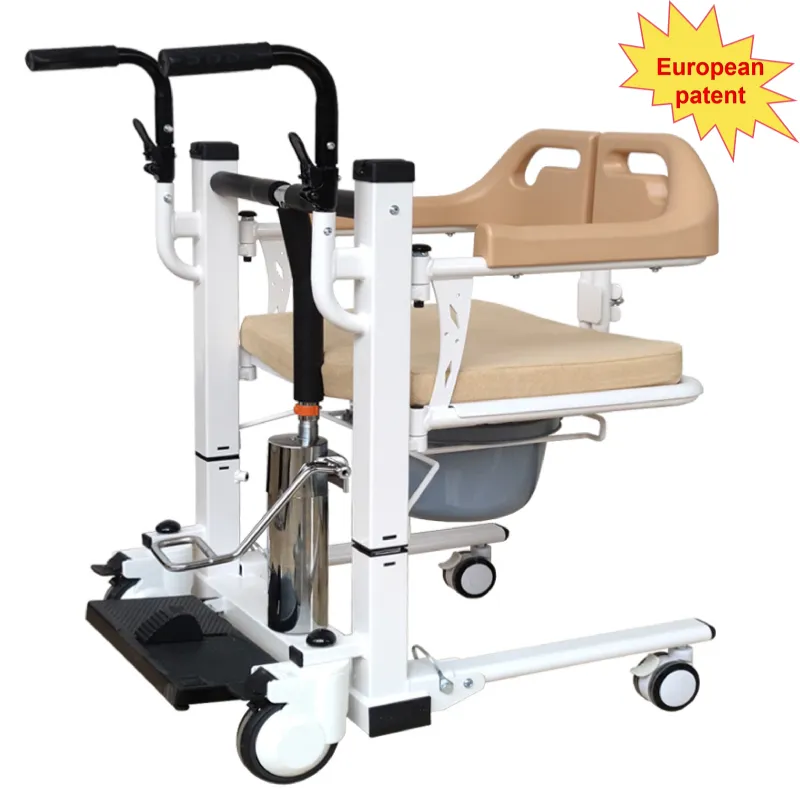
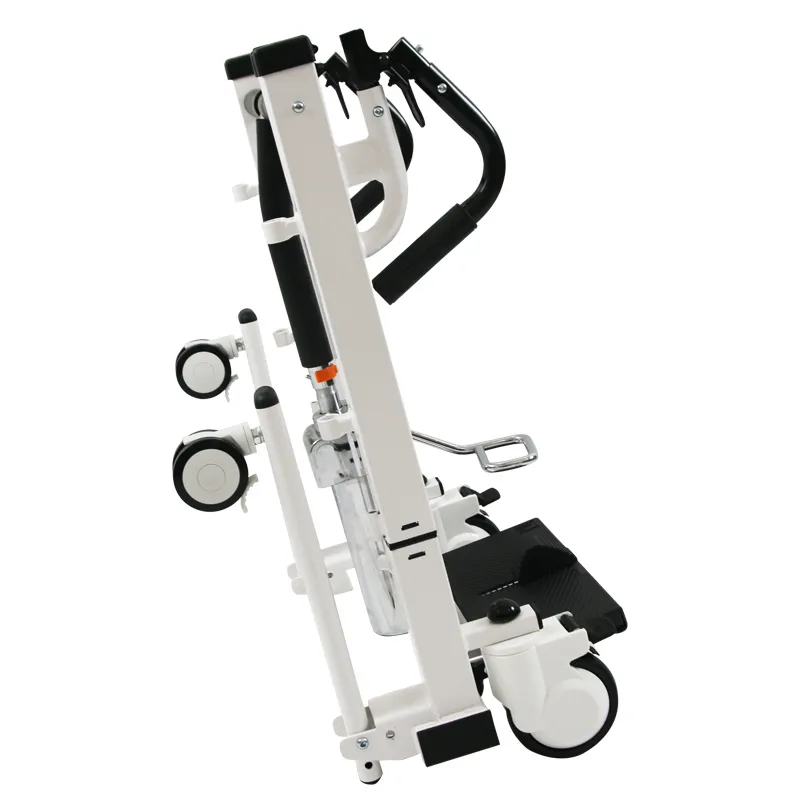
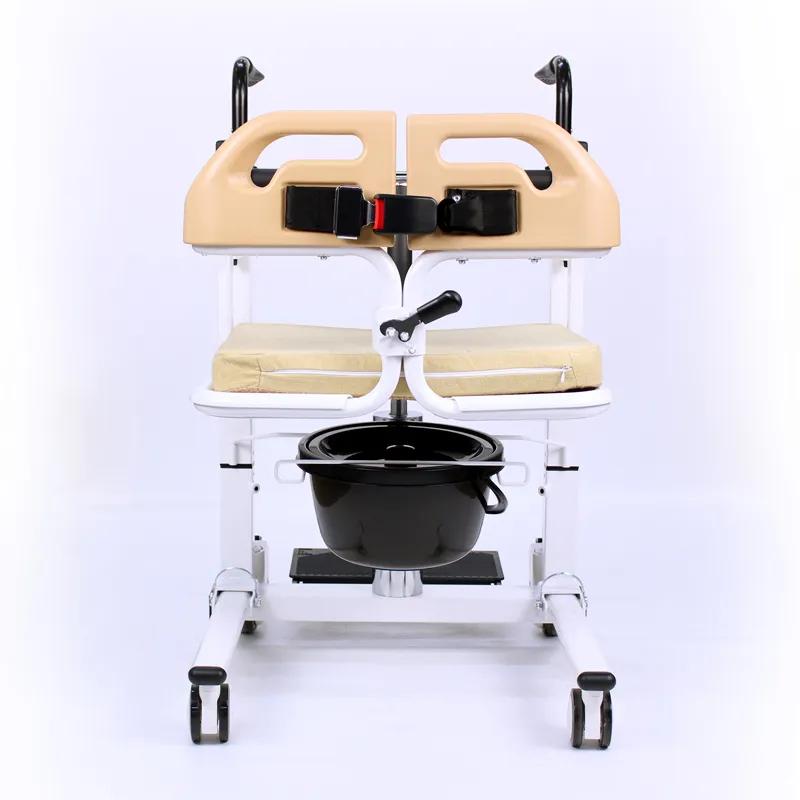
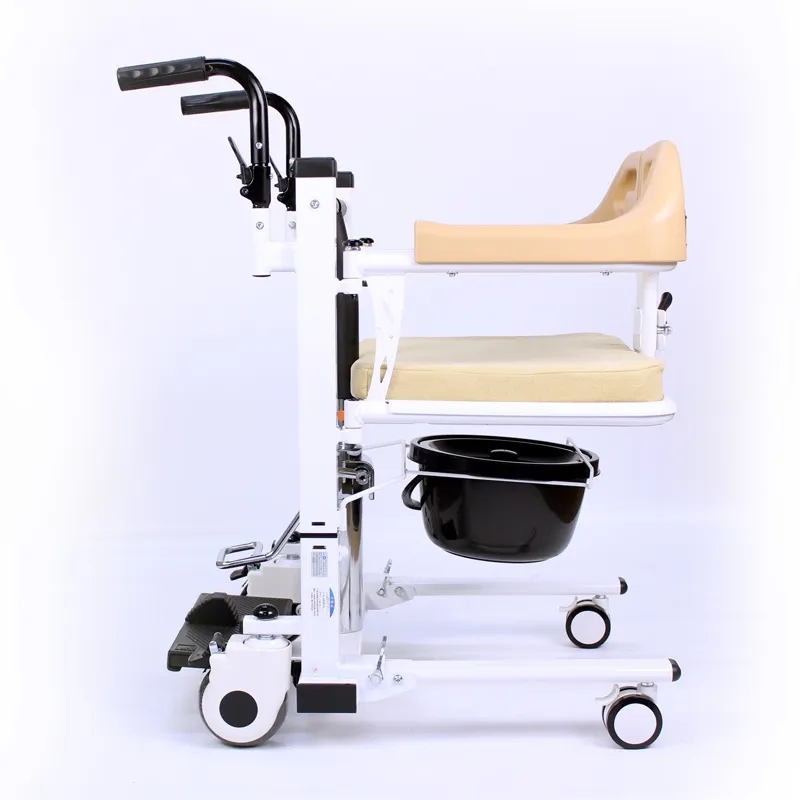
A patient lift transfer chair is a comprehensive transfer tool designed specifically for healthcare institutions, integrating lifting, support, fixation, and mobility. It significantly improves transfer efficiency, reduces nursing risks, and enhances the patient experience.
So why do hospitals need patient lift transfer chairs so much? And what makes it an indispensable piece of equipment in modern hospitals?
What core pain points does the patient lift transfer chair address for hospitals?
Medical institutions have higher requirements for patient transfer procedures than home care, which must meet the following criteria:
• High safety standards
• High-frequency reusability
• Rapid transfer between different departments
• Reliable load-bearing capacity
• High efficiency and standardized nursing actions
However, traditional transfer methods generally have the following drawbacks:
1. High risk of manual handling
Medical staff are prone to lumbar spine, wrist, and shoulder injuries due to prolonged bending and lifting of patients.
2. Varying patient conditions and difficulty in transfer
Patients such as postoperative patients, comatose patients, paralyzed patients, and elderly patients lack physical support, and improper handling can easily lead to secondary injuries.
3. Traditional wheelchairs cannot solve the "height difference" problem
Different heights of hospital beds, examination tables, toilets, etc., make it impossible for wheelchairs to be height-adapted, resulting in unsmooth transfers.
4. Difficulty in Unifying Transfer Needs Across Multiple Scenarios
Hospital transfers involve more than just moving from bed to chair; they also include:
• Bed ↔ Examination Bed
• Bed ↔ Imaging Equipment
• Ward ↔ Treatment Area
• Emergency Room ↔ Intensive Care Unit
These scenarios require safer and more flexible equipment.
The patient lift transfer chair is a solution developed to address these pain points.
Why does patient transfer in a hospital require a high level of safety?
In a hospital environment, patients' physical conditions are often complex, including:
• Post-operative weakness
• Muscle atrophy due to prolonged bed rest
• Elderly patients with fragile bones
• Balance disorders in patients with neurological diseases
• The risk of severe pain in trauma patients
Traditional manual assistance or wheelchair-assisted transfers are insufficiently safe in these situations.
How does the patient lift transfer chair improve safety?
The structural safety design of the patient lift transfer chair provides hospitals with more reliable protection:
• A fully enclosed support system prevents forward or side tilting.
• A stable lifting system ensures height adaptation.
• A split seat allows patients to enter without standing.
• A widened support surface provides more robust support.
• A multi-point braking system prevents slippage during transfer.
• A locking guardrail structure ensures the patient does not move unnecessarily.
Therefore, the patient lift transfer chair can significantly improve the stability of hospital transfers and reduce the risk of accidents, which is one of the reasons why medical institutions attach great importance to it.
Can the patient lift transfer chair reduce the physical burden on medical staff?
This is one of the most important questions for all hospitals.
Hospital nursing staff face a large amount of repetitive physical labor, especially in bed-chair transfers.
Surveys show that traditional handling methods can easily lead to the following:
• Lower back strain
• Lumbar disc herniation
• Excessive stress on the arms and shoulders
• Occupational injuries caused by long-term strain
The patient lift transfer chair is designed to reduce the burden on caregivers.
How does a patient lift transfer chair reduce nursing stress?
• No need to bend over and lift patients.
• The lifting system replaces manual lifting.
• Patient transfer can be completed by a single person.
• Easy to move, reducing pushing and pulling load.
• Patient posture is supported by the equipment, requiring no additional assistance.
This means that while hospital nursing efficiency is improved, the risk of physical injury to nursing staff is significantly reduced, and the overall work experience is optimized.
What role does a patient lift transfer chair play in a hospital?
Is it an assistive tool or a core piece of equipment?
In a hospital, the patient lift transfer chair is not just an assistive tool; it is more like a frequently used core nursing device.
This is because there are many tasks in the hospital environment that must be completed with it:
✔ Adaptable to different height environments
The heights of various facilities in a hospital vary:
• Hospital beds: 55–65 cm
• Examination beds: 60–85 cm
• Toilets: 40–50 cm
• Treatment tables: 70–90 cm
Wheelchairs cannot accommodate these height differences, but the patient lift transfer chair can flexibly adjust through its lifting system, making the transfer process seamless.
✔ Improve the efficiency of specialized departments
For example:
• Rehabilitation Department
• Emergency Department
• Radiology Department
• Internal Medicine
• Post-operative Surgical Ward
• Intensive Care Unit (ICU)
In these areas, patient transfer is a high-frequency procedure, and the patient lift transfer chair can greatly improve efficiency and safety.
✔ Enable single-person care, facilitating hospital resource allocation and management
In situations of strained medical resources, the patient lift transfer chair makes it possible for "one nurse to complete a transfer task that originally required two people."
Therefore, it is not only an "auxiliary device" but also an important tool for improving hospital operational efficiency.
How does the patient lift transfer chair improve hospital nursing processes?
Modern hospital nursing pursues higher efficiency and standardization, and the patient lift transfer chair precisely meets these needs.
1. Standardized transfer movements
Traditional transfer methods suffer from inconsistent movements due to significant differences in nurses' experience.
The patient lift transfer chair ensures a uniform, safe, and stable operation.
2. Enhanced patient experience
Reduces the pain caused by pulling and lifting, making patients feel safer.
3. Reduced Transfer Time and Improved Turnover Efficiency
Multiple patients within the same department can be transferred more quickly.
4. Reduced Patient Incident Rate
Especially in patients with fractures, post-operative conditions, and elderly patients, patient lift transfer chairs significantly reduce the risk of falls and slips.
5. Easy Hygiene Control and Equipment Disinfection
Patient lift transfer chairs typically use easy-to-clean waterproof materials and antibacterial designs, meeting hospital disinfection standards.
These features make patient lift transfer chairs an important part of hospital nursing procedures.
Can patient lift transfer chairs be used in all hospital departments?
Patient lift transfer chairs are not only suitable for certain specific departments, but they actually cover most nursing scenarios in hospitals.
1. Internal Medicine and Surgical Wards
Patients have difficulty getting up and require frequent examinations or movements.
2. Rehabilitation Department
Assisting patients with movement before functional training in a safe state.
3. ICU and Monitoring Room
Confused and weak patients require stable, non-lifting transfers.
4. Emergency Department
Rapid and safe transfer is a key indicator. 5. Examination Departments (Radiology, Ultrasound)
Patients often need to be transferred between platforms to complete examinations.
6. Pre- and Post-operative Recovery Rooms
Post-operative patients require stable transfer methods.
7. Nursing Homes and Auxiliary Wards
Elderly patients have limited mobility and higher needs.
With hospitals placing greater emphasis on scientific nursing care, patient lift transfer chairs have become core equipment used in multiple departments.
How do patient lift transfer chairs reduce hospital accident and liability risks?
Hospitals' biggest concerns include:
• Patient falls during transfer
• Secondary injuries caused by patient slips
• Questioning of inappropriate transfer methods by family members
• Occupational injuries to nursing staff due to handling
• Additional liability for compensation
The role of patient lift transfer chairs in the hospital environment is precisely to solve these problems.
Key safety advantages include:
• Patients can be transferred without standing.
• Fully enclosed support prevents accidental tipping.
• Brakes and angle locking enhance stability.
• Height adjustment reduces lifting movements.
• Professional structure reduces the risk of external force injury.
Using the patient lift transfer chair has significantly reduced nursing safety incidents in hospitals, thereby reducing management risks and unnecessary disputes.
Why Choose Guangdong Dayang Medical as Your Trusted Supplier?
Guangdong Dayang Medical Technology Co., Ltd., founded in 2009, is a leading manufacturer and supplier of high-quality medical equipment, including electric wheelchairs, manual wheelchairs, sports wheelchairs, commodes, walkers, beds, mobility scooters, shower chairs, and walking sticks.
With two advanced R&D and production bases, the company ensures strict adherence to ISO13485, ISO9001, FDA, and TUV standards. Purchasing from Dayang Medical ensures access to advanced designs, patented technologies, and personalized services.