

Hospital beds are far more than just places to rest—they are critical medical devices that directly impact patient safety, comfort, and recovery. Whether in the intensive care unit or a home care setting, choosing the right bed is essential. This article will explore the main types of hospital beds, their specialized uses, and how to make an informed choice when faced with different types.
What are the most common types of hospital beds?
Based on different adjustment mechanisms, hospital beds are mainly divided into three basic types, each with its specific usage scenarios.
Manual Hospital Beds
Main features: The height of the bed and the angle of the back or legs can be manually adjusted by cranking a hand crank.
Core advantages: Simple structure, robust and durable, low maintenance cost, and economical price. It does not rely on electricity and has no risk of electronic failure.
Best For: For institutions with limited budgets, and for patients who do not require frequent repositioning (such as during the postoperative stabilization period).
Semi-Electric Hospital Beds
Main features: Electric head and foot adjustment, manual height adjustment.
Core advantages: A good balance is struck between cost and convenience, and patients have a certain degree of autonomy.
Best For: This is suitable for patients who require some self-care ability but have limited physical strength, or for families where caregivers cannot be present to manually adjust their condition at all times. It is commonly used in rehabilitation centers and long-term care facilities.
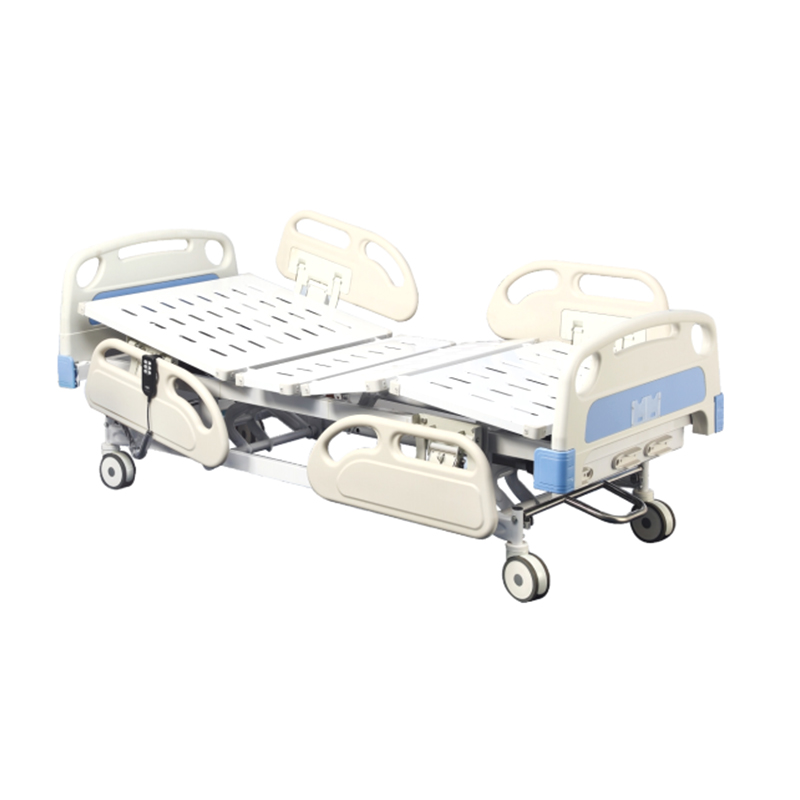
Fully Electric Hospital Beds
Main features: The head, feet, and height can all be adjusted electronically via remote control.
Core advantages: Offers optimal ease of operation, reduces the burden on caregivers, and enhances patient safety and independence.
Best For: Patients with limited mobility, patients requiring frequent turning, and patients requiring modern clinical or home care.
Which specialized hospital beds meet specific medical needs?
Specialized hospital beds provide targeted support for patients with specific health conditions or those at high risk.
Bariatric Hospital Beds
Designed for heavier patients, bariatric beds feature a wider frame and reinforced structure with a higher weight capacity (often up to 500 kg or more). They provide enhanced stability and safety, reducing the risk of injury to the patient or damage to the bed. Heavy-duty side rails and powerful motors facilitate safer care for larger individuals.
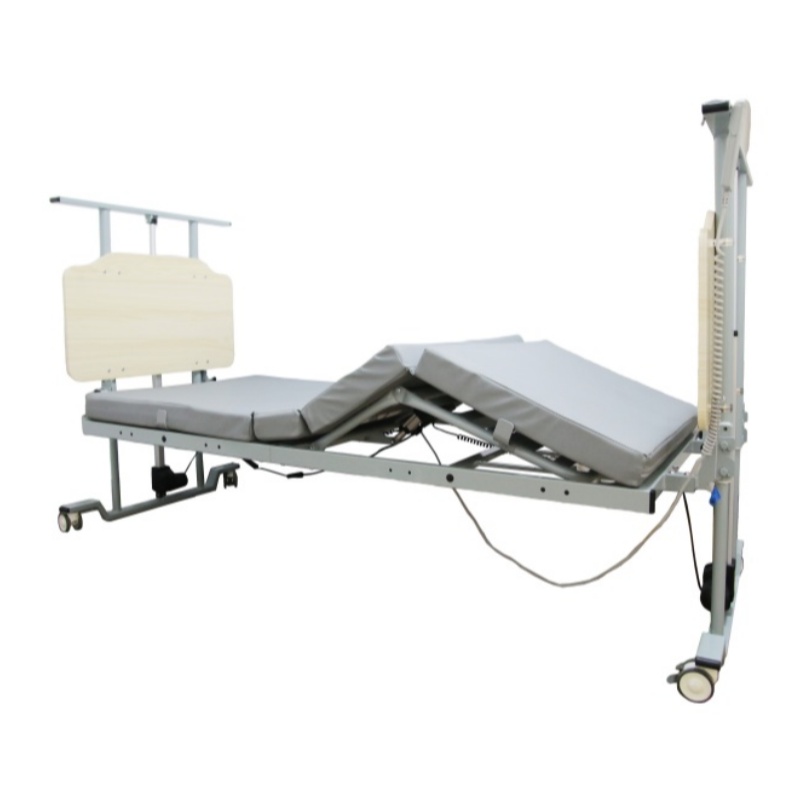
Low Hospital Beds
Also known as low-profile beds, these are designed to sit very close to the floor to minimize injury from falls. They are essential in settings caring for elderly patients, those with neurological conditions, or anyone at a high risk of falling. Many models can still be raised electronically to facilitate caregiving tasks, combining safety with practicality.
Pediatric Hospital Beds
These beds are scaled for infants and children, featuring high side rails or enclosed crib designs to prevent falls. Available in manual or electric versions, they ensure a secure and age-appropriate environment. Designs often incorporate engaging colors or themes to help reduce anxiety for young patients.
Critical Care Beds (ICU/CCU Beds)
Advanced beds designed for intensive care units (ICUs) and cardiac care units (CCUs). They feature full-electric operation, sophisticated positioning options (like cardiac chair or Trendelenburg positions), integrated monitoring systems, and side rails with built-in controls. These beds support complex medical interventions, continuous monitoring, and rapid response in critical situations, playing a vital role in patient stability and outcomes.
How to choose the most suitable hospital bed based on a patient's condition?
Choosing the right bed requires comprehensive consideration of several key factors related to the patient and the nursing environment:
Patient Mobility and Physical Condition: Assess the need for frequent repositioning. Patients with severely limited mobility are generally well-suited to fully electric beds, while more independent patients may find a semi-electric bed sufficient.
Patient Weight: Standard beds have weight limits. If a patient exceeds these limits, a weight-reduced bed is necessary to ensure their safety and comfort.
Clinical Needs: Specific circumstances determine the type of bed. Patients at risk of pressure sores may require specialized air-liquid suspension mattresses. Patients requiring advanced monitoring need intensive care unit beds, while stable patients at risk of falls are better suited to low-lying beds.
Care Environment (Home Care vs. Clinical Care): Home Care: Consider room size, portability, and accessibility for caregivers. Lighter, simpler beds (manual or semi-electric) may be suitable for homes with limited space. For long-term care requiring frequent adjustments, a fully electric bed may be the best investment option, despite the higher cost. Clinical Environment: Hospitals and rehabilitation centers prioritize the practicality, advanced features, and durability of equipment to meet the needs of medical equipment and staff.
Choosing a hospital bed requires a precise match between the patient's needs and the bed's functionality. The following comparison shows recommended choices in different situations.
Patient/Situation | Recommended bed type | Reasons for choosing |
During the postoperative recovery period, mobility is still acceptable | Manual Hospital Beds or Semi-Electric Hospital Beds | Limited adjustment needs during recovery period, high cost-effectiveness |
Patients with chronic diseases have limited mobility at home | Semi-Electric Hospital Beds or Fully Electric Hospital Beds | Balancing the need for autonomous comfort adjustment with cost-effectiveness |
High risk of fall (e.g., elderly, neurological disorders) | Low Hospital Beds | The core safety feature is to reduce the fall height and impact force |
Obese patients | Bariatric Hospital Beds | Standard hospital beds are unsafe; dedicated beds ensure adequate support |
Critically ill patients require continuous monitoring | ICU/CCU Hospital Beds | Specifically designed for complex body positions and life support equipment integration |
Prolonged bed rest increases the risk of pressure sores | Fully Electric Hospital Beds + professional mattress | Frequent turning over is essential for maintaining skin integrity |
Pediatric patients | Pediatric beds | Safety is ensured through age-appropriate sizing and protective design |
What Specific Benefits does choosing the right hospital bed bring?
Choosing the right hospital bed offers significant advantages throughout the entire nursing process:
Enhanced safety: Prevents falls through guardrails and a low-profile design; ensures stability for large patients.
Improved clinical outcomes: Facilitates therapeutic positioning, assisted respiratory care, and prevention of pressure sores and joint contractures.
Enhanced patient comfort and autonomy: Electrically controlled beds allow patients to adjust their position independently, reducing feelings of helplessness and improving their mental state.
Reduced nursing workload: Reduces physical exertion during transport and turning, minimizing occupational injuries.
Increased nursing efficiency: Optimizes nursing procedures, is compatible with medical equipment, and facilitates cleaning and infection control.
Conclusion: Choosing the right hospital bed improves care quality
From basic general hospital beds to highly specialized intensive care systems, the choice of hospital bed directly impacts patient health and clinical efficiency. When selecting a bed, a careful assessment of the patient's condition, mobility, body type, and specific care environment is essential. Choosing the right bed is a crucial step in ensuring safety, improving comfort, and promoting patient recovery.