

In the fields of medical and home care, the Patient Lift Transfer Chair is becoming increasingly common. It provides great convenience for people with limited mobility, those who are bedridden, or those undergoing rehabilitation.
Many families and care facilities consider purchasing this type of equipment when wondering: Who exactly is a Patient Lift Transfer Chair for?
This article will address this core question, providing an in-depth analysis from the perspectives of functional positioning, target population, care needs, safety, and usage precautions.
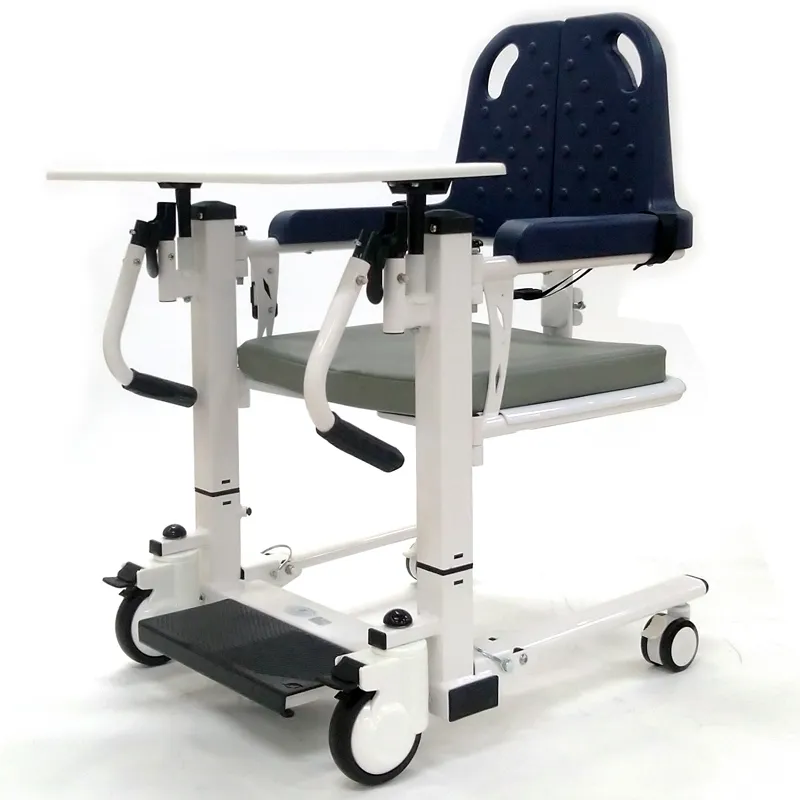
Is a Patient Lift Transfer Chair a wheelchair?
No! A Patient Lift Transfer Chair is a medical assistive device designed to help people with limited mobility safely and comfortably move from one location to another.
It is commonly used in home care, nursing homes, rehabilitation centers, hospital wards, and other settings, assisting patients in transferring from bed to wheelchair to toilet to bathroom.
Main functions of the Patient Lift Transfer Chair:
• Height adjustment: Adjustable height via hydraulic or electric system for easy patient transfer from bed or chair surface;
• Transfer function: Equipped with locking casters for short-distance movement on smooth surfaces;
• Nursing function: Some models feature an openable seat for easy access to the toilet or bathing area by caregivers.
In short, the Patient Lift Transfer Chair is designed to address the core nursing problem of "difficult patient mobility," serving as a bridge between "stationary" and "mobile" environments in healthcare settings.
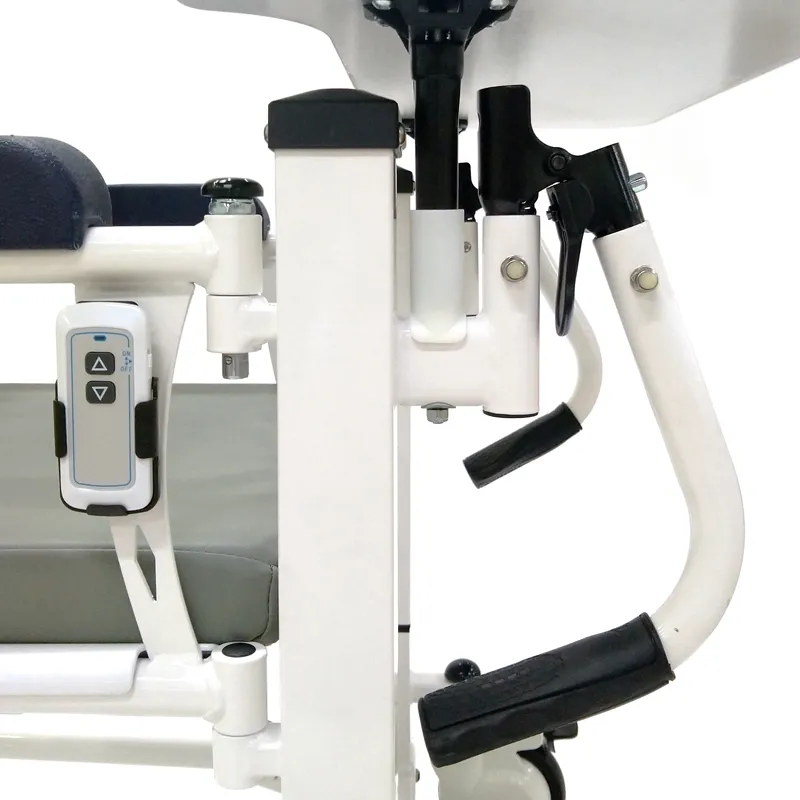
Who needs a Patient Lift Transfer Chair the most?
Many people mistakenly believe that the Patient Lift Transfer Chair is only suitable for seriously ill patients. In fact, its application is very broad, covering a wide range of people from those with mild mobility limitations to those who are bedridden for extended periods.
The following details several suitable groups:
1. Patients who are bedridden or semi-bedridden for extended periods
For patients who are bedridden for extended periods, the Patient Lift Transfer Chair is almost an essential piece of equipment for daily care.
These patients are typically unable to get in and out of bed independently due to stroke, post-operative recovery, paralysis, or advanced age and frailty.
The Patient Lift Transfer Chair can:
• Help patients safely transfer to a wheelchair, sofa, or toilet;
• Prevent back injuries caused by caregivers lifting them forcefully;
• Reduce the risk of falls and ensure a safe transfer.
Especially in home settings where a professional care team is unavailable, the Patient Lift Transfer Chair can significantly reduce the burden of care.
2. Patients in Post-Surgery Rehabilitation
During the post-operative rehabilitation phase, patients often need to gradually regain mobility under the guidance of a doctor.
However, in the initial stages, external assistance is still required for movement and positioning.
Using the Patient Lift Transfer Chair can:
• Help patients easily get in and out of bed, avoiding strain on surgical wounds;
• Support short periods of sitting training, promoting blood circulation;
• Make the rehabilitation process safer and more comfortable.
This device is particularly suitable for patients who have undergone lower limb surgery, spinal surgery, or hip replacement surgery to assist with daily activities.
3. Elderly and Frail Individuals
As people age, many experience muscle weakness, decreased balance, and joint stiffness, leading to difficulty standing or walking.
For this group, the Patient Lift Transfer Chair is an ideal assistive care tool.
It allows the elderly to safely:
• Transfer from bed to a chair or bathroom;
• Perform simple bathing or toileting;
• Reduce the risk of falls and protect bone health.
Furthermore, for elderly individuals living alone or with limited care resources, having a Patient Lift Transfer Chair can greatly improve their quality of life.
4. Individuals with Limited Mobility
The Patient Lift Transfer Chair is also highly suitable for individuals with limited lower limb mobility due to illness, accidents, or congenital conditions.
Unlike regular wheelchairs, the Patient Lift Transfer Chair focuses on facilitating transfers between different heights, such as:
• Transferring from bed to the toilet;
• Transferring from a sofa to a shower chair.
This vertical lifting capability is not available in regular wheelchairs.
For people with disabilities requiring daily care or assisted mobility, the Patient Lift Transfer Chair enhances their autonomy and sense of dignity.
5. Users in Nursing Homes and Hospitals
Besides personal and home use, the Patient Lift Transfer Chair is also standard equipment in hospitals, nursing homes, and rehabilitation centers.
These institutions have a large number of patients and frequent care needs.
The Patient Lift Transfer Chair can:
• Reduce the workload of caregivers;
• Improve transfer efficiency and safety;
• Reduce the risk of secondary injury to patients.
Therefore, the Patient Lift Transfer Chair plays an important role in both home environments and professional care settings.
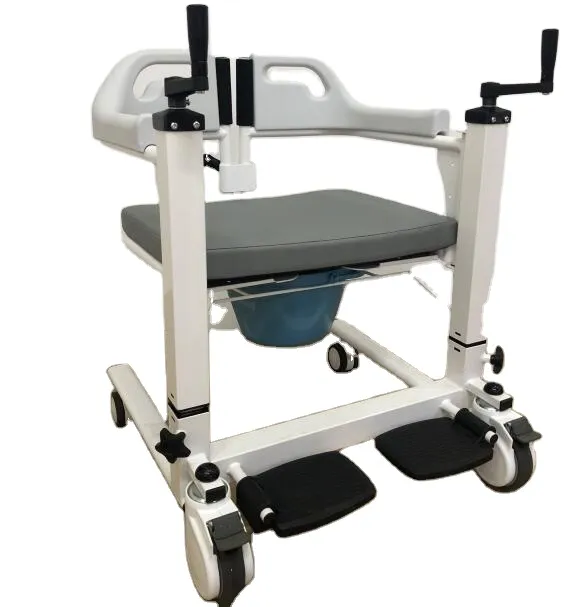
Why Do These Groups Need the Patient Lift Transfer Chair?
After understanding the target population, we also need to understand why they "need" this equipment.
1. Improved Safety During Transfers
Manually carrying or using a regular chair to transfer a patient carries a high risk.
The Patient Lift Transfer Chair, through its structured design (lifting system, safety belt, locking wheels), significantly reduces the possibility of accidental slips or falls.
For weak or unstable patients, this equipment effectively prevents secondary injuries.
2. Reduced Physical Burden on Caregivers
Without mechanical assistance, caregivers need to frequently exert force to move patients, which not only easily causes lower back injuries but also affects care efficiency.
With the Patient Lift Transfer Chair, caregivers can easily complete the entire transfer process by simply operating the handle or controlling the lifting button.
3. Improved Psychological and Physical Experience for Patients
Patients often feel embarrassed or insecure when being carried.
The Patient Lift Transfer Chair provides a stable, smooth, and privacy-respecting transfer method, making patients feel respected and cared for.
At the same time, regular sitting or short periods of movement can also help:
• Promote blood circulation;
• Prevent pressure sores;
• Reduce stiffness and muscle atrophy.
What are the main types of Patient Lift Transfer Chairs?
Different types of Patient Lift Transfer Chairs are suitable for different groups of people.
1. Manual Patient Lift Transfer Chair
Lifting and lowering is achieved through a hydraulic pump or mechanical lever. Advantages include simple structure, low cost, and easy maintenance.
Suitable for lighter patients and those requiring skilled caregivers.
2. Electric Patient Lift Transfer Chair
Utilizes an electric lifting system, offering precise control and easy operation.
Suitable for patients who are bedridden for extended periods, heavier patients, or those requiring frequent transfers.
3. Bathroom-type Patient Lift Transfer Chair
Features waterproof design and an open seat, allowing for use in bathrooms.
Suitable for patients with limited mobility who still require daily cleaning and care.
4. Patient Lift Transfer Chair with Bedpan
Allows direct access to the toilet, suitable for patients with severely limited mobility.
Different models vary in load-bearing capacity, lifting height, and wheel structure. The appropriate model should be selected based on the user's weight, activity level, and environmental conditions.
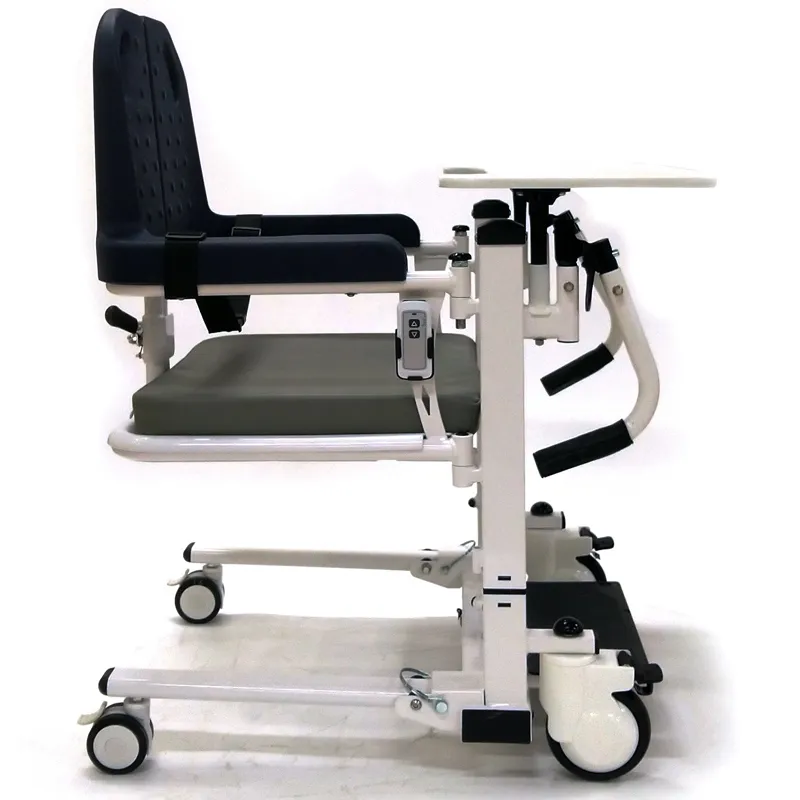
Core Advantages of Patient Lift Transfer Chairs
Why are more and more nursing homes and families choosing Patient Lift Transfer Chairs? The main reasons for its superior performance lie in its significant advantages:
• High safety: Stable structure, non-slip casters, and safety belt protection;
• High efficiency: Saves nursing time and improves nursing efficiency;
• High versatility: Multi-purpose for lifting, moving, bathing, and toileting;
• High comfort: Ergonomically designed seat;
• Easy maintenance: Corrosion-resistant and easy-to-clean materials.
These features make the Patient Lift Transfer Chair an indispensable piece of basic equipment in modern nursing care.
What precautions should be taken when using the Patient Lift Transfer Chair?
To ensure safety and comfort, the following points should be followed when using the Patient Lift Transfer Chair:
• Check the equipment before use: Ensure all parts are intact, the lifting function is normal, and the wheel locks are usable.
• Ensure the ground is level: Using it on uneven or slippery surfaces can easily cause it to tip over.
• Secure the patient: Always fasten the safety belt during transfer to prevent slipping.
• Avoid Overloading: Different models of the Patient Lift Transfer Chair have a maximum weight limit (usually around 150kg). Exceeding this limit may cause structural damage.
• Smooth Operation: Move slowly during lifting, lowering, and pushing to avoid wobbling.
Who is the Patient Lift Transfer Chair suitable for?
The Patient Lift Transfer Chair is primarily suitable for the following groups:
1. Long-term bedridden or semi-bedridden patients;
2. Post-operative recovery patients;
3. Elderly and frail individuals;
4. People with lower limb disabilities;
5. Institutional patients requiring frequent care.
It is not designed for mobility, but for nursing care and safe transfer.
Who is Guangdong Dayang Medical Technology Co., Ltd.?
Guangdong Dayang Medical Technology Co., Ltd. (Dayang Medical) was founded in 2009 and is a professional manufacturer and supplier based in Foshan at the heart of the Guangdong–Hong Kong–Macau Greater Bay Area. As an experienced factory and company specializing in mobility and home medical devices — including electric wheelchairs, manual wheelchairs, sports wheelchairs, commodes, walkers, hospital beds, rollators, shower chairs and walking canes — we combine production capacity with R&D strength.