

When a person's mobility is limited or even unable to walk due to illness, accident, or old age, choosing a suitable wheelchair becomes a crucial step in regaining independence.
However, faced with the wide variety of wheelchairs on the market—especially the two main categories of electric and manual wheelchairs—many people are confused: Which one should I choose?
This article will analyze in detail the differences, advantages and disadvantages, suitable users, key selection points, and usage precautions of electric and manual wheelchairs, helping you clarify which wheelchair best suits the specific needs of "unable to walk."
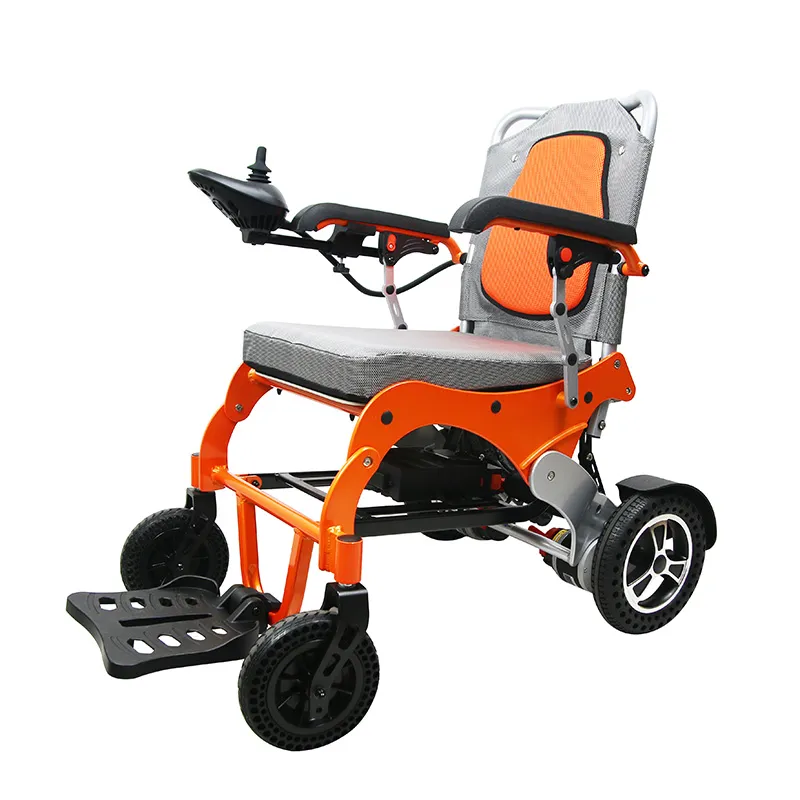
What does it mean to be unable to walk? Why is wheelchair selection important?
"Unable to walk" is not just a simple physical limitation; it represents a comprehensive change in daily life, home environment, and psychological state.
In this situation, a wheelchair is not just a means of transportation, but an extension of quality of life.
Choosing the right wheelchair allows users to regain a certain degree of freedom of movement safely and comfortably, thereby maintaining their ability to live independently.
There are many types of wheelchairs, but the two most core types are:
1. Electric wheelchairs (powered by electricity, allowing for autonomous movement)
2. Manual wheelchairs (requiring human effort or assistance from caregivers)
While both types are designed for people with limited mobility, they differ significantly in structure, function, usage, and applicable scenarios.
Understanding these differences is a prerequisite for choosing the right wheelchair.
Which type of wheelchair is suitable for someone who cannot walk?
For patients who cannot walk, the key factors in choosing a wheelchair are:
• Sufficient upper limb strength of the user;
• Whether long-term assistance from caregivers is available;
• The degree of need for range of motion and independence;
• The environment of use (indoor, outdoor, road conditions);
• Budget and maintenance capabilities.
Based on these conditions, we can divide the selection process into two main lines:
• Sufficient upper limb strength and a desire for independent movement → Consider a manual wheelchair
• Insufficient upper limb strength or long-term bedridden status → Consider an electric wheelchair
Below, we will elaborate on the differences between the two and the selection criteria.
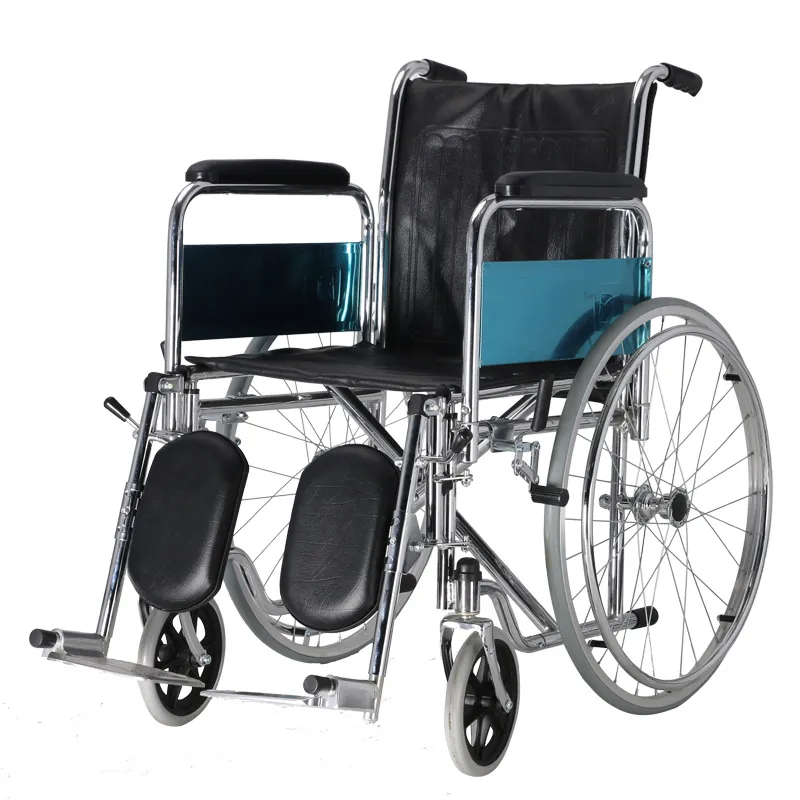
What is a manual wheelchair?
A manual wheelchair is an assistive device powered by human effort, relying on the user's hands to push large wheels or a caregiver to push it from behind.
It is the most traditional and common type of wheelchair.
Although its technical structure is relatively simple, modern manual wheelchairs have achieved a high level of ergonomic design after years of development.
Key features of manual wheelchairs:
• Lightweight and foldable for easy storage;
• No power supply required, low maintenance costs;
• Intuitive to use and simple to operate;
• Can be pushed by a caregiver or by the user.
Advantages of manual wheelchairs:
• Lightweight and portable: suitable for home, hospital, and public transportation use;
• Affordable: lower cost compared to electric wheelchairs;
• Low failure rate: simple mechanical structure, durable;
• Exercise training benefits: the self-propelled design can help strengthen upper limb muscles.
Disadvantages of manual wheelchairs:
• Relies on upper limb strength; prolonged pushing can cause fatigue.
• Not suitable for those with weak physical strength or complete paralysis.
• Difficult to use outdoors over long distances.
• Lacks automated functions (such as ramp climbing, electric tilting, etc.).
Who are suitable for manual wheelchairs?
Manual wheelchairs are suitable for the following groups:
1. Those with strong upper limb muscles who can push themselves independently.
2. Those who need short-term or temporary use (such as during post-operative rehabilitation).
3. Those accompanied by caregivers and only need occasional pushing.
4. Primarily used indoors.
In other words, if you cannot walk but can still use your arms flexibly, a manual wheelchair is an economical, safe, and sufficiently practical option.
What is an electric wheelchair?
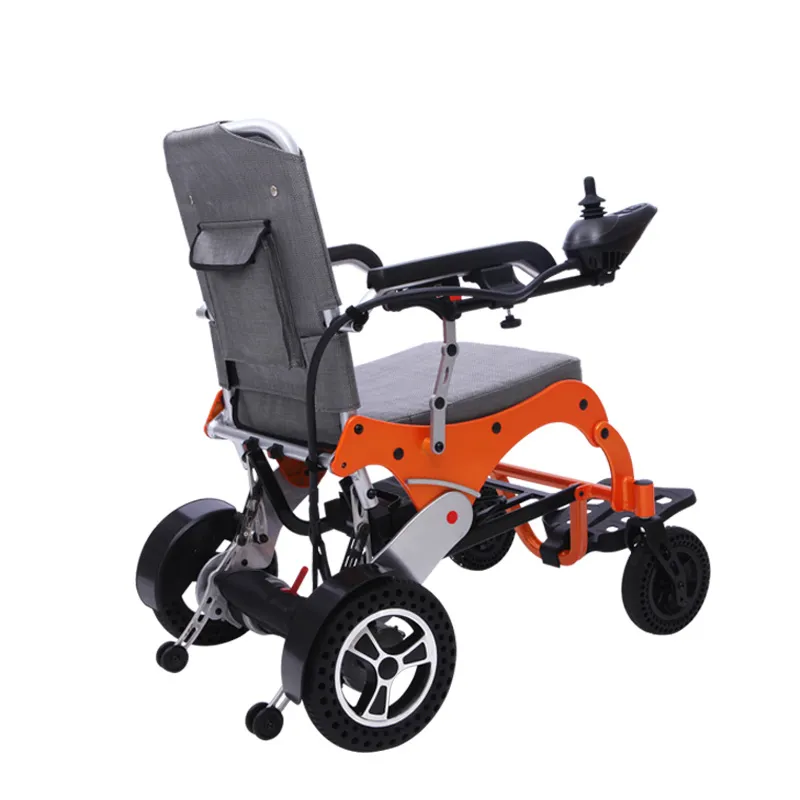
An electric wheelchair is a high-tech mobility aid powered by batteries, motors, and a control system.
Users can easily perform forward, backward, turning, and braking movements by manipulating handles or control panels.
Compared to manual wheelchairs, electric wheelchairs significantly improve mobility and independence.
Key Features of Electric Wheelchairs:
• Equipped with a motor drive system for automatic movement;
• Simple operation and sensitive control;
• Supports various terrains (indoor, outdoor, ramps, etc.);
• Can be equipped with advanced functions such as tilting, height adjustment, and folding.
Advantages of Electric Wheelchairs:
• Effortless: Completely eliminates the need for human propulsion, suitable for those with upper limb weakness;
• High independence: Users can freely control their direction and speed of movement;
• High comfort: Most models feature shock absorption, adjustable backrests, and cushioned seats;
• Intelligent control: Some products have remote control and braking protection systems.
Disadvantages of Electric Wheelchairs:
• Higher price: Significantly higher cost than manual wheelchairs;
• Heavy: Inconvenient to carry and fold;
• High maintenance requirements: Requires regular charging and maintenance;
• Dependent on electricity: Power outages or battery malfunctions will affect usability.
Who are electric wheelchairs suitable for?
Electric wheelchairs are especially suitable for the following groups:
1. Individuals with insufficient upper limb strength or who are completely unable to push a manual wheelchair;
2. Elderly people living alone or people with disabilities who do not have long-term care assistance;
3. Patients who need to go out frequently and have a large range of movement;
4. Users who wish to improve their independence and comfort in daily life.
If a patient is completely unable to walk and has limited physical strength, then an electric wheelchair is the first choice.
How to determine which type of wheelchair is right for you?
Many patients who are "unable to walk" are in different physical conditions, so a general answer cannot be given. The following are the criteria for judgment:
1. Judging by physical ability
• If arm strength is good → prioritize a manual wheelchair;
• If arm strength is weak or movement is completely dependent on assistance → recommend choosing an electric wheelchair.
2. Judging by the usage environment
• Indoors, on flat ground → manual wheelchairs are more flexible;
• Outdoors, for longer distances → electric wheelchairs are more efficient.
3. Consider the Caregiver's Needs
• Long-term companionship by family or caregivers → A manual wheelchair is sufficient.
• Independent travel is required, lacking assistance → An electric wheelchair is more suitable.
4. Consider Your Budget
If your budget is limited, you can initially choose a high-quality manual wheelchair and upgrade to an electric one later as needed.
What other factors should be considered when choosing a wheelchair?
Whether electric or manual, the following factors should be considered when purchasing:
• Weight Capacity: Choose the appropriate size based on the user's weight (usually 100–150 kg).
• Seat Width and Depth: Should conform to the user's comfortable sitting posture and prevent thigh compression.
• Backrest and Footrest: Adjustable design improves comfort for long-term use.
• Wheel Size: Larger wheels are suitable for outdoor use, smaller wheels for indoor use.
• Safety Devices: Electromagnetic brakes, anti-tipping devices, seat belts, etc.
• Ease of Maintenance: Is battery replacement easy? Are the tires durable?
These details directly relate to daily user experience and safety, and should not be overlooked.
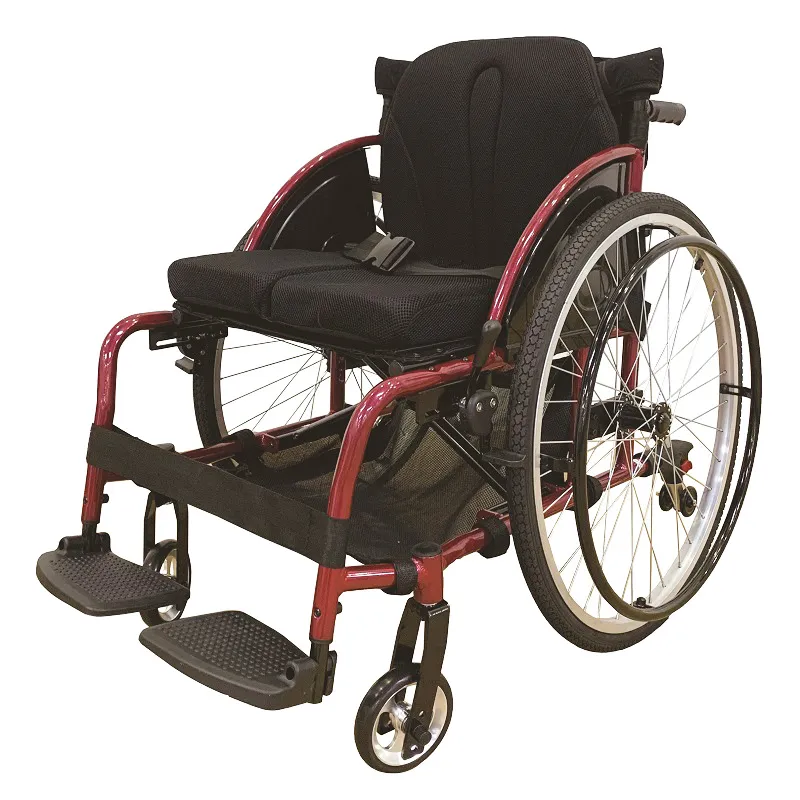
Precautions for Wheelchair Use by People Who Cannot Walk
Proper wheelchair use is not only about convenience, but also about safety and health.
• Maintain correct posture: Avoid prolonged slouching to reduce spinal pressure;
• Regularly check tires and brakes: Ensure safe driving;
• Electric wheelchairs should be charged regularly: Maintain battery activity and avoid over-discharge;
• Prevent over-reliance: Patients with the means can combine this with rehabilitation training;
• Avoid rough roads and steep slopes: Both manual and electric wheelchairs may pose risks.
Which type of wheelchair should someone who cannot walk choose?
The answer depends on your physical condition, usage environment, and need for independence.
• If upper limb strength is sufficient and care conditions are good → a manual wheelchair can meet basic needs;
• If upper limb weakness is present but independent movement is desired → an electric wheelchair is a safer and more comfortable option.
Regardless of the type chosen, the key is to allow the patient to move safely, comfortably, and with dignity.
A wheelchair is not just an assistive device, but an extension of a lifestyle.