

Falls are one of the most common accidents among the elderly, post-operative recoveries, and those with balance disorders. According to rehabilitation medicine research, as people age or are affected by illness, their balance and reaction speed gradually decline, leading to a significant increase in instability and the risk of falls. To reduce this risk, more and more people are using walking aids for extra support.
However, with so many types of walking aids available—from 4-wheel rollators to stable wheelless walking frames—which one truly helps prevent falls?
This article will delve into the stability principles of walking aids, the characteristics of different types, and their suitable user groups from a professional perspective, focusing on why wheelless walking frames are considered the most effective choice for preventing falls.
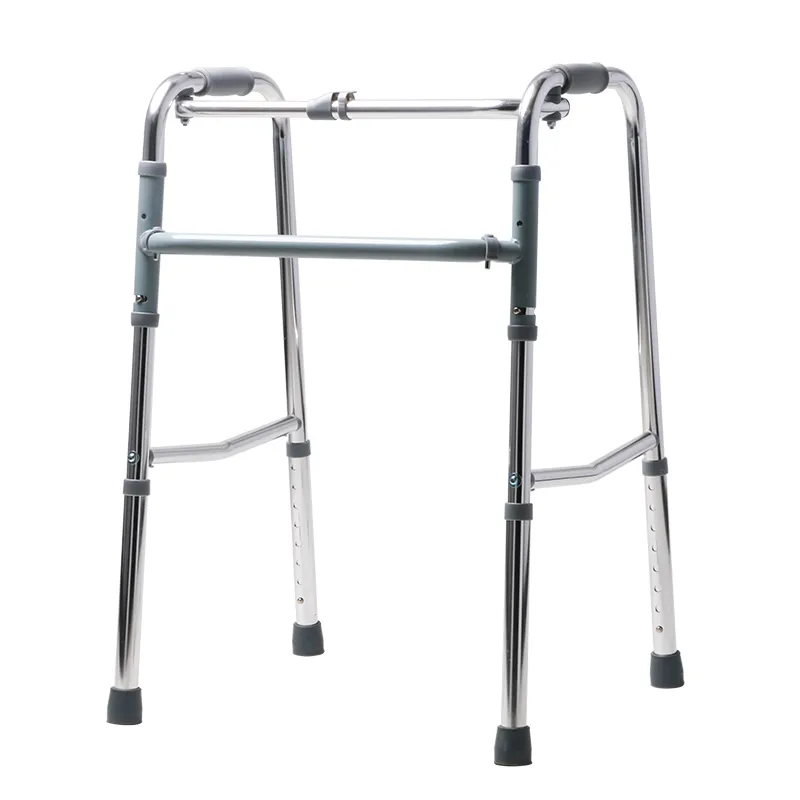
Why are people with balance disorders prone to falls?
Human balance relies on the combined effects of vision, the vestibular system, muscle strength, and neurological coordination. When any of these systems malfunctions, such as:
• Weakened lower limb muscle strength;
• Decreased proprioception (body position awareness);
• Slower reaction speed;
• Inability to quickly adjust the center of gravity while walking;
this leads to a loss of stability during movement, increasing the risk of falls.
In this situation, the role of a walking aid is not only to support body weight, but more importantly, to provide an additional balance surface. Differences in the structure and function of different walking aids directly determine their fall prevention capabilities.
What are some common walking aids? How do their stability differ?
Walking aids can be categorized into the following main types based on design and purpose, each with a different impact on stability and fall prevention.
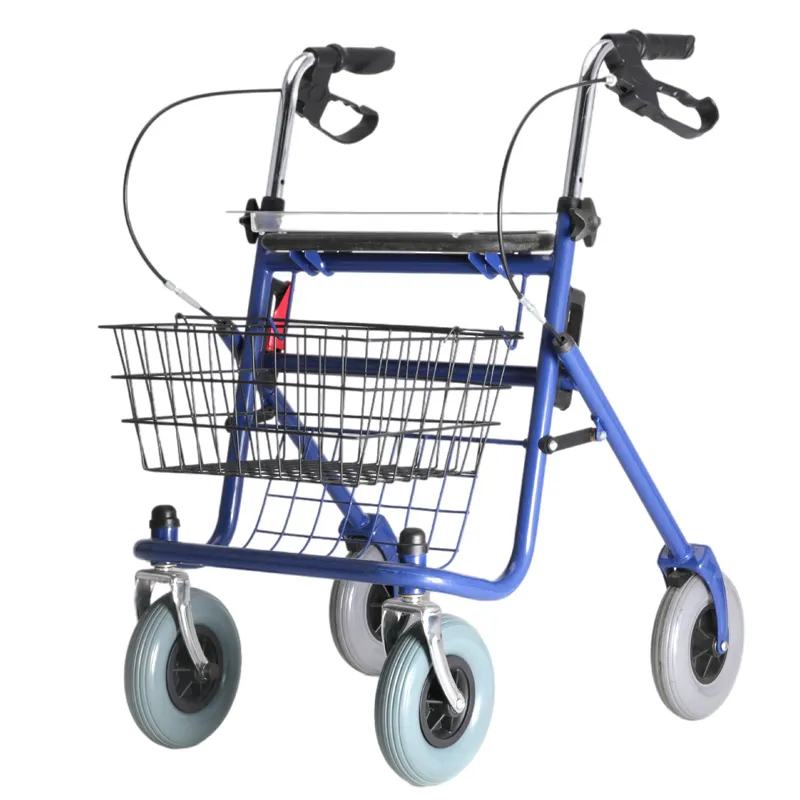
1. 4-wheel rollator
• Structural features: Four wheels, with a braking system, seat, and handles.
• Advantages: Large support surface, allowing for smooth movement; most include a seat for resting.
• Disadvantages: Wheels can slide freely; uneven ground or improper use of brakes can easily lead to inertial slippage.
Summary: 4-wheel rollator suitable for individuals with relatively good mobility but requiring balance support. Its fall prevention effect is limited if the user has slow reaction time or poor handbrake control.
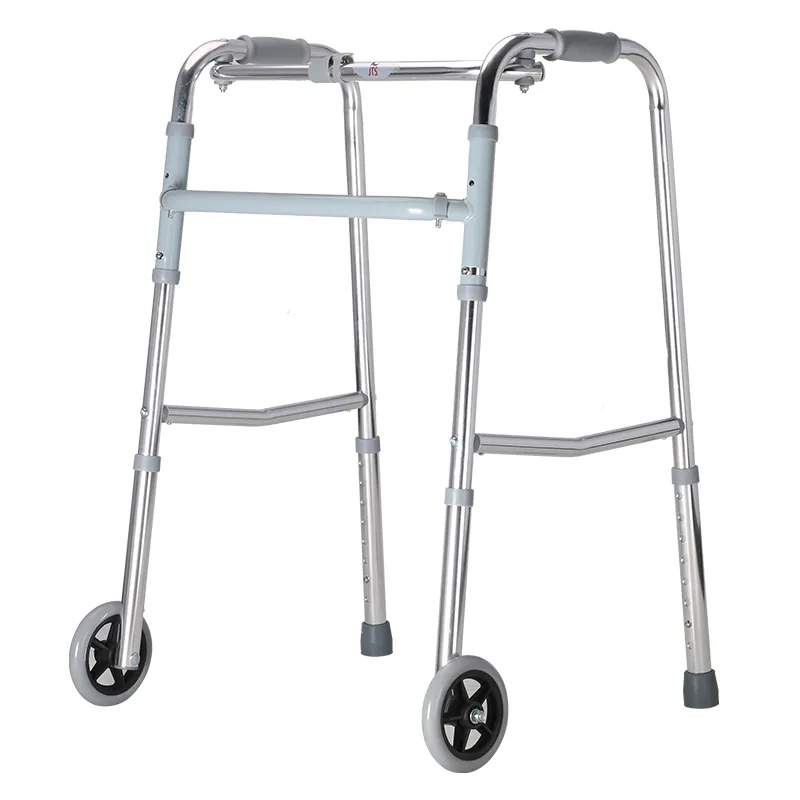
2. Wheeled Walking Frame
• Structural features: Two wheels in the front, anti-slip footpads in the rear.
• Advantages: Easier to move than wheelless frames; the anti-slip footpads provide some stability.
• Disadvantages: Still susceptible to forward sliding; less stable than wheelless walking frames.
Summary: Suitable for individuals with moderate balance impairment, as an intermediate choice between wheelless walking frames and a 4-wheel rollator.
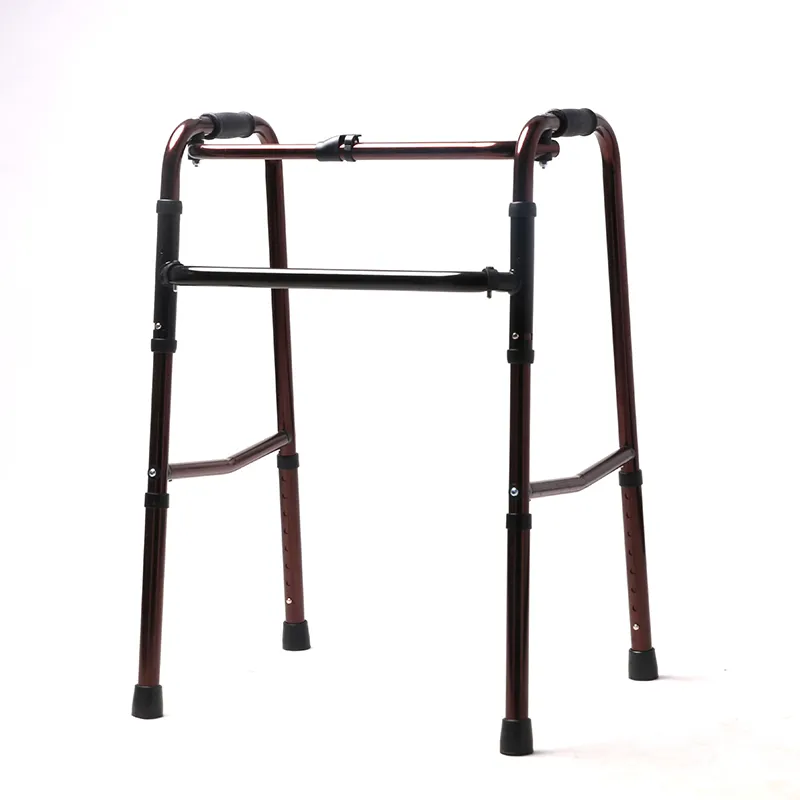
3. Wheelless Walking Frames
• Structural features: Four legs on the ground, wheelless design; movement is entirely by lifting.
• Advantages: Most stable, no risk of slipping, and the best fall prevention assistive device.
• Disadvantages: Requires some upper limb strength; slower movement speed.
Summary: Best for preventing falls, especially suitable for those with severely impaired balance, in the early stages of rehabilitation, or frail elderly individuals.
Why are wheelless walking frames better at preventing falls?
Among all types of walking aids, the structural design of wheelless walking frames determines their superior fall prevention capabilities.
1. Four-point support structure provides maximum stability
The four support points of wheelless walking frames directly contact the ground, forming a stable rectangular support surface.
Compared to 4-wheel rollators, the support point position does not change due to pulley rotation, so the body's center of gravity remains within the fixed support area when standing or walking.
2. No risk of slipping
Because there are no wheels, wheelless walking frames will not slip during use.
Even if the user suddenly loses balance, they can immediately rely on the walking frame to support their body weight, thus preventing falls.
3. Simple operation and strong control
Users only need to move forward in a rhythm of "lift—move forward—lower—walk," without worrying about braking, wheel locking, or other operational issues, making control more direct and safer.
4. High Surface Adaptability
Whether on carpet, tile, or uneven surfaces, the four rubber anti-slip pads on wheelless walking frames provide a firm grip, further enhancing fall prevention.
How do 4-wheel rollators and wheelless walking frames compare in terms of fall prevention?
To help readers understand the differences more intuitively, a comparative analysis is provided below:
Project | 4-Wheel Rollator Walker | Wheelless Walking Frame |
| Stability | Above average | Extremely high |
| Slippage Risk | Yes (if brakes are not locked) | None |
| Balance Support | Depends on wheel position | Fixed support point |
| Operational Difficulty | Requires manual brake control | Simple lifting and moving is possible |
| Target Audience | Suitable for those with moderately impaired balance | Suitable for those with severely impaired balance or in the early stages of rehabilitation |
| Mobility Efficiency | Relatively fast | Slower pace |
| Fall Prevention Effect | Good | Optimal |
As the table shows, 4-wheel rollators perform excellently in assisting daily walking, but in terms of fall prevention, their stability and safety are inferior to wheelless walking frames.
Especially for those with severe balance disorders, weak lower limb strength, or slow reaction times, wheelless walking frames offer a safer support method.
Who are the most suitable users of wheelless walking frames?
Choosing the right walking aid depends on a comprehensive assessment of individual physical condition, balance ability, and the environment in which it is used. The following groups are most suitable for using wheelless walking frames:
1. Individuals with severely impaired balance
Such as stroke patients, Parkinson's disease patients, and patients recovering from spinal cord injuries, who are prone to swaying or instability while walking.
2. Lower limb weakness or post-operative recovery patients
Patients who have undergone hip or knee surgery require highly stable support during the early rehabilitation phase.
3. Elderly individuals
Elderly individuals with some upper limb strength but slower reaction times and lack of control over wheeled walking frames.
4. Individuals with a fear of falling
Those who have experienced falls and lack confidence in walking can benefit from wheelless walking frames to enhance their sense of security.
What points should be noted when using wheelless walking frames?
1. Correct height adjustment
The height of the walking frame should be adjusted so that the user's elbows are slightly bent at approximately 15 degrees when standing. Too high will cause shoulder tension, while too low will affect balance and support.
2. Correct walking posture
Keep your body centered inside the walking frame; avoid excessive forward leaning or reliance on it.
When moving, follow a stable rhythm of "lifting up—moving forward—stepping forward with both feet."
3. Use a level surface
Avoid using the device on wet, slippery, sloping, or uneven surfaces to prevent uneven pressure on the rubber footpads.
4. Pay attention to balanced upper limb force
Users should apply force evenly with both hands to prevent tilting or unilateral fatigue.
5. Avoid rapid movement
Wheelless walking frames are designed for steady walking and are not suitable for rapid movement. Excessive speed may cause a forward shift of the center of gravity and loss of balance.
What is the difference between wheelless walking frames and other walking aids?
Although "walking aid" is a general term, it can be further subdivided based on whether it has wheels, its structure, and function:
Types | Features | Fall Prevention Ability |
| Wheelless walking aid | Four-leg support, fully stable | ★★★★★ |
| Front-wheel walking aid | Front wheels, rear anti-slip pads | ★★★★☆ |
| Four-wheel rollator | Four wheels with brakes, can be sat on | ★★★☆☆ |
Conclusion: Wheelless walking frames offer the strongest fall prevention among all walking aids, making them particularly suitable for users in the early stages of rehabilitation or those with high safety requirements.
When is a 4-wheel rollator more suitable?
While wheelless walking frames offer the strongest fall prevention, 4-wheel rollators remain a more practical choice in certain situations.
1. Individuals with moderate balance impairment or mild muscle weakness
These individuals can still control their center of gravity but require stable support. A 4-wheel rollator provides a larger support area and makes walking easier.
2. Users who frequently need to go out
4-wheel rollators typically come with a basket and seat, making them convenient for shopping or outdoor walks.
3. People who need rest functions
The built-in seat design allows them to stop and rest at any time, suitable for those who tire easily after long periods of walking.
Therefore, provided their balance allows, 4-wheel rollators are more suitable for the functional recovery phase or daily commutes, rather than being the first choice for fall prevention.
How to determine if you should transition from a 4-wheel rollator to wheelless walking frames?
The judgment criteria mainly include three aspects:
1. Walking stability
If you still frequently wobble and need assistance when using a 4-wheel rollator, it indicates insufficient fall prevention support, and you should consider switching to wheelless walking frames.
2. Braking Control Ability
If hand strength or reaction time is insufficient for safe use of the braking system, the wheeled walking aid should not be used.
3. Psychological Safety
If you still feel unstable or fear slipping while using the walking aid, it indicates that the current equipment does not meet your safety needs, and wheelless walking frames would be more suitable.
What types of mobility equipment are popular among Dayang Medical buyers?
Many global buyers choose our electric wheelchairs, rollators, commodes, and patient beds because they combine affordable prices with dependable performance. As a leading manufacturer and supplier from China, Dayang Medical focuses on durability and user comfort. Buyers can purchase these products at wholesale prices, request factory quotes, and enjoy discount promotions for volume orders.