

When selecting a wheelchair, many people prioritize comfort, materials, and price, yet often overlook a critical factor: how easy the wheelchair is to push. For users who require assistance from others to move, the "ease of pushing" directly impacts the convenience of their daily lives as well as the physical burden placed on their caregivers.
Whether in a hospital, a rehabilitation facility, or a home care setting, utilizing a wheelchair that is lightweight and easy to maneuver is essential for ensuring both safety and comfort.
This article will systematically address this question by examining five key dimensions: structural design, wheel diameter, weight distribution, functional type, and usage environment.
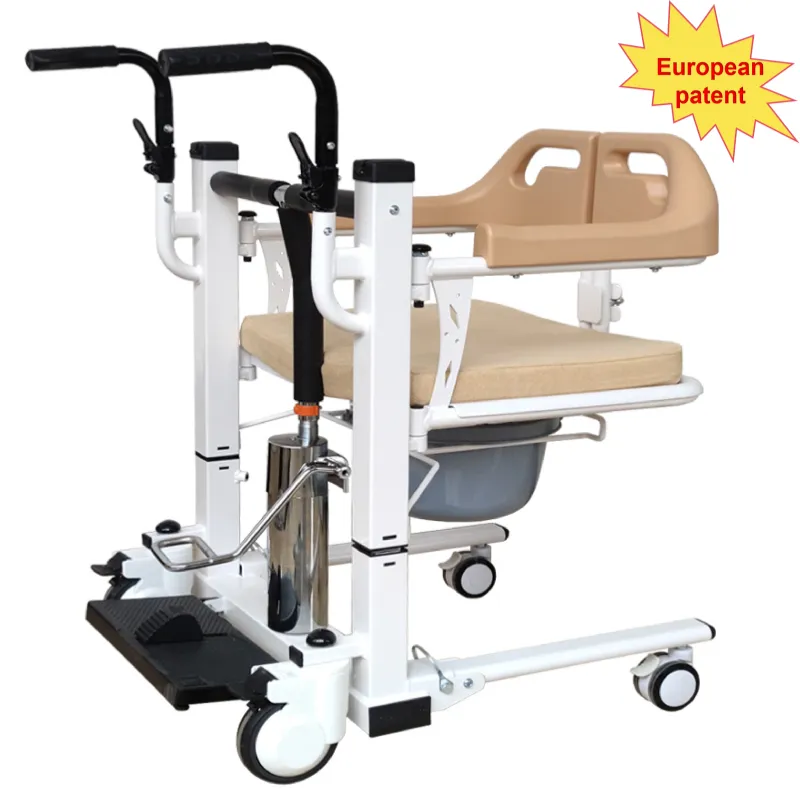
Why Is "Ease of Pushing" a Crucial Criterion When Buying a Wheelchair?
Many people mistakenly assume that as long as a wheelchair has wheels, they are all equally easy to push.
In reality, differences in structure, materials, center of gravity distribution, and rear-wheel size among various wheelchairs can result in significant differences in handling and maneuverability.
1. Effortless Pushing Means Safer Care
For the elderly, post-operative patients, or individuals with mobility impairments, caregivers often need to push the wheelchair frequently.
If a wheelchair is excessively heavy, suffers from high axle resistance, or lacks agile steering, it not only increases physical exertion but also heightens the risk of losing control or tipping over.
2. Easy Pushing Translates to a Smoother User Experience
A lightweight and smooth-rolling wheelchair makes pushing less physically demanding and allows for more precise directional control.
Particularly in environments such as narrow corridors, ramps, and elevator entrances, an easy-to-push wheelchair can significantly reduce snagging and friction, thereby improving operational efficiency.
3. A "Burden-Reducing Tool" for Long-Term Caregivers
In long-term care settings, a caregiver may need to push a wheelchair dozens of times throughout the day.
An easy-to-push design not only boosts efficiency but also reduces strain on the lower back and shoulders, thereby lowering the risk of work-related injuries.
Therefore, "ease of pushing" is not merely an optional add-on for comfort; rather, it represents a comprehensive integration of safety, efficiency, and ergonomics.
What Are the Key Factors That Influence How Easy a Wheelchair Is to Push?
To determine which type of wheelchair is easiest to push, one must first understand the core structural factors that influence its pushing performance. The following five points are key:
1. Rear Wheel Diameter
The larger the rear wheels, the easier it is to traverse small obstacles or uneven terrain.
However, if the wheelchair is primarily pushed by a caregiver, smaller rear wheels actually make it easier to maneuver.
This is why lift-and-transfer chairs are widely used in hospitals and care facilities—their smaller rear wheels allow caregivers to push them with greater agility and less physical effort.
2. Wheel Axle and Bearing Structure
High-quality bearings reduce rolling resistance, resulting in a smoother ride.
Lower-end wheelchairs often cut corners on bearings, leading to a "dragging sensation" or audible clicking noises when being pushed.
3. Frame Weight
Wheelchair frames are typically constructed from aluminum alloy or steel.
Aluminum alloy frames are lightweight yet sturdy, making them ideal for frequent pushing;
Conversely, while steel wheelchairs offer excellent stability, they are heavier and more difficult to push over long distances.
4. Center of Gravity and Weight Distribution
If a wheelchair's center of gravity is too high or its weight distribution is uneven, it may feel "unstable" or drift off course when being pushed.
A well-engineered wheelchair should maintain a low center of gravity and central balance to ensure stability when turning corners or navigating inclines and declines.
5. Brake and Armrest Design
Wheelchairs featuring a responsive braking system and ergonomically positioned brake levers allow caregivers to easily control the speed.
Lift-and-transfer chairs excel in this regard; their handbrakes are ergonomically positioned, making both pushing and parking safer and more secure.
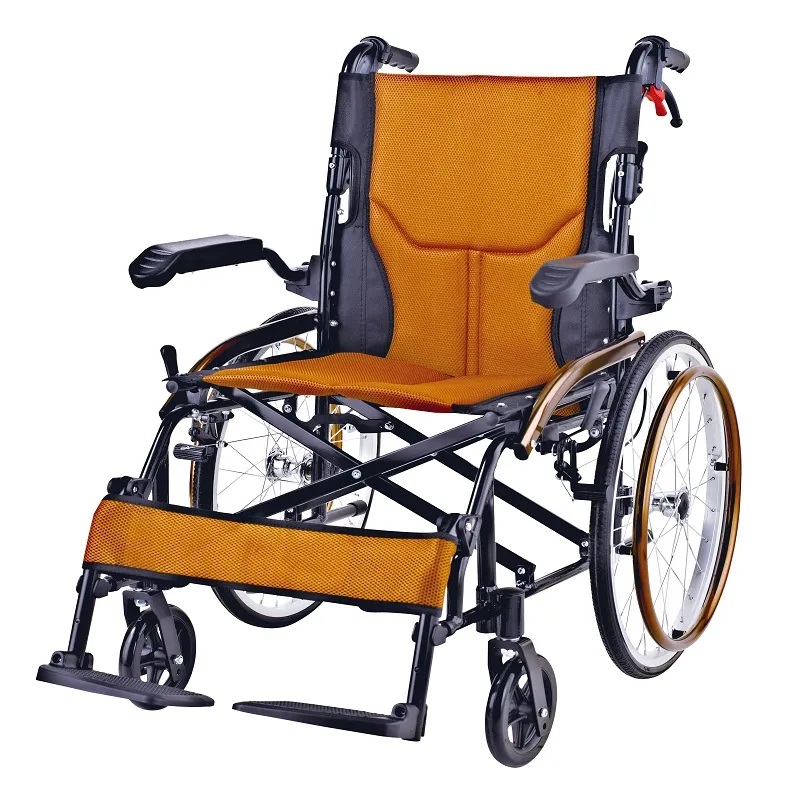
Why is it easier for caregivers to push a lift-and-transfer chair?
Among all types of wheelchairs, the lift-and-transfer chair is widely considered the most suitable option for caregiver-assisted mobility.
These chairs are extensively used in hospitals, nursing homes, and rehabilitation centers; their fundamental design objective is to enable caregivers to transfer and transport patients with less physical strain and greater efficiency.
1. Structural Advantages of the Lift-and-Transfer Chair
Lift-and-transfer chairs feature a design with small rear wheels and large front casters, resulting in a compact overall profile and a tight turning radius.
This allows caregivers to maneuver the chair with ease, even within confined spaces such as patient rooms or elevators. Furthermore, its integrated braking system and adjustable-height mechanism ensure smoother propulsion and parking—significantly reducing the physical effort required, particularly when pushing up ramps or navigating over door thresholds.
2. Smaller Rear Wheels for Easier Steering Control
Unlike traditional self-propelled wheelchairs (which feature large rear wheels), lift-and-transfer chairs typically have smaller rear wheels.
This design places the caregiver's center of gravity closer to their own body's core while pushing, allowing them to propel or steer the chair without expending excessive physical force.
This structural configuration makes the pushing process feel lighter and more effortless, making it particularly well-suited for family caregivers with limited physical strength.
3. Lift-and-Transfer Function Reduces the Burden of Manual Handling
The lift-and-transfer chair is not merely a mobility aid; it also features an adjustable-height mechanism that allows it to dock seamlessly with beds or toilets, thereby effectively minimizing the physical exertion required during patient transfers.
This ensures that caregivers can transfer patients more safely and efficiently, while also eliminating the inherent risks associated with manually "lifting and carrying" a patient.
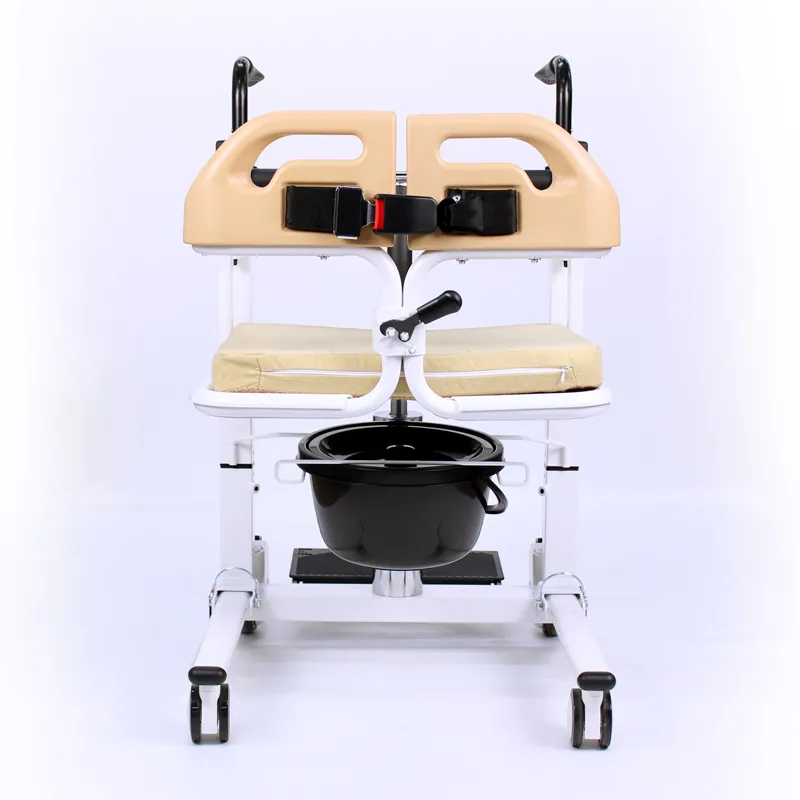
Why Are Self-Propelled Wheelchairs with Large Rear Wheels More Difficult to Push?
Many traditional wheelchairs are equipped with large rear wheels specifically to facilitate self-propulsion by the user.
However, from the caregiver's perspective, these large rear wheels actually increase the resistance encountered during pushing.
1. Greater Overall Weight
Large rear wheels typically necessitate a more robust frame structure, resulting in a higher overall weight for the wheelchair.
In scenarios requiring prolonged periods of pushing, this increased weight imposes a significant physical burden.
2. Rearward Shift in Center of Gravity During Pushing
The larger size of the rear wheels shifts the wheelchair's center of gravity toward the back. Consequently, caregivers must exert greater physical force to maintain balance while pushing—making it particularly difficult to control the direction of travel when navigating inclines or making turns.
3. Unsuitable for Confined Spaces
Large rear wheels occupy more physical space and result in a wider turning radius.
This makes the wheelchair difficult to maneuver in environments with limited space, such as hospital wards, elevators, and narrow corridors.
Therefore, if the user is unable to propel the wheelchair independently and relies primarily on others to push them, a lift-and-transfer chair offers a far more manageable and user-friendly solution than a traditional self-propelled wheelchair with large rear wheels.
How Significantly Do Wheelchair Weight and Materials Affect Pushing Effort?
Many people assume that a wheelchair is easy to push simply because its wheels roll smoothly.
In reality, however, the wheelchair's total weight and the choice of construction materials have a decisive impact on how light or heavy it feels to push.
1. Aluminum Alloy Wheelchairs Are Lighter and More Portable
Wheelchairs made of aluminum alloy are typically about 30% lighter than their steel counterparts while still maintaining excellent structural rigidity.
For caregivers, this translates to less resistance when pushing the chair and smoother overall operation.
2. Steel Wheelchairs: Sturdy but Cumbersome
Steel-framed wheelchairs are often utilized in situations requiring higher load-bearing capacity (such as for larger-bodied users); however, their substantial weight makes them unsuitable for patients who require frequent mobility or transport.
3. Material Advantages of Lift-and-Transfer Chairs
Modern lift-and-transfer chairs commonly feature lightweight metal construction, utilizing materials such as aluminum alloy or aerospace-grade steel.
Combined with a compact design, this allows the chair to maintain exceptional stability while significantly reducing pushing resistance, making it an ideal choice for assisted mobility scenarios.
Why are Lift-and-Transfer Chairs Better Suited for Users Who Rely on Others for Propulsion?
When a user suffers from upper-body weakness, poor balance, or lacks the physical stamina to propel themselves, a self-propelled wheelchair is no longer a suitable option.
In such cases, a lift-and-transfer chair—pushed by a caregiver—presents a safer and more ergonomically sound solution.
1. Reduced Strain for Caregivers, Enhanced Safety for Users
Lift-and-transfer chairs are designed with a low center of gravity and a narrow wheelbase, making them effortless to push and highly stable in direction.
Caregivers can initiate movement without exerting excessive force, thereby minimizing the risk of falls or tipping accidents.
2. Facilitating Seamless Transfers Between Bed and Chair
The lifting mechanism allows the seat height to be adjusted, creating a seamless transition between the chair and a bed or commode; this eliminates the need for caregivers to manually lift and carry the patient.
This not only conserves physical energy but also significantly reduces the risk of accidental injury.
3. Ideal for Indoor Daily Activities
With their compact structure, lift-and-transfer chairs can easily navigate through doorways, elevators, and narrow corridors, making them the ideal mobility aid for use within homes and care facilities.
If you lack the physical strength to propel a wheelchair yourself and intend to rely on others for assistance, a caregiver-assisted patient lift-and-transfer chair is generally the most suitable choice for you. These chairs feature smaller rear wheels, making them easier for the caregiver to maneuver—a design that is both energy-efficient and safe.
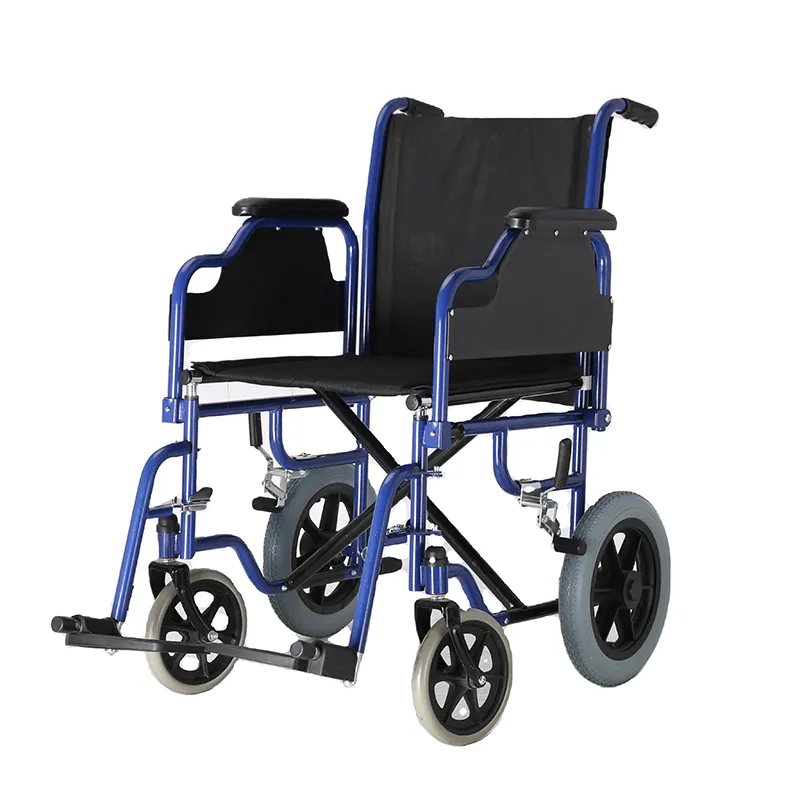
How to Properly Use and Maintain a Lift-and-Transfer Chair?
Selecting the right equipment is just the first step; mastering the proper techniques for usage and maintenance is essential to ensure the chair continues to operate smoothly and reliably over the long term.
Usage Recommendations:
• Before pushing, ensure that the brakes are in the released position.
• When pushing, keep your arms naturally extended; avoid using your lower back to generate force.
• Move slowly when ascending slopes; when descending, keep the brakes partially engaged.
• When transferring a patient, ensure that both the wheelchair and the bed are securely locked via their brakes.
• Periodically inspect the lifting mechanism and bearings to ensure they operate smoothly.
Key Maintenance Points:
• Check tire pressure and bearing lubrication on a monthly basis.
• Avoid exposing the wheelchair to humid or high-temperature environments for prolonged periods.
• Regularly wipe down the lifting column and metal components to prevent corrosion.
• Periodically test the brake functionality to ensure responsive and effective braking.
Proper maintenance not only extends the lifespan of the equipment but also ensures that every push is smooth and reliable.
The Easiest Wheelchair to Push—Designed Specifically for Caregiving
By comparing the structural characteristics and handling performance of various wheelchair types, the following conclusion can be drawn:
The lifting transfer chair is currently the easiest type of wheelchair to push and is the most suitable choice for caregiver-assisted mobility.
Its key advantages include:
1. A small rear-wheel design that makes pushing effortless.
2. A scientifically engineered lifting and braking system that ensures safe operation.
3. A stable center of gravity combined with agile steering capabilities.
4. A design that significantly reduces the physical strain on caregivers.
For users who are unable to propel themselves and require assistance from others, the lifting transfer chair represents more than just portability and safety; it embodies a philosophy of human-centered, compassionate care.