

Choosing the right electric wheelchair for obese or overweight individuals is not a simple matter. Compared to standard electric wheelchairs, these users have higher requirements in terms of weight capacity, seat width, stability, power system, and braking ability.
Therefore, heavy-duty power wheelchairs, specifically designed for heavier users, have become the preferred choice for many.
This article will analyze in detail how obese individuals should choose electric wheelchairs from multiple dimensions, including structural design, hardware configuration, and user experience, and why "heavy-duty power wheelchairs" are the most noteworthy category.
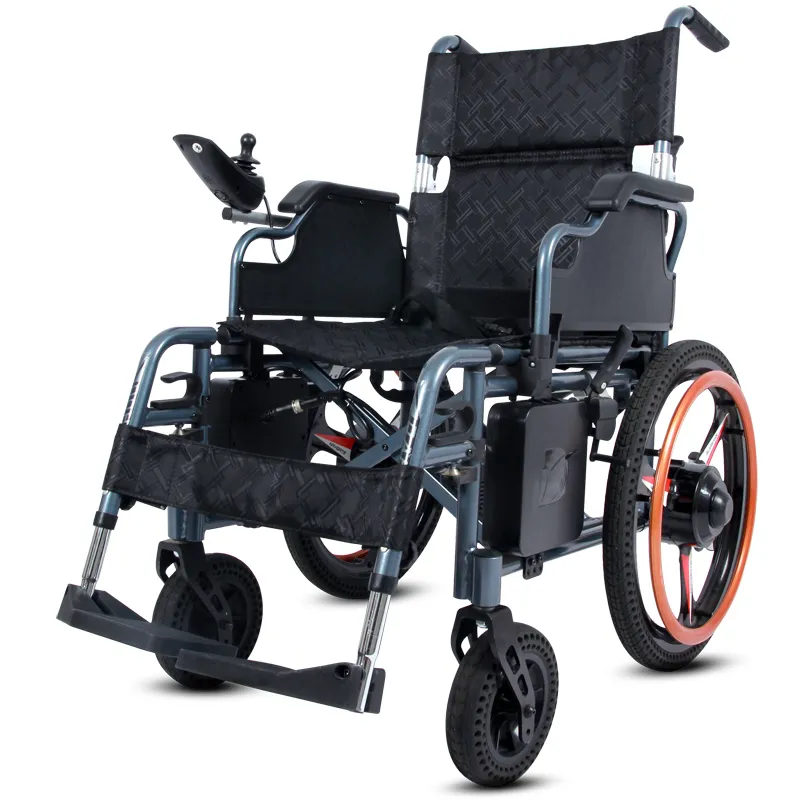
Why are heavy-duty power wheelchairs more suitable for obese individuals?
The needs of obese individuals for electric wheelchairs differ significantly from those of ordinary users, mainly in the following key aspects:
1. Higher weight capacity requirements
Overweight individuals typically weigh over 120 kg, 150 kg, or even 200 kg, while the rated weight capacity of ordinary electric wheelchairs is generally 100–120 kg. If operated beyond its load capacity, wheelchairs may experience the following risks:
• Accelerated wear and tear on structural components
• Significantly shortened motor lifespan
• Unstable battery life
• Shaking or even danger during operation
Heavy-duty electric wheelchairs typically have a load capacity of 180–300 kg, making them a safer and more reliable option for obese users.
2. Higher Seat Size and Support Requirements
Standard wheelchair seats are typically 43–46 cm wide, but obese individuals require wider, deeper, and more stable seats to provide sufficient support. Heavy-duty electric wheelchairs feature specially widened seats, commonly:
• 50 cm
• 55 cm
• 60 cm
Even custom sizes are available.
Furthermore, heavy-duty electric wheelchairs have enhanced support in details such as the backrest, seat cushion, armrests, and footrests to prevent pain from prolonged sitting.
3. More Powerful Power System Required
Due to their greater weight, heavy-duty users require greater torque and power when traversing slopes, grass, speed bumps, and other challenging terrains. Therefore, heavy-duty electric wheelchairs typically feature:
• More powerful dual motors
• Thicker drive shafts
• Enhanced shock absorption systems
This ensures smooth and stable starting, acceleration, and hill climbing.
4. Stability and anti-tipping performance are more important
Overweight users have a more difficult center of gravity to control, and the narrower chassis of ordinary wheelchairs are not stable enough. Heavy-duty electric wheelchairs have a wider, longer chassis and a lower center of gravity, reducing the risk of tipping over and making them more suitable for daily use by heavier users.
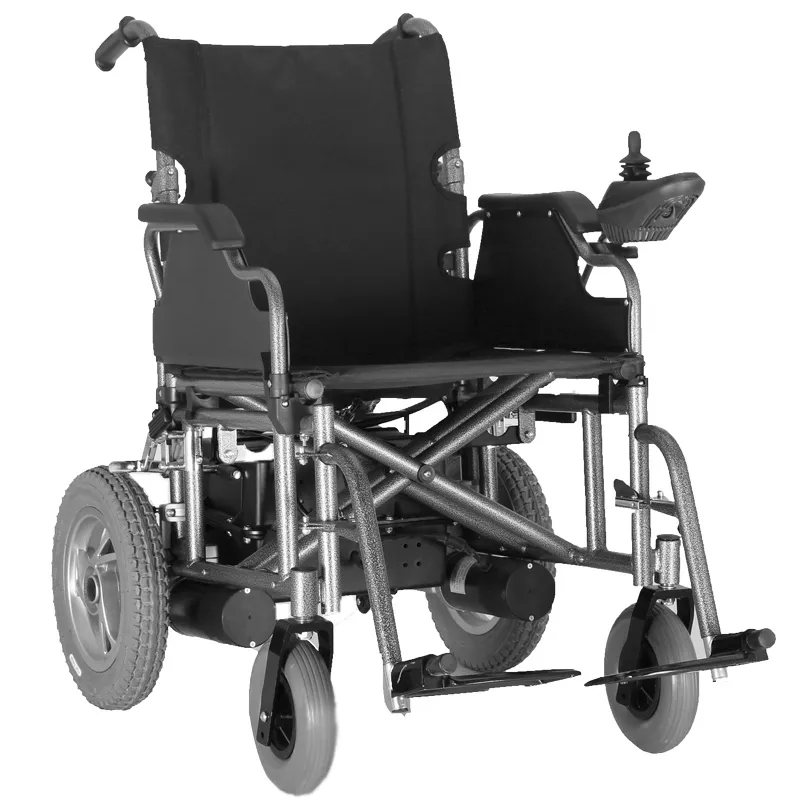
Do obese people really need heavy-duty power wheelchairs?
How to determine key indicators?
To make a more scientific judgment, users can use the following quantitative indicators to determine whether they need a heavy-duty electric wheelchair, rather than a regular model.
1. Do you weigh more than 120 kg?
If your weight exceeds the rated load of a regular electric wheelchair (usually around 120 kg), then to avoid safety hazards, you should purchase a heavy-duty power wheelchair.
2. Do you need a wider seat?
If your hip width or thigh circumference exceeds the standard seat width by 46 cm, you should choose a wheelchair with a seat width of ≥ 50 cm, which is typically only available in heavy-duty electric wheelchairs.
3. Do you need high power for outdoor use?
The high torque of a heavy-duty electric wheelchair is needed in the following situations:
• Frequent uphill and downhill driving
• Excessive weight causing excessive load on a standard motor
• Driving on grass or gravel roads
• Reduced range due to weight
4. Are you sensitive to stability?
Overweight individuals are more prone to drifting when turning or on side slopes, thus requiring the wider chassis of a heavy-duty electric wheelchair for stability.
If any of the above applies, there is an 80% chance that a heavy-duty electric wheelchair is more suitable for you.
What are the core features of a heavy-duty electric wheelchair?
The following are the key technical features that distinguish heavy-duty electric wheelchairs from ordinary electric wheelchairs.
1. Superior Load-Bearing Structure
These typically employ:
• Thickened aluminum alloy or steel main frame
• Reinforced welding points
• Pressure-resistant rear axle structure
• Large-size run-flat tires
Ensuring the stability of the entire vehicle structure under high loads.
2. High-Power Drive Motors
Standard wheelchair motors typically have a power output of 250–300W, while heavy-duty power wheelchairs commonly feature:
• 400W x2
• 500W x2
• 650W x2 (high-performance models)
Powerful motors allow even overweight users to easily start on flat ground and climb hills effortlessly.
3. More Stable Multi-Point Shock Absorption Structure
For example:
• Front and rear dual shock absorbers
• Centrally mounted spring system
• Anti-tilt structure
This results in a smoother ride, preventing vibrations caused by body weight from being amplified.
4. High-capacity lithium or lead-acid batteries
Due to their weight, heavy-duty power wheelchairs consume more power than those for regular users. Therefore, they are typically equipped with:
• 20Ah+ lithium batteries
• 40Ah lead-acid batteries
• Dual-battery expansion design
Ensuring undiminished battery life.
5. Widened and thickened seat design
The seat usually features:
• Deeper seat cushion
• Widened backrest
• Reinforced armrests
• Weight-bearing footrests
Maintaining a stable posture even when carrying a heavy load.
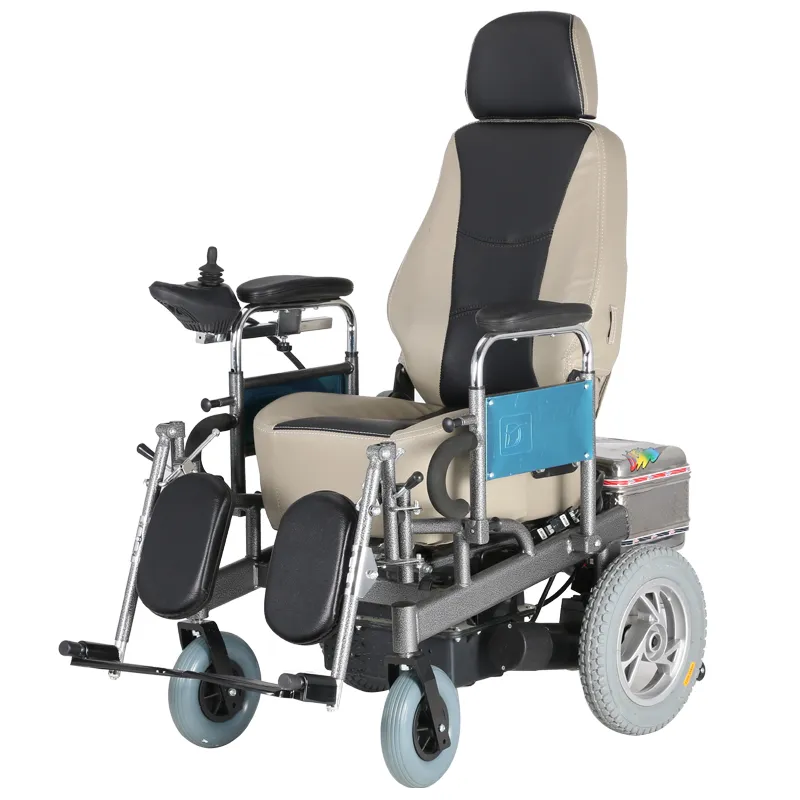
What key considerations should obese individuals focus on when purchasing a heavy-duty electric wheelchair?
The following are eight crucial points to consider when actually buying a heavy-duty electric wheelchair, each directly impacting the user experience.
How much weight does a heavy-duty electric wheelchair need to support?
For obese individuals, weight capacity is the primary consideration. General recommendations are as follows:
User weight range | Recommended wheelchair load capacity
100–130 kg | ≥150 kg
130–160 kg | ≥180 kg
160–200 kg | ≥220 kg
>200 kg | ≥250–300 kg heavy-duty electric wheelchairs
A higher load capacity is not unnecessary; it allows for greater durability of the motor, bearings, and structural components over long-term use.
What seat width should obese individuals choose for a heavy-duty power wheelchair?
Seat width directly determines comfort. The actual measurement method is as follows:
Measurement Method:
• Sit on a hard chair
• Measure the widest part of your hips with a soft measuring tape
• Add 2–3 cm to each side
• Obtain the seat width that suits you
Recommended Seat Width Range:
Hip Width (cm) | Recommended Seat Width (cm)
40–45 | 46
45–50 | 50
50–55 | 55
>55 | 55–60 or Customized
Heavy-duty electric wheelchairs offer more large-size options, which standard models often cannot meet.
What motor and battery life configuration should obese individuals choose?
Motor Recommendations:
• Dual 400W motors: Suitable for users weighing under 120 kg
• Dual 500W motors: Suitable for users weighing 120–160 kg
• Dual 650W motors: Suitable for users weighing over 160 kg or those needing outdoor use
High-torque motors can avoid:
• Difficulty starting
• Difficulty climbing hills
• Motor overheating
• Inaccurate range claims
Battery Recommendations:
• 20Ah+ lithium battery, range 20–30 km
• 40Ah lead-acid battery, range 25–40 km
For longer range, a dual-battery extension is available, a common advantage of many heavy-duty power wheelchairs.
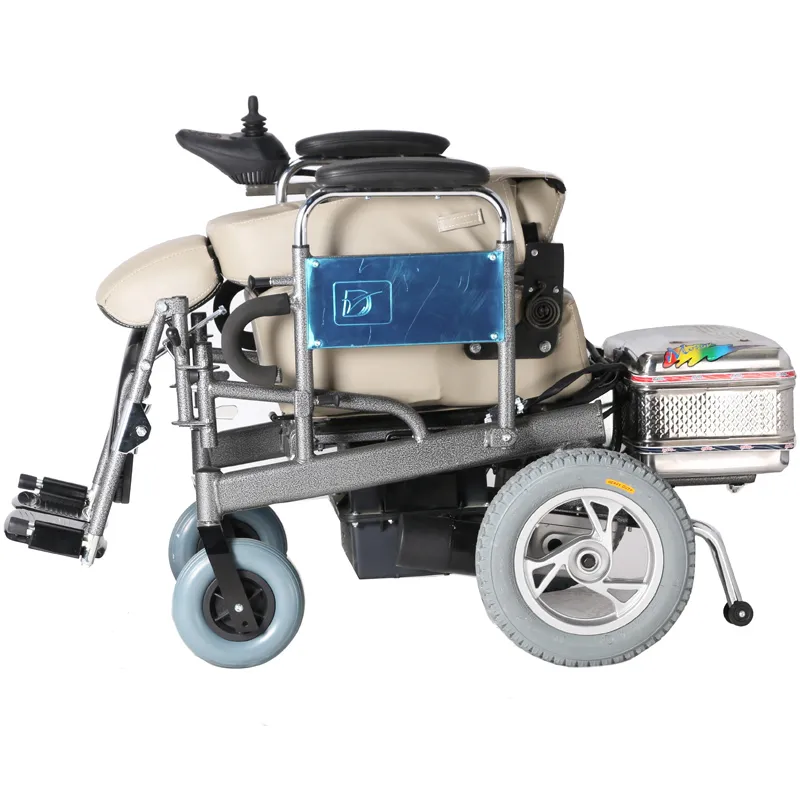
Do heavy-duty electric wheelchairs require a wider chassis for improved stability?
The answer is yes.
Benefits of a wider chassis:
• Anti-rollover
• More stable center of gravity
• Safer seating posture
• Less swaying when navigating obstacles
For heavier users, width is more important than height. A wider chassis significantly reduces the risk of accidents when turning, navigating slopes, or using side slopes.
Is the control system important for obese users?
Very important.
Because obese individuals may have limited arm mobility, heavy-duty electric wheelchairs typically offer more sensitive and easy-to-use controls, including:
• High-sensitivity joysticks
• Adjustable joystick arms
• Left/right interchangeable control
• Precise speed adjustment
This avoids difficulties in operating in confined spaces.
Do workmanship details affect the safety of obese users?
Yes, and significantly.
When purchasing a heavy-duty electric wheelchair, pay close attention to the following details to ensure it meets heavy-duty standards:
• Rough welding
• Reinforced chassis
• Thickened footrests
• Stable armrests
• Large and sturdy anti-tilt wheels
• Adjustable back support
The more robust the materials used in these details, the safer it will be for long-term use.
Common Misconceptions When Obese Individuals Choose Heavy-Duty Electric Wheelchairs
To avoid making a mistake, pay special attention to the following misconceptions:
Misconception 1: Focusing only on load capacity, ignoring the motor
A wheelchair with a 200 kg load capacity but only a 300W x 2 motor will not be able to maintain power output and will fail when climbing hills.
Misconception 2: Ignoring seat width
Insufficient seat width will lead to:
• Thigh compression
• Unstable posture
• Pain during prolonged use
This is an indicator that obese individuals should not overlook.
Misconception 3: Focusing only on appearance, ignoring chassis structure
A wider and heavier chassis provides greater stability; this is the core logic of heavy-duty power wheelchairs. Myth 4: Believing heavy-duty power wheelchairs are too bulky and inconvenient to carry.
In reality, some heavy-duty electric wheelchairs can be folded or even disassembled for transport, but this depends on choosing a model with a reasonable structure.
How to ultimately determine which heavy-duty power wheelchair is most suitable for your needs?
The final selection should follow these three steps:
Step 1: Determine the weight capacity based on your weight
The heavier you are, the higher the weight capacity of the heavy-duty electric wheelchair should be. However, don't blindly pursue the highest weight capacity; consider your height and body type.
Step 2: Choose the seat width based on your hip width
Measuring your hip width and choosing a suitable seat width is key to ensuring comfort.
Step 3: Choose the power and tire configuration based on the usage scenario
• Primarily indoors: More flexible mid-wheel drive heavy-duty electric wheelchair
• Primarily outdoor: High-torque motor, off-road tires, large-capacity battery
• Long-term use: High-density foam seat, adjustable backrest
This will maximize the user experience.