

When shopping for walking aids, many people find themselves torn between a three-wheel rollator walker and a four-wheel rollator walker: Which is more stable? Which is more maneuverable? Which is better suited to my—or my family member's—physical capabilities and daily lifestyle?
On the surface, both are simply "rollator walkers," designed to provide support while walking and offer a seat for brief rests. However, when examined through the lenses of structural stability, steering agility, weight distribution, intended use scenarios, and safety margins, their specific roles and advantages differ significantly.
This article employs a systematic approach to help you navigate the choice between a three-wheel and a four-wheel walker, enabling you to make a decision that is both more appropriate and safer for your needs.
Why Are Three-Wheel and Four-Wheel Walkers So Often Compared?
Primarily because, while both share the same fundamental objective—aiding mobility—they achieve this goal through vastly different means. The three-wheel walker utilizes a "three-point contact" configuration to achieve a tighter turning radius and greater agility; conversely, the four-wheel walker relies on "four-point contact" to deliver superior lateral and longitudinal stability. For the user, the real question is rarely "which device is more advanced," but rather "which device best aligns with my specific physical condition and the environment in which I will be using it."
Is the Three-Wheel Walker More Maneuverable? Where Does Its Agility Come From?
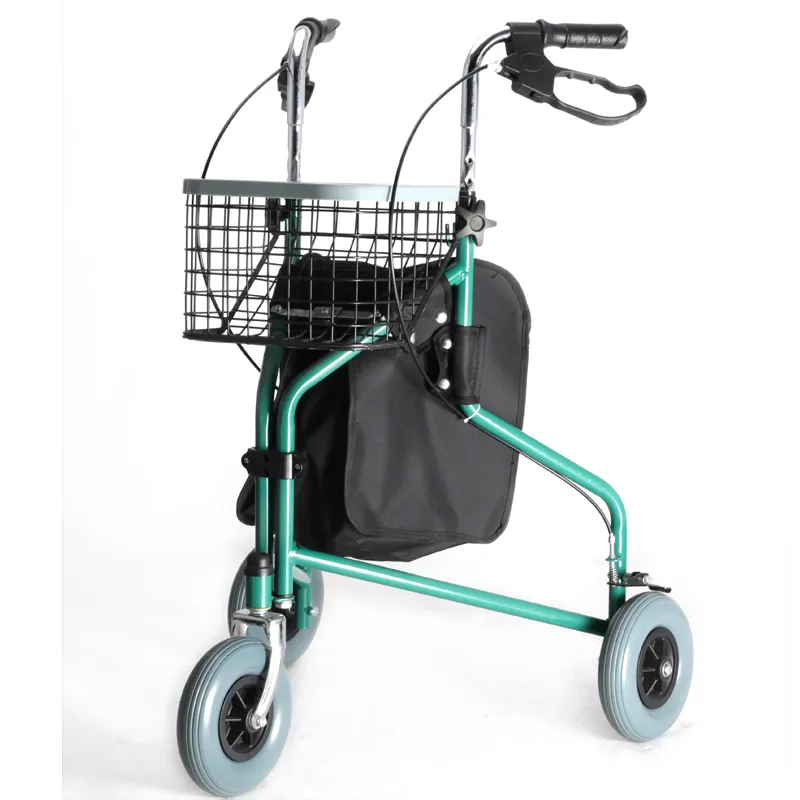
Three-wheel rollator walkers typically feature a triangular configuration consisting of a single front wheel and two rear wheels. The single front wheel allows for a wider steering angle, resulting in a smaller turning radius and the ability to change direction more rapidly. This inherent agility stems primarily from the following factors:
• Wide Front-Wheel Steering Angle: Makes it easier to navigate around obstacles or execute U-turns in confined spaces.
• Narrower Frame: Allows for smoother passage through doorways, around furniture, and within narrow queuing lanes.
• Lighter Weight: Requires less physical effort to accelerate, come to a stop, or make minor directional adjustments.
Consequently, in indoor environments—where frequent turning, short-distance travel, and the need to avoid collisions with people or objects are common—the agility of the three-wheel rollator walker offers a distinct advantage.
Is the Four-Wheel Walker More Stable? Where Does Its Stability Come From?
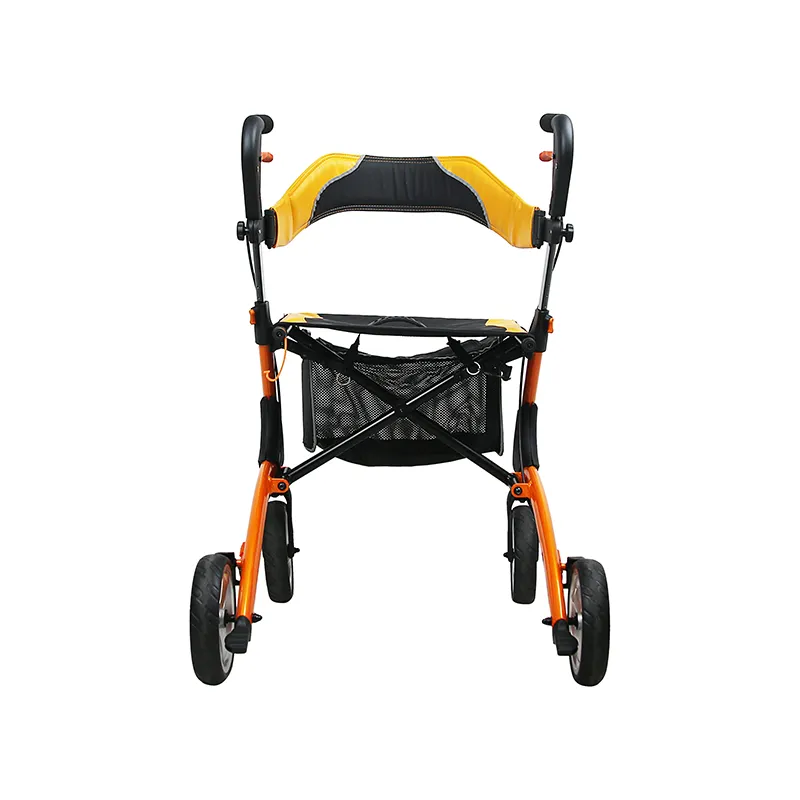
The four-wheel rollator walker utilizes a "four-point contact" configuration. From a mechanical standpoint, this creates a larger base of support—forming a wider polygon—which significantly enhances its resistance to tipping or rolling over. Its stability is manifested in the following ways:
• Lateral Stability: It is less prone to tipping over during side-to-side swaying, providing the user with a more grounded and secure sense of support.
• Longitudinal Stability: When navigating inclines, declines, or uneven terrain, shifts in the front-to-back center of gravity are more controllable.
• Load-Bearing and Braking: Most four-wheel walkers are designed with a greater emphasis on load-bearing limits and braking responsiveness, resulting in a more "solid" and secure feel when parked for standing.
If your primary priority is "stability"—particularly for walking medium-to-long distances on flat surfaces, or in scenarios requiring frequent stops for rest—a four-wheel walker is often the more suitable choice.
How do the functional differences between three-wheel and four-wheel walkers manifest?
Although both types assist with walking, provide handheld support, and allow for brief rests, the actual user experience differs significantly:
• Steering and Maneuverability: Three-wheel rollator walkers feature a smaller turning radius, allowing for flexible navigation around obstacles; four-wheel walkers have a slightly larger turning radius, but offer superior stability when moving in a straight line.
• Standing Security: Four-wheel rollator walkers remain more stable once stopped, being less prone to "wobbling"; users of three-wheel walkers must pay closer attention to maintaining their center of gravity.
• Resting and Seating: The seat on a four-wheel walker is typically wider and offers more stable support, making it suitable for brief periods of sitting; while three-wheel walkers also allow for resting, users must pay particular attention to the model's overall stability and braking reliability when making a selection.
• Navigability: Three-wheel walkers maneuver more nimbly through crowded environments; four-wheel walkers maintain a greater sense of overall stability when traversing slightly uneven ground or small thresholds.
How do three-wheel and four-wheel walkers suit different user profiles?
1. Matching Physical Conditions
Good Balance and Adequate Lower-Body Strength: Users in this category may prioritize a three-wheel rollator walker to enjoy more flexible maneuverability and a lighter physical burden.
High Stability Requirements, Prone to Walking Fatigue, or Requiring Frequent Stops for Rest: Users in this category are better suited to a four-wheel rollator walker, which provides stronger support and greater confidence when stopping to rest.
2. Hands and Grip Strength
If you have average grip strength and need to apply the brakes frequently: The dual-handle braking and brake-locking mechanisms on four-wheel walkers—found on most models—tend to offer a more "solid and substantial" feel.
Three-wheel walkers also feature reliable brakes; however, their agile maneuverability often entails more frequent stopping and fine-tuning, meaning the required grip strength and tactile feel must be a good match for the user.
How do you choose between indoor and outdoor use? Are there significant differences depending on the surface and space?
• For narrow indoor spaces, areas dense with furniture, or situations requiring frequent turning: A three-wheel rollator walker performs better.
• For extended use on flat outdoor paths, community trails, or long shopping mall corridors: A four-wheel rollator walker offers more stable cruising, providing greater peace of mind.
• For elevators, supermarket aisles, or hospital corridors: Both types are suitable; however, if you frequently need to push shopping items or stop to sit and rest, a four-wheel walker is the more user-friendly option.
Who are the ideal users for three-wheel walkers versus four-wheel walkers?
Three-wheel walkers are best suited for:
• Individuals who need to make frequent turns in confined spaces;
• Those with limited physical strength who prefer a device that is lighter and easier to lift/carry;
• Frequent travelers who need to fold the device for transport in a vehicle;
• Those who primarily use the device for short distances on flat surfaces.
Four-wheel walkers are best suited for:
• Individuals who prioritize stability when stationary and value having a seat for resting;
• Those who walk longer distances and require a more robust level of stability;
• Those navigating environments that include slightly uneven terrain or minor inclines/ramps;
• Those who require a higher weight capacity or greater "anti-tip" stability margins.
Which type is better suited for a "walk-and-stop" usage pattern?
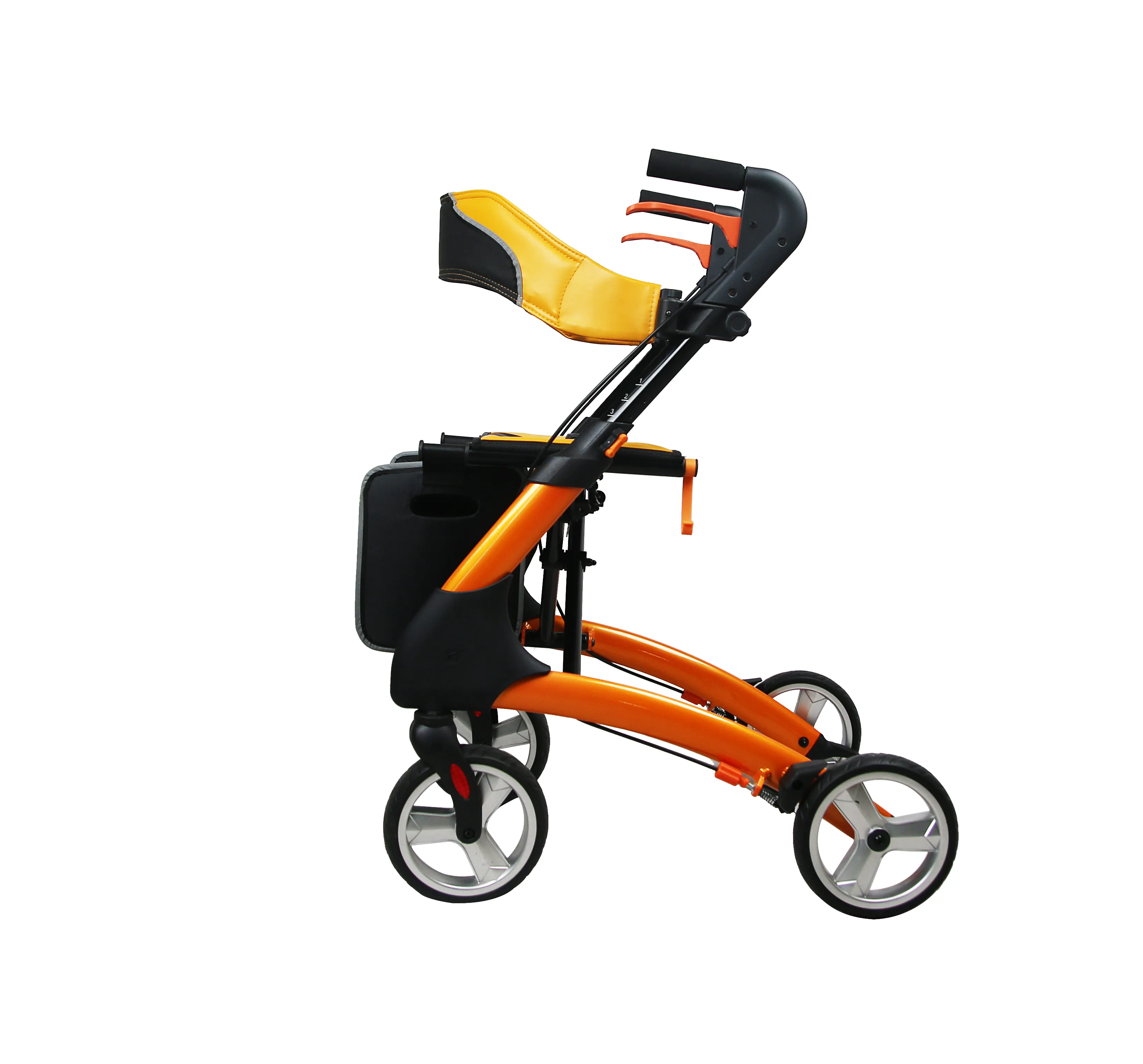
Four-wheel walkers typically feature a more stable seat, more reliable brake locks, and a lower risk of tipping. This makes the rhythm of "walk—stop—sit—walk again" feel less strenuous. If your daily routine involves walking short distances, stopping frequently, and sitting often, a four-wheel rollator walker is the preferred choice.
If your style is more about "moving briskly and agilely, with only occasional stops," a three-wheel rollator walker will feel lighter and more nimble.
How much "stability" is sacrificed for the sake of a three-wheel walker's "agility"?
Being "agile" does not equate to being "unstable"; rather, it implies a greater demand for managing your center of gravity. When using a three-wheeled walker:
• Slow down as much as possible when turning to prevent sudden shifts in your center of gravity caused by sharp corners;
• When ascending or descending slight inclines or crossing door thresholds, keep your elbows slightly bent to avoid overextending your arms;
• When stopping to rest, always engage the brakes before sitting down to prevent the device from sliding.
Provided these operational guidelines are followed, a three-wheeled rollator walker remains a safe and reliable aid in everyday environments.
Does the "greater stability" of a four-wheeled walker necessarily mean it is "more cumbersome"?
Not necessarily. Many modern four-wheeled walkers feature lightweight aluminum alloy frames, offering stability without excessive weight. Furthermore, they retain foldable designs and adjustable heights, striking a balance between stability and portability. However, four-wheeled walkers are generally slightly bulkier than their three-wheeled counterparts; they occupy a bit more space when folded, meaning that for tasks such as loading the device into a vehicle, stowing it in a bag, or carrying it up stairs, the three-wheeled walker still retains a natural advantage in terms of "lightness and compactness."
How should one weigh budget against value for money? Does spending more money always guarantee a better product?
"More expensive" does not equate to "more suitable." Three-wheeled rollator walkers typically fall within a more budget-friendly price range, with their primary value lying in their lightness and agility. Four-wheeled walkers, on the other hand, offer a superior "overall experience" in terms of stability, support, and resting capabilities, and often come with richer features (such as more comfortable seats, storage baskets, backrests, shock-absorbing wheels, etc.). Your choice should be a balanced decision based on your actual usage scenarios, physical condition, and personal comfort preferences—rather than a simple comparison of price tags.
Which is better: a three-wheeled walker or a four-wheeled walker?
Please review the questions below and answer each with a simple "Yes" or "No," then tally the total number of "Yes" responses:
1. Do you frequently walk in narrow spaces or navigate sharp corners?
2. Do you need to frequently fold the device to load it into a vehicle or carry it up stairs?
3. Do you rarely require a seat to stop and rest?
4. Is the ground you walk on predominantly flat and even?
5. Are you particularly sensitive to the weight of the device?
If you answered "Yes" to three or more questions, a three-wheeled walker is likely the more suitable choice for you. If the number of "Yes" responses is 2 or fewer—or if you frequently need to sit and rest, navigate more complex terrain, or require a higher weight capacity—a four-wheeled rollator walker is the more suitable choice.
Which is better: a three-wheeled walker or a four-wheeled walker?
Conclusion: It is not a question of "which is better," but rather "which is better suited for you."
• If your primary priorities are agile maneuvering, lightweight portability, and frequent turning during short-distance indoor use—a three-wheeled walker aligns more closely with your needs.
• If your primary priorities are sturdy support, the ability to stop and sit down with ease, and walking medium-to-long distances—with frequent stops—on level surfaces, a four-wheeled rollator walker is the more appropriate choice.
Fundamentally, three-wheeled and four-wheeled rollator walkers are two products that share a common lineage but serve different functions: the former emphasizes agility and lightness, while the latter prioritizes stability and support. Basing your decision on your physical condition, your intended usage environment, and the feel of the device during a test push is the key to selecting the right walker for you.