

In physical rehabilitation, elderly care, or post-operative recovery, "assistive walking devices" play a crucial role.
They not only help people maintain balance and reduce the risk of falls, but also enhance independence and confidence in daily activities.
However, the market offers a wide variety of assistive devices—Rollators, walking frames, walking sticks, and more—each with different functions.
So, the question arises: which device is best for assisting walking?
This article will analyze the characteristics of three mainstream assistive devices from the perspectives of ergonomics, stability, target audience, usage environment, and safety, helping you to scientifically and rationally determine which one best suits your needs.
Why do you need assistive walking devices?
Many people who lose some of their walking ability mistakenly believe that as long as they can still walk with difficulty, they don't need walking aids.
But from a rehabilitation medicine perspective, choosing the right assistive walking device can significantly reduce the risk of falls and effectively distribute the burden on joints and muscles.
The main functions of assistive devices include:
• Maintaining balance and stability: reducing center of gravity sway and preventing falls.
• Reduces physical load: Reduces pressure on lower limb joints.
• Promotes confidence and independence: Helps users safely complete daily activities.
• Assists rehabilitation training: Helps patients gradually regain a normal gait.
In other words, assistive devices are not a "last resort," but an important tool for recovery and independence.
What are the three most common types of assistive walking devices?
Currently, the three most common types of assistive devices used in clinical practice and daily life include:
1. Rollator (Walker with Wheels)
2. Walking Frame/Walker
3. Walking Stick
While all three devices are used to "assist walking," they differ significantly in structure, support method, and target users.
Next, we will analyze each in detail.
4-Wheel Rollator (Walker with Wheels)
Walking Frame/Walker
Walking Stick
What is a "Rollator"? Who is it suitable for?
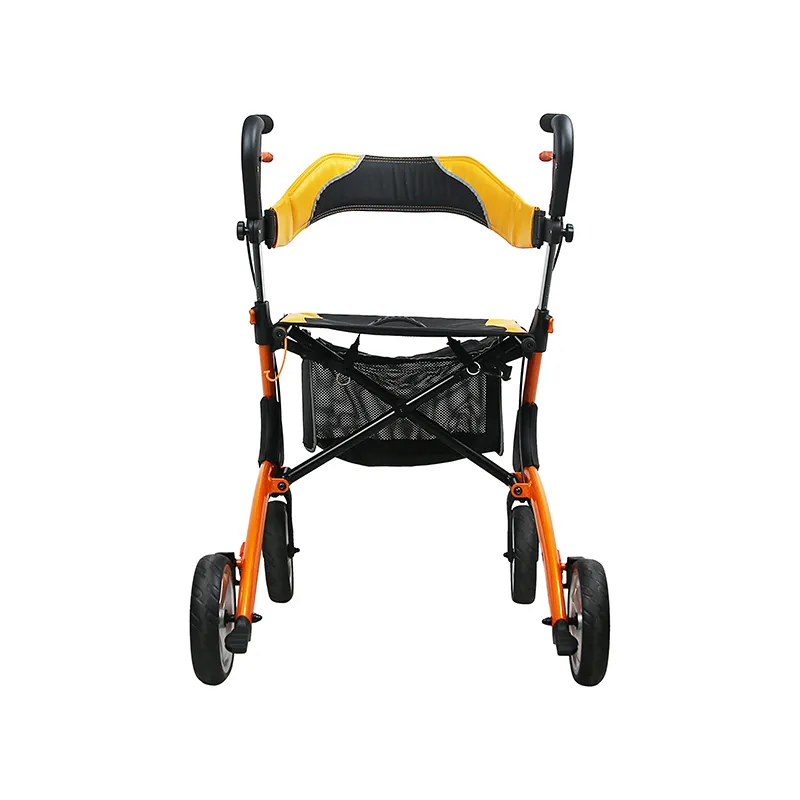
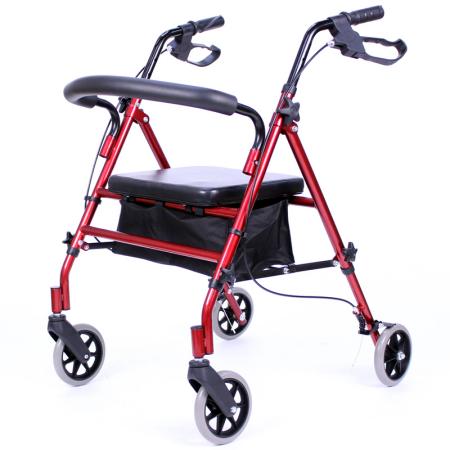
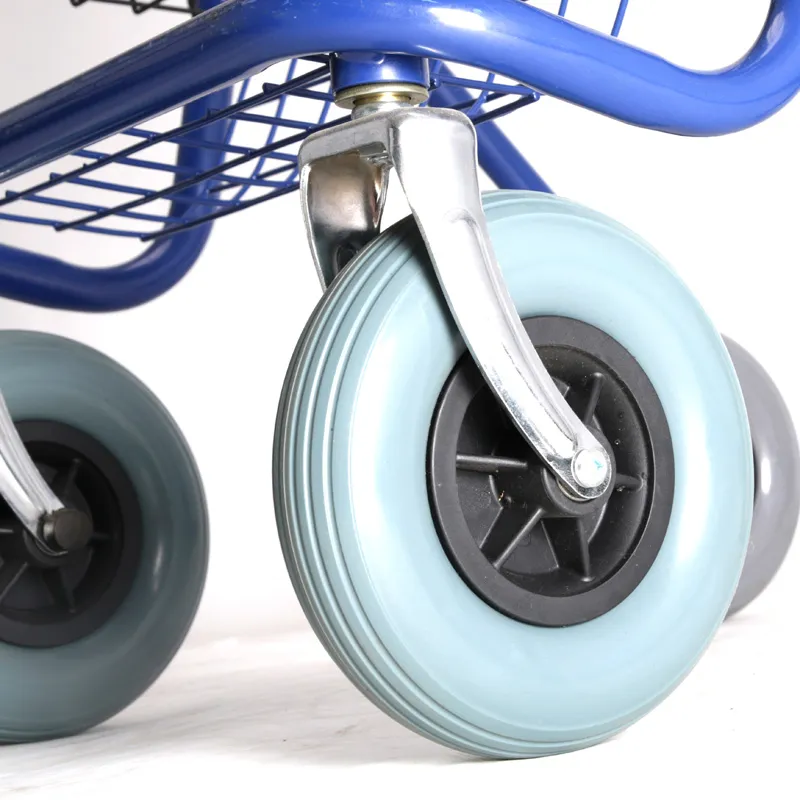
A Rollator walker is an assistive walking tool with wheels, typically equipped with four wheels, a brake handle, a seat, and a storage basket.
Compared to a traditional walking frame, it provides smoother and more flexible movement, making it particularly suitable for outdoor walking or users with lower physical strength.
Advantages of Rollators:
• Effortless Movement: Wheels reduce friction, eliminating the need for frequent lifting.
• Built-in Seat: Allows users to sit and rest at any time, suitable for those with limited stamina.
• Increased Independence: Suitable for everyday activities such as shopping and walks in the park.
• Some models include a braking system: Ensures safety when going downhill or turning.
Disadvantages of Rollators:
• Inconvenient to operate in confined spaces (such as a hallway);
• Braking may be difficult for those with insufficient upper limb strength;
• Not suitable for patients who need to fully support their body weight.
Suitable Users of Rollators:
• Elderly individuals with decreased physical strength but still able to walk independently;
• Post-operative rehabilitation patients who need to walk long distances;
• Individuals with mild but not complete loss of balance.
What is the difference between a walking frame and a Rollator?
Which is more stable?
Many people easily confuse walking frames and Rollators, thinking they are only different in terms of wheels. In reality, there are fundamental differences in their support methods and stability.
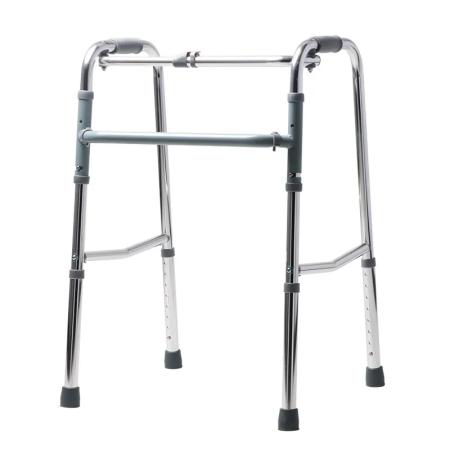
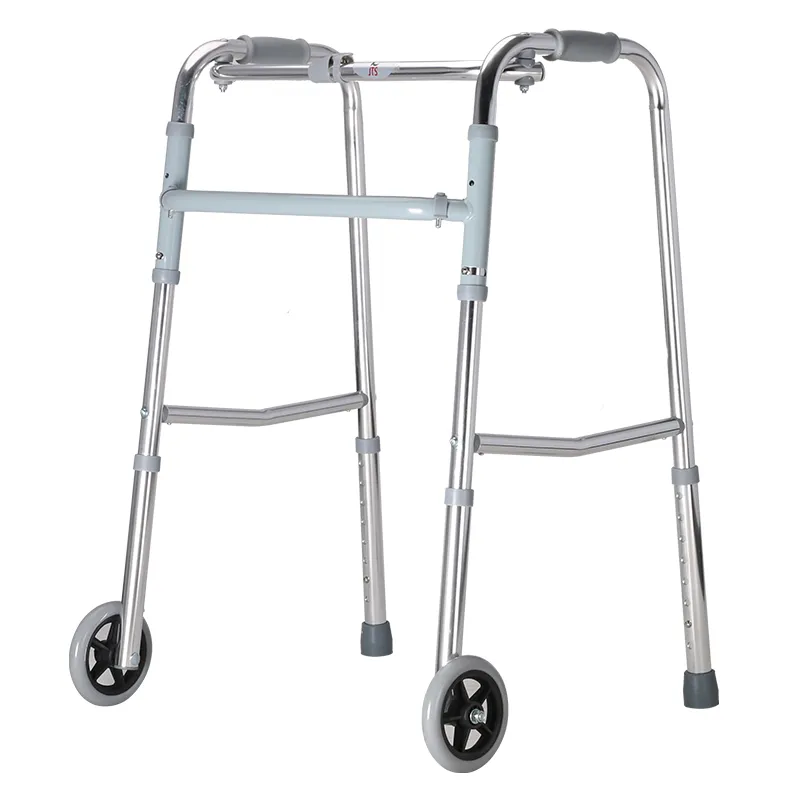
Walking frames are typically made of aluminum alloy and have four support legs (without wheels or with two front wheels). They move forward by the rhythm of the user lifting and lowering their arms.
They offer greater stability but require more physical strength.
Advantages of walking frames:
• High stability: Four-point ground contact structure, large support surface.
• Suitable for people with full or partial weight-bearing disabilities;
• Lightweight and durable, suitable for indoor use;
• Easy to control, less prone to slipping.
Disadvantages of walking frames:
• Requires upper limb strength to lift, relatively strenuous;
• Slower walking speed;
• Easily fatigued over long distances.
Suitable users for walking frames:
• People with severe lower limb weakness;
• People with significantly limited balance;
• Patients in the early stages of recovery after surgery or injury.
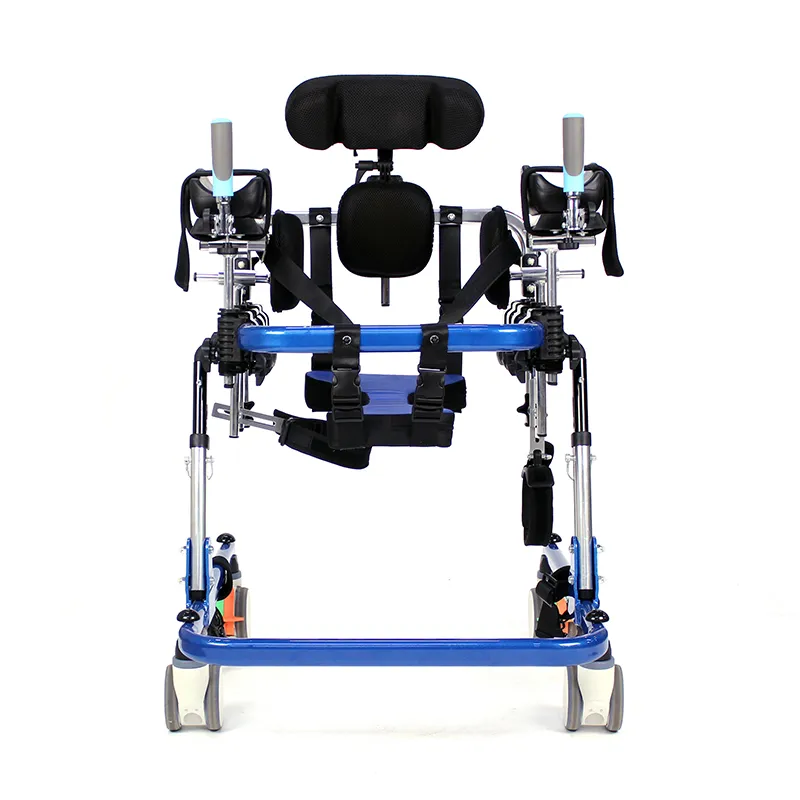
Walking frames vs. Rollators: Core differences
Comparison Items | Walking frame | Rollator |
| Whether it has wheels | Usually wheelless or with no front wheel | Four-wheeled |
| Mobility method | Lift-lower-move | Propelled forward |
| Stability | Strengthened | Slightly weaker |
| Usage environment | Indoors or on flat surfaces | Outdoors or long distances |
| Force requirements | Requires upper limb support | Effortless, rolling propulsion |
—Walking frames are safer and more stable, while rollator walkers are more flexible and convenient.
If "support capacity" is the core consideration, walking frames are more suitable for users with weaker constitutions.
Can walking sticks meet daily walking assistance needs?
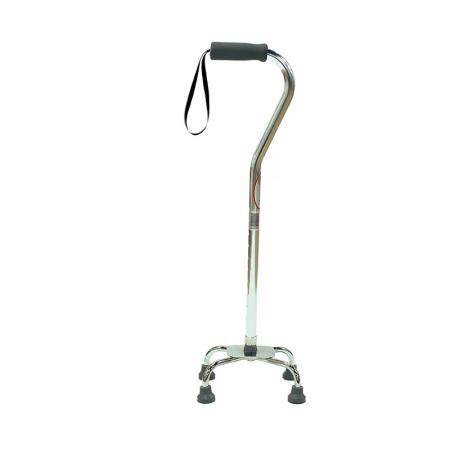
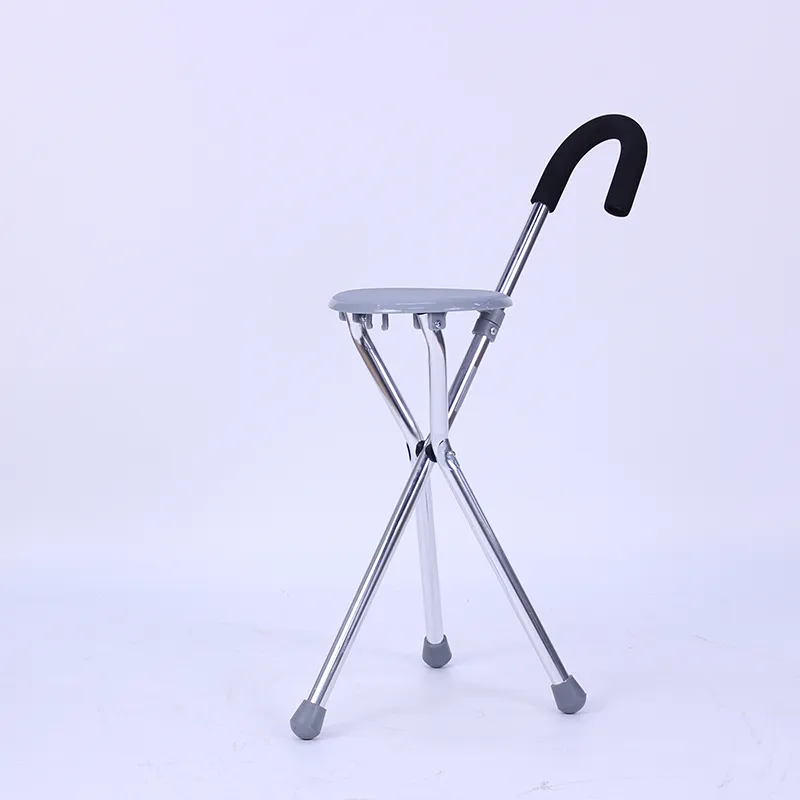
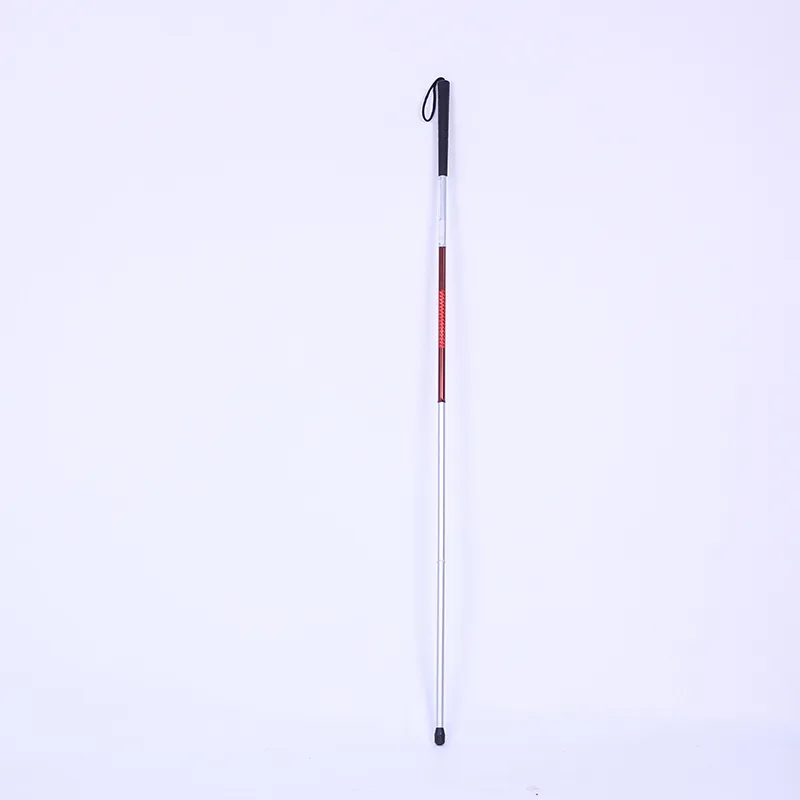
A walking stick is the simplest and lightest walking aid. It helps users maintain balance and reduce the load on their lower limbs through single or multiple points of contact with the ground.
Main types of walking sticks:
• Single-point walking stick: The most common type, simple in structure, suitable for those with mild balance problems;
• Four-point walking stick: Supported by four points at the bottom, more stable but slightly heavier;
• Folding walking stick: Portable, suitable for carrying when out and about.
Advantages of walking sticks:
• Lightweight and easy to carry;
• Simple to operate;
• Low cost and easy maintenance;
• Suitable for those with mild walking difficulties or temporary support needs.
Disadvantages of walking sticks:
• Small support area, limited stability;
• Cannot support heavy weight;
• Not suitable for people with severe leg weakness.
Correct principles for using walking sticks:
• The walking stick should be used on the same side as the unaffected hand;
• The length of the walking stick should allow the elbow to be slightly bent at approximately 15°;
• Regularly check the rubber pads at the tip of the stick to prevent slippage.
Walking sticks are suitable for people with mild balance problems who can walk independently but need some support.
For users with significant strength loss or gait instability, walking frames or rollator walkers are safer choices.
Rollator, walking frame, or walking stick?
Before deciding which assistive device to use, consider four factors: physical condition, usage scenario, physical strength level, and safety needs.
1. Choose based on physical support needs
• Mild balance instability: Walking stick
• Requires partial support: Walking frame
• Insufficient strength but can walk independently: Rollator
2. Choose based on usage environment
• Confined indoor spaces: Walking frame is the most stable;
• Flat outdoor roads or shopping malls: Rollator walker is more suitable;
• Temporary outings or light assistance: Walking stick is the most convenient.
3. Choose based on physical strength and dexterity
• If arm strength is insufficient, a walking frame is not recommended.
• If reaction time is slow, avoid rollators with brakes.
• If you are thin, choose lightweight equipment.
4. Choose based on safety priorities
From a safety perspective:
• Walking frame > Rollator > Walking stick
• The larger the stability and support surface, the better the fall protection.
However, flexibility decreases in the opposite direction.
How to correctly adjust and use walking aids?
Even if you choose the right equipment, improper use can still lead to secondary risks.
Here are the key points for using three types of assistive devices:
1.Key Points for Using the Rollator
• Hold the brake handles with both hands and keep your body upright.
• Push the vehicle rather than relying on your weight to lean on it while walking.
• Be prepared to brake when going uphill or downhill.
• Always lock the wheels before sitting down to rest.
2. Key Points for Using the Walking Frame
• Keep your body centered in the walking frame;
• Avoid excessive lifting of the walking frame;
• Both feet should always land in the center of the support frame;
• Walk slowly and evenly.
3. Key Points for Using the Walking Stick
• The walking stick should be placed on the healthy side;
• First, move the walking stick and the affected leg forward simultaneously;
• Then, use the healthy leg to support your body and complete the step;
• Maintain balance and avoid shifting your center of gravity.
Correct usage not only extends the lifespan of the device but also ensures that every step is stable and safe.
Different Assistive Devices: Overview of Advantages and Disadvantages
Project | Rollator | Walking frame | Walking stick |
| Stability | Medium | High | Low |
| Operational Difficulty | Medium | Moderately high | Minimum |
| Usage Environment | Outdoor | Indoor | Universal |
| Physical Requirements | Low | Indoor | Low |
| Support Capacity | Medium | Strong | Weak |
| Portability | General | Basic | Very portable |
| Target Audience | Older adults, those with mild mobility impairments | Basic balance, patients in recovery period | For those who need mild support |
The table above clearly shows that different devices have their own advantages in stability, flexibility, and support. There is no absolute "best," only the "most suitable."
The Most Suitable Assistive Device – It Lies in Your Body
The key to choosing assistive walking devices is not the brand or price, but whether it truly suits your physical condition and lifestyle.
1. If you only need slight support and balance assistance, a walking stick is the lightest option.
2. If you need greater stability and a sense of security, a walking frame provides solid support.
3. If you want to remain independent when physically weak, a rollator walker makes walking easier.
The most suitable device is the one that helps you take each step safely, steadily, and confidently.
Regardless of the assistive device you choose, always remember: the device is a partner to help you "walk better," not a machine to "walk for you."
What kind of walking aids does Dayang Medical supply?
Our product line includes a wide range of walking aids, such as rollator walkers, walking frames, crutches, and walking sticks. Each item is produced in our factory in China, following strict safety standards and ISO certifications.
Buyers can purchase these mobility products at wholesale prices and request factory quotes for bulk supply. We offer cheap deals, promotions, and discount sales, while ensuring every walking aid is durable and high quality.