

In a hospital, the bed is one of the most basic and crucial medical devices for every patient's recovery. Different types of beds differ significantly not only in their structural design but also in their functionality, safety, target population, and operating methods, reflecting distinct levels of professionalism.
When we enter a hospital, we often see two different medical environments: "regular wards" and "ICU wards." Many people may ask: What's the difference between an ICU hospital bed and a regular hospital bed? Why must critically ill patients use ICU hospital beds?
This article will systematically analyze the differences between ICU hospital beds and regular hospital beds from multiple perspectives, helping you fully understand their differences, functional characteristics, and usage scenarios.
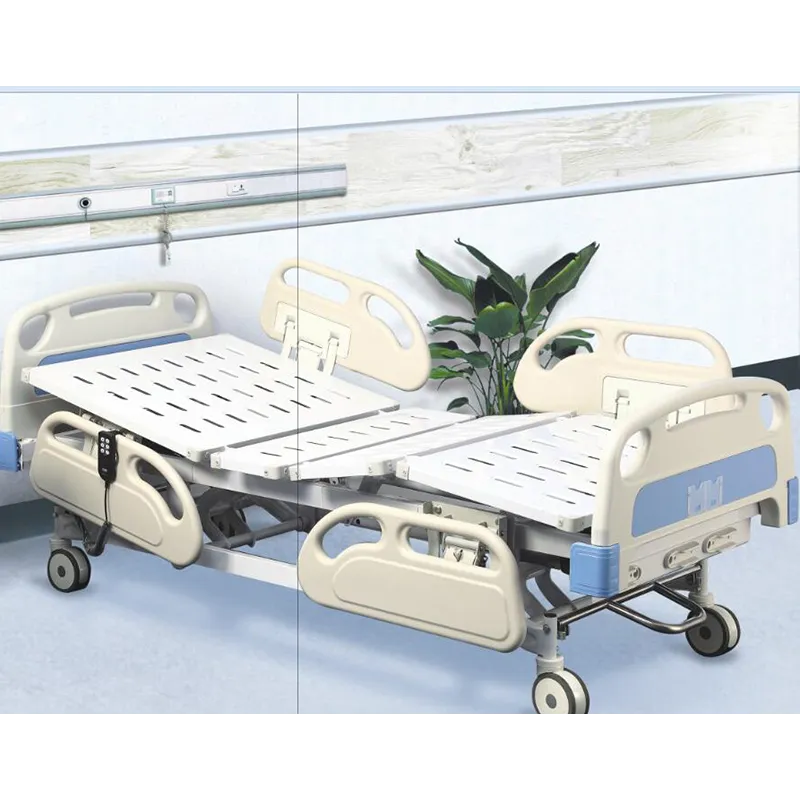
Why differentiate between ICU hospital beds and regular hospital beds?
In the hospital system, bed design is determined based on the severity of the patient's condition and their nursing needs.
• Regular hospital beds are mainly used for general inpatients, meeting their daily rest and basic nursing needs;
• ICU hospital beds are specifically designed for critically ill patients, requiring intensive monitoring and resuscitation with complex medical equipment.
Due to the unique environment of the ICU (Intensive Care Unit), the frequency of equipment and procedures is far higher than in general wards. Therefore, the ICU hospital bed must possess higher levels of safety, adjustability, and functional integration.
In other words, an ICU hospital bed is not just a bed, but a medical support system.
What is an ICU hospital bed?
An ICU hospital bed is an electrically powered medical bed specifically designed for patients in the intensive care unit. It features multi-angle adjustment, automatic position changing, emergency repositioning, cardiopulmonary resuscitation (CPR) functions, and high-intensity load-bearing capacity.
It not only meets the physiological needs of patients in critical conditions but also assists medical staff in performing treatment and nursing procedures efficiently and safely.
ICU hospital bed structure:
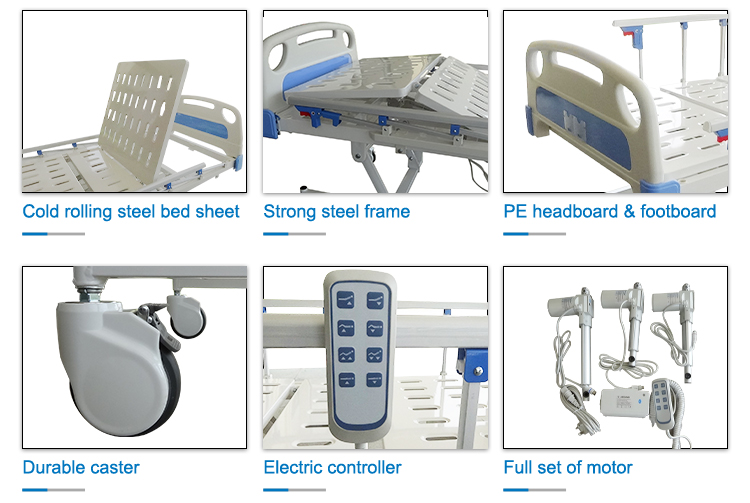
• Multi-motor system: Enables bed height adjustment, backrest, leg support, and overall posture adjustment;
• Emergency repositioning system (CPR): One-button restoration to a supine position;
• Battery backup system: Allows continued operation during power outages;
• Removable and washable bed board: Facilitates cleaning and disinfection;
• High-strength bed frame: High load-bearing capacity and stability;
• Integrated control panel: Convenient for medical staff;
• Safety accessories such as IV stands, guardrails, and anti-pinch system.
ICU hospital bed applications:
• Intensive Care Unit (ICU)
• Postoperative Recovery Unit (PACU)
• High Dependence Unit (HDU)
• Patients requiring prolonged bed rest and frequent vital sign monitoring
ICU hospital beds are high-end medical equipment. Their core value lies in providing safe, precise, and adjustable positioning support for critically ill patients, while assisting medical teams in efficiently performing nursing procedures.
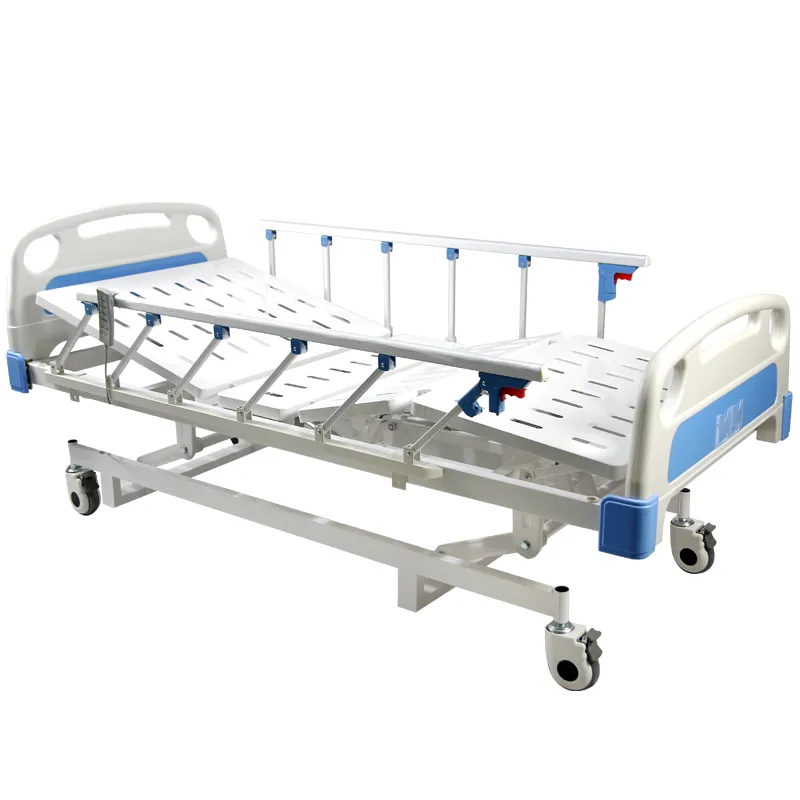
What is a regular hospital bed?
Standard hospital beds refer to standard medical beds used by general inpatients. They have a relatively simple structure, with functions primarily focused on basic positioning and comfort support.
Standard hospital beds can be categorized as follows:
• Manual beds (angle adjusted via a crank)
• Semi-electric beds (some are motor-driven)
• Fully electric beds (common in high-end wards or private hospitals)
Functions of standard hospital beds:
• Backrest adjustment: helps patients sit up;
• Leg extension: promotes blood circulation;
• Bed height adjustment (available in some models);
• Guardrails and IV stands;
• Simple wheel structure for easy movement.
Standard hospital beds are mainly used in:
• General wards for internal medicine, surgery, orthopedics, etc.;
• Rehabilitation centers and nursing facilities;
• Home care environments.
Standard hospital beds emphasize comfort and basic care, while ICU hospital beds focus on medical intervention and monitoring safety; their design philosophies are completely different.
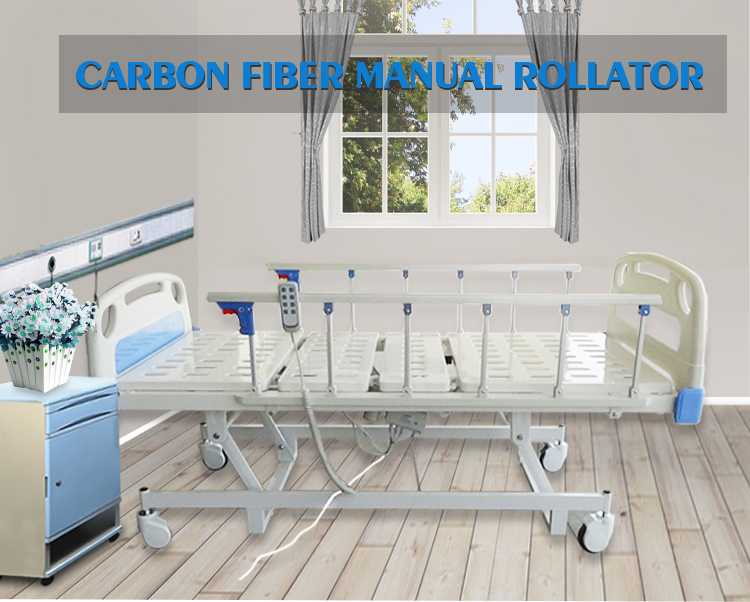
What is the core difference between ICU hospital beds and standard hospital beds?
Below, we will conduct a professional comparison from multiple dimensions, including function, structure, safety, and operation.
Project | ICU hospital bed | Standard Hospital Bed |
| Design Positioning | Professional monitoring equipment for critically ill patients | Basic hospital bed for general patients |
| Adjustment Method | Fully electric, multi-angle control | Manual or semi-electric adjustment |
| Control System | Multi-motor + intelligent control panel | Single motor or mechanical crank |
| Safety Functions | Anti-pinch system, emergency reset, CPR function | Primarily for fall prevention |
| Load Capacity | Weight: Up to 250-300kg | Generally suitable for patients weighing approximately 150-180kg |
| Power Dependence | Requires power supply and backup battery | Can be electric or manual |
| Operating Method | One-button operation for medical staff + patient self-control | Primarily manually adjustable |
| Nursing Efficiency | High-end, supports multi-functional operation | Medium-range, requires manual assistance |
| Price Range | High-end medical equipment | Mostly mid-to-low-end beds |
| Applicable Targets | Suitable for critically ill, post-operative, and long-term bedridden patients | Suitable for general inpatients or rehabilitation patients |
It can be seen that the functions of an ICU hospital bed far exceed those of a regular hospital bed. Its key technological features are:
1. Automation;
2. Safety;
3. Medical compatibility;
4. Long-term stability.
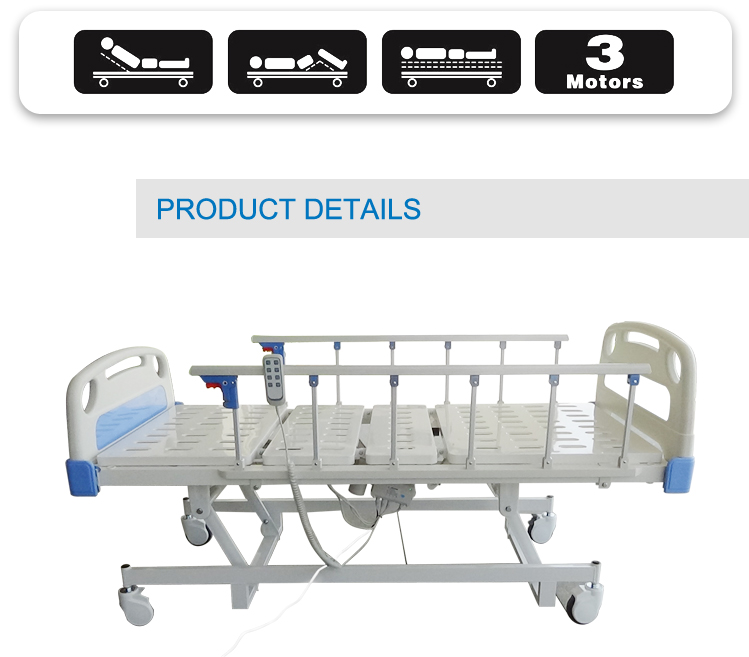
What are the key functions of an ICU hospital bed?
To meet the special nursing needs of critically ill patients, ICU hospital beds typically possess the following core functions:
1. Fully Electric Multi-Stage Adjustment
ICU hospital beds are usually equipped with 3-5 motor systems, enabling precise control of:
• Backrest elevation;
• Leg support;
• Overall height adjustment;
• Bed tilt;
• Anti-misoperation limit.
This multi-angle adjustment helps patients maintain a proper position, prevents pressure sores, and promotes respiratory function.
2. Automatic Position Changing
Some models support timed left and right turning, reducing the risk of pressure sores caused by prolonged bed rest and alleviating the workload of nursing staff.
3. One-Button Cardiopulmonary Resuscitation (CPR)
In emergencies, medical staff can quickly return the bed to a supine position using the "CPR button," facilitating resuscitation operations.
4. Intelligent Safety System
• Bedside anti-pinch protection;
• Bed body limit protection;
• Power overload protection;
• Emergency backup battery in case of power failure.
5. Assistive Care Design
• Removable headboard for easy resuscitation;
• Bed height can be lowered to the ground for easy getting in and out of bed;
• Compatible with vital sign monitoring equipment and ventilator interfaces.
The core purpose of these functions is to achieve safe, precise, and efficient operation in intensive care.
Why are ICU hospital beds more expensive than regular hospital beds?
Many people wonder: why are ICU hospital beds several times more expensive than regular hospital beds?
The main reasons include the following:
1. Higher technological content
ICU hospital beds integrate multiple high-tech components such as electronic control systems, hydraulic structures, and alarm mechanisms, making their technological complexity far greater than that of regular hospital beds.
2. Stricter Material Requirements
ICU hospital beds use high-strength antibacterial materials for their frames, boards, and guardrails, capable of withstanding high-frequency disinfection, long-term use, and heavy workloads.
3. Higher Safety Standards
ICU hospital beds must pass medical device safety certification, meeting multiple international standards for electrical safety, mechanical stability, and resistance to electrical interference.
4. Enhanced Functional Integration
They need to be compatible with other medical equipment (such as monitors, ventilators, and infusion pumps), thus requiring a more sophisticated design.
ICU hospital beds are not just "advanced hospital beds," but multifunctional life support platforms, hence their higher price.
Which patients need ICU hospital beds?
Not all patients need ICU hospital beds. The following groups are most suitable:
1. Critically ill patients: such as those with multiple organ failure, heart disease, or respiratory diseases.
2. Postoperative recovery patients: requiring close monitoring of vital signs after major surgery.
3. Long-term bedridden patients: requiring frequent repositioning to prevent pressure sores.
4. Requires a ventilator support: ICU hospital beds can secure the equipment and adjust the patient's position.
The advantages of ICU hospital beds are truly realized only when intensive care, monitoring, or treatment is required.
Can ICU hospital beds be used in general wards?
Yes, but it's usually uneconomical. General patients don't need as many features.
How high can an ICU hospital bed be adjusted?
The typical height adjustment range is 450mm–750mm, which can be flexibly adjusted according to nursing needs.
Can an ICU hospital bed still be used during a power outage?
Most models are equipped with backup batteries, allowing for several hours of continuous use.
What is the weight-bearing capacity of an ICU hospital bed?
Most are designed to support 250–300kg, with some reinforced models reaching 350kg.
Can a general hospital bed be upgraded to an ICU hospital bed?
It's not recommended. The structure, circuitry, and safety standards are all different, making simple modifications impossible.
How does Dayang Medical support small hospitals and clinics?
We provide affordable, high quality equipment suitable for small healthcare facilities. Our factory in China offers low price purchasing, wholesale discounts, and factory quotes for hospitals and clinics. Buyers can customize product features, choose convenient delivery schedules, and receive technical support.
Dayang Medical’s reliable supply chain ensures timely delivery, making us a trusted supplier for institutions needing cost-effective medical equipment solutions without compromising quality.