

In elderly care, rehabilitation assistive devices, and long-term care equipment, toilet(commode) wheelchairs and toilet(commode) chairs are two of the most frequently mentioned product categories.
Both help people with mobility impairments solve toileting problems, improving convenience and safety. However, many people often can't distinguish between the two when choosing.
So, what exactly is the difference between a commode wheelchair and a commode chair?
Who are they suitable for?
What are the differences in usage, function, and structure?
This article will systematically and professionally analyze these questions from multiple aspects, including definition, functional structure, usage scenarios, applicable groups, advantages and disadvantages, and key points for selection, helping you accurately understand the core differences between "toilet wheelchairs" and "toilet chairs."
What is a toilet wheelchair?
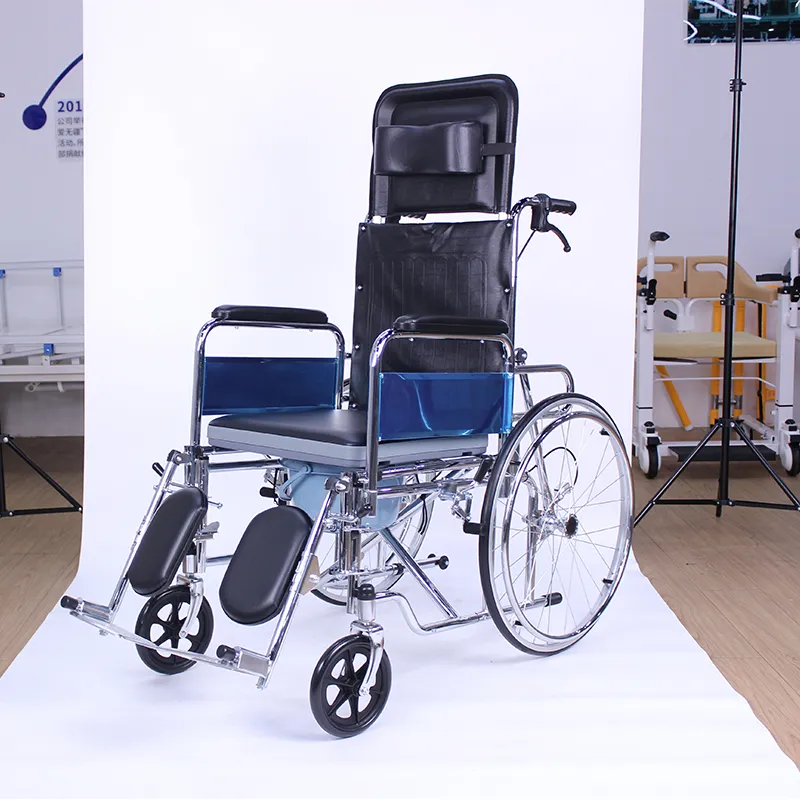
A toilet wheelchair is a composite assistive device that combines a wheelchair with a toilet seat function.
It can not only be used as a regular wheelchair for daily mobility but also for toileting, bathing, or bedside urination/defecation.
The structural features of a toilet wheelchair include:
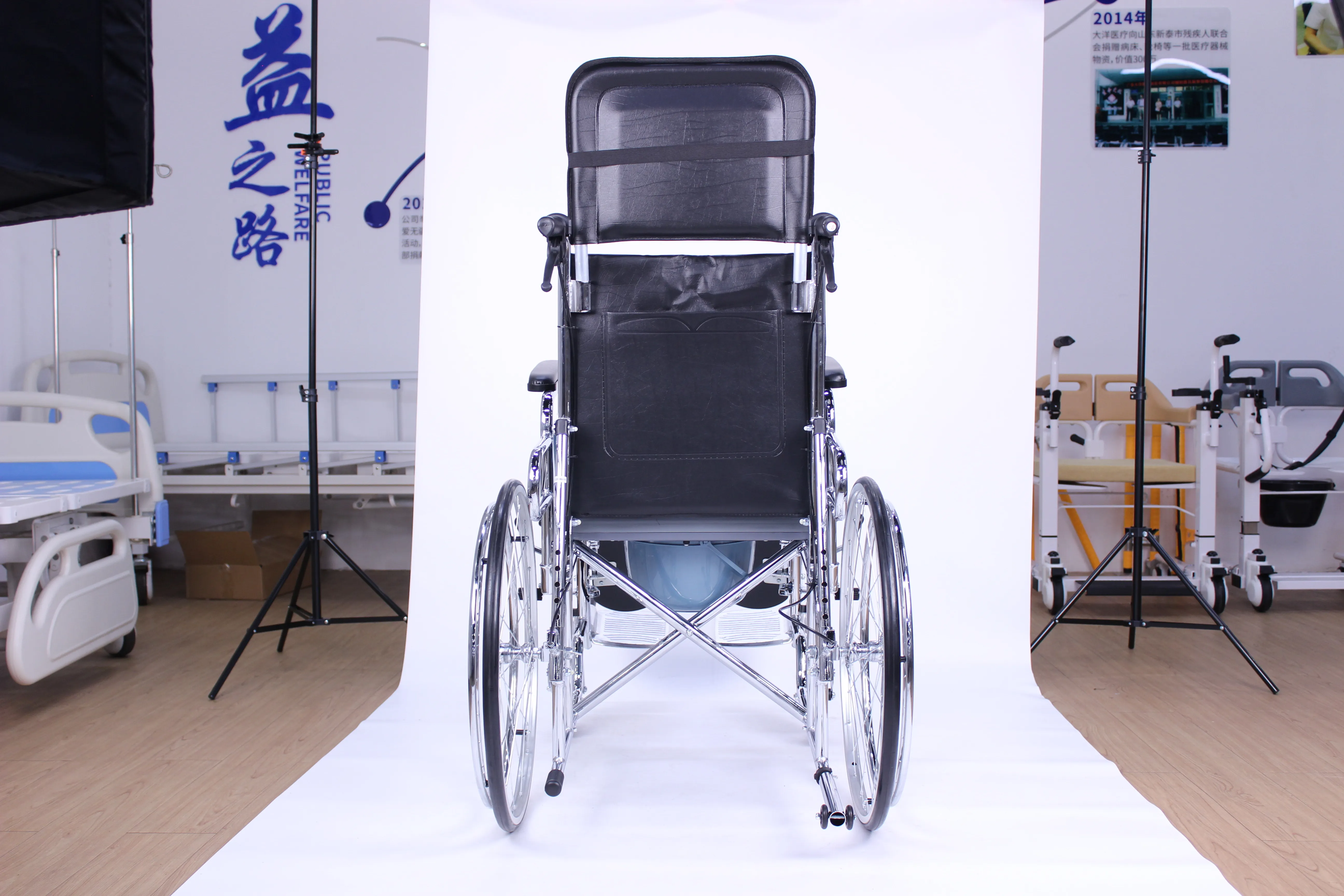
• Wheelchair chassis: Equipped with four wheels for easy movement;
• Seat ring with an opening: Includes a removable cover for toileting;
• Removable bedpan: Placed under the seat for easy collection and disposal of waste;
• Push handle and braking system: For easy control and restraint by caregivers;
• Footrests and armrests: Provide support and safety.
A toilet wheelchair can be understood as a "mobile commode chair," ideal for users who require both mobility and toileting assistance.
What is a toilet chair?
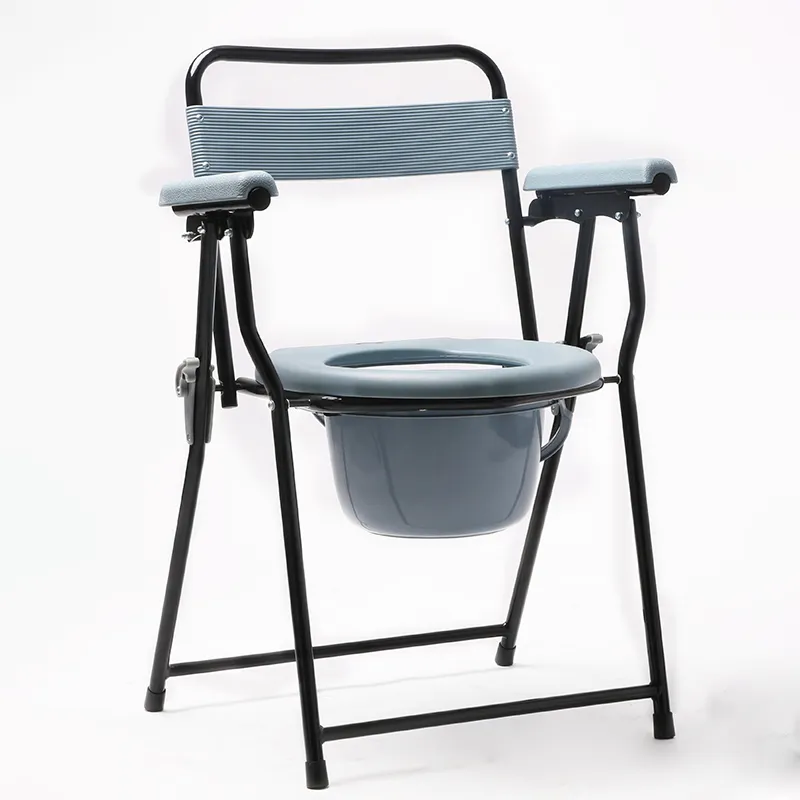
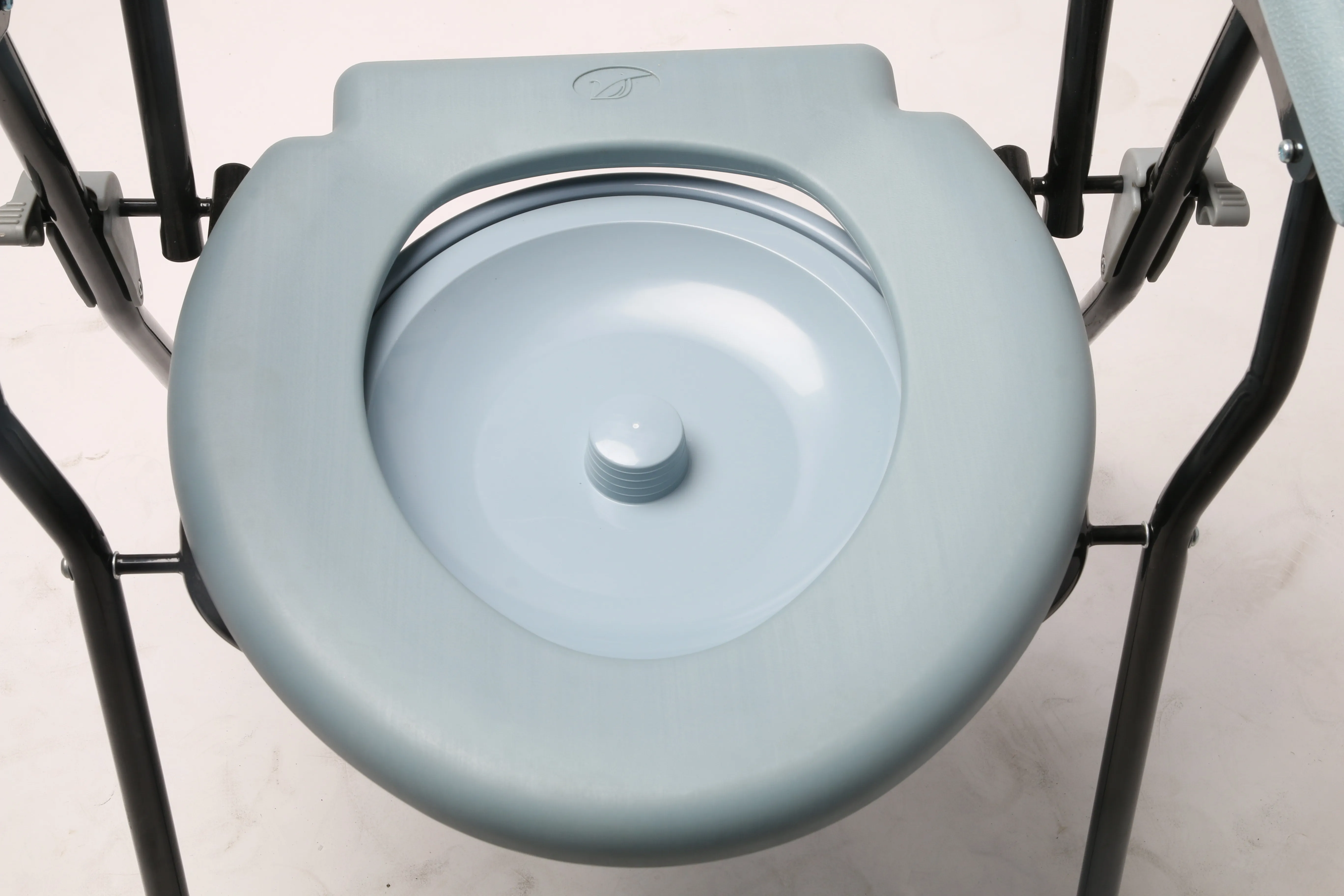
A toilet chair is a fixed toileting aid, resembling a chair in shape, but with an opening in the center of the seat and a removable bedpan.
Users can use the toilet while seated in the toilet chair without having to walk to the restroom.
The main structural components of a toilet chair include:
• A sturdy frame (usually metal or plastic);
• A seat cushion with an opening;
• A removable bedpan or urinal;
• Some models have armrests and a backrest for support when sitting up;
• Some models are foldable for convenient home use.
Compared to a toilet wheelchair, a toilet chair typically does not have wheels, cannot move, and can only be used in a fixed position.
Its main function is to allow people with mobility impairments to conveniently use the toilet at the bedside or in the bedroom.
What are the structural differences between a toilet wheelchair and a toilet chair?
Although the names "toilet wheelchair" and "toilet chair" are similar, they are structurally significantly different.
Comparison Items | Toilet wheelchair | Toilet chair |
| Whether it has wheels | With wheels, movable | No wheels, fixed for use |
| Main functions | Mobility + toileting | Toilet use (fixed location) |
| Structural complexity | Higher height, includes brakes, pedals, and handles | Relatively simple, only has basic support structure |
| Usage method | Can be pushed to the bathroom or bedside | Requires to be placed in a fixed location |
| Suitability for nursing care and pushing | Yes, can be pushed by caregivers | No, user needs to get up and sit down independently |
| Size occupied | Slightly large | Smaller, suitable for narrow spaces |
| Suitable population | For those with limited mobility who need to be moved | Suitable for people with limited mobility or bedridden individuals |
Structurally, a toilet wheelchair is a "mobile toilet chair," offering more comprehensive functions but with a more complex structure;
Toilet chairs are lighter, more economical, and suitable for users who only need assistance with toileting.
Why do some people choose a toilet wheelchair instead of a toilet chair?
This is one of the most common questions consumers encounter when making a purchase.
When should you choose a commode wheelchair? When is a commode chair more suitable?
Let's analyze this from the perspectives of function and usage needs.
1. Is mobility necessary?
If the user can sit upright, be safely pushed, or is partially self-sufficient, then a toilet wheelchair is more suitable.
It can be moved by caregivers, seamlessly connecting the bedroom to the bathroom, and from the bedside to the shower area, reducing the risks associated with frequent moves.
A toilet chair, on the other hand, is stationary, requiring the user to use the toilet in the same location, making it unsuitable for scenarios requiring movement.
2. Size of the usage environment
The chassis and wheels of a toilet wheelchair take up considerable space, making it inconvenient to move if the bedroom or bathroom is small.
In this case, a smaller, foldable toilet chair is more suitable.
If the home space is spacious and the floor is flat, a toilet wheelchair offers a more flexible user experience.
3. Caregiving needs and dependence
For users requiring assistance, the pushable design of a toilet wheelchair greatly reduces the burden of care.
Caregivers do not need to carry the patient; they can simply push the toilet wheelchair to complete the toileting process.
For elderly people who can sit up but have difficulty walking, a toilet chair is more convenient for daily use, as it can be placed beside the bed.
Who is a commode wheelchair suitable for?
Toilet wheelchairs have a wider range of users, mainly including:
• Post-operative recovery patients (e.g., after hip or knee surgery);
• People with lower limb mobility issues;
• Patients with neurological diseases (e.g., stroke, Parkinson's disease);
• Elderly people or patients who need to stay in bed for extended periods;
• Residents of nursing homes or rehabilitation facilities.
These groups typically require integrated care functions encompassing mobility, toileting, and bathing, and a toilet wheelchair perfectly meets these combined needs.
Who is a commode chair suitable for?
Comparatively, toilet chairs are more suitable for the following groups:
• Elderly people with slower mobility but who can sit up;
• People with insufficient lower limb strength and difficulty using the toilet at night;
• Bedridden patients who can sit up for short periods;
• Users who do not require frequent movement and only need fixed toileting assistance.
Toilet chairs are simple, stable, and cost-effective, making them ideal for home care and daily use by the elderly.
Differences in User Experience between Toilet Wheelchairs and Toilet Chairs
1. Safety
• Toilet Wheelchair: Equipped with a braking system, non-slip footrests, and stable support, making it more suitable for patients requiring assistance from caregivers.
• Toilet Chair: Stable four-legged support prevents slipping, but ensures a flat surface for placement.
2. Comfort
• Toilet Wheelchair: Usually equipped with PU cushions and a backrest, providing greater comfort for long-term use.
• Toilet Chair: Some have a hard seat, suitable for short-term use.
3. Cleaning and Maintenance
• Toilet Wheelchair: Complex structure requires regular cleaning of the wheels and metal frame.
• Toilet Chair: Simple structure, with a removable and easily cleanable bedpan.
4. Space and Portability
• Toilet Wheelchair: Takes up a lot of space and is difficult to store.
• Toilet Chair: Foldable design saves space, suitable for small apartments.
Price Differences Between Toilet Wheelchairs and Toilet Chairs
The price difference between the two is significant in the market:
Categories | Price range (USD) | Key factors influencing price |
| Toilet chair | Approximately $50-$200 | Material, foldable design, armrests |
| Toilet wheelchair | Approximately $150-$500 | Material, braking system, foot pedals, foldable design, waterproof performance |
1. If only bedside toilet assistance is needed, a toilet chair is economical.
2. If mobility assistance or professional care is required, a toilet wheelchair is a more worthwhile investment.
Is a commode wheelchair more advantageous in nursing scenarios?
In long-term care, rehabilitation training, and institutional care environments, the advantages of a commode wheelchair are more pronounced.
It allows caregivers to perform toilet assistance tasks in a more effortless and safer way.
Key advantages include:
• High mobility;
• Reduced risk of being moved and falling;
• Simultaneous fulfillment of bathing and toileting needs;
• Improved care efficiency;
• Adaptability to different locations (bedroom, bathroom, toilet).
However, in purely home care, if space is limited or the budget is tight, a toilet chair remains a cost-effective choice.
Differences in Maintenance Between Toilet Wheelchairs and Toilet Chairs
Toilet Wheelchair Maintenance Focus:
• Regularly clean the potty and seat;
• Check the wheels and braking system for proper function;
• Prevent water stains from causing rust on metal parts;
• Regularly check the stability of screws, footrests, and seat cushion.
Toilet Chair Maintenance Focus:
• Clean the potty after each use;
• Regularly wipe the chair frame and keep it dry;
• Check for wear on the non-slip footpads;
• For folding models, pay attention to lubricating the joints.
Good maintenance can extend the lifespan of the equipment and ensure user safety and hygiene.
What Factors Should Be Considered When Choosing a Toilet Wheelchair or a Toilet Chair?
When purchasing, consider the following factors:
1. User's Mobility
If the user cannot walk independently, a pushable commode wheelchair should be chosen.
If the user can sit up independently but has slow mobility, a commode chair is more suitable.
2. Space Requirements
Small spaces are more suitable for folding commode chairs; spacious environments allow for fully functional commode wheelchairs.
3. Care Intensity
If a professional caregiver is available, a toilet wheelchair is easier to operate; if primarily used by the user, a toilet chair is lighter and more convenient.
4. Budget and Usage Frequency
For short-term use, an economical toilet chair is suitable; for long-term or multi-functional needs, a high-quality toilet wheelchair is recommended.
Can a toilet wheelchair be used as a regular wheelchair?
Yes, but it is not recommended as a long-term replacement for a regular wheelchair, as its design is primarily for toileting and short-distance movement.
Can a toilet chair be used in the bathroom?
Yes, but ensure the floor is dry and non-slip to prevent the metal from rusting.
Can a toilet wheelchair be used for showering?
Some models are waterproof and can be used as a shower chair; check the product specifications before purchasing.
Can a toilet chair be folded for storage?
Most household toilet chairs are foldable, suitable for home use and portability.
How to choose the most suitable product?
• Commode wheelchair: Suitable for users with severely limited mobility who require nursing assistance and mobility.
• Commode chair: Suitable for users with slow mobility, partial self-care ability, and who only require toilet assistance.
Regardless of the product chosen, the core goal is to improve safety, enhance quality of life, and reduce the burden of care.
Does Dayang support wholesale distribution and global sales?
Absolutely. As a factory-level manufacturer in China with two production sites and an export-ready product portfolio, Dayang supports wholesalers, distributors, and international sales channels. We can supply CE-marked products for European markets, FDA-compliant configurations for designated markets, and documentation required for customs clearance. Distribution partners can benefit from volume discounts, branded product lines, and priority manufacturing slots.