

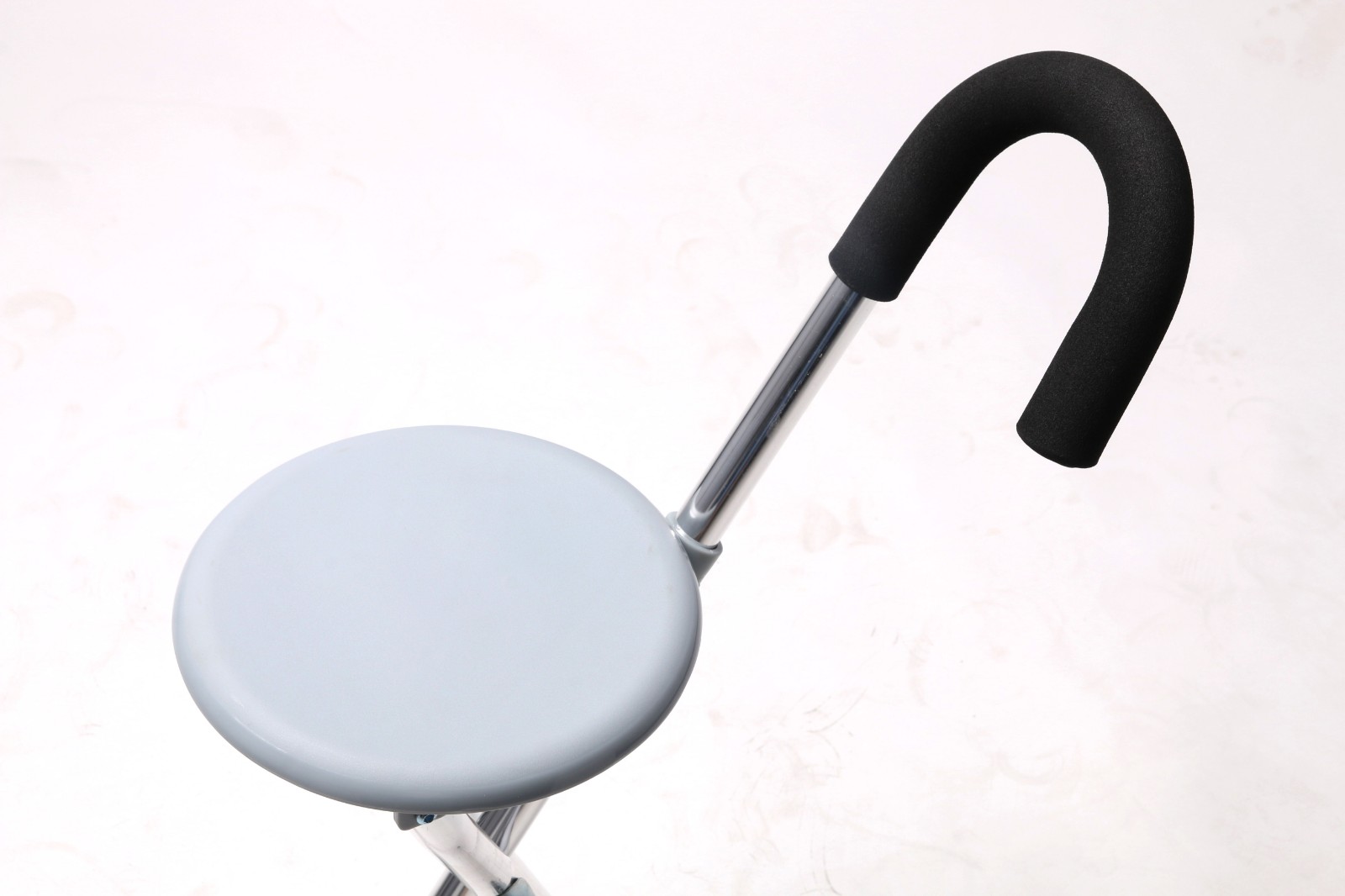
In daily life, walking sticks are no longer just a tool to assist walking. To allow users more opportunities to rest during long outings, some specially designed walking sticks incorporate a "seat" function, thus forming a multi-functional assistive device that can be used as a walking stick and can be easily converted into a chair.
The most common names for these types of walking sticks are "walking stick chairs," "walking sticks with seats," "folding chair walking sticks," or "triangular stool walking sticks." They are structurally designed to switch from "walking stick mode" to "chair mode" in a short time.
This article focuses on answering the title's question from the perspectives of structural science, ergonomics, and functional analysis, and is suitable for those who want to understand the "walking stick converts into a seat" type in depth.
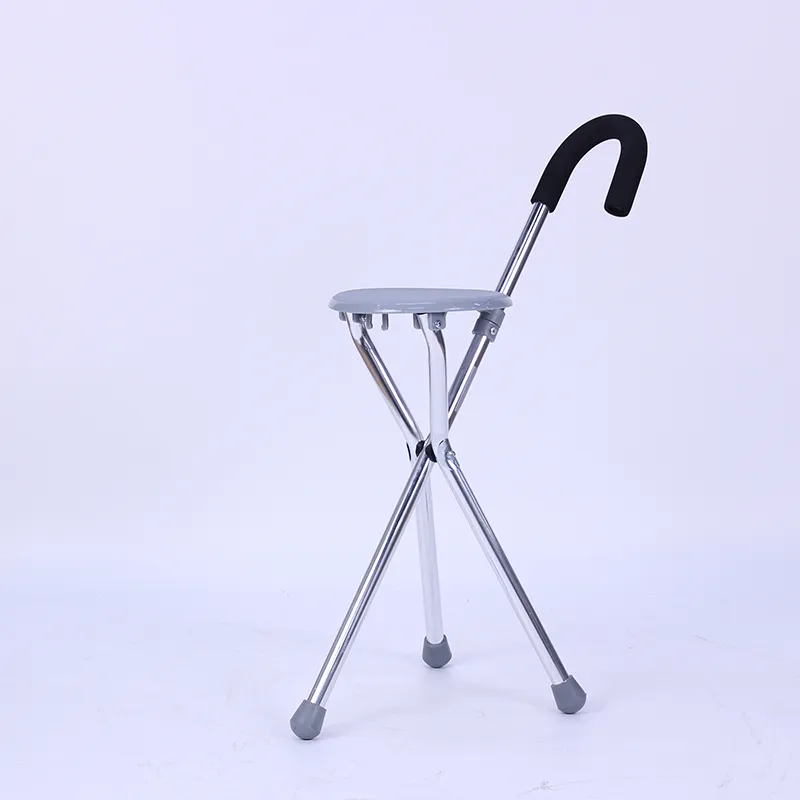
What type of walking stick has a seat?
The most direct answer is: Walking sticks that can be converted into seats generally belong to the "folding walking stick with seat" type.
The main characteristic of this type of cane is its design based on a folding structure, a stable support, and an auxiliary seat, allowing users to freely switch between standing, walking, and temporary rest.
These canes typically include the following basic types:
• Tripod folding chair cane (most common and easily identifiable)
• Four-legged folding chair cane (more stable)
• Single-leg concealed chair cane (less common)
• Triangular support multi-functional cane chair
• Dual-mode folding cane chair (combined with ergonomic seat design)
Below, we will explain their structure and features one by one.
How does a tripod folding chair cane transform into a chair?
The tripod folding chair cane is the most common type of convertible chair cane on the market.
Features of a Three-Legged Folding Chair Cane:
• Three supporting legs
• Foldable seat at the top
• Handle doubles as a chair backrest or fulcrum
• Folds down to a regular straight-handled cane
How to Use a Three-Legged Folding Chair Cane:
• Folds into a regular cane for walking
• Unfolds the tripod for resting
• With the seat unfolded, the user can sit on the stable triangular structure
Advantages of a Three-Legged Folding Chair Cane:
• Lightweight
• Quick unfolding
• Easy to carry
• Most versatile function
Disadvantages of a Three-Legged Folding Chair Cane:
• Not suitable for heavier individuals to sit on for extended periods
• Relatively small seat
The three-legged folding chair cane is a typical example of the "cane-to-seat" category.
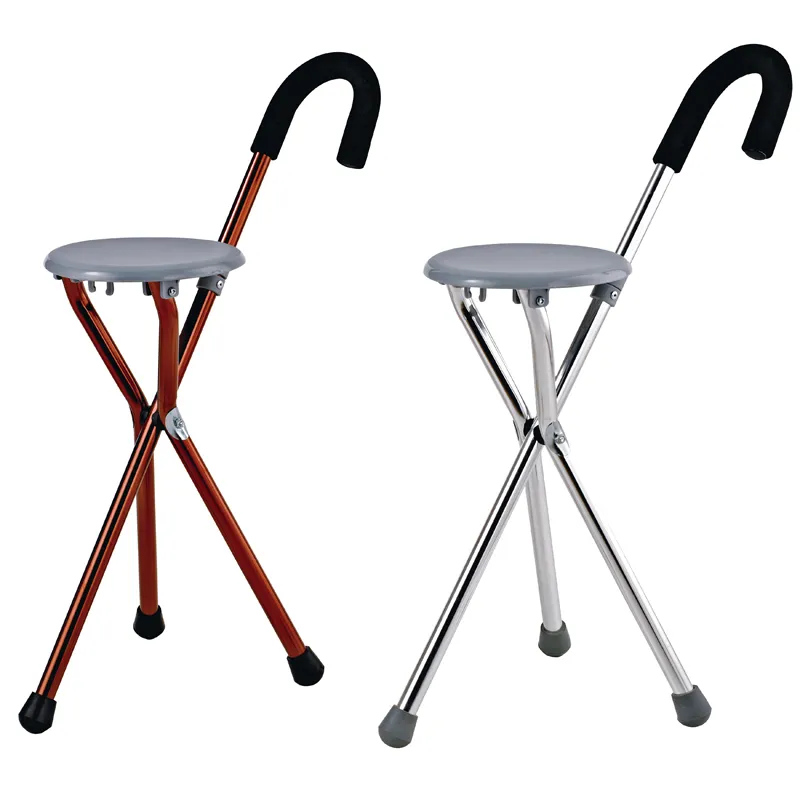
Are Four-Legged Folding Chair Canes More Stable?
Many people are concerned: Is a four-legged structure more stable than a three-legged one?
Answer: Yes, four-legged chair canes are more stable.
A four-legged folding cane with a seat provides support at four points, making it more stable and suitable for:
• People with poor balance
• Users who require higher stability
• People who need to rest for longer periods
Advantages of a four-legged cane with a seat:
• Optimal stability
• Greater weight-bearing capacity
• More reassuring when sitting
Disadvantages of a four-legged folding cane with a seat:
• Significantly increased weight
• Slightly larger structure, less portable than a three-legged version
If stability is the top priority, a four-legged cane with a seat is a better option.
Are single-legged canes with seats practical?
Types with "single-legged canes + unfoldable seat supports" exist, but are less common.
Features of a single-leg cane with a seat:
• The main body of the cane is a single-column structure.
• A support foot can be folded up at the bottom to form a small seat.
• More suited for emergency use than long-term use.
Overall evaluation: While this type of cane can "transform into a seat," its stability in a seated position is not as good as a three- or four-legged structure. Therefore, it belongs to the category where functionality outweighs practicality, and is only suitable for occasional use.
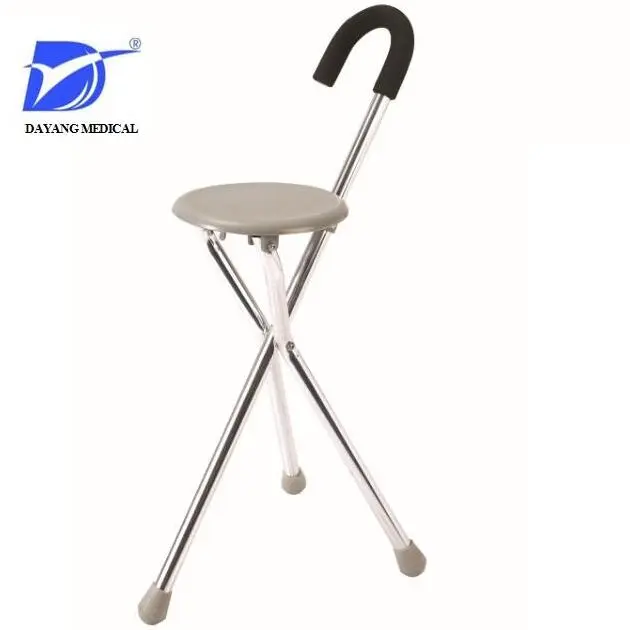
What type is a multi-functional triangular support cane chair?
This is a more common type of "more stable seated cane" in recent years, but we will not discuss trends, only describe its structural characteristics.
Structural Features:
• Three robust supports at the bottom
• Larger seat area
• Height adjustable
• One-piece folding design
Advantages of the Multifunctional Triangular Support Cane Chair:
• More like a combination of a "portable stool + cane"
• Improved seating comfort
• Excellent load-bearing capacity
Disadvantages of the Multifunctional Triangular Support Cane Chair:
• Slightly larger size
• Relatively heavy, not suitable for prolonged walking with canes
Suitable for users who need frequent rests but still want to maintain mobility.
Why can a cane become a chair? What is the design mechanism?
The reason why a cane with a seat can transform into a chair is mainly based on three core designs:
1. How is the folding mechanical structure achieved?
Cane chairs generally use the following folding structures:
• Hinge structure
• Locking mechanism
• Three-point folding joint
• Rotatable support arm
These structures work together to keep the cane straight when standing and walking, and to form a triangular or quadrangular support system when unfolded.
2. How is the seat stable?
The seat is generally made of:
• Thickened ABS engineering plastic
• Aluminum alloy plate
• Triangular or circular folding plate
The seat design must meet the following requirements:
• Distribution of the human body's center of gravity in a sitting posture
• Pressure-resistant structure
• No slipping when seated
• Automatic locking when unfolded
The key lies in structural stability and even force distribution.
3. How does the bottom support maintain balance?
The stability of the cane seat mainly depends on the bottom support:
• Three-legged structure → Forms a stable triangle
• Four-legged structure → Provides a larger support surface
• Larger anti-slip pads → Enhance friction
These designs allow the cane to safely transform into an instant seat.
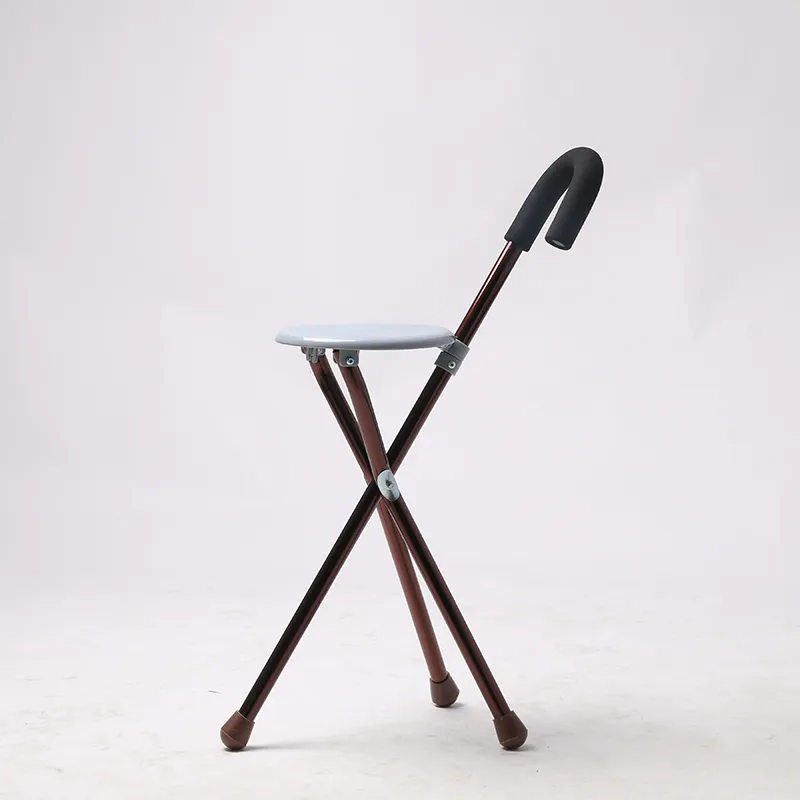
Which type of user is best suited to a cane with a seat?
Canes with seats are not suitable for everyone. They are mainly suitable for:
1. People who need to go out frequently but are prone to fatigue
For example, people who get tired easily when walking for long periods, queuing, or taking walks.
The cane seat provides the possibility of resting at any time.
2. People with mild mobility impairments who don't want to frequently find a place to sit.
These users want to maintain independent walking but have decreased physical strength.
A cane chair can reduce physical exhaustion.
3. People who don't want to carry an extra folding stool.
This versatility avoids carrying two items, making outings more convenient.
4. People who need short breaks but don't need a fixed seat.
Such as walking in the park, queuing, or waiting for a bus.
A cane chair is very practical in these scenarios.
Is it safe to sit on a cane chair?
Cane chairs are designed for short breaks, not long periods of sitting.
Assessing their safety mainly involves considering the following points:
1. Is the weight-bearing capacity sufficient?
Most cane chairs have a weight-bearing capacity of 80kg to 150kg.
You must check the labeled weight-bearing value when purchasing.
2. Does the bottom support have an anti-slip function?
Essential features for a safe cane chair:
• Thickened rubber feet
• Non-slip texture
• Large contact area with the ground
3. Can it remain stable without wobbling?
Judgment criteria:
• Is the bottom support evenly distributed on the ground?
• Are the hinges securely locked?
• Is the seat deformed?
4. Is it suitable for the user's body type?
Taller or heavier individuals should choose a reinforced chair cane.
What are the advantages of a cane with a chair?
Canes with chairs offer the following significant advantages:
• Combines two functions, saving carrying space
• Suitable for people traveling for long periods
• Provides immediate rest, preventing fatigue
• Increases freedom of movement
• Avoids the inconvenience of searching for a chair
• Increases a sense of security
In many situations, canes with chairs are more practical than ordinary canes.
What are the limitations of canes with chairs?
While highly functional, they are not suitable for everyone.
Common limitations include:
• Heavier than regular canes
• Smaller seat, unsuitable for prolonged sitting
• Requires a stable surface to sit on
• Complex folding structure in some models
• Limited weight capacity
Therefore, choose according to your own needs.
How to choose a suitable "cane with a seat"?
When choosing a cane with a seat, consider the following:
1. Confirm the structure type (three-legged vs. four-legged)
• Lighter → Three-legged model
• More stable → Four-legged model
2. Check the weight capacity
Choose a model with a weight capacity of 80kg to 150kg or more.
3. Check if the height is adjustable
An unsuitable height will affect walking and sitting posture.
4. Check the ease of folding
Fast folding speed and secure fasteners are key.
5. The seat should have an ergonomic design
A wider seat is more comfortable, but it will also increase the weight.
6. Materials must be safe and durable
Common materials:
• Aluminum alloy (lightweight and sturdy)
• Stainless steel (stable but heavy)
• Engineering plastics (for seat surfaces)