

In the modern hospital system, the Intensive Care Unit (ICU) is one of the most critical medical areas. Patients admitted here are mostly critically ill patients with unstable vital signs, requiring continuous monitoring and multidisciplinary treatment support.
To ensure these patients receive the most scientific, safe, and comfortable treatment support, the hospital beds used in the ICU are completely different from those in general wards.
So, what type of bed is used in the ICU?
The answer is—the electric ICU hospital bed.
This article will help you fully understand this high-end medical equipment designed specifically for critical care.
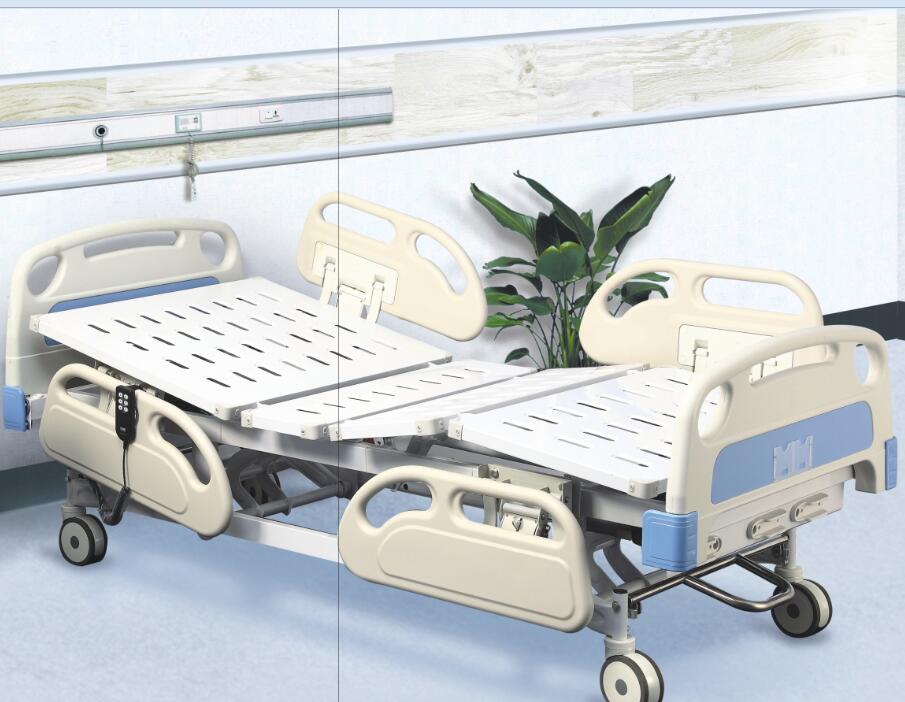
Why does the ICU need a dedicated hospital bed?
ICU patients often have altered consciousness, insufficient respiratory function, unstable circulation, and are bedridden for extended periods. Unlike patients in general wards, they have extremely high requirements for hospital beds.
Standard hospital beds offer only basic supine support. However, in intensive care environments, hospital beds need to perform multiple functions simultaneously:
• Support continuous monitoring equipment connections (such as ECG monitoring, ventilators, and infusion pumps);
• Facilitate operation and resuscitation by medical staff;
• Allow for rapid posture adjustment to improve breathing and blood circulation;
• Reduce the risk of complications from prolonged bed rest, such as pressure sores and lung infections;
• Ensure patient safety and comfort.
Therefore, standard hospital beds are far from meeting the needs of intensive care.
For this reason, modern hospital ICUs almost universally use electric ICU hospital beds.
What is an electric ICU hospital bed?
An electric ICU hospital bed is a high-end medical hospital bed that integrates electric adjustment, intelligent monitoring, safety support, and a user-friendly design.
Unlike traditional manual hospital beds, it is driven by a motor system and can be adjusted to multiple angles via a control panel or remote control, providing comprehensive support for patients.
The core components of an electric ICU hospital bed include:
• Electric drive system: Multiple motors control the lifting and angle changes of various parts of the bed;
• Control panel/remote control: For use by medical staff or patients, allowing precise control of the bed's movements;
• Segmented bed structure: Typically divided into independently adjustable modules for the head, back, hips, and legs;
• Bed lifting system: Allows for overall lifting, facilitating medical staff operations or patient access to and from the bed;
• Safety rail system: Prevents patient falls;
• Casters and braking system: Facilitates bed movement or securing;
• Emergency power supply and alarm device: Ensures safety and controllability during power outages or equipment malfunctions.
In short, an electric ICU hospital bed is an intelligent hospital bed system integrating nursing, safety, and treatment assistance.
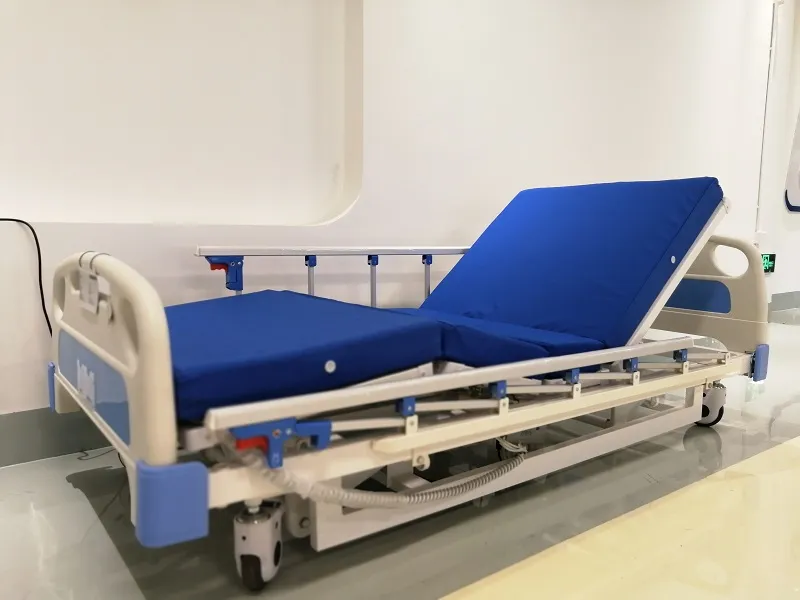
What are the core functions of an electric ICU hospital bed?
An electric ICU hospital bed is more than just an "adjustable bed"; it is a systematic device that assists treatment, supports nursing care, and enhances safety.
Its core functions mainly include the following:
1. Electric Height Adjustment
• The overall height of the bed can be adjusted as needed, facilitating operation by medical staff;
• It can quickly switch to "CPR mode" or resuscitation posture.
2. Back and Leg Angle Adjustment
• The backrest and legrests are independently controlled by motors to assist patients in adjusting their position;
• Improves breathing, promotes blood circulation, and reduces back pressure.
3. Automatic Position Changing
• Some electric ICU hospital beds support left and right turning functions, reducing the risk of pressure sores;
• Automatic cyclic turning time can be set, reducing the burden on nursing staff.
4. Weighing and Position Monitoring System
• Integrated weight sensor, allowing medical staff to monitor changes in the patient's weight in real time;
• Some models can detect positional deviations and automatically correct the patient's position.
5. Emergency Reset Function
• One-button lying-down and CPR reset functions facilitate rapid operation during resuscitation.
6. Safety Alarm System
• Prevents risks caused by misoperation, over-limit adjustments, or power failure;
• Features audible and visual alarms to ensure timely response.
Because of these intelligent and safety features, the electric ICU hospital bed has become standard equipment in intensive care units.
What is the difference between an electric ICU hospital bed and a regular electric hospital bed?
Although the names are similar, electric ICU hospital beds and regular electric hospital beds differ significantly in structure and function.
Project | Standard electric hospital bed | Electric ICU Hospital Bed |
Application Location | General ward | Intensive Care Unit (ICU) |
| Functional Complexity | Basic height and backrest adjustment | Multi-motor, multi-angle intelligent control |
| Load Capacity | Standard weight (120–150kg) | High strength (180–250kg) |
| Safety System | Standard guardrails | Medical-grade fall guardrails and alarm devices |
| Nursing Assistance Functions | No turning function | Automatic turning and pressure ulcer prevention system |
| Monitoring System | None | Integrated weighing and position monitoring module |
| Power Supply | Single power supply | Dual power supply + emergency battery |
| Price Range | 1000 $ –2500 $ | 3,000 $ –10,000 $ and above |
It can be seen that the technology and safety of electric ICU hospital beds far surpass those of regular hospital beds; they are professional-grade equipment designed specifically for high-risk patient environments.
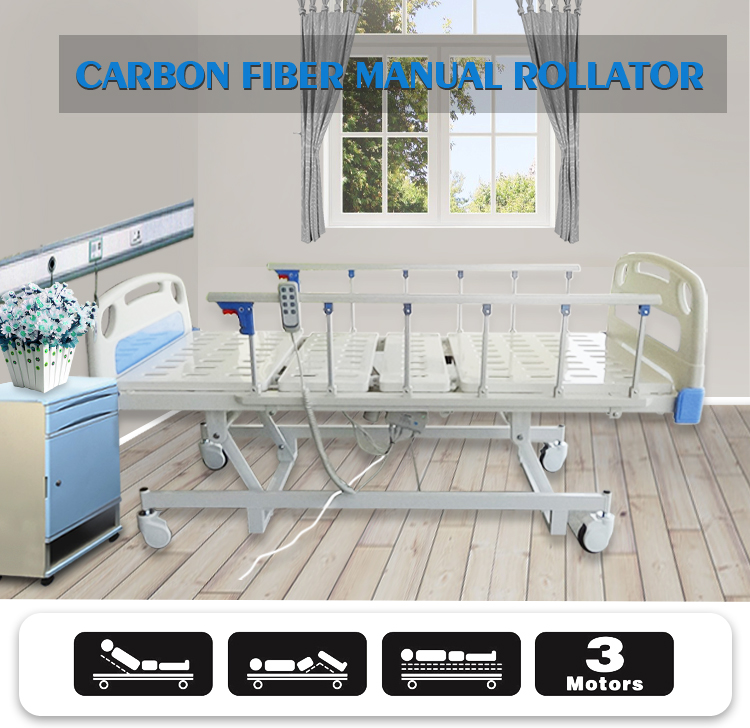
What benefits do electric ICU hospital beds bring to patients?
In the ICU environment, most patients are unconscious or unable to move independently. At this time, the electric ICU hospital bed not only provides physical support but also plays a medical support role.
1. Reduced Risk of Secondary Injury
Electrically adjustable, the bed eliminates the need for manual movement when turning or lifting the patient, avoiding traction on catheters or the risk of fractures.
2. Improved Respiratory and Circulatory Function
Elevating the back or legs promotes lung ventilation and reduces the risk of venous thrombosis, which is especially important for critically ill patients.
3. Reduced Risk of Pressure Ulcers and Infections
The automatic turning function effectively reduces pressure ulcers and skin infections caused by prolonged bed rest.
4. Increased Nursing Efficiency
Healthcare staff can quickly adjust the hospital bed remotely, reducing manpower and improving operational safety.
5. Enhanced Patient Comfort
The ergonomic zoned design reduces pressure points on the body, making patients more comfortable during recovery.
Therefore, in the ICU, the electric ICU hospital bed is not only equipment but also a crucial component of the medical safety system.
How is Safety Ensured in Electric ICU Hospital Beds?
Safety is the primary consideration in the design of electric ICU hospital beds.
The safety features of the electric ICU hospital bed include:
• Fall protection rails: Fully enclosed structure, lockable with one hand;
• Electromagnetic braking system: Ensures a more stable bed, preventing slippage;
• Power protection system: Equipped with overload, short circuit, and undervoltage protection;
• Emergency power supply: Maintains basic lifting and resetting functions during power outages;
• Alarm system: Issues alerts in case of malfunction or motor obstruction;
• Anti-static mattress design: Reduces interference from medical equipment.
These safety features ensure the electric ICU hospital bed remains stable and reliable even under high-intensity use.
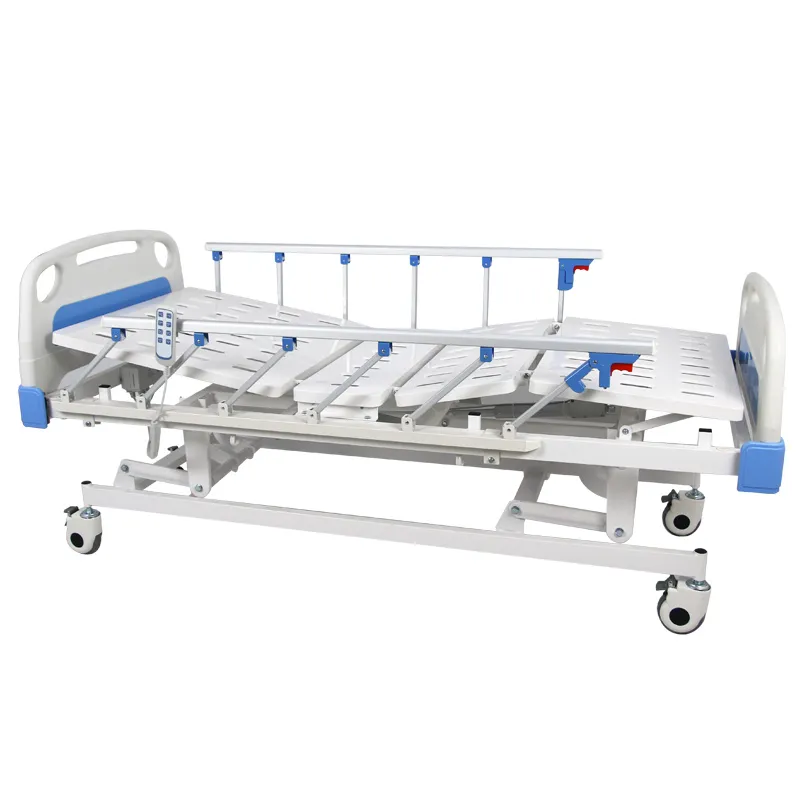
Main Materials and Structural Features of Electric ICU Hospital Beds
A high-quality electric ICU hospital bed must not only be highly functional but also durable enough in terms of materials and structure to withstand sterilization and long-term use.
Common Materials:
• Bed Frame: High-strength carbon steel or aluminum alloy, corrosion-resistant and oxidation-resistant;
• Bed Board: ABS engineering plastic or steel ventilated structure;
• Guardrails: Medical-grade plastic + metal frame, impact-resistant;
• Casters: Silent medical casters with independent braking devices.
Structural Features:
• Zoned design (independent control for back, hips, and legs);
• Seamless welding, easy to clean;
• Compatible with various medical accessories, such as IV stands, bed end tags, oxygen cylinder holders, etc.
Every detail of the electric ICU hospital bed serves "high safety, high efficiency, and high comfort."
What factors should hospitals consider when choosing an electric ICU hospital bed?
Different hospitals have different ICU sizes, patient types, and equipment budgets; therefore, multiple indicators must be considered when selecting an electric ICU hospital bed.
1. Functional Compatibility
Does it possess core ICU functions such as automatic turning, weighing, and emergency repositioning?
2. Ease of Use
Is the control panel intuitive, allowing medical staff to quickly learn how to use it?
3. Safety and Reliability
Does it have fall protection, electric shock protection, and alarm systems? Is the emergency power supply adequate?
4. Materials and Cleaning Ease
Is it corrosion-resistant, liquid-proof, and easy to disinfect?
5. After-Sales Service and Parts Support
Is there a comprehensive maintenance network and parts replacement support?
Only electric ICU hospital beds that meet the above conditions can truly meet the standards for use in intensive care units.
Maintenance and Care Recommendations for Electric ICU Hospital Beds
Because electric ICU hospital beds are used under high-intensity conditions for extended periods, proper maintenance can extend the equipment's lifespan and ensure safety.
Routine Maintenance Tips:
• Regular Cleaning and Disinfection: Wipe with a neutral detergent, avoiding liquid seepage into the motor;
• Check the power cord and plug: Prevent aging or damage;
• Monthly Inspection of the Electric System: Ensure smooth lifting and lowering without abnormal noise;
• Test the brake and locking system: Prevent bed slippage;
• Keep the environment dry: Prevent electrical malfunctions caused by excessive humidity.
Following the correct maintenance procedures, the electric ICU hospital bed can maintain stable operation for several years, ensuring the continuity of ICU medical work.
Can the electric ICU hospital bed be operated without power?
Yes. Most models are equipped with emergency batteries, allowing basic lifting and resetting to complete even after a power outage.
Will the electric ICU hospital bed interfere with medical equipment?
No. The system design complies with electromagnetic compatibility standards and will not affect equipment such as monitors and ventilators.
What is the maximum weight capacity of the electric ICU hospital bed?
Generally 180–250 kg, some reinforced models can reach 300 kg.
Can the mattress be replaced?
Yes. A waterproof, pressure-resistant medical mattress that matches the bed size should be used.
Does the electric ICU hospital bed need regular calibration?
A comprehensive inspection and electrical safety test are recommended annually.
Why is an electric ICU hospital bed indispensable in the ICU?
The electric ICU hospital bed is an irreplaceable core piece of equipment in the ICU environment.
It integrates safety, intelligence, and human-centered design, meeting the diverse care needs of critically ill patients.
Its core values can be summarized as follows:
• Supporting the entire critical care process, from monitoring to rehabilitation;
• Improving patient safety and comfort;
• Enhancing nursing efficiency and medical response speed;
• Reducing medical risks and labor costs.
Therefore, the beds used in the ICU are not ordinary hospital beds, but powerful, scientifically structured, and reliable electric ICU hospital beds.
They not only support patients' lives but also represent the safety standards and humanistic care of modern medical equipment.