

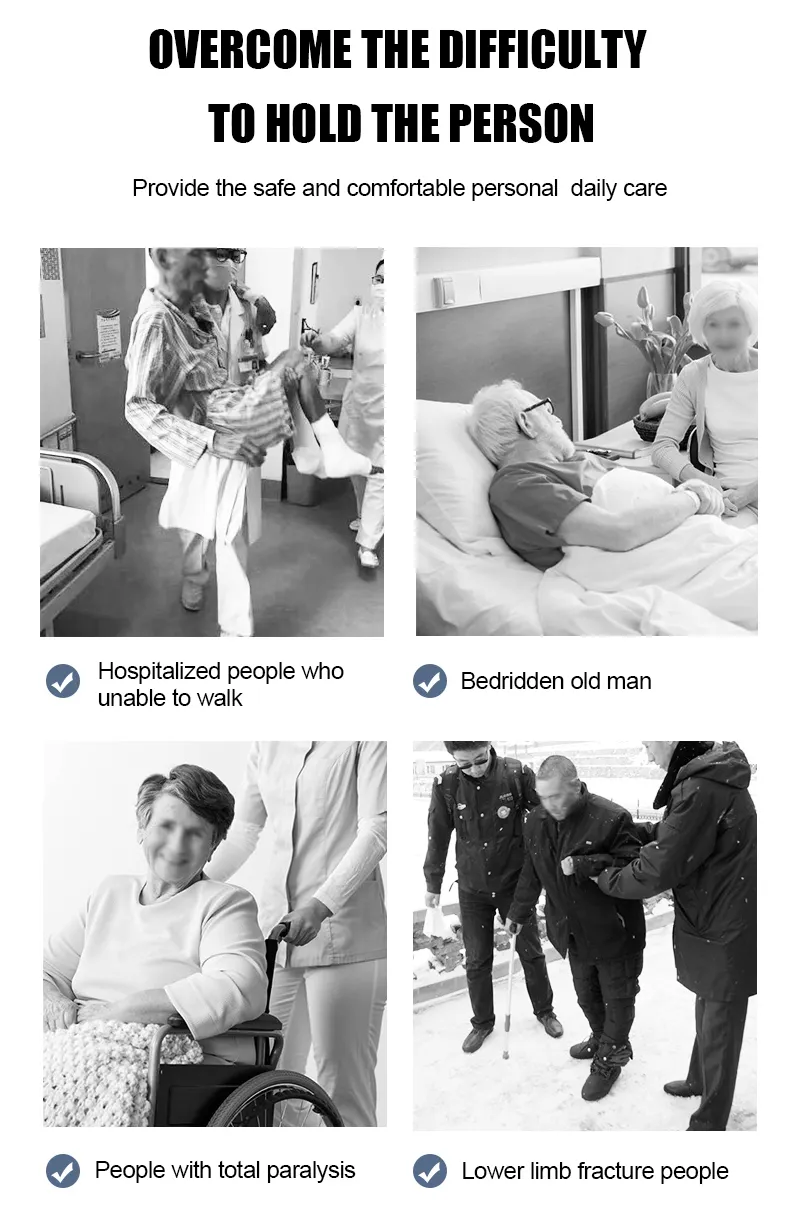
In hospitals, rehabilitation centers, nursing homes, and home care, hydraulic lift transfer chairs are highly practical assistive devices. They help patients with limited mobility transfer from bed to chair, chair to toilet, or bathroom.
However, in actual use, many people only focus on the smoothness of the lifting function, neglecting a crucial indicator—weight capacity.
The weight capacity of a hydraulic lift transfer chair directly determines its safety, durability, and suitable users.
Understanding the importance of weight capacity includes the following aspects:
• Ensuring safety: Using it beyond its weight capacity can easily cause mechanical deformation or even failure;
• Extending lifespan: Proper use can prevent excessive wear on the hydraulic system;
• Matching needs: Different patients have different weights; choosing the appropriate model ensures smooth operation;
• Compliance with standards: Medical equipment has rated weight capacity standards, which are an important basis for product compliance.
Generally, the rated weight capacity of mainstream hydraulic lift transfer chairs on the market is around 100KG, or approximately 220 pounds.
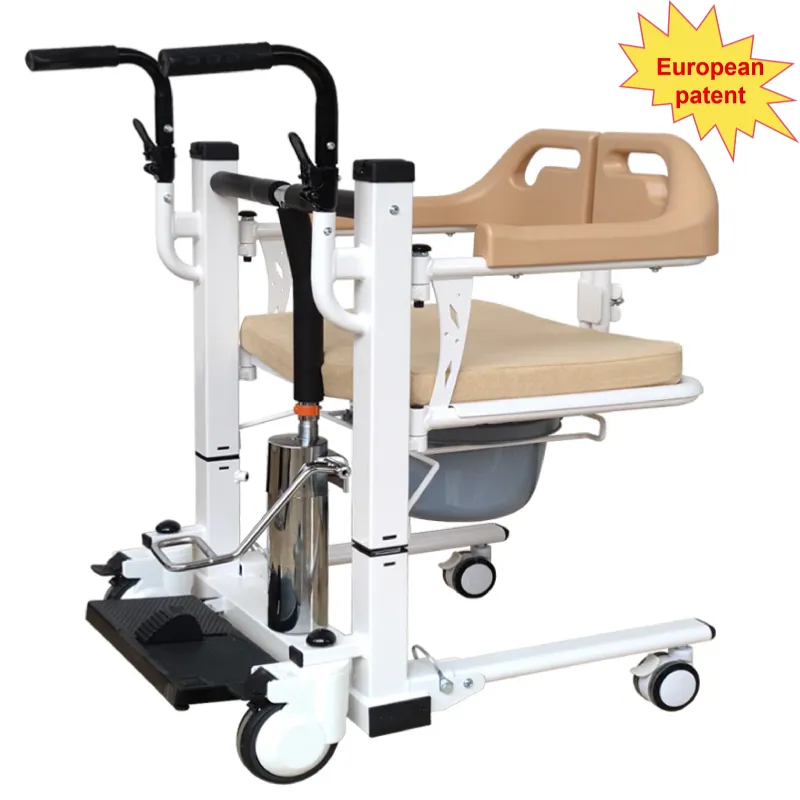
Hydraulic Lift Transfer Chair Load Capacity – 100KG
1. What is a Hydraulic Lift Transfer Chair?
A hydraulic lift transfer chair is a multi-functional nursing device controlled by a hydraulic system for lifting and lowering.
It can be used for various patient transfer scenarios, such as from bed to chair, chair to bed, and chair to commode. Compared to ordinary wheelchairs, its core difference lies in its ability to adjust height, support the entire body weight, and maintain a smooth transfer.
2. Why can it bear approximately 100KG?
Its load-bearing capacity mainly depends on the following three aspects:
(1) Structural Strength of the Hydraulic System
The hydraulic lift transfer chair achieves lifting and lowering through a high-strength hydraulic cylinder. The oil pressure transmission within the hydraulic cylinder is uniform and stable, allowing it to bear a large weight within a limited area.
A high-quality hydraulic system can typically safely withstand an instantaneous load of 1.5 times its rated weight, ensuring stability during normal use.
(2) Main Frame Material
Generally, it adopts a carbon steel pipe structure or an aluminum alloy reinforced pipe frame. The carbon steel structure is robust and stable, with excellent bending resistance, which is a crucial guarantee for the hydraulic lift transfer chair to achieve a load capacity of 100KG.
(3) Support Point and Stress Distribution Design
During the overall design, multiple support points are set according to the principles of human body stress:
• Back support
• Hip support surface
• Leg support frame
• Hydraulic support rod connection point
This multi-point stress distribution structure ensures that the patient's weight is not concentrated in a single part, thus ensuring overall stability.
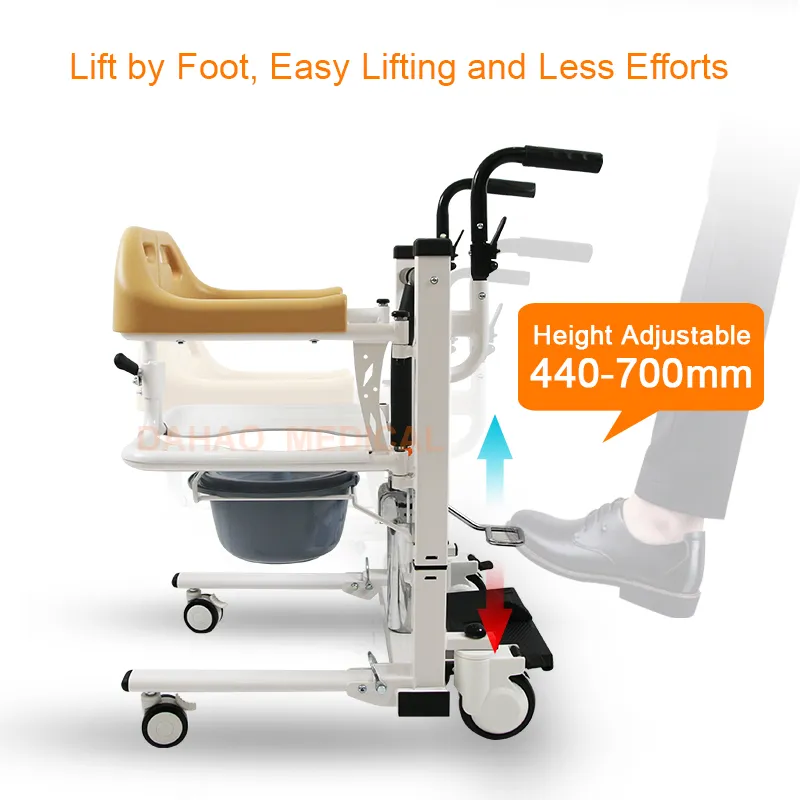
What is the load capacity range of the hydraulic lift transfer chair?
Why is it mostly 100KG?
The reasons are:
• Most adult weights fall within this range;
• A balance is achieved between ensuring safety and lightweight design;
• It meets the dual needs of home care and institutional use;
• It ensures that the hydraulic system does not operate under overload during long-term use.
What is the relationship between the load capacity and structural design of the hydraulic lift transfer chair?
1. The specifications of the hydraulic cylinder determine the lifting force
The lifting force of the hydraulic lift transfer chair comes from the inner diameter and pressure intensity of the hydraulic cylinder. The thicker the hydraulic cylinder and the higher the internal pressure, the stronger its lifting capacity.
Standard models typically use hydraulic cylinders with a diameter of 25mm–32mm and a rated pressure of approximately 10–12MPa, sufficient to support a vertical lift of 100KG.
2. Frame strength and connection method affect overall load-bearing capacity
Hydraulic lift transfer chairs with thickened steel pipe welded structures have good bending resistance.
If an aluminum alloy structure is used, it is necessary to compensate for insufficient material strength through reinforced riveting and double-layer support design.
3. Safety factor of load-bearing design
In engineering design, medical equipment typically uses a safety factor of 1.3–1.5.
That is to say, a hydraulic lift transfer chair rated for 100KG can withstand a weight of approximately 130–150KG for a short period of time, but it is not recommended to use it beyond the rated range for extended periods.
Can a hydraulic lift transfer chair still be used if the user's weight exceeds 100KG?
This is a crucial question and one of the most frequently asked by users.
1. Theoretically possible, but increased risk
Most hydraulic lift transfer chairs have a safety margin sufficient to support over 100KG for short periods. However, prolonged or frequent use can lead to accelerated wear of the hydraulic cylinders, deformation of the support rods, and even safety hazards.
2. Reinforced or electro-hydraulic models recommended
For users weighing over 100KG, models with a rated load capacity of 120KG or higher, or electro-hydraulic transfer chairs, should be chosen. These offer stronger lifting power and a more stable structure.
3. Unauthorized reinforcement or modification not recommended
Some users attempt to increase the load capacity by welding steel bars or thickening the seat plate, but this compromises the overall mechanical structure and increases the risk of instability.
The correct approach is to choose a hydraulic lift transfer chair with the appropriate specifications based on the user's weight.
What safety mechanisms are included in the load-bearing design of a hydraulic lift transfer chair?
The load-bearing capacity of a hydraulic lift transfer chair involves more than just its ability to support weight; it also encompasses several technical details related to safety and stability:
1. Anti-tipping structure
The base utilizes a wide-spaced four-leg design or eight-wheel support, ensuring even weight distribution and preventing tilting during lifting.
2. Hydraulic soft-descent system
High-quality hydraulic lift transfer chairs are equipped with a soft-descent control valve, ensuring a smooth and shock-free descent.
3. Safety locking mechanism
Once the target height is reached, a mechanical locking mechanism prevents slippage.
4. Human weight balance design
The seat center is perpendicularly aligned with the hydraulic shaft to avoid uneven loading.
These details collectively ensure safe and stable operation even under a 100KG load.
Does the material of a hydraulic lift transfer chair affect its load-bearing capacity?
Yes, the choice of material has a decisive impact on the load-bearing capacity of a hydraulic lift transfer chair.
1. Steel Structure Hydraulic Lift Transfer Chair
• Advantages: High load-bearing capacity, up to 120KG or more;
• Disadvantages: Relatively heavy, somewhat cumbersome to move;
• Suitable for: Hospitals or long-term care facilities.
2. Aluminum Alloy Hydraulic Lift Transfer Chair
• Advantages: Lightweight, rust-resistant, aesthetically pleasing;
• Disadvantages: Slightly lower load-bearing capacity, generally around 100KG;
• Suitable for: Home care, elderly use.
3. Stainless Steel Structure Hydraulic Lift Transfer Chair
• Advantages: Corrosion resistant, suitable for humid environments;
• Disadvantages: Higher cost, moderate weight;
• Load-bearing range: Approximately 100–120KG.
In summary, steel structure hydraulic lift transfer chairs offer the strongest load-bearing capacity, but a trade-off must be struck between weight and flexibility.
How to determine if a hydraulic lift transfer chair meets the standard load-bearing capacity?
To determine if a product meets standards, consider the following:
• Check the product manual: Clearly state the "maximum load capacity" or "rated load."
• Confirm certification standards: Check if it meets ISO13485, CE, or YY/T medical device standards.
• Check welding and pipe wall thickness: High-quality steel pipes typically have a thickness of no less than 1.5mm.
• Test lifting smoothness: Under full load, lifting should be smooth without shaking or abnormal noise.
• Observe the stability of the hydraulic cylinder: No oil leakage after long-term use indicates a good system.
What usage details should be noted when using a hydraulic lift transfer chair with a load capacity of 100KG?
1. Ensure the ground is flat
Using on uneven ground will result in uneven distribution of the actual load-bearing pressure, causing excessive force on one side.
2. Do not lift suddenly
Rapid operation may cause fluctuations in hydraulic oil pressure, affecting the system's lifespan.
3. Do not push or move during lifting
Moving during lifting can easily cause structural misalignment, reducing load-bearing safety.
4. Regular Maintenance
It is recommended to inspect the hydraulic system, brakes, and welds every 3 months to ensure long-term stable load-bearing capacity.
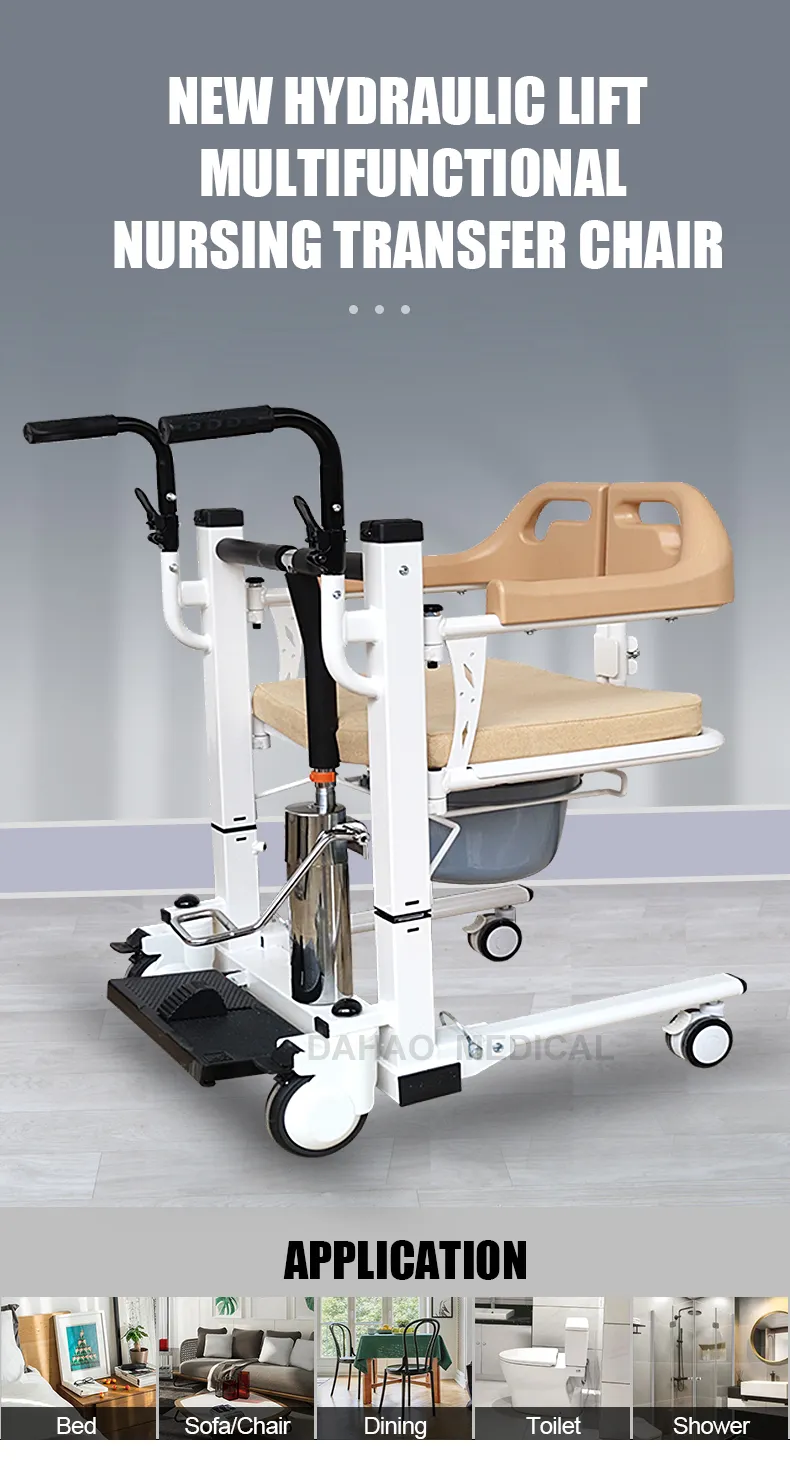
Safe Use of a Hydraulic Lift Transfer Chair Starts with Understanding its Load-Bearing Capacity
The core design principle of a hydraulic lift transfer chair is "safe load-bearing capacity and smooth lifting."
For the average adult, a 100KG load-bearing capacity is sufficient for most daily care needs.
However, proper use and regular maintenance are equally important for ensuring the equipment's safety and reliability.
When choosing a chair, consider the following:
• User's weight;
• Usage scenario (home/medical facility);
• Material and structure;
• Hydraulic system quality.
Only when used within a reasonable load-bearing range can a hydraulic lift transfer chair fully function, reducing the burden on caregivers and providing patients with a safer and more comfortable mobility experience.
Why purchase electric wheelchairs from Dayang Medical?
Guangdong Dayang Medical Technology Co., Ltd. specializes in electric wheelchairs, providing high-quality, durable, and reliable designs. As a professional manufacturer and supplier in China, founded in 2009, we offer customized and wholesale purchasing options. Our company operates two R&D and production bases, ensuring strict quality control with ISO13485, ISO9001, FDA, TUV, and CE certification.
Dayang Medical is a trusted China-based supplier for global brands, distributors, and healthcare facilities seeking high-quality medical equipment.