

In the modern market for rehabilitation aids, "walkers" serve as essential tools that help the elderly, patients undergoing rehabilitation, and individuals with mobility impairments enhance their ability to live independently.
Among the many types of walking aids available, the Type 2 walker and the Type 3 walker cart are the two most frequently discussed categories. When making a selection, many people often find themselves puzzled: What exactly is the difference between a Type 2 walker and a Type 3 walker cart? Which one is the better fit for me or my family members?
This article will focus on these two key terms—"Type 2 Walker" and "Type 3 Walker Cart"—to provide a comprehensive and systematic explanation. Our goal is to help you fully understand the differences between them in terms of structural design, functional features, intended usage environments, stability, portability, comfort, and price point.
What Are the Basic Definitions of Type 2 Walkers and Type 3 Walker Carts?
1. What is a Type 2 Walker?
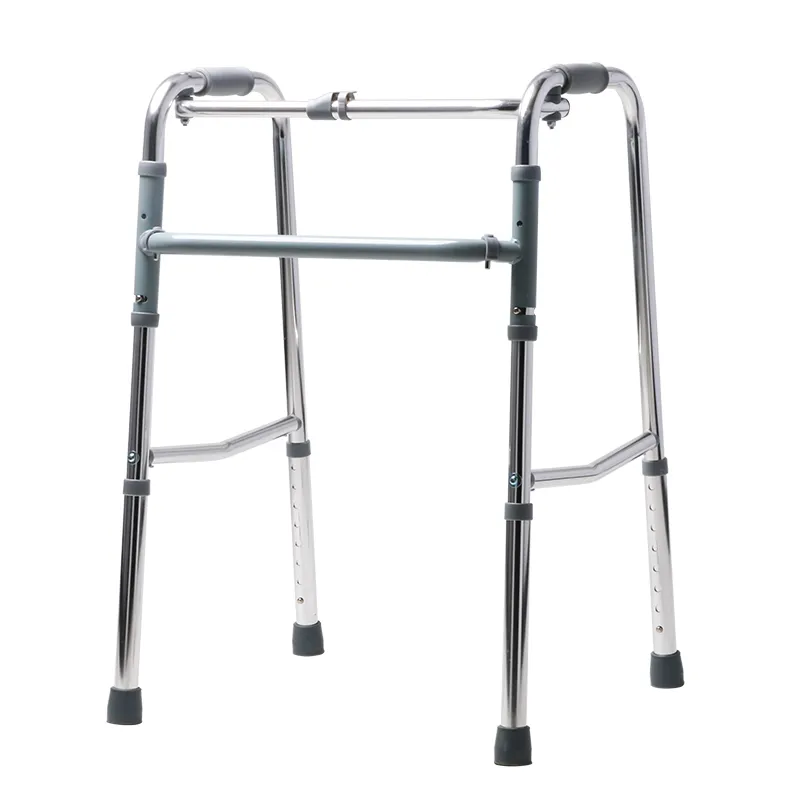
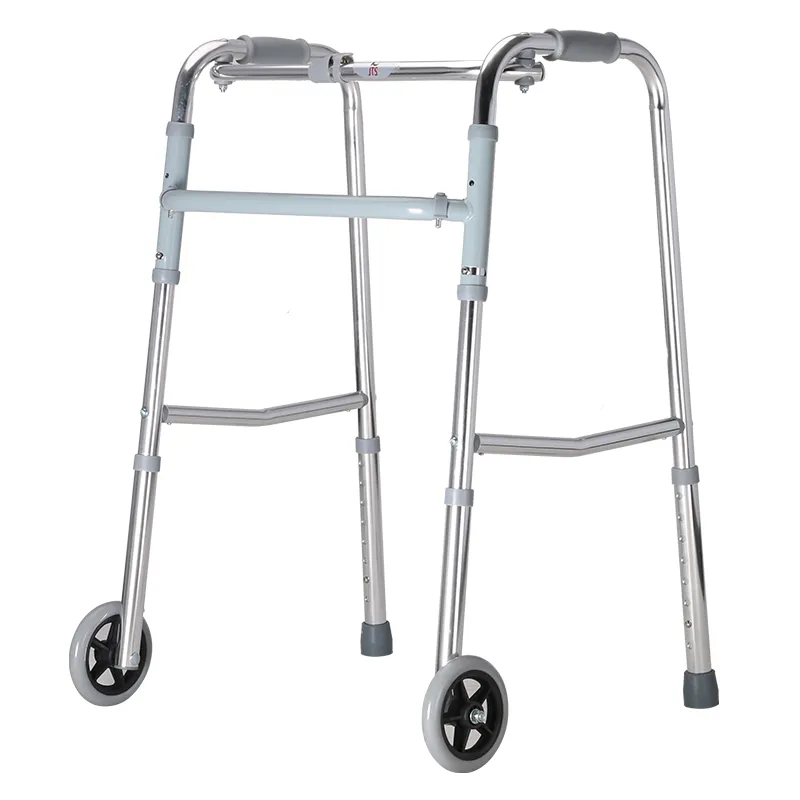
A Type 2 walker typically refers to a lightweight walking frame featuring four support points. These four support points may consist of four non-slip rubber tips, or a combination structure comprising two front wheels and two rear tips.
Its primary characteristics include:
• High Stability: The four-point contact with the ground effectively prevents tipping.
• Simple, Lightweight Structure: Easy to carry and fold.
• Designed for Indoor Use or Flat Surfaces: Suitable for use in homes, rehabilitation centers, or hospital wards.
Type 2 walkers are suitable for individuals who have insufficient leg strength and require additional support, yet are still capable of walking independently.
2. What is a Type 3 Walker Cart?
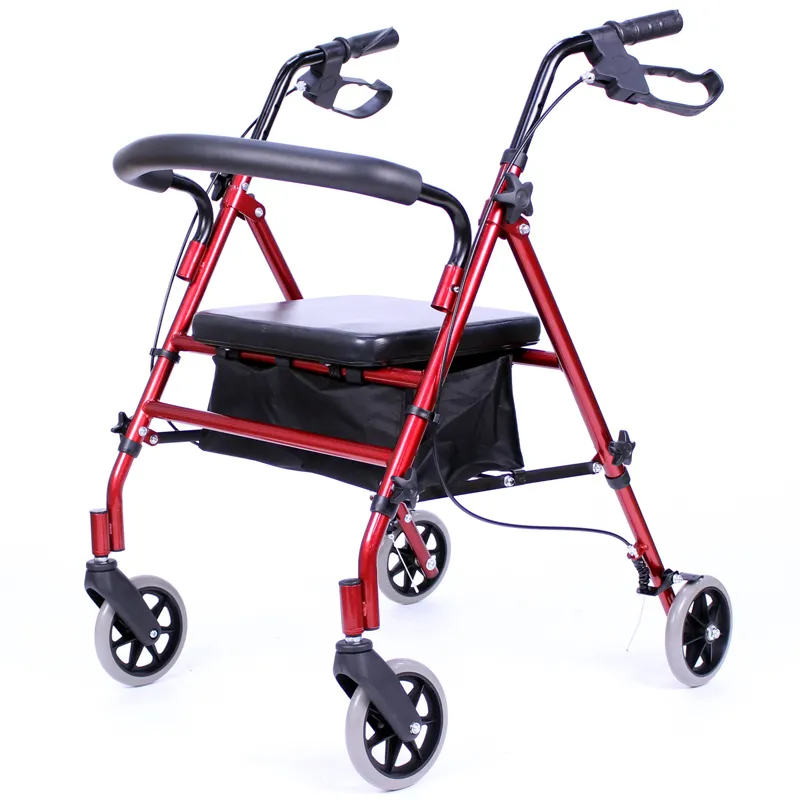
A Type 3 walker cart typically refers to a four-wheeled outdoor walking aid equipped with a seat. Its design objective is to provide users with greater freedom and a heightened sense of security when walking outdoors.
Its core features include:
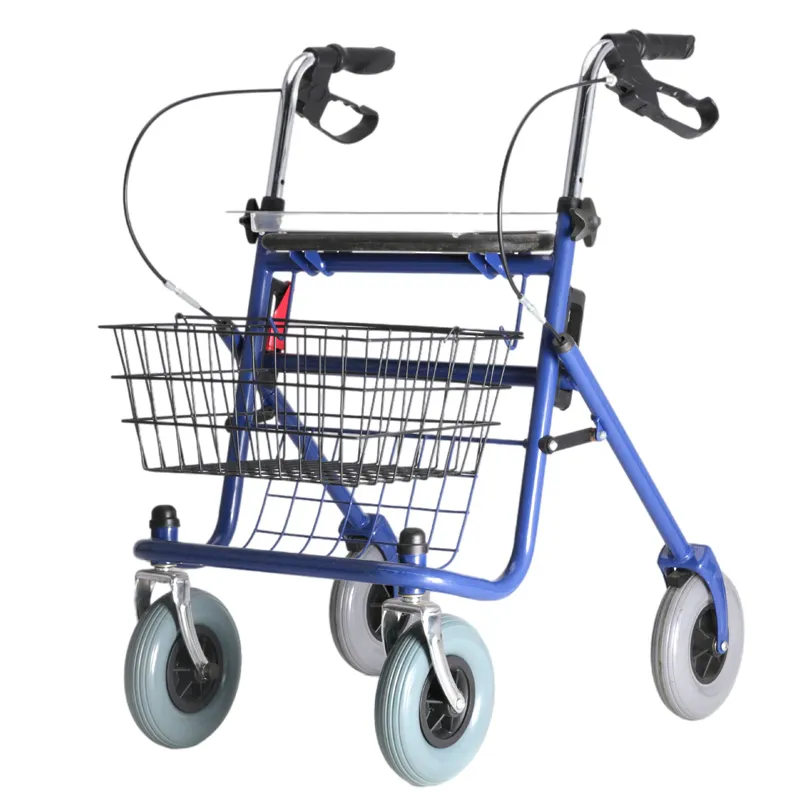
• Four large-sized wheels capable of navigating various types of terrain.
• An integrated seat design, allowing the user to rest at any time.
• Typically equipped with a braking system and a storage basket.
Type 3 walker carts are also commonly referred to as "rollators" or "four-wheeled walkers." They are suitable for individuals who need to travel long distances or frequently engage in outdoor activities.
What are the structural design differences between Type 2 walkers and Type 3 walker-rollators?
Structural design constitutes one of the most significant differences between the two.
1. Structural Characteristics of Type 2 Walkers
• Frame Design: Typically constructed from lightweight aluminum alloy or stainless steel tubing, forming a U-shaped or rectangular structure.
• Support Points: Features four contact points with the ground to ensure stability; generally lacks a mobility system (though models with front wheels feature a semi-fixed structure).
• No-Seat Design: Primarily intended to provide support rather than a place to rest.
• Adjustable Height: Can be adjusted to accommodate users of varying heights.
In short, the Type 2 walker functions more like a "support frame," emphasizing stability and lightweight portability.
2. Structural Characteristics of Type 3 Walker-Rollators
• Wheel Design: Features four large wheels, typically 8-inch or 10-inch rubber tires.
• Frame Structure: Resembles a small cart, incorporating a seat, backrest, handbrakes, and a storage basket.
• Folding System: Designed to be foldable for easy portability or storage in a car trunk.
• Braking and Steering Systems: Handles are equipped with braking mechanisms to ensure safety.
Consequently, the Type 3 walker-rollator is structurally more complex, integrating three key functions: support, mobility, and resting.
What are the differences in usage environments between Type 2 walkers and Type 3 walker-rollators?
The intended usage environment is a critical factor that must be considered when selecting a walking aid.
1. Suitable Environments for Type 2 Walkers
• Primarily Indoor Use: Ideal for settings such as homes, hospitals, and rehabilitation centers.
• Requires Level Surfaces: Suitable for use on tiles, hardwood floors, carpets, and similar surfaces.
• Operable in Confined Spaces: Due to their compact dimensions, they are well-suited for use in limited areas such as hallways and bedrooms.
• Minimal Impact from Climate/Terrain: The wheel-less or small-wheel design is best suited for stable, controlled environments.
Therefore, Type 2 walkers are highly suitable for daily short-distance mobility and rehabilitation exercises.
2. Suitable Environments for Type 3 Walker-Rollators
• Primarily Outdoor Use: Ideal for use on streets, in parks, on community pathways, and similar outdoor settings.
• Adaptable to Various Surfaces: Capable of navigating a variety of terrains, including asphalt roads, paved paths, and grassy areas.
• Suitable for Extended Walking: Equipped with a seat, allowing users to take a rest whenever needed.
• Specific spatial requirements: Less agile than the Type 2 walker when maneuvering in confined spaces.
Conclusion: If the primary usage scenario is indoors, the Type 2 walker is more suitable; if frequent outdoor walking is required, the Type 3 walker rollator is clearly the superior choice.
Which offers better stability: the Type 2 walker or the Type 3 walker rollator?
1. Stability Analysis of the Type 2 Walker
• Stable four-point support structure: Distributes weight evenly, preventing tipping.
• Low center of gravity: Provides more secure support.
• Unsuitable for slopes or uneven ground: The design of the leg tips may cause wobbling on non-level surfaces.
Overall, the Type 2 walker offers extremely high stability in flat environments.
2. Stability Analysis of the Type 3 Walker Rollator
• Four-wheel structure ensures balance.
• Large wheels offer excellent terrain adaptability: Can easily traverse small steps or uneven ground.
• Slightly higher center of gravity; caution is advised when making sharp turns.
Conclusion: The Type 2 walker is more stable on flat ground, while the Type 3 walker rollator is better adapted for varied outdoor terrains.
How does the portability of the Type 2 walker compare to that of the Type 3 walker rollator?
1. Portability of the Type 2 Walker
• Lightweight (approximately 2–4 kg).
• Some models feature a foldable design.
• Compact size; easy to carry and store.
Disadvantage: Models without wheels must be lifted to move, which can be slightly strenuous for some users.
2. Portability of the Type 3 Walker Rollator
• Heavier weight (approximately 6–10 kg).
• Foldable for storage, though it occupies more space.
• Equipped with a rolling function, making movement less physically demanding.
In short: The Type 2 walker is easier to store, while the Type 3 walker rollator is easier to push over longer distances.
What are the differences in comfort between the Type 2 walker and the Type 3 walker rollator?
1. Comfort of the Type 2 Walker
• Provides support functionality only; does not allow the user to sit down and rest.
• Suitable for short-duration use or rehabilitation exercises.
• Handgrips are typically made of foam or rubber; while comfortable to the touch, they serve a singular function.
2. Comfort of the Type 3 Walker-Rollator
• Features a built-in seat and backrest, allowing for rest at any time.
• The handles are height-adjustable and offer a comfortable grip.
• Suitable for extended periods of walking and for shopping trips.
Therefore, in terms of comfort, the Type 3 walker-rollator is clearly superior to the Type 2 walker.
How do the Type 2 walker and the Type 3 walker-rollator differ in terms of safety?
1. Safety of the Type 2 Walker
• Features a stable structure but lacks a braking system.
• Equipped with non-slip foot pads to enhance traction.
• Suitable for users who need to walk slowly and maintain a steady pace.
2. Safety of the Type 3 Walker-Rollator
• Equipped with a braking system, offering more flexible control.
• Features larger wheels with excellent shock absorption, along with a robust anti-tipping design.
• Suitable for users with limited physical strength who still need to venture outdoors.
Therefore, the Type 3 walker-rollator offers distinct advantages regarding safety control.
FAQ
1. Is the Type 2 walker suitable for people who are completely unable to walk?
It is not recommended. The Type 2 walker is primarily a walking aid; users require a certain level of lower-body strength to use it effectively. Individuals who are completely unable to walk should consider using a wheelchair or other assistive devices instead.
2. Can the Type 3 walker-rollator be used on inclines or declines?
Yes, it can be used on slopes; however, users should operate the braking system with caution to prevent excessive speed, which could lead to a hazardous situation.
3. Which is easier to clean: the Type 2 walker or the Type 3 walker-rollator?
The Type 2 walker has a simple structure, making it easier to clean. The Type 3 walker-rollator, with its more complex seat and wheel components, requires more detailed maintenance.
4. Is it advisable for elderly individuals to purchase a Type 3 walker-rollator?
If an elderly person enjoys going outdoors, visiting parks, or shopping, the Type 3 walker-rollator is a safer and more comfortable choice. However, if their activities are primarily confined to indoor spaces, the Type 2 walker would be more suitable.