

For individuals with cerebral palsy (CP), mobility and postural control often present significant challenges. Due to neurological damage resulting in abnormal muscle tone, postural instability, or impaired motor coordination, these individuals rely heavily on assistive devices in their daily lives to maintain proper posture and facilitate movement. Among the various assistive devices available, the cerebral palsy wheelchair stands out as one of the most common and crucial tools for mobility.
A cerebral palsy wheelchair is more than just a means of transport; it is a "postural support system" specifically engineered to accommodate the user's body structure, muscle condition, and postural control needs. It not only grants the user freedom of movement but also provides stable support and safety during daily activities.
This article offers a professional, systematic overview of cerebral palsy wheelchairs, exploring their definition, functions, structural features, usage, and key selection criteria.
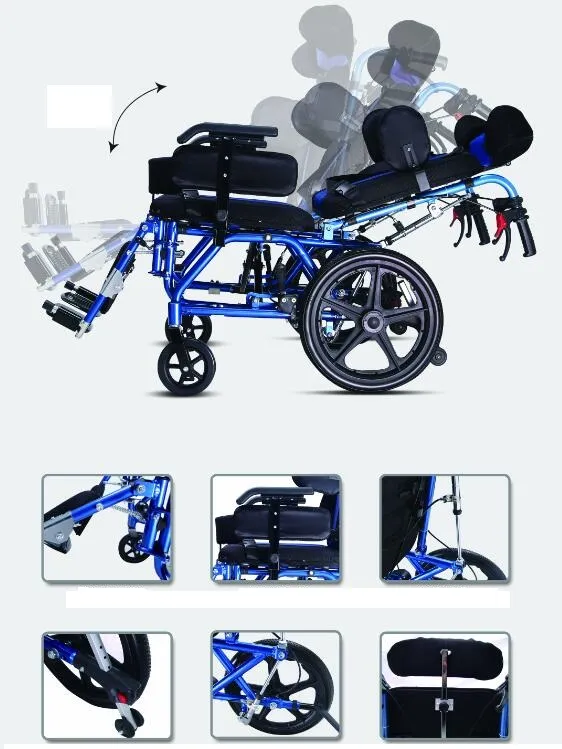
What is the definition of a cerebral palsy wheelchair?
A cerebral palsy wheelchair is a specialized wheelchair designed specifically for individuals with cerebral palsy. Its purpose is to help users maintain a stable seated position, support the body, enhance mobility, and alleviate discomfort caused by muscle tension.
Unlike standard manual wheelchairs, cerebral palsy wheelchairs prioritize postural control, body containment, and support. They allow for adjustments to the backrest angle, footrest height, and head support position based on the user's muscle tone.
It is not merely a "sit-and-push" chair; rather, it is an assistive device that integrates medical rehabilitation with functional utility, serving to correct posture, provide support, and relieve pressure during daily use.
Why do individuals with cerebral palsy need specialized wheelchairs?
Individuals with cerebral palsy often experience the following issues:
• Abnormally high or low muscle tone;
• Poor trunk control;
• Impaired coordination of the head, neck, or limbs;
• Long-term postural instability.
Standard wheelchairs fail to provide adequate postural support, which can lead to complications such as scoliosis, pressure ulcers, muscle fatigue, and even respiratory restriction.
Therefore, the specialized support structure of a cerebral palsy wheelchair helps users maintain a correct seated position, promotes respiratory and digestive function, and reduces the risk of secondary deformities.
What are the differences between a cerebral palsy wheelchair and a standard wheelchair?
Many people mistakenly assume that a wheelchair designed for cerebral palsy is merely an "ordinary wheelchair with cushions"; in reality, there are significant differences in design philosophy and functional purpose between the two.
| Comparison Item | Standard Wheelchair | Cerebral Palsy Wheelchair |
| Target Users | Individuals with general mobility issues | Patients with cerebral palsy and postural control disorders |
|Structural Design | Basic seat cushion, fixed backrest | Multi-point support structure, adjustable backrest and headrest |
|Postural Control | Basic | Precision support (head, trunk, pelvis) |
|Safety System | Standard seatbelt | Multi-point restraint system (shoulder, waist, and leg straps) |
|Comfort | Standard soft padding | Memory foam, custom cushions, pressure-distributing design |
|Usage Scenario | Temporary or short-term mobility | Long-term use and daily postural support |
Thus, a cerebral palsy wheelchair is more akin to a "personalized rehabilitation seat"; it not only provides mobility but also meets medical needs regarding body support and postural correction through its structural design.

What are the key structural and functional features of a cerebral palsy wheelchair?
1. Head and Neck Support System
Patients with cerebral palsy often struggle to stabilize their heads, making them prone to leaning forward or tilting to the side. These wheelchairs are typically equipped with adjustable headrests and neck supports to help maintain a midline position and prevent excessive muscle fatigue.
2. Trunk Support and Lateral Structures
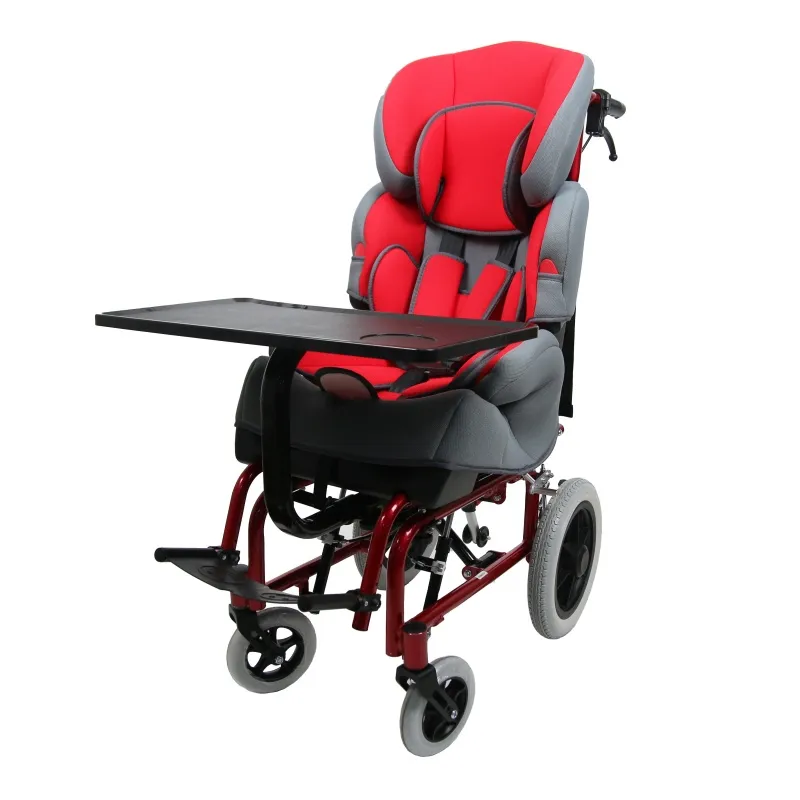
Lateral backrest supports cradle the torso to prevent the body from leaning. Some high-end models feature angle-adjustable chest supports or pads to help keep the upper body symmetrical and upright.
3. Pelvic Positioning System
The pelvis forms the foundation of a seated posture. These wheelchairs often utilize pelvic belts or diagonal straps to secure the pelvis, preventing posterior tilting or sliding, thereby stabilizing the body's center of gravity.
4. Seat Cushion and Pressure Distribution System
To prevent pressure sores or concentrated pressure on the buttocks caused by prolonged sitting, the cushions often utilize memory foam or air-cell structures that distribute weight evenly according to the user's body shape.
5. Footrests and Leg Support
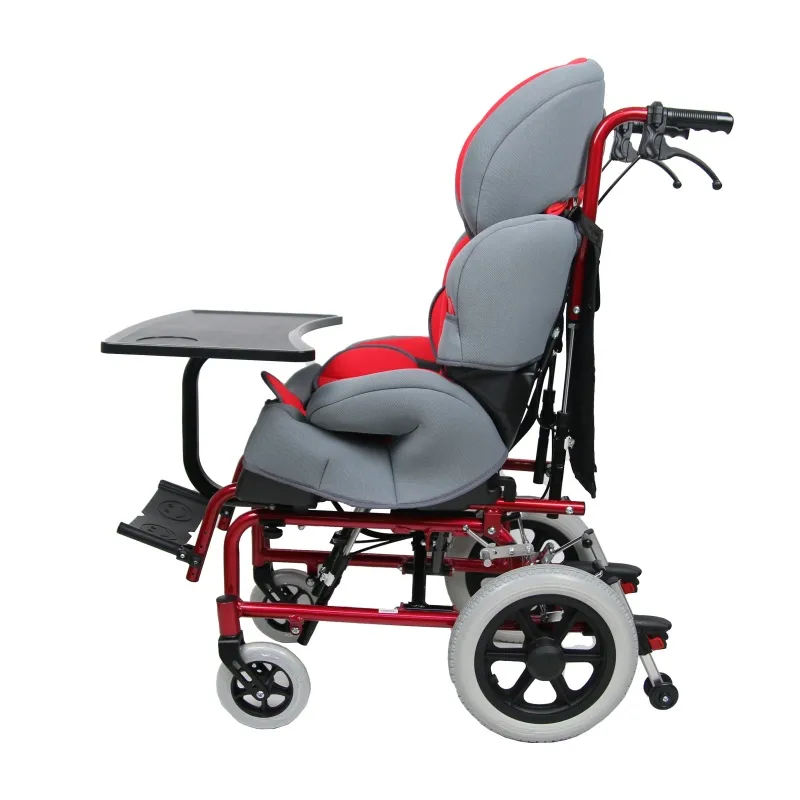
Adjustable footrests maintain a natural bend in the lower limbs, preventing the knees from turning outward or inward (valgus or varus); some models include calf guards to help maintain a symmetrical posture.
6. Safety Restraints and Anti-Slip Design
Wheelchairs for cerebral palsy are typically equipped with a five-point safety harness system—including shoulder, waist, and thigh straps—to prevent accidental slipping.
Additionally, anti-slip footrests and braking mechanisms enhance overall safety.
7. Adjustable Tilt and Recline Functions
Depending on muscle tone, the backrest can be adjusted for "tilt" or "recline." Tilting helps relieve pressure on the ischial tuberosities (sit bones), while reclining helps relax the body and improve breathing.
What are the primary uses of a cerebral palsy wheelchair?
Many people view a cerebral palsy wheelchair merely as a "mobility aid," but its functions extend far beyond that.
The core purposes of a cerebral palsy wheelchair include the following:
1. Providing Postural Support and Body Stability
Through features such as headrests, lateral supports, and pelvic belts, the wheelchair helps patients maintain balance and prevents risks associated with abnormal posture or loss of muscle control.
2. Promoting Respiratory and Digestive Functions
Proper sitting posture allows for full chest expansion, improving respiratory efficiency; it also avoids abdominal compression, aiding digestion and elimination.
3. Preventing Physical Deformities
Prolonged poor posture can lead to issues such as scoliosis or pelvic misalignment. The wheelchair's support structure helps maintain skeletal symmetry and reduces the risk of secondary deformities.
4. Enhancing Independence
The wheelchair enables patients to perform certain movements or activities autonomously within the home or care facility, boosting self-confidence and social interaction skills.
5. Reducing Caregiving Burden
For caregivers, the wheelchair reduces the frequency of lifting and transferring the patient, while facilitating daily care tasks such as feeding, washing, and grooming.
What key points should be observed when using a cerebral palsy wheelchair?
Proper usage ensures safety and extends the equipment's lifespan.
When using a cerebral palsy wheelchair, pay attention to the following:
1. Personalized Posture Adjustment
• Ensure the pelvis is positioned in the center of the seat cushion;
• Keep the spine aligned vertically with the backrest;
• Position the head along the midline, avoiding forward leaning;
• Place feet naturally on the footrests.
2. Lock the wheels before adjusting the angle
Secure the wheelchair before adjusting the tilt or recline to prevent sliding.
Ensure the brakes are firmly engaged, especially on sloped surfaces.
3. Regularly check safety belts and support systems
Safety belts may loosen over time; check and adjust their tension regularly.
Pelvic belts or chest supports should fit snugly against the body without restricting breathing.
4. Monitor skin and pressure points
Inspect the skin on the buttocks, back, and thighs daily to prevent redness or pressure sores caused by uneven pressure from the seat cushion.
5. Ensure safe usage environments
Avoid using the wheelchair on slippery or steeply sloped surfaces.
For electric wheelchairs, regularly check the condition of the battery and motor.
Who needs a cerebral palsy wheelchair?
Not all individuals with cerebral palsy require a wheelchair, but it is typically needed in the following situations:
• Patients with moderate to severe cerebral palsy — unable to walk independently or lacking postural control;
• Individuals with weak trunks or an inability to support their heads — requiring head, neck, and chest support;
• Individuals with unstable muscle tone — requiring stable containment to minimize involuntary movements;
• Individuals requiring prolonged sitting — needing comfortable support and pressure distribution systems;
• Children with cerebral palsy undergoing rehabilitation — using the chair to train for correct sitting posture and balance.
At professional rehabilitation facilities, doctors or therapists will assess the need for a cerebral palsy wheelchair and determine the appropriate configuration based on the patient's specific symptoms.
How to choose the right cerebral palsy wheelchair?
Selecting a cerebral palsy wheelchair involves considerations of comfort and safety; the user's physical condition, care needs, and daily environment should all be taken into account.
1. Choose the type based on intended use
• Manual cerebral palsy wheelchair: Suitable for patients with some upper-body strength or those who are pushed by caregivers;
• Electric cerebral palsy wheelchair: Suitable for patients with severe cerebral palsy or those who need to operate the chair independently;
• Rehabilitation training wheelchair: Used for postural training and support during daytime activities.
2. Select the size based on body shape and height
Parameters such as seat width, seat depth, backrest height, and footrest length must match the user's body proportions. Sizes that are too large or too small will compromise the effectiveness of the support.
3. Check adjustability and safety features
Greater adjustability means better adaptability; the chair should also feature a reliable braking system and an anti-tip design.
4. Choose comfortable and durable materials
High-quality cerebral palsy wheelchairs typically feature aluminum alloy frames, breathable and non-slip fabrics, and memory foam cushions, making them both lightweight and easy to clean.
How should a cerebral palsy wheelchair be maintained?
Proper maintenance not only extends the wheelchair's lifespan but also ensures safety.
1. Daily cleaning
• Wipe the seat and backrest with a damp cloth;
• Remove dust and hair from the wheels weekly;
• Avoid using strong acidic or alkaline cleaning agents.
2. Periodic maintenance
• Check monthly for loose screws or buckles;
• Inspect the cushion every six months for sagging;
• For electric models, regularly check the battery status.
3. Proper storage
• Store in a dry, well-ventilated area;
• Avoid prolonged exposure to direct sunlight or rain;
• If not in use for an extended period, disconnect the power and use a dust cover.
What are the positive effects of using a cerebral palsy wheelchair?
Long-term, correct use of a cerebral palsy wheelchair offers significant benefits for both the patient's physical health and psychological well-being:
• Improves posture and balance — promotes symmetrical spinal development and reduces muscle tension;
• Increases participation in daily life — makes it easier for patients to engage in learning, recreation, and social activities;
• Reduces reliance on caregivers — alleviates the burden on family members and nursing staff;
• Boosts confidence and a sense of security — allows patients to move freely with safe, stable support;
• Lowers the risk of complications — effectively prevents pressure sores, respiratory issues, and skeletal deformities.
What is the core value of a cerebral palsy wheelchair?
A cerebral palsy wheelchair is not merely a means of transport but a comprehensive rehabilitation aid; its core value lies in—
Providing safe, comfortable, and stable support for sitting and mobility, helping patients maintain physical balance, improve their quality of life, and enhance their independence.
A suitable wheelchair for cerebral palsy should feature:
• a stable support structure;
• an adjustable postural support system;
• a comfortable seat cushion and pressure-relief design;
• safe and reliable restraint and braking systems.
A properly selected, used, and maintained wheelchair enables individuals with cerebral palsy to enjoy a freer life with safety and dignity.