

Why do intensive care beds require such a wide array of medical equipment?
In a standard hospital ward, a bed primarily serves the function of supporting a patient during rest and treatment. In contrast, within an Intensive Care Unit (ICU), the bed is far more than just a place for the patient to lie down; it is a vital component of the entire life-support system. Family members visiting an ICU for the first time often notice that the patient is surrounded by a multitude of medical devices: monitors continuously display vital signs, ventilators maintain respiration, and infusion pumps deliver medication, alongside various bedside alarms, power outlets, gas supply terminals, and nursing support equipment. Together, these devices form the comprehensive treatment system of a modern intensive care bed.
With the advancement of modern medicine, the ICU has become a critical setting for the emergency care of critically ill patients. Whether dealing with severe trauma, stroke, myocardial infarction, multi-organ failure, post-operative recovery from major surgery, or life-threatening conditions such as septic shock and acute respiratory failure, patients often require admission to the ICU for round-the-clock monitoring and treatment. The World Health Organization (WHO) notes that critically ill patients typically require continuous life support and close monitoring; modern ICUs rely on a combination of advanced medical equipment and specialized healthcare teams to safeguard patient lives. Meanwhile, driven by an aging population and the rising incidence of complex diseases, hospitals worldwide are increasing their investment in intensive care beds and ICU facilities, with high performance, multifunctionality, and intelligent technology emerging as key trends in their development.
Compared to standard hospital beds, intensive care beds feature more complex ergonomic designs and must operate in coordination with various life-support systems. Understanding the equipment associated with these beds not only helps patients' families better grasp the ICU treatment process but also enables healthcare institutions and procurement professionals to gain a comprehensive understanding of the composition of modern ICU bed systems.
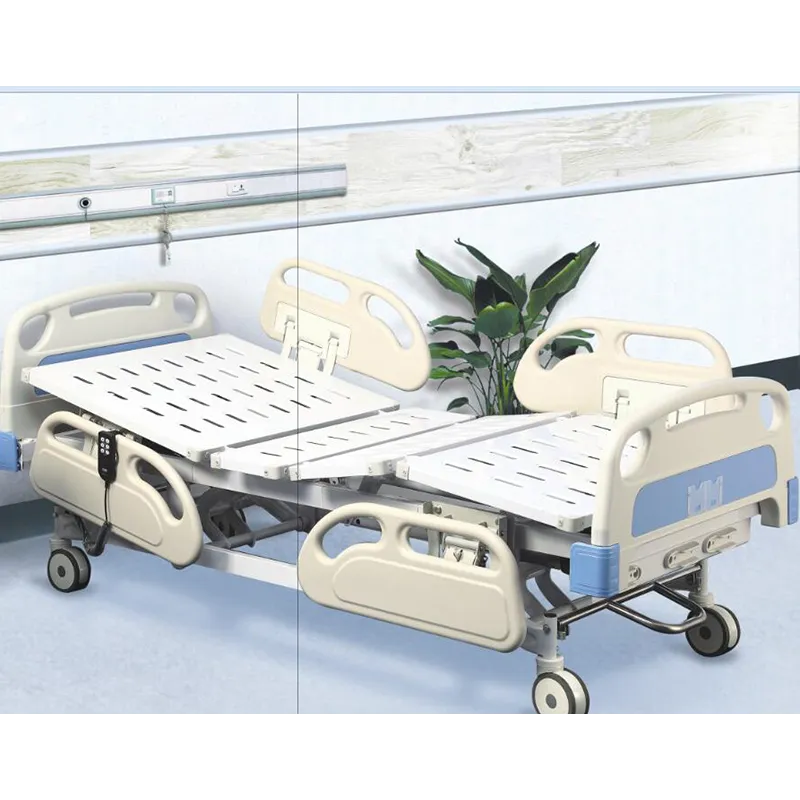
What is an intensive care bed (ICU bed)?
An intensive care unit (ICU) bed is a specialized medical bed designed for the monitoring, emergency resuscitation, and treatment of critically ill patients. Compared to standard hospital beds, ICU beds have more rigorous requirements regarding structural design, load-bearing capacity, adjustability, safety features, and equipment compatibility. They must not only accommodate the needs of patients undergoing prolonged bed rest and treatment but also support the integration of extensive medical equipment, thereby providing an efficient and safe care environment for medical staff.
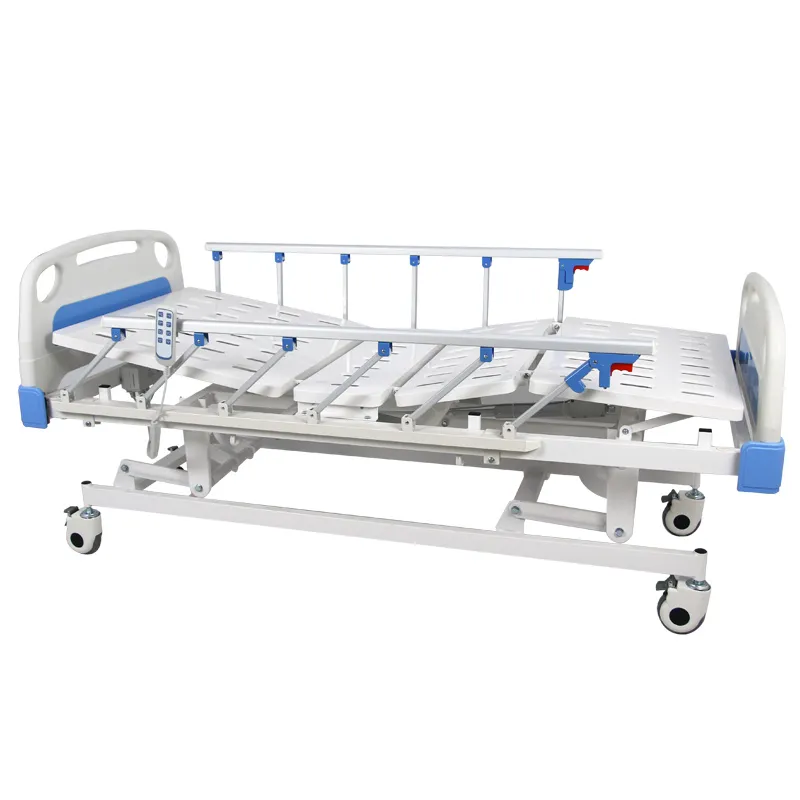
Modern ICU beds typically feature electric adjustment systems that allow for various positioning adjustments—such as backrest elevation, leg elevation, overall height adjustment, Trendelenburg and reverse-Trendelenburg tilting, and the "cardiac chair" position—to meet the needs of different medical conditions and stages of treatment. Additionally, these beds are equipped with standardized rails, mounting points for IV poles, equipment brackets, and attachment fixtures, facilitating the organized arrangement of medical devices such as ventilators, patient monitors, and infusion pumps. In this sense, an ICU bed is far more than just a bed; it is a comprehensive platform for critical care.
One of the core components of an ICU hospital bed setup: the patient monitor
Among all ICU equipment, the patient monitor is a standard feature for virtually every intensive care bed. It is responsible for the real-time monitoring of vital signs—including heart rate, ECG, blood oxygen saturation, respiratory rate, blood pressure, and body temperature—and continuously displays dynamic data to medical personnel.
Modern monitors typically provide 24-hour continuous monitoring and feature intelligent alarm systems. Should a patient experience abnormal heart rate, a drop in blood oxygen levels, blood pressure fluctuations, or respiratory arrest, the system immediately triggers audible and visual alarms to alert medical staff for prompt intervention. Some high-end monitors can also connect to hospital information systems, enabling automatic data storage, remote monitoring, and historical trend analysis, thereby providing doctors with comprehensive data to inform treatment plans.
For an ICU hospital bed, the monitor is not merely a diagnostic tool; it serves as a vital window into the patient's physiological status and is an indispensable core component of the entire intensive care process.
Ventilators: Vital Life-Support Equipment
Ventilators are among the most prominent pieces of medical equipment at the bedside in intensive care units (ICUs) and are frequently used for life support. When patients cannot breathe effectively on their own—due to lung disease, severe infection, recovery from anesthesia, neurological disorders, or other causes—ventilators facilitate normal gas exchange through mechanical ventilation.
Modern ICU ventilators offer various ventilation modes, such as controlled ventilation, assisted ventilation, synchronized intermittent mandatory ventilation (SIMV), and pressure support ventilation, allowing treatment plans to be flexibly adjusted based on the patient's condition. Additionally, these devices monitor parameters like tidal volume, respiratory rate, airway pressure, and oxygen concentration in real-time, enabling doctors to continuously assess the patient's respiratory function.
With the advancement of smart technology, next-generation ventilators can automatically adjust the level of support based on the patient's spontaneous breathing. This not only improves therapeutic outcomes but also facilitates the patient's gradual weaning from mechanical ventilation, thereby enhancing recovery efficiency.
Infusion Pumps and Syringe Pumps: Ensuring Precise Medication Delivery
Critically ill patients often require simultaneous treatment with multiple medications—such as vasopressors, sedatives, antibiotics, nutritional fluids, and insulin. These drugs demand precise infusion rates that are difficult to maintain consistently through manual adjustment; consequently, infusion pumps and syringe pumps have become standard equipment at ICU bedsides.
Infusion pumps deliver fluids continuously at preset rates, whereas syringe pumps are better suited for the high-precision infusion of small-volume medications. Modern ICU bedsides are typically equipped with multiple pumps to accommodate the simultaneous administration of different drugs. Some smart infusion systems can automatically record infusion data and integrate with hospital information platforms, thereby improving medication management efficiency and reducing human error.
Medical Pendant Systems and Gas Outlets: Optimizing Space Utilization Around the ICU Bed
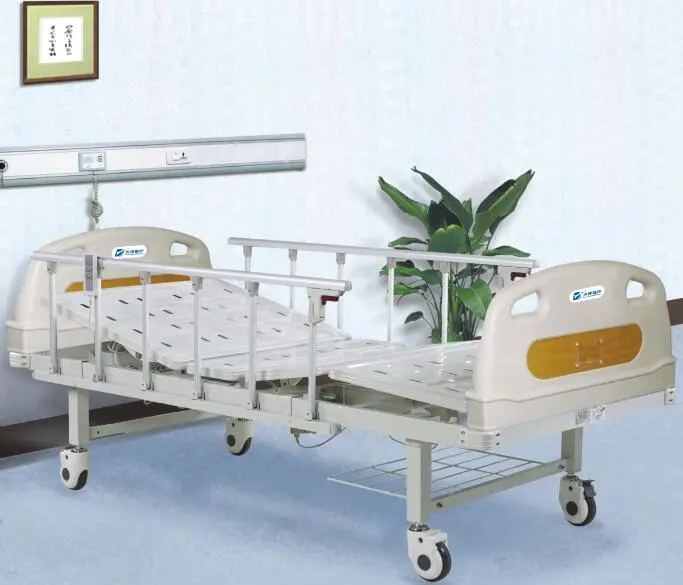
To enhance nursing efficiency, modern ICUs increasingly utilize medical pendant systems. Typically installed above the intensive care bed, these suspended units integrate oxygen, compressed air, and vacuum suction outlets, as well as power sockets, network ports, and equipment mounting platforms. This centralized layout of medical equipment eliminates floor-based cabling and maximizes the available workspace. For ICU hospital beds, medical pendant systems not only optimize equipment placement but also enable medical staff to quickly operate various life-support devices, thereby enhancing the efficiency of emergency interventions. Additionally, these pendants effectively reduce the risk of cross-infection and contribute to a tidier, safer patient room environment.
Negative-Pressure Suction Equipment: A Vital Tool for Maintaining Airway Patency
Many critically ill patients experience a diminished ability to clear phlegm independently, making their airways prone to the accumulation of secretions that can impede normal breathing. Consequently, negative-pressure suction equipment is a crucial component of ICU hospital bed setups.
Negative-pressure suction systems promptly remove phlegm, blood, and other secretions from the patient's airway, helping to maintain patency and reduce the risk of pulmonary infections. Such equipment is indispensable for ensuring respiratory safety, particularly for patients on mechanical ventilation, as it is frequently used multiple times a day.
The ICU Bed Itself: A Sophisticated Medical Device
While many view the ICU hospital bed merely as a place for patients to rest, modern intensive care beds are, in fact, highly intelligent medical devices.
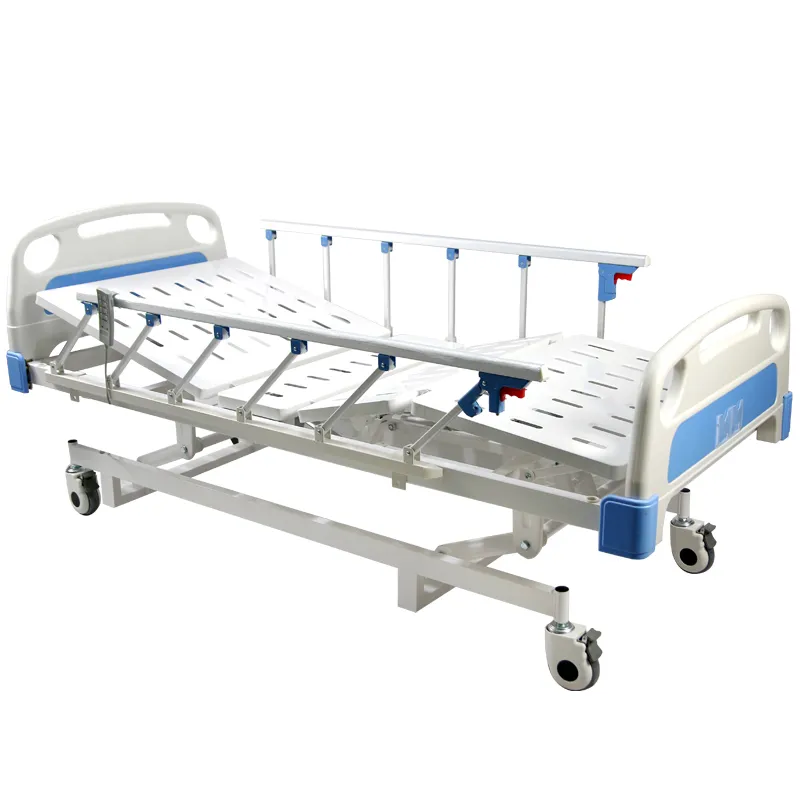
Mainstream ICU hospital beds typically feature fully electric control systems, allowing for a wide range of positional adjustments—such as backrest elevation, leg section adjustment, overall bed height adjustment, and tilting (lateral, forward, and backward). These various positions help improve respiratory function, promote blood circulation, and reduce the risk of pressure ulcers, while also facilitating medical examinations and nursing care.
Some high-end ICU hospital beds are equipped with integrated weighing systems that monitor weight changes in real-time without requiring the patient to move. Others feature "bed-exit" alarms that alert nursing staff if a patient unexpectedly leaves the bed. Certain smart ICU hospital beds can even automatically log the timing of position changes, aiding in pressure ulcer prevention and enhancing the overall quality of care.
Pressure Ulcer Prevention Systems: Essential Protection for Long-Term Bedridden Patients
Prolonged bed rest is common among ICU patients, and continuous pressure on the body can easily lead to pressure ulcers. To address this, modern ICU beds are increasingly equipped with anti-pressure ulcer systems.
Dynamic air-cushion mattresses are currently among the most widely used solutions. By alternately inflating and deflating multiple air cells, they shift pressure points across different parts of the body, thereby alleviating continuous pressure on localized tissues and improving blood circulation in the skin. In addition, some high-end ICU hospital beds are equipped with pressure-sensing systems that monitor the distribution of body pressure in real-time, assisting nursing staff in timely patient repositioning.
Studies show that the proper use of pressure-relieving mattresses, combined with standardized patient-turning protocols, can significantly reduce the risk of pressure ulcers in long-term bedridden patients—a key component of modern ICU care.
Smart technology is transforming modern ICU hospital beds
With advancements in artificial intelligence, the Internet of Things (IoT), and digital healthcare technologies, modern intensive care beds are entering the era of smart technology. An increasing number of ICU hospital beds can connect to hospital information systems, enabling centralized management of vital signs, infusion records, patient positioning, and nursing data, thereby improving data-sharing efficiency.
Some advanced hospitals have implemented smart alarm systems that use algorithms to analyze trends in vital signs; these systems provide early warnings before abnormalities occur, helping medical staff detect potential risks sooner. Furthermore, technologies such as remote monitoring, wireless device connectivity, smart voice control, and digital nursing platforms are being widely adopted, allowing ICU hospital beds to evolve from traditional nursing equipment into intelligent life-support platforms.
Why do ICU hospital beds require so many devices working in concert?
Critically ill patients often suffer from multiple organ dysfunctions, meaning a single device cannot meet all treatment needs. For instance, a patient on mechanical ventilation might simultaneously require a monitor for vital signs, an infusion pump for medication, negative-pressure suction equipment to maintain airway patency, a pressure-relieving mattress for skin protection, and an ICU hospital bed capable of adjusting body position to improve lung function. These devices do not operate in isolation; instead, they form a comprehensive life-support system managed collectively by doctors, nurses, and hospital information systems.
Consequently, the modern intensive care bed has become the central platform for the entire ICU treatment process, rather than merely a piece of furniture. The strategic arrangement of various medical devices around the ICU hospital bed not only enhances treatment efficiency but also secures precious time for the emergency care of critically ill patients.
FAQ
What is the difference between an ICU bed and a standard hospital bed?
ICU hospital beds feature specialized electric adjustment mechanisms that support a wide range of positioning options and accommodate extensive life-support equipment—such as monitors, ventilators, and infusion pumps—whereas standard hospital beds primarily cater to the rest and basic care needs of inpatients, offering relatively simple functionality.
Are all intensive care unit beds equipped with ventilators?
Not every patient requires a ventilator; however, most ICU units are equipped with ventilator ports or actual ventilator units at each bedside, ensuring they are readily available should a patient's condition require them.
Why are there so many infusion pumps around an ICU hospital bed?
Critically ill patients often require multiple medications simultaneously, each with specific infusion rates and dosage requirements. Consequently, multiple infusion and syringe pumps are frequently used in tandem to ensure precise and safe medication delivery.
Can ICU hospital beds automatically adjust their position?
Modern electric ICU hospital beds typically support various functions, including backrest elevation, leg adjustment, overall height adjustment, lateral tilting, and Trendelenburg/reverse-Trendelenburg positioning. Some high-end models even offer preset nursing positions to enhance care efficiency and patient comfort.
Why are intensive care unit beds becoming increasingly intelligent?
Driven by advancements in digital healthcare and artificial intelligence, modern ICU hospital beds can connect to hospital information systems to facilitate vital sign monitoring, nursing documentation, intelligent alarms, and remote data management. These capabilities not only improve nursing efficiency but also enable doctors to stay promptly informed of changes in a patient's condition, thereby providing more precise therapeutic support for the critically ill.