

As an important category of modern assistive mobility devices, electric wheelchairs must meet the core needs of users with mobility impairments while adhering to strict structural design and safety standards.
Among these standards, the weight limit for electric wheel chairs is consistently one of the most important parameters for users before purchasing, as it directly impacts safety, durability, user experience, and device performance.
Generally, most standard electric wheel chairs on the market have a load capacity limit between 100kg and 120kg. This value is not only related to the product structure but also closely linked to the overall design philosophy of the power wheelchair.
This article will systematically and thoroughly answer questions about the weight limits of electric wheel chairs, helping you understand why most electric wheelchairs have a load capacity between 100kg and 120kg, and how different users can choose the appropriate model based on their weight and usage needs.
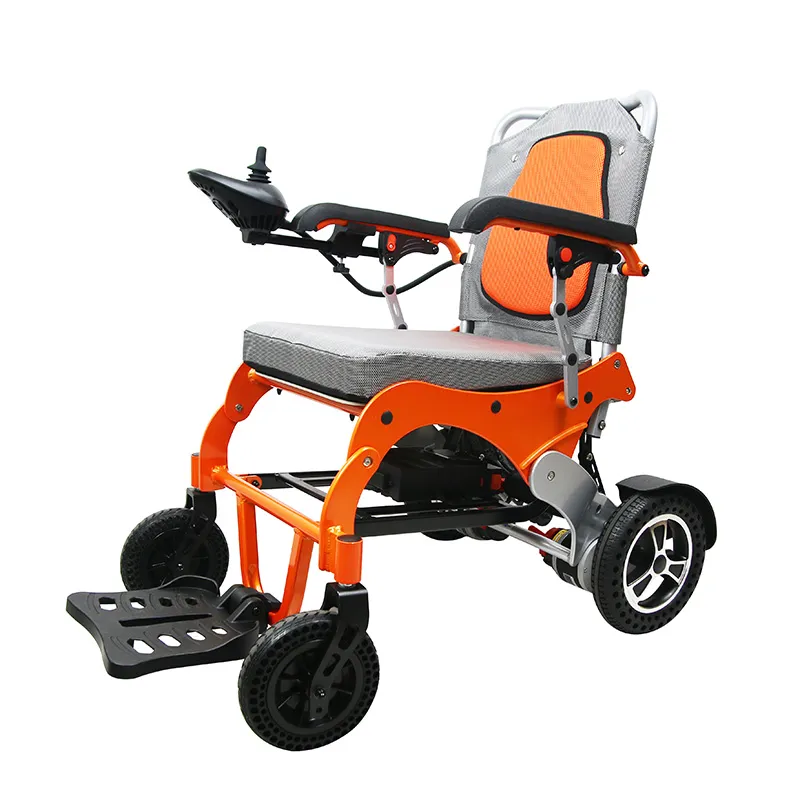
Why are there weight limits for electric wheelchairs?
Although electric wheelchairs have robust frames, motors, and battery systems, they must still comply with engineering principles and materials science limitations. The following factors collectively determine the load-bearing capacity of an electric wheelchair:
1. The Strength Limit of the Frame Material
Electric wheelchair frames are typically made of aluminum alloy, high-strength steel, or aerospace-grade materials. Different materials have distinctly different load-bearing capacities. For example:
• Lightweight aluminum alloy electric wheelchairs prioritize portability, but their load-bearing capacity is usually limited to 120kg;
• Reinforced steel frame structures can increase load-bearing capacity, but significantly increase the overall weight, affecting folding and carrying.
2. The Output Capacity of the Electric Wheelchair Motor
The motor's torque and continuous output capacity determine whether the power wheelchair can maintain smooth operation while carrying different weights. Exceeding the motor's design load capacity will lead to:
• Decreased speed
• Rapid motor overheating
• Increased failure rate
• Accelerated battery degradation
Therefore, manufacturers set reasonable load-bearing ranges based on motor performance.
3. Battery and Control System Capacity
Electric wheelchairs require higher battery current output capacity when operating at full load. Overload can affect the stability of the control system and even trigger system protection mechanisms, causing the electric wheelchair to stop operating.
4. Safety Standards and Risk Control
International and regional standards for assistive devices have strict requirements on "maximum load capacity." To ensure stability in extreme conditions (such as ramps, uneven surfaces, and shock absorption), manufacturers tend to set more conservative load limits to avoid safety hazards.
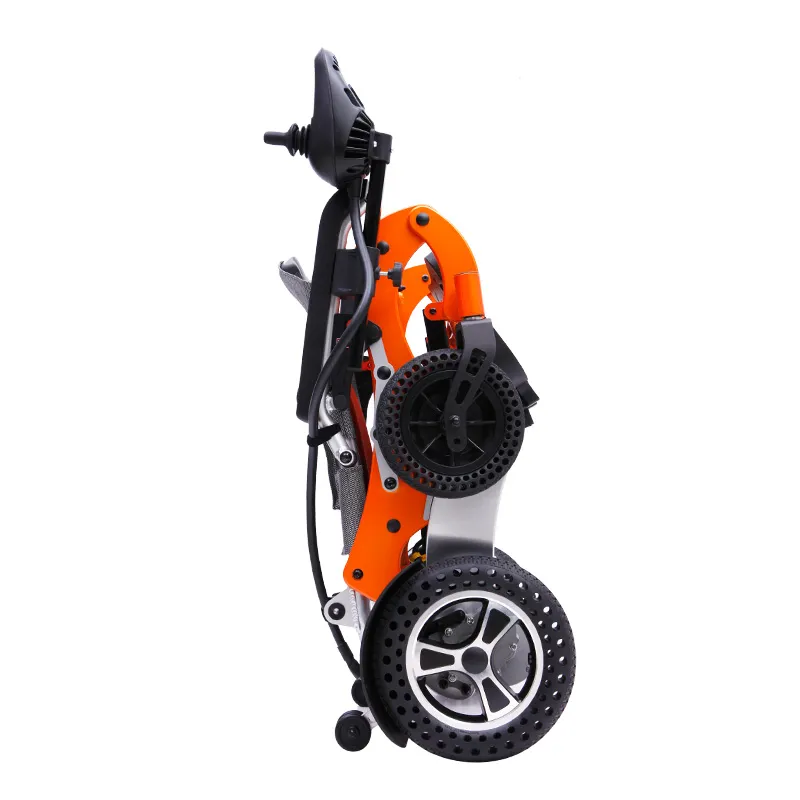
Why are most electric wheelchairs limited to a load capacity of 100kg–120kg?
This is currently the most common load capacity range for electric wheel chairs. The main reasons are as follows:
1. Covering the mainstream user weight range
100kg–120kg can meet the needs of the vast majority of users. This range strikes a balance between safety, vehicle body strength, and product cost.
2. Comprehensive considerations in structural design
While maintaining folding functionality, lightweight design, elevator accessibility, and car trunk storage, this load capacity range represents the most reasonable design outcome.
3. Trade-offs between riding performance and battery life
Electric wheel chairs not only need to bear weight, but also maintain stability on slopes, grass, and cobblestone paths. A 100kg–120kg weight limit ensures:
• Stable acceleration
• Sensitive steering
• Normal shock absorption
• No sudden drop in battery life due to overload
What happens if an electric wheelchair exceeds its weight limit?
Are there any safety risks?
While most electric wheelchairs have a certain safety margin, exceeding the weight limit can still pose risks. Common effects include:
1. Frame deformation or excessive stress at weld points
Prolonged overloading can cause fatigue in the frame materials, especially in folding frames or welded sections, which may lose their original strength.
2. Overloading the motor leads to performance degradation
Overload can cause:
• Insufficient motor power
• Increased noise
• Slow start or jerking
• Stopping or even rolling on slopes
3. Increased risk of brake system failure
Exceeding the weight limit may prevent the electromagnetic brakes from providing sufficient braking force, especially posing a serious safety hazard when going downhill.
4. Faster battery consumption and shortened lifespan
The battery needs to output a larger current to drive the electric wheelchair, causing the battery to age faster and even triggering a brief protective power outage.
For these reasons, users must strictly adhere to the officially stated weight limit when purchasing an electric wheelchair.
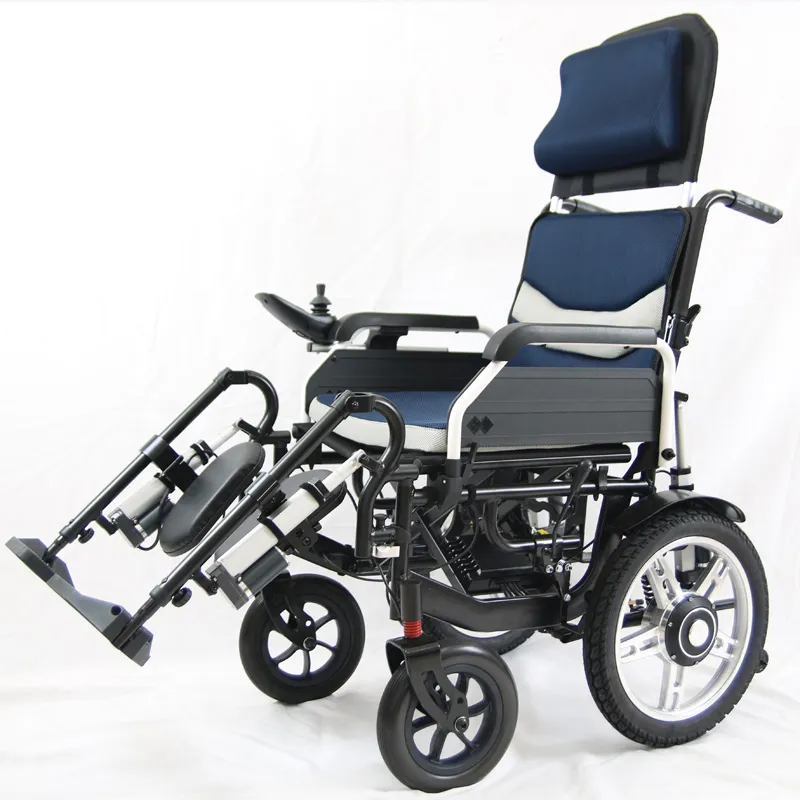
Are there electric wheel chairs with a weight limit exceeding 120kg?
While standard electric wheel chairs generally support 100kg–120kg, there are still specialized or reinforced electric wheel chairs on the market with even higher weight limits. For example:
• 150kg load capacity model: reinforced frame and larger motor
• 180kg–200kg load capacity model: commonly used in medical institutions or specific user groups
However, these types of electric wheel chairs typically have the following characteristics:
• Cannot be fully folded for lightweight use
• Heavier overall, inconvenient to transport
• Suitable for larger users or long-term use scenarios
If the user's weight exceeds the standard range, a heavy-duty electric wheelchair should be proactively chosen, rather than forcing the use of a standard model, to ensure safety.
What is the relationship between the load capacity of an electric wheelchair and tire type?
Tires are the key component of a power wheelchair that contacts the ground, and their material and specifications also affect load-bearing performance.
1. Solid tires
Good load-bearing stability, no need to worry about tire blowouts, suitable for general users.
2. Pneumatic tires
Better shock absorption, more comfortable on complex road surfaces, but the load-bearing capacity is generally lower than that of solid tires.
3. Larger Rear Wheels
Larger rear wheels better distribute the user's weight, allowing the power wheelchair to remain stable even at its maximum weight.
Therefore, when choosing a power wheelchair, you should also pay attention to whether the tire configuration supports its weight-bearing capacity.
My weight is close to the weight limit; can I still buy this power wheelchair?
Many users weigh between 95kg and 110kg and worry about approaching the weight limit. In this case, please note the following:
1. It is recommended to leave a 10%–15% safety margin for the power wheelchair
If the electric wheelchair's weight limit is 120kg, and your weight is 108kg, then it is still within a safe range.
2. Consider the weight of everyday accessories
For example, shopping bags, handbags, backpacks, clothing, etc., may add an extra 3kg–10kg, which should not be ignored.
3. Be aware of load changes due to terrain differences
When using the power wheelchair on steep slopes or uneven surfaces, the pressure will be higher than when driving on flat ground; therefore, you should avoid exceeding the weight limit.
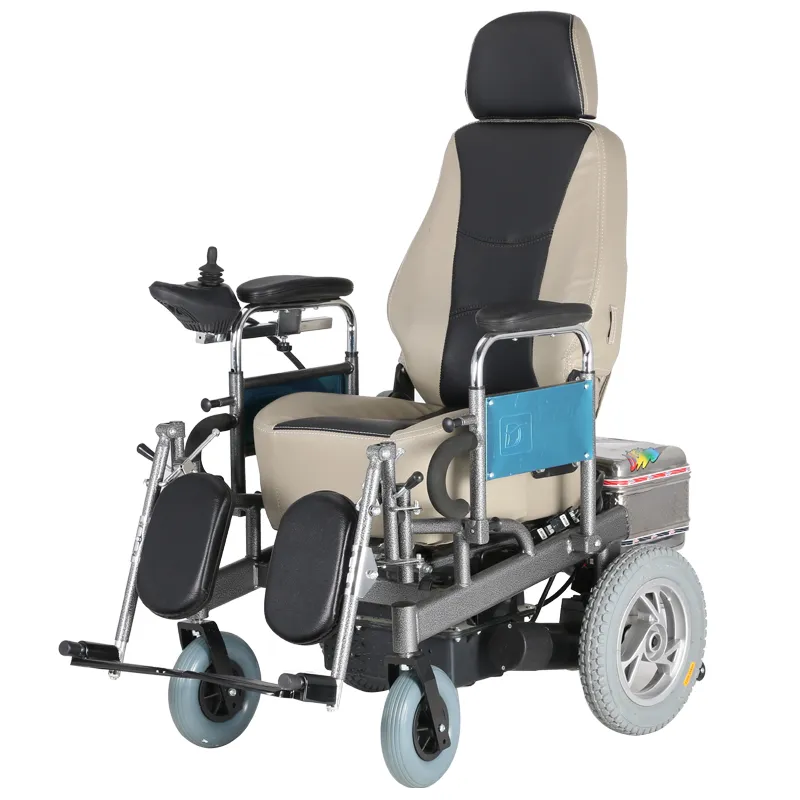
How to determine if the load-bearing capacity of an electric wheelchair is truly reliable?
To avoid purchasing substandard products, you can check the following:
1. Check if the "maximum load capacity" is clearly stated instead of a vague description
Reliable power wheelchair brands will:
• Explicitly state "Maximum load capacity: 120kg"
• Provide test reports or quality standard specifications
2. Pay attention to the number of crossbeams in the power wheelchair frame
The more crossbeams and the stronger the welds, the higher the load capacity.
3. Understand the motor's nominal power and peak power
For example:
• A 250W standard model typically corresponds to a load capacity of 100kg–120kg.
• 350W–500W can support higher load-bearing requirements.
4. Pay attention to the electric wheelchair's net weight
A lighter frame often means thinner materials or a simpler structure, which will affect its load-bearing capacity. Generally, models weighing 23kg–28kg have more reliable load-bearing capacity.
Does the load capacity of a power wheelchair affect its range?
The answer is yes. The higher the load capacity, the more power the power wheelchair requires, and the greater its power consumption. Therefore, there is a direct correlation between load capacity and range.
1. Electric wheel chairs consume more power when fully loaded
The battery discharges faster, reducing the actual range.
2. For heavier users, it is recommended to choose a larger capacity battery
For example:
• A 20Ah battery is suitable for users weighing under 80kg.
• 24Ah–30Ah batteries are more suitable for users weighing over 100kg.
How to correctly choose the appropriate load capacity range for your electric wheelchair?
When choosing a power wheelchair, consider the following factors:
1. User weight
Directly determines the minimum load capacity requirement.
2. Usage frequency
Users who use it for extended periods daily require a higher safety margin.
3. Road conditions and slopes
The more complex the environment, the higher the load capacity and power requirements.
4. Portability needs
For larger users, it is recommended to choose a reinforced structure to ensure stability even with slightly greater weight.
How can I request a quote, and what purchasing terms do you offer?
To obtain a quote from Dayang Medical, provide the product model(s), specifications, required quantity and desired customization details; our sales team will respond with a formal quotation including unit prices, production lead times, and available discounts for bulk or recurring orders. We offer flexible purchasing options: retail single-unit sales, wholesale bulk pricing, and customized OEM solutions.
Payment terms and incoterms (FOB, CIF, EXW) are negotiable and will be listed on the quote. Promotional pricing and seasonal discounts may apply for qualified distributors, hospitals or volume purchases.