

- - Why do older adults need a rollator?
As people age, their physical functions gradually decline, especially muscle strength and balance, making walking increasingly difficult.
When they experience unsteady gait, slow walking, or frequent falls, using a rollator walker becomes an important means of restoring safe mobility and maintaining independent living.
Among the many types, the 4-wheel rollator, due to its stability, flexibility, and design (it can be sat or pushed), has become an ideal walking aid for many older adults.
It not only reduces the burden on the legs but also provides extra support, helping older adults walk safely at home or outdoors, thereby reducing the risk of falls and increasing self-confidence.
Therefore, identifying whether an older adult needs a rollator, especially a 4-wheel rollator walker, is a crucial part of family care.
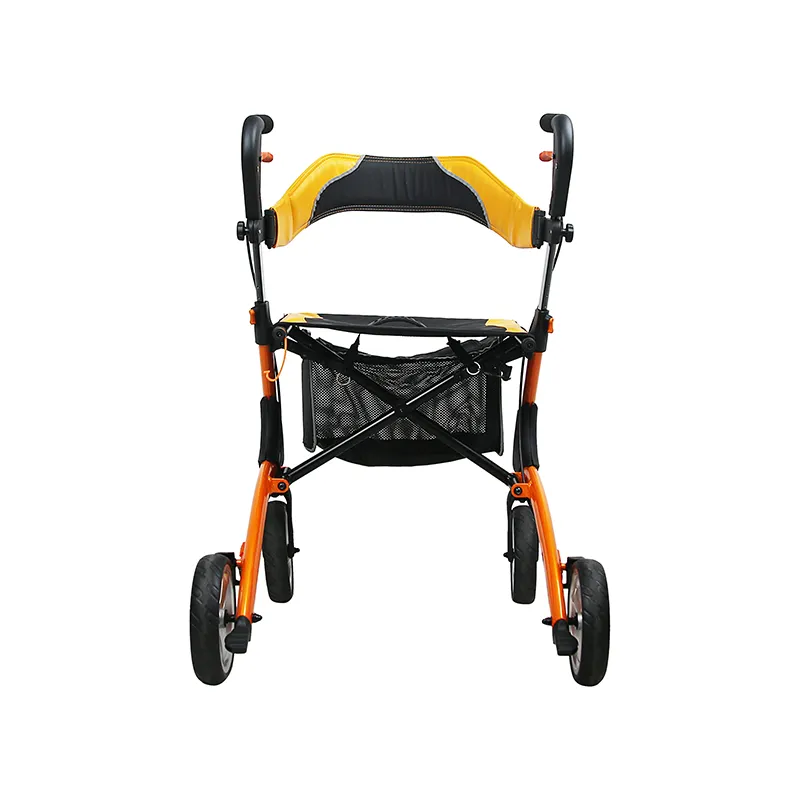
What signs indicate that an older adult is starting to need a rollator?
Determining whether an older adult should use a rollator involves not only considering age but, more importantly, observing their walking ability and balance.
The following signs often indicate that they already need to use a rollator walker to assist with mobility.
1. Do you wobble or lose balance easily while walking?
When older adults walk with an unsteady gait and frequently sway from side to side, it may be a sign of declining balance.
This is usually related to weakened lower limb muscles, stiff joints, or decreased neurological coordination.
A 4-wheel rollator can play a crucial role in this situation:
• It provides four-point stable support, greatly reducing the risk of imbalance;
• The front wheel can rotate 360°, making walking smoother;
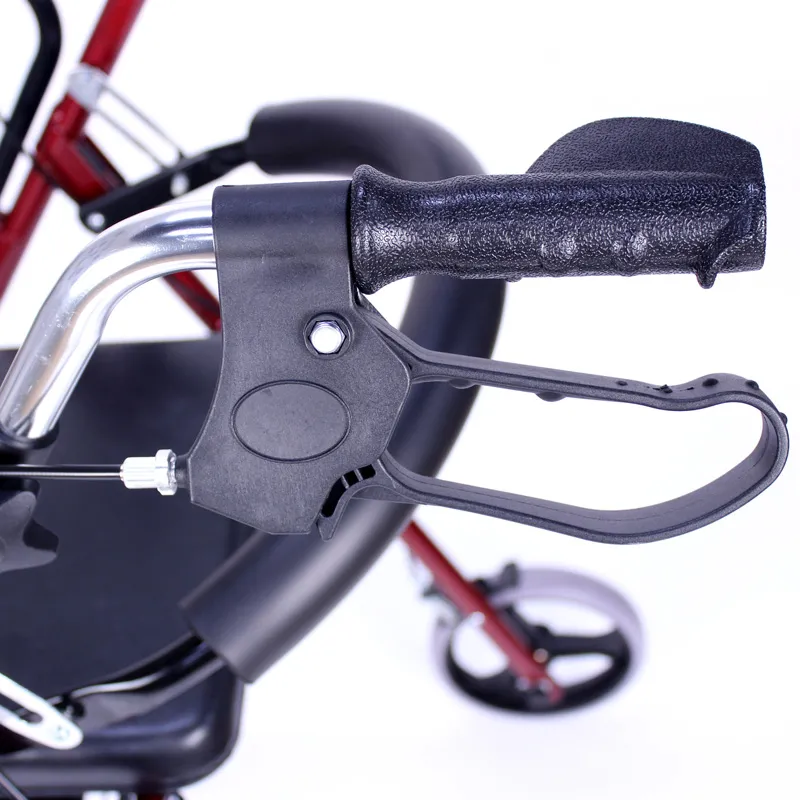
• It is designed with a braking system to stop the vehicle at any time and prevent accidental slippage.
Tip: If older adults frequently sway or lose their balance when turning or walking, they should consider using a rollator walker to assist in maintaining balance.
2. Significantly reduced walking distance and easy fatigue?
Many older adults used to be able to walk hundreds or even thousands of meters, but due to changes in their bodies, they now experience leg weakness, shortness of breath, and even back pain after walking for only a few minutes.
In this case, a 4-wheel rollator walker is an ideal choice.
Unlike wheelless walking aids, its wheels make pushing easier, eliminating the need for seniors to lift the device; some models also include a seat for convenient rest.
Key advantages include:
• Reduced physical exertion;
• Reduced pressure on the knees and hips;
• Prevention of falls due to exhaustion.
Judgment criteria: If an elderly person frequently needs to stop to catch their breath or lean against a wall after only a few steps, it indicates a decline in their walking endurance, and a 4-wheel rollator should be considered for assisted mobility.
3. Frequent need for assistance or reliance on furniture for movement?
When an elderly person begins to rely on others or furniture for support, it indicates a significant decline in their independent walking ability.
This dependence not only affects self-confidence but can also increase the burden on caregivers.
A 4-wheel rollator effectively replaces "human support":
• It provides stable support for body weight, offering a sense of psychological security;
• Can be used indoors or outdoors;
• The handbrake design allows for easy stopping and increases safety.
If an elderly person needs assistance going out, using the toilet, or entering the kitchen, it's a clear sign they need a rollator walker to help them regain independent walking.
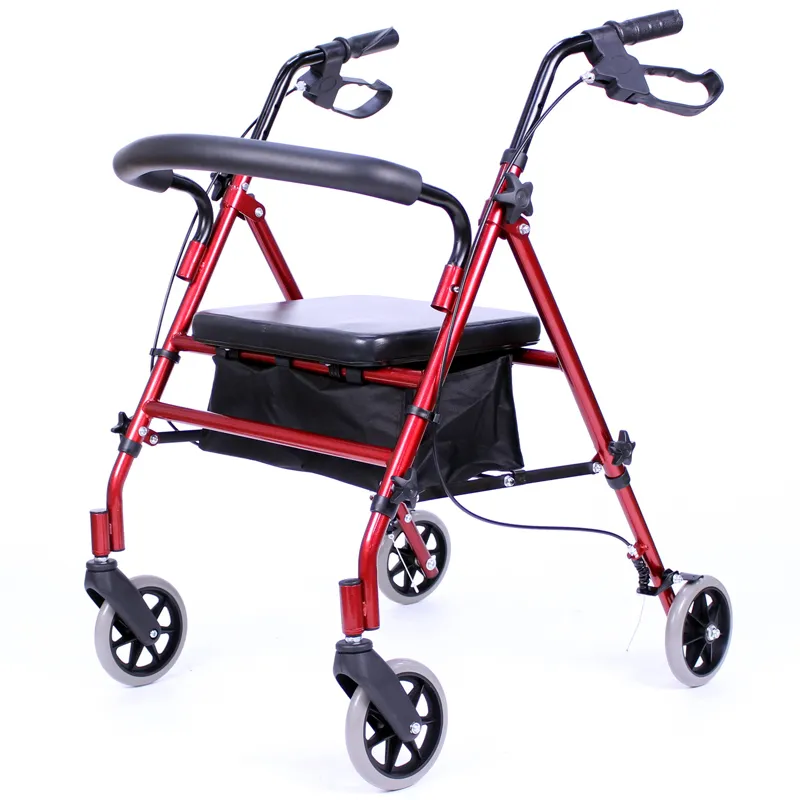
4. Frequent falls or near falls?
Falls are one of the most dangerous health threats to older adults.
Data shows that falls are a leading cause of disability and even fractures in the elderly, and decreased balance is often a precursor to a fall.
A 4-wheel rollator can significantly reduce the risk of falls because:
• It has a wider support base for greater stability;
• Users can grab the handrails in time when they lose balance;
• It assists in shifting the center of gravity during walking, preventing sudden falls.
Reminder: If an elderly person has had one fall or multiple near falls within the past 3 months, they should consider using a rollator walker immediately.
5. Changes in gait or shorter strides?
A sudden decrease in stride length, dragging of the feet, or leaning forward in older adults often indicates weakness in the lower limb muscles or decreased neural control.
Using a 4-wheel rollator can help them at this time:
• Maintain proper gait;
• Avoid falls caused by forward leaning;
• Slow down the decline in walking patterns due to muscle atrophy.
If you notice that an older adult is "walking slowly," "has difficulty lifting their legs," or "always leans forward," you should consider using a rollator walker to assist walking as soon as possible.
6. Afraid to go out alone or reducing activity levels?
Many older adults gradually reduce their outdoor activities due to fear of falling or physical weakness.
Prolonged inactivity can lead to muscle atrophy and joint stiffness, further worsening walking ability.
A 4-wheel rollator can help them regain confidence:
• Stable and secure support reduces the fear of falling;
• Lightweight design for easy outdoor use;
• Some models come with storage bags or baskets for convenient shopping or carrying items.
Psychological fear of falling is also a signal from the body—using a rollator walker at this time can break the vicious cycle of "the more afraid you are to walk, the less you dare to walk."
7. Difficulty standing up from a seated position or turning around?
When older adults need multiple attempts and leverage to stand up from a chair or bed, it indicates weakened lower limb strength.
Difficulty turning or maneuvering also increases the risk of falls.
A 4-wheel rollator's handlebar and braking system provides stable support points when standing up:
• Grasp the handlebars with both hands and use upper limb strength to stand up;
• After standing, you can directly hold onto the handlebars to stabilize yourself, preventing dizziness and falls;
• Easy steering, suitable for confined spaces.
Conclusion: Difficulty standing up and turning is a "warning signal" from the body, indicating that older adults need the assistance of a rollator walker.
Why is a 4-wheel rollator recommended?
There are various types of walking aids on the market, including wheelless, two-wheeled, three-wheeled, and four-wheeled models. Among all types, the 4-wheel rollator combines stability, flexibility, and comfort, making it the most suitable type for daily use by older adults.
1. Better Stability
Four support points keep the vehicle balanced on various surfaces, preventing swaying during walking, especially suitable for older adults with unsteady gait.
2. Easier to Use
Compared to wheelless walking aids that require repeated lifting, 4-wheel rollator walkers only require a gentle push to move forward, reducing arm strain.
3. Equipped with a Seat for Rest
Many 4-wheel rollators are equipped with a folding seat, allowing seniors to sit down and rest whenever they get tired, a very thoughtful design.
4. Safer with Brakes
The braking system secures the vehicle when going uphill, downhill, or stopping, preventing slippage or tipping.
5. Convenient for Carrying Items
Some models come with a shopping basket or storage bag, making it easier for seniors to go grocery shopping or for walks.
Overall, the 4-wheel rollator walker is the most comprehensive, stable, and safest walking aid, especially suitable for seniors with poor balance or unsteady gait who still wish to maintain their mobility.
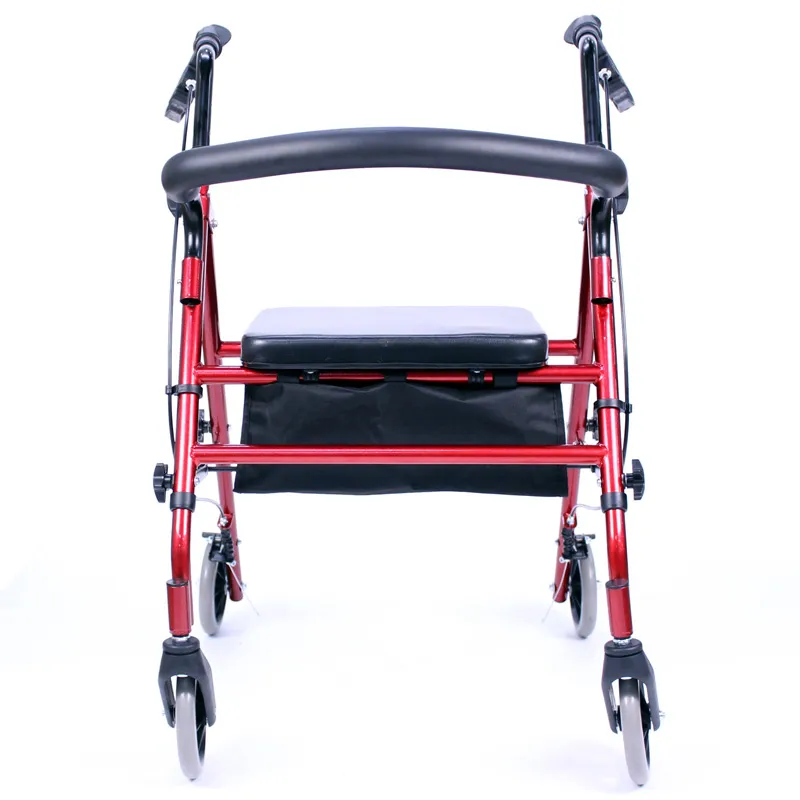
What Should Seniors Pay Attention to When Using a 4-wheel Rollator?
Using the rollator walker correctly is more important than simply buying one. Improper use not only fails to provide assistance but may also increase risks.
1. Adjust the height appropriately
The handrail should be level with your wrist, and your elbow should be bent at approximately a 15° angle when gripping it.
A height that is too low can cause hunching, while a height that is too high will increase shoulder fatigue.
2. Do not sit on the rollator and be pushed
The 4-wheel rollator is not a means of transportation and should not be used as a mobility scooter.
Having someone push it is extremely dangerous and can easily lead to tipping or loss of wheel control.
3. Check the brakes before use
Before each use, ensure the brakes are functioning properly to prevent slippage when going downhill or turning.
4. Maintain a slow pace
Control your speed while walking and avoid pushing too fast. Exercise extra caution, especially on wet, slippery, or uneven surfaces.
5. Regular maintenance and cleaning
Regularly check for loose screws and worn tires, and keep the device clean and dry.
Safety principle: The rollator is an assistive tool, not a replacement for walking. Proper use is essential to ensure the safety of the elderly.
How to determine if an elderly person needs to use a rollator as soon as possible?
In summary, you should consider getting a 4-wheel rollator walker for an older adult as soon as possible if the following situations occur:
✅ Unsteady gait or frequent swaying
✅ Frequent falls or near falls
✅ Significantly reduced walking distance
✅ Need for assistance or furniture for movement
✅ Fear of going out and reduced activity
✅ Difficulty getting up and turning around
✅ Doctor's recommendation to enhance walking support
When two or more of these signs appear, it indicates that the older adult is in the "moderate walking impairment" stage. At this point, using a rollator is the most scientific and safest option.
A Suitable Rollator Makes Walking Safer and More Dignified
Using assistive devices is not a sign of "regression" for older adults, but rather the beginning of regaining independence and dignity.
A suitable 4-wheel rollator can help them leave their homes again, participate in social activities, maintain muscle vitality, and slow functional decline.
Remember: Don't ignore the signals your body sends.
Choosing the right rollator adds the most solid support for the safety and confidence of older adults.
What kind of company is Dayang Medical and what products does it supply?
Guangdong Dayang Medical Technology Co., Ltd. is a professional medical equipment manufacturer in China, established in 2009. As a reliable supplier and factory, the company focuses on the design, production, and global sales of rehabilitation and healthcare products. Its product portfolio includes electric wheelchairs, manual wheelchairs, mobility scooters, commode chairs, walkers, hospital beds, and shower chairs.