

Among assistive mobility devices, lightweight power wheelchairs have garnered significant attention due to their balance of power and portability.
Driven by an electric motor, they achieve automatic movement without manual pushing, helping people with mobility impairments regain greater independence.
Compared to traditional electric or manual wheelchairs, lightweight electric wheelchairs are known for their "lightweight" design.
Their design philosophy is: To make the wheelchair lighter and more flexible while maintaining the convenience of electric drive.
For the elderly, post-operative recoveries, or those with limited mobility, lightweight power wheelchairs not only meet daily travel needs but also strike a balance between portability and comfort.
However, like any device, lightweight electric wheelchairs also have some limitations.
This article will explore the advantages and disadvantages of lightweight electric wheelchairs from multiple perspectives, including structure, performance, and user experience.
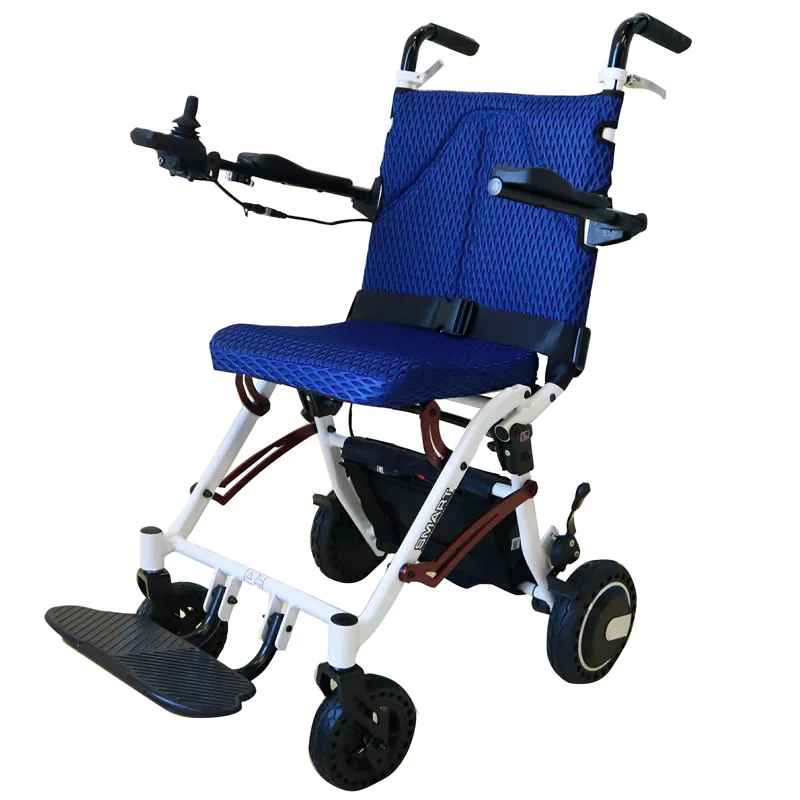
What are the differences between lightweight power wheelchairs and ordinary wheelchairs?
1. Characteristics of Lightweight Electric Wheelchairs
Lightweight electric wheelchairs are made of lightweight metals (such as aluminum alloy or carbon fiber), typically weighing between 20 and 30 kg, significantly less than the 40 kg or more of traditional electric wheelchairs.
They are equipped with a motor, controller, battery, and folding structure, emphasizing portability, easy storage, and flexible operation.
2. Differences from Regular Electric Wheelchairs
Comparison Dimensions | Lightweight electric wheelchair | Standard electric wheelchairs |
| Weight | Approximately 20-30kg, lightweight and foldable | Weighing over 40kg, heavy and difficult to move |
| Powertrain | Small-power motor, energy-saving and low-noise | More powerful, suitable for long-distance travel |
| Driving Range | Medium range, generally 10-20 kilometers | Long range, some exceeding 30km |
Structural Design | Foldable design, easy to carry | Fixed design, suitable for long-term use |
| Target Audience | Suitable for the elderly and short-distance travelers | Suitable for long-term use or for heavier individuals |
In short, lightweight electric wheelchairs are more suitable for users who prioritize flexibility and convenience, rather than those who use them continuously for extended periods.
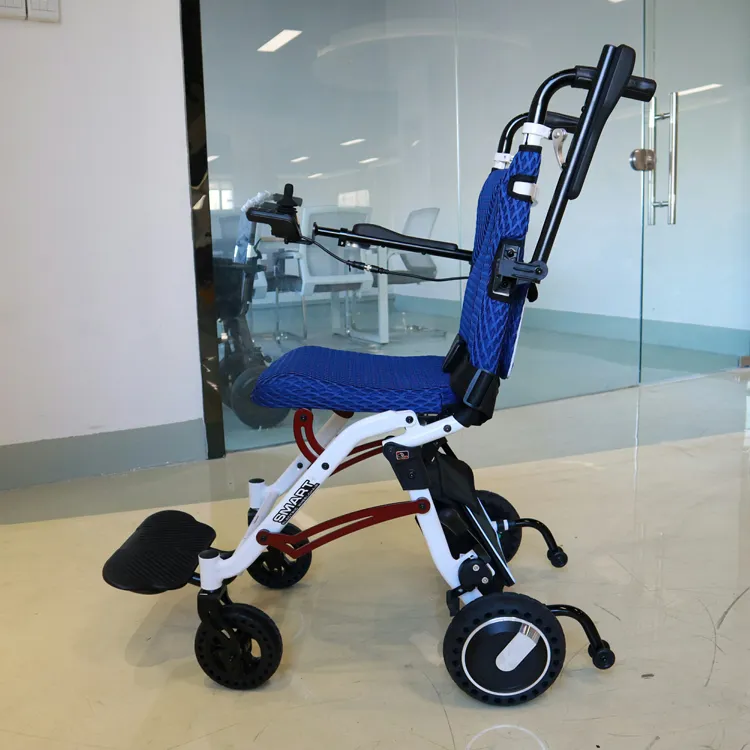
What are the Pros of lightweight power wheelchairs?
The biggest advantage of lightweight power wheelchairs is that they are "lightweight without sacrificing functionality."
From a practical user experience perspective, their advantages are mainly reflected in the following aspects:
1. Lightweight structure, easy to move and store
Lightweight electric wheelchairs use aluminum alloy or aerospace-grade metal materials, significantly reducing weight while maintaining strength.
Most models support one-click folding or quick-release structures, allowing for easy storage in a car trunk or a corner of the home.
Advantages Summary:
• Foldable and operable by a single person, no assistance required;
• Suitable for going up and down stairs, storing in a car, and taking up elevators;
• User-friendly for the elderly or caregivers, reducing the burden of carrying.
For users who frequently travel, this portability greatly enhances their freedom of use.
2. Simple Operation, Low Learning Curve
Lightweight electric wheelchairs generally use intelligent control handles, supporting precise control of forward, backward, turning, and braking functions.
The user interface is intuitive and responsive, allowing even first-time users to quickly master the controls.
Common operational advantages include:
• One-handed operation, with control levers interchangeable between left and right hands;
• Equipped with an electromagnetic braking system, stopping instantly upon releasing the handle;
• Speed adjustment function, suitable for different scenarios.
This "human-centered" design makes lightweight power wheelchairs particularly popular among the elderly.
3. Removable Battery, More Flexible Charging
Lightweight electric wheelchairs generally use lithium batteries, which are removable and replaceable, making charging convenient.
Compared to traditional lead-acid batteries, lithium batteries are lighter, have a longer lifespan, and charge faster.
Advantages:
• Range sufficient for daily commutes (approximately 10-20 kilometers);
• Batteries can be carried indoors for charging;
• Backup batteries extend usage time.
This makes lightweight power wheelchairs more flexible and practical for daily commutes and travel.
4. Comfortable and Ergonomically Designed
Modern lightweight electric wheelchairs emphasize ergonomics. The seat and backrest use high-density foam and breathable fabric to effectively reduce fatigue from prolonged sitting.
Additionally, some models feature adjustable footrests, flip-up armrests, and shock-absorbing tires, further enhancing comfort.
Highlights:
• No stuffiness even after prolonged sitting;
• Easy to sit and get in;
• Smoother turning and shock absorption.
This comfort advantage makes lightweight electric wheelchairs not just a means of transportation, but also a long-term companion for mobility.
5. Energy-saving and environmentally friendly, low noise
Because lightweight electric wheelchairs use high-efficiency motors and lithium battery systems, they consume less energy and operate with less noise.
Suitable for use in indoor environments, hospitals, shopping malls, and other places requiring a quiet environment.
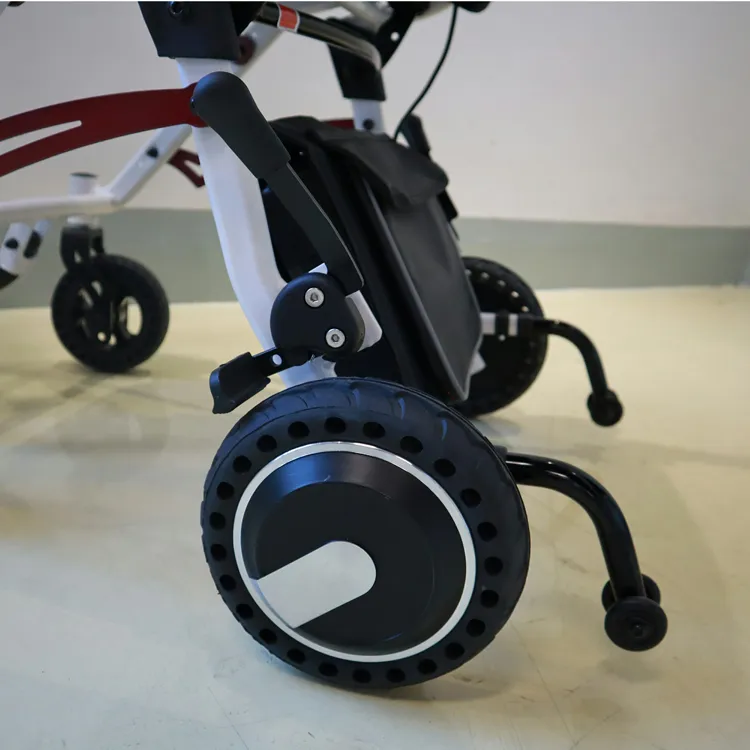
What are the Cons of lightweight power wheelchairs?
Although lightweight electric wheelchairs have many advantages, they still have limitations in some aspects, which users should fully understand when choosing one.
1. Limited load-bearing capacity
To reduce weight, lightweight power wheelchairs use a lightweight structure, and their overall load-bearing capacity is generally within 100 kg.
For heavier users or those who need to carry extra weight, there may be insufficient stability issues.
Potential problems:
• Overloading may increase the motor load;
• The frame is prone to fatigue deformation;
• Shortened service life.
Therefore, the maximum load-bearing parameters should be strictly confirmed before purchase to avoid long-term overloading.
2. Weaker battery life and power
The motor power of lightweight electric wheelchairs is usually 150W to 250W, and the battery capacity is relatively small.
While sufficient for short daily trips, its power performance is slightly insufficient for long distances or complex terrain (such as uphill, grassy, and gravel roads).
Limitations:
• Weak uphill capability;
• Limited range (generally 10-15 kilometers);
• Range decreases with increasing load.
This is especially important for users who frequently engage in long-distance travel or outdoor activities.
3. Poor Stability
Due to its lightweight structure and high center of gravity, lightweight power wheelchairs are prone to tilting during high-speed turns or on bumpy surfaces.
Although some models are equipped with anti-tilt wheels, their stability is still inferior to traditional electric wheelchairs.
Common Issues:
• Highly affected by wind;
• Prone to swaying when encountering obstacles;
• Requires extra caution when going uphill or downhill.
4. Relatively High Price
High-quality lightweight power wheelchairs, due to the use of lightweight metals, lithium batteries, and folding structures, have higher manufacturing costs.
The price is often 20%-40% higher than that of ordinary steel electric wheelchairs.
However, this cost translates to a lighter and more comfortable user experience, making it cost-effective for frequent travelers.
5. High Repair and Parts Replacement Costs
Lightweight power wheelchairs are structurally more sophisticated, with many parts custom-made.
If problems arise with the control system, motor, or battery, repair costs are relatively high, and parts are less interchangeable.
Who are lightweight power wheelchairs suitable for?
Choosing a lightweight electric wheelchair should be based on actual needs and the usage environment.
Suitable users include:
• Elderly individuals with reduced mobility but still possessing some upper limb dexterity;
• Post-operative recovery patients or individuals with limited mobility but requiring short-distance travel;
• People who frequently need to go out, get in and out of vehicles, or travel;
• Families where caregivers wish to reduce the burden of carrying others.
In short, lightweight electric wheelchairs are best suited for individuals with limited mobility who still seek flexible travel.
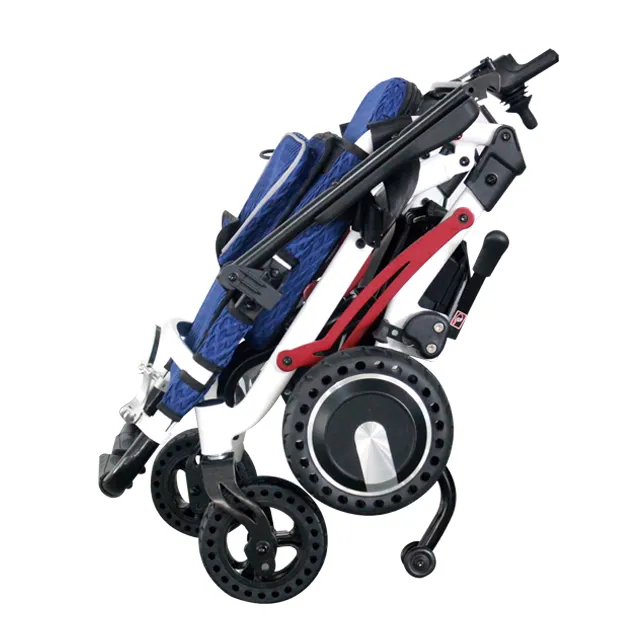
How to properly use and maintain a lightweight power wheelchair to ensure its durability?
Proper use and maintenance can significantly improve the safety and lifespan of a lightweight power wheelchair.
Regular Charging:
• Avoid over-discharging the battery;
• Charge monthly if not in use for extended periods.
Keep Dry:
• Prevent water from entering the motor and controller;
• Dry promptly after rain to prevent oxidation.
Check Tires and Brakes:
• Maintain proper tire pressure;
• Regularly test brake system sensitivity.
Control Load:
• Avoid prolonged overloading;
• Avoid carrying passengers or transporting heavy objects.
Proper Folding and Unfolding:
• Follow the instructions to prevent damage to the folding mechanism.
Is a Lightweight Electric Wheelchair Worth Choosing?
The advent of lightweight electric wheelchairs has greatly improved the independence and mobility of people with mobility impairments.
It has significant advantages in portability, comfort, and ease of use, making it an ideal choice for most elderly people and those undergoing rehabilitation.
However, its limitations cannot be ignored: limited load-bearing capacity, slightly weaker power, and shorter range.
Therefore, the key to choosing a lightweight electric wheelchair lies in the intended use case:
• If you primarily travel short distances on smooth surfaces → ✅ A lightweight electric wheelchair is the best choice;
• If you are heavier or need to travel outdoors for extended periods → ❌ Consider a standard electric wheelchair.
Can Dayang Medical provide wholesale electric wheelchair supply?
Yes, electric wheelchairs are one of our main products, and we provide bulk wholesale supply for distributors and hospitals worldwide. Our models are designed for comfort, durability, and safety, all certified under CE and FDA standards. Buyers can request factory quotes, benefit from low-price purchasing, and enjoy discount promotions for wholesale orders.
As a manufacturer in China, Dayang Medical ensures cheap prices without sacrificing quality, making us a strong supplier brand for mobility solutions.