

When caring for patients with limited mobility, insufficient muscle strength, or inability to stand independently, choosing the right assistive device is crucial for both safety and efficiency.
In recent years, the Patient Lift Transfer Chair has become a widely favored nursing device in hospitals, nursing homes, and among home caregivers due to its integrated lifting, support, and mobility functions.
However, like any device, the Patient Lift Transfer Chair has its advantages and limitations.
To help readers understand more systematically and professionally whether it is suitable for their care needs, this article will analyze the main advantages and disadvantages of the Patient Lift Transfer Chair, and introduce its applicable scope, key points for pre-use assessment, and common misconceptions.
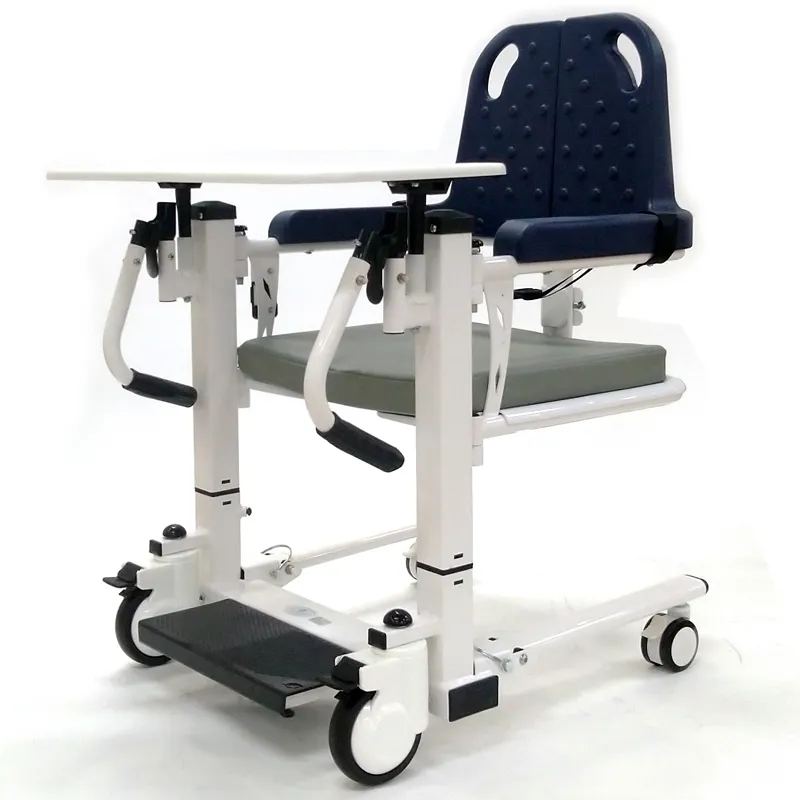
What is a Patient Lift Transfer Chair?
A Patient Lift Transfer Chair is a device specifically designed to assist people with mobility impairments in common transfer movements such as sitting to standing, bed to chair, and chair to toilet. It combines a lifting mechanism with a movable base, allowing caregivers to safely transfer patients without strenuous lifting.
Core functions include:
• Lifting function: Elevates the patient from a sitting position to a standing height or lowers them to a target position electrically or manually.
• Transfer function: Accessible from the bedside, wheelchair, sofa, or toilet, ensuring safe movement.
• Support and stability: Provides continuous support for patients who cannot stand steadily, reducing the risk of falls.
• Reduces caregiver burden: Replaces manual lifting with device support, reducing strain on caregivers.
These functions make the Patient Lift Transfer Chair an irreplaceable and vital tool in daily care.
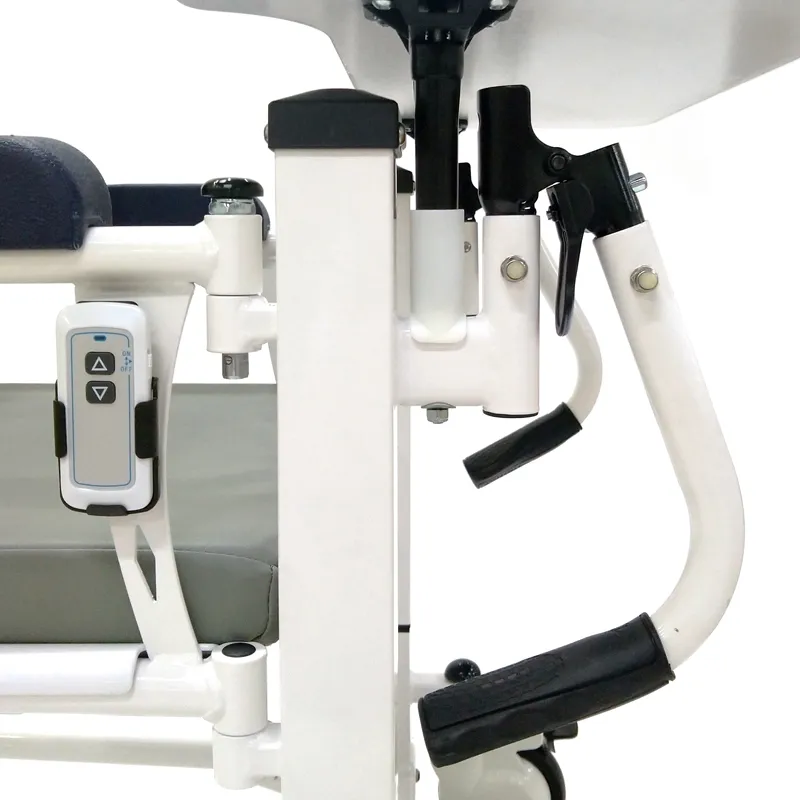
What are the advantages of the Patient Lift Transfer Chair?
Does the Patient Lift Transfer Chair significantly reduce the risk of falls and injuries?
Yes, it does.
Falls are one of the greatest safety threats to people with mobility impairments, especially when attempting to stand, sit, or move. The Patient Lift Transfer Chair significantly reduces this risk through its stable support structure and lifting system.
The main advantages are:
• Smooth and controllable lifting process, reducing sudden patient imbalance.
• Strong support area, stabilizing body weight.
• Caregivers can focus on adjusting posture without using all their strength to lift.
• Patients do not need to rely on their own muscle strength, avoiding falls due to fatigue or pain.
For users with limited mobility, the safety improvement provided by this device is significant.
Does the Patient Lift Transfer Chair effectively reduce the burden on caregivers?
Absolutely.
Traditional methods of transferring patients usually require caregivers to lift, carry, support, or even drag them, which can easily lead to:
• Excessive pressure on the lumbar spine
• Strain in shoulder and back muscles
• Chronic fatigue in hand joints
• Chronic pain caused by poor posture during operation.
The Patient Lift Transfer Chair replaces most of the lifting actions with mechanical lifting, allowing caregivers to primarily focus on position adjustment, guidance, and protection, significantly reducing workload.
This not only protects caregivers but also improves overall care safety.
Is the Patient Lift Transfer Chair suitable for various transfer scenarios?
One of the design goals of the Patient Lift Transfer Chair is to assist patients in performing a variety of daily activities, making it suitable for a wide range of scenarios:
• Bed to wheelchair transfer
• Wheelchair to toilet transfer
• Chair to bathroom seat transfer
• Lifting from the floor to a sitting position (some models)
• Short-distance movement at home
This versatility makes the device highly practical in both homes and institutions.
Does the Patient Lift Transfer Chair help improve patient participation?
Many patients are unable to actively participate in transfers due to physical limitations. The Patient Lift Transfer Chair addresses this by:
• Armrest design
• Assistive standing angle
• Stable lifting process
Helping users maintain a degree of autonomy in a safe environment. This maintains muscle activity, enhances self-care, and reduces psychological stress.
Is it more protective of the patient's body than traditional transfer methods?
Yes, because the Patient Lift Transfer Chair avoids the following problems:
• Frictional damage caused by pulling on the skin
• Pressure pain caused by supporting the armpit
• Joint pressure caused by uneven force
• Sudden shift in center of gravity due to improper operation
• Soft tissue injury caused by excessive force
It is especially important for patients with fragile skin, muscle atrophy, or those recovering from surgery.
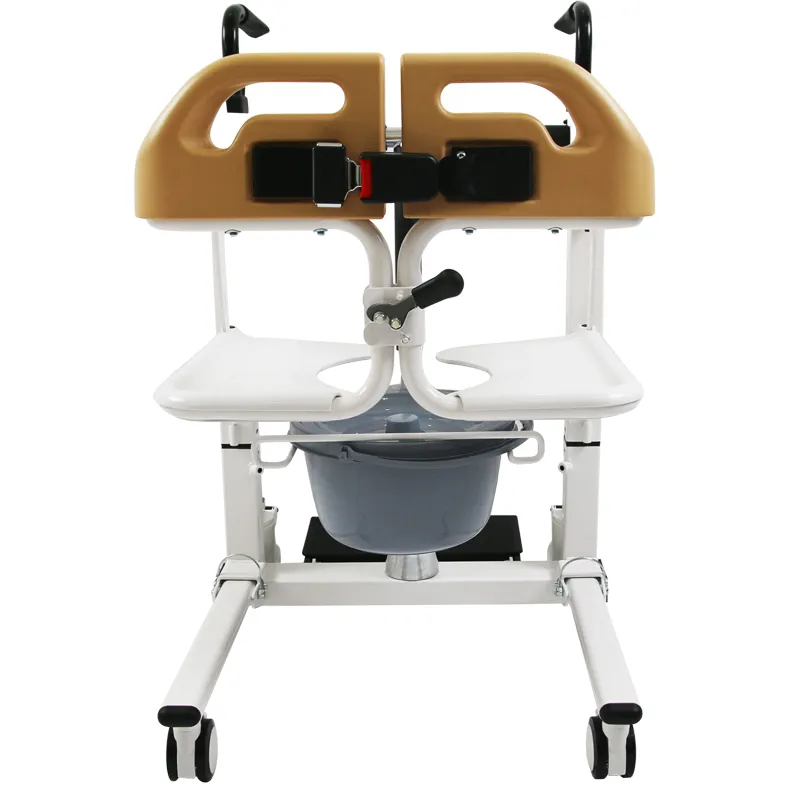
What are the disadvantages of the Patient Lift Transfer Chair?
Does the Patient Lift Transfer Chair require sufficient indoor space?
Yes. The device typically has wheels, a chassis, and a lifting mechanism, therefore it takes up more space than a regular wheelchair.
Consider:
• Sufficient distance from the bedside
• Wide enough bathroom doorway
• Ample turning space
• Level, stepless floor
If the space is too narrow, it may affect movement and positioning, thus affecting the effectiveness of use.
What are the basic requirements for the patient's abilities when using the Patient Lift Transfer Chair?
Although the device is designed to be very safe, patients still need to have basic cooperation skills to use it:
• Maintain a simple sitting posture
• Be able to grasp the armrests (required for some models)
• Be willing to accept assistance
• Have their body posture adjustable
For patients who have completely lost control of their sitting posture, some models may not be suitable, requiring a higher-level transfer assistive device.
Does the Patient Lift Transfer Chair require operation by a caregiver?
Yes. The Patient Lift Transfer Chair is not a device for independent patient operation; a caregiver is required to use it to:
• Push the chair
• Check the seatbelt position
• Press the lifting button or operate the manual mechanism
• Assist in adjusting the body position
However, its operation is not difficult and can generally be mastered after a short training session.
Is the Patient Lift Transfer Chair more expensive than ordinary assistive devices?
Compared to traditional transfer methods or simple walking aids, the Patient Lift Transfer Chair is indeed a mid-to-high-priced nursing device.
Factors affecting price include:
• Electric or non-electric
• Weight capacity
• Seat material
• Type of safety devices
• Brand and after-sales service
Although the price is higher, the safety and labor savings it provides are significant.
Does the Patient Lift Transfer Chair require maintenance?
Yes, although maintenance is usually minimal, but the following should be noted:
• Check that the wheels are moving smoothly
• Maintain the lifting system
• Clean the seat and armrests
• Ensure the locking mechanism is working properly
• Electric models require regular charging
Proper maintenance extends its lifespan and ensures safe use.
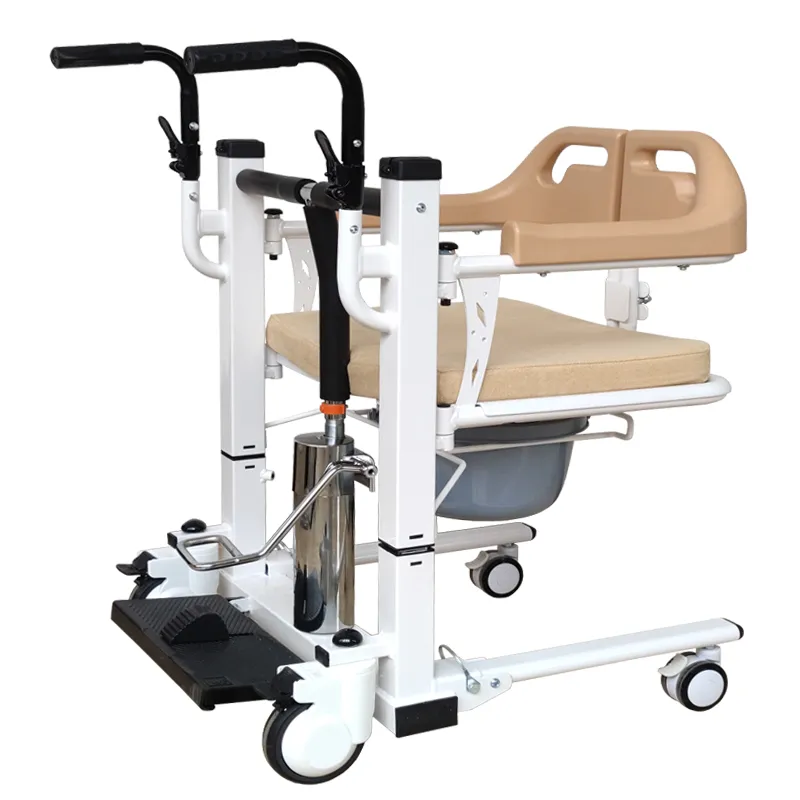
Who is the Patient Lift Transfer Chair suitable for?
Which patients are particularly suitable for the Patient Lift Transfer Chair?
The following patients benefit most from the device:
• Insufficient muscle strength to stand independently
• Weak trunk control but able to maintain a sitting position briefly
• Poor balance
• Insufficient lower limb strength
• Age-related degeneration leading to instability
• Postoperative patients with limited weight-bearing capacity
• Patients requiring frequent bed-to-chair transfers
These users can significantly reduce the risk of falls and improve transfer efficiency.
Which patients may not be suitable for the Patient Lift Transfer Chair?
Some models may not be suitable for the following situations:
• Complete inability to maintain a sitting position
• Inability to bend the body or difficulty maintaining a fixed posture
• Overweight exceeding the device's weight capacity
• Severe spasticity or inability to cooperate with transfer instructions
In these cases, a higher-level total body transfer device may be needed.
What family factors should be considered before selection?
Key considerations:
• Space dimensions
• Floor material
• Whether a threshold needs to be crossed
• Storage location
• Whether a long distance needs to be pushed
These factors determine whether the model selection is suitable for the home environment.
Is it necessary for caregivers to learn how to operate the chair first?
We recommend learning the following:
• How to adjust the foot pedals
• How to lock the wheels
• How to stabilize the patient's position
• How to properly operate the lifting system
Most manufacturers provide easy-to-understand instructional materials.
What promotions does Dayang Medical offer for new clients?
New clients often enjoy special discounts and promotional prices when placing their first wholesale order. Our factory-direct sales model allows us to provide inexpensive purchasing options, helping customers reduce initial costs. Buyers receive transparent quotes, support with customization, and quick delivery. Whether purchasing wheelchairs, shower chairs, or walking aids, new partners can expect factory promotions combined with high-quality products. This makes Dayang Medical a popular supplier in China for businesses starting in the healthcare industry.