

In modern healthcare settings, hospital beds are no longer merely basic equipment for patient rest; they are vital medical devices that integrate nursing support, rehabilitation assistance, therapeutic functions, and patient safety features. Whether in large general hospitals, specialized facilities, rehabilitation centers, nursing homes, or home care environments, hospital beds play an indispensable role. Driven by advancements in medical technology and an aging population, hospital beds have evolved from traditional manual models to intelligent electric ones, with increasingly sophisticated structural designs and functional capabilities.
Industry research indicates that the global hospital bed market has been growing steadily, with electric hospital beds seeing a particularly significant rise in market share. While electric beds have become standard in many tertiary hospitals and high-end medical facilities, manual hospital beds remain widely used in primary care institutions and general wards due to their cost-effectiveness and ease of maintenance. Understanding the key components and functions of hospital beds not only aids healthcare facilities in procurement decisions but also helps nursing staff and patients' families better appreciate the value and utility of these beds.
This article examines the overall structure of hospital beds, providing a detailed analysis of the key components, operating principles, and future development trends for both manual and electric models.
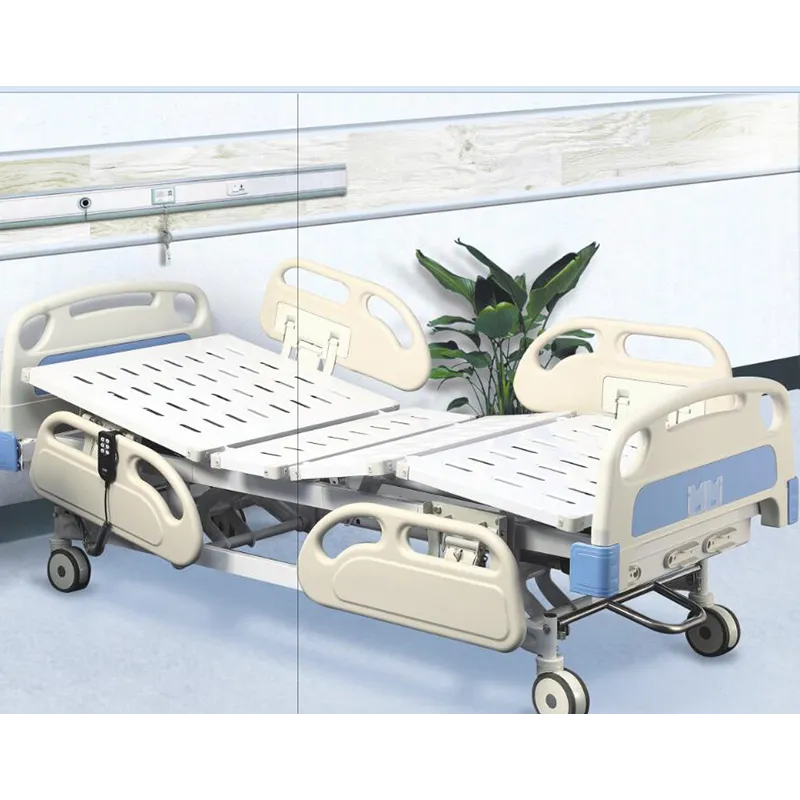
Why do hospital beds require complex structural designs?
Many people view hospital beds simply as upgraded versions of ordinary beds, but in reality, a modern hospital bed constitutes a comprehensive nursing system. During their stay, patients may require various treatments and procedures—such as IV therapy, monitoring, oxygen administration, rehabilitation exercises, postural adjustments, and long-term bedridden care—all of which rely on the coordinated functioning of the bed's various components.
This is particularly crucial for critically ill, post-operative, and elderly patients; the bed must not only provide a comfortable resting environment but also help reduce the physical strain on nursing staff and improve care efficiency. For instance, electric beds can assist patients who cannot turn over independently by adjusting the backrest and leg sections, while height-adjustment features can effectively lower the risk of falls when patients need to get out of bed. Consequently, the structural design of modern hospital beds has transcended the realm of traditional furniture, positioning them more as specialized medical equipment.
What are the core components of a hospital bed?
Structurally, manual and electric hospital beds share essentially the same main components, differing primarily in their drive mechanisms and functional configurations. Generally, a standard hospital bed consists of a bed frame, a bed surface system, backrest and leg-rest adjustment mechanisms, head and foot boards, side rails, a caster system, and a control system.
These components combine to form a complete bed system, with each part serving a specific function.
Bed Frame System: The Bed's Structural Foundation
The bed frame acts as the "skeleton" of the hospital bed, serving as the foundation upon which all functional modules are mounted and operated.
Most mainstream hospital beds are constructed from high-strength cold-rolled steel tubing, stainless steel, or aluminum alloy. High-quality frames undergo processes such as welding, rust removal, and electrostatic powder coating; this ensures not only high load-bearing capacity but also long-term resistance to humid environments and corrosion from disinfectants.
Typically, standard manual hospital beds have a safe load-bearing capacity of 200 to 250 kg, whereas high-end electric beds and intensive care unit (ICU) beds can support 300 to 450 kg; some specialized care beds can even withstand loads exceeding 500 kg.
Frame stability is directly linked to patient safety. Insufficient frame strength can lead to deformation, wobbling, or even safety hazards over time; consequently, healthcare institutions prioritize frame materials and load-bearing specifications when purchasing hospital beds.
Bed Surface System: The Area of Direct Patient Contact
The bed surface system is the part with which patients have the most frequent daily contact and is a key factor influencing comfort.
Modern hospital beds typically feature a multi-section bed surface design, commonly comprising four parts: the backrest panel, seat panel, thigh panel, and lower-leg panel. This segmented structure accommodates various treatment and nursing needs, allowing patients to adjust their body position according to their specific situation.
Common bed surface materials on the market include perforated steel plates, steel wire mesh panels, and ABS engineering plastic panels. Perforated steel plates are the most widely used option, as they offer a balance of strength and breathability, effectively reducing moisture accumulation beneath the mattress. In electric hospital beds, the various sections of the bed surface are typically driven independently by motors, allowing for more precise adjustment; in contrast, manual hospital beds rely on mechanical cranks to adjust the bed surface.
The Vital Role of the Backrest Adjustment System
Patients confined to bed for extended periods often need to change their posture between lying down and sitting up. Relying solely on caregivers for manual adjustments is not only time-consuming and labor-intensive but can also cause discomfort to the patient. Consequently, the backrest adjustment system has become one of the core functional modules of hospital beds.
This system primarily controls the angle of the backrest panel, enabling the patient to transition gradually from a flat, supine position to a semi-reclined or seated position. For post-operative patients, elevating the backrest can alleviate respiratory strain; for those needing to eat, it facilitates a comfortable seated posture; and for long-term bedridden patients, it effectively reduces the risk of pulmonary infections and pressure ulcers.
Typically, the adjustment range for the backrest is between 0° and 75°.
Manual hospital beds achieve angle changes by using a crank to drive a lead screw mechanism; while simple to operate, they require manual adjustment by caregivers. Electric hospital beds, however, utilize low-voltage DC motors, allowing patients to make adjustments independently via a controller, which greatly enhances convenience.
The Significance of the Leg Adjustment System for Rehabilitation Care
In addition to backrest adjustment, the leg adjustment system is another crucial component of hospital beds.
Many patients in the post-operative recovery phase require lower-limb elevation to promote venous return and prevent edema and deep vein thrombosis (DVT). The leg adjustment function plays a vital role in these scenarios.
Modern hospital beds usually divide the leg section into two parts—the thigh panel and the lower leg panel—using a linkage mechanism to adjust their angles. Some high-end electric hospital beds also feature a knee-bend function, allowing patients to maintain a more ergonomically sound posture.
Research indicates that for long-term bedridden patients, regular leg elevation and postural changes can effectively improve blood circulation and reduce the risk of certain complications. Therefore, the leg adjustment system has become a standard feature of modern nursing beds.
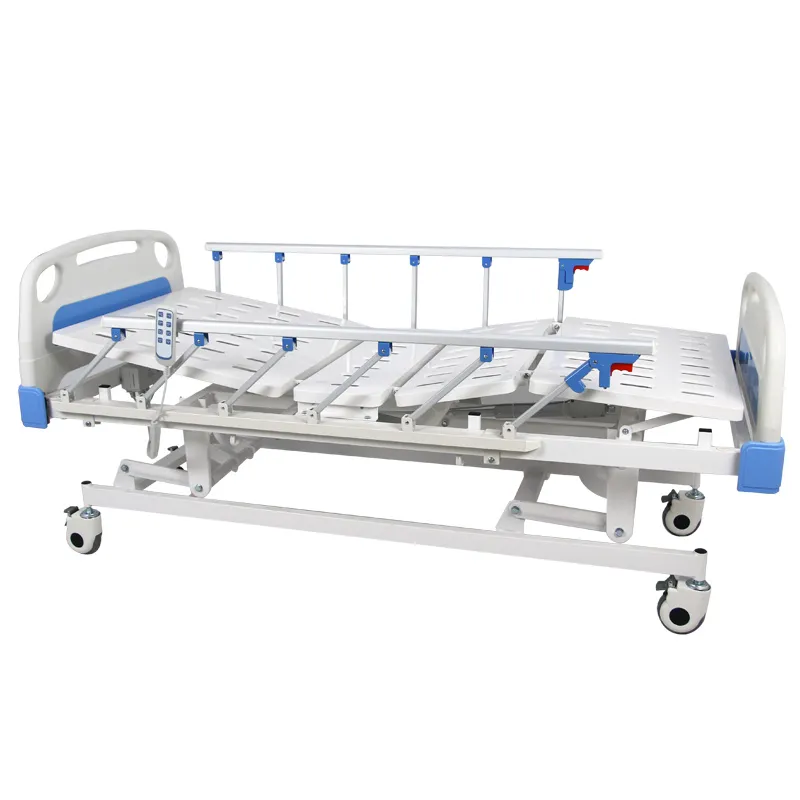
Side Rail Systems: A Crucial Safeguard for Patient Safety
Patient falls remain a primary risk in hospital care; elderly patients, post-operative patients, and those with impaired consciousness are particularly prone to falling out of bed.
To enhance safety, modern hospital beds are commonly equipped with side rail systems.
Typically installed on both sides of the bed, these rails serve to prevent accidental falls while providing support for patients when turning over, sitting up, or shifting position.
Common types of side rails include:
•Full-length rails;
•Half-length rails;
•Four-section folding rails;
•Split-style rails.
High-end electric hospital beds often feature split-style ABS side rails; these are not only aesthetically pleasing but also allow for flexible raising and lowering based on care requirements.
Nursing research indicates that the proper use of side rails significantly reduces the risk of patient falls, making them an indispensable component of modern hospital beds.
Headboards and Footboards: More Than Just Decoration
Many people view headboards and footboards merely as decorative elements, yet they actually serve several important functions.
First, they help prevent the patient from sliding, thereby enhancing safety. Second, nursing staff can use the footboard to push the bed during patient transport or emergency procedures. Additionally, patient identification cards and nursing charts are often mounted in the footboard area.
Most modern hospital beds feature headboards and footboards made of ABS engineering plastic, a material characterized by its light weight, impact resistance, and ease of cleaning and disinfection.
Some electric beds designed for ICUs feature quick-release footboards that can be rapidly removed during emergency CPR or other critical interventions, thereby improving the efficiency of life-saving efforts.
Caster Systems: Key Components Determining Mobility
Hospital beds require excellent mobility, as patients frequently need to be transported to operating rooms, examination rooms, or rehabilitation areas.
The caster system fulfills this requirement.
Modern hospital beds are typically equipped with four medical-grade, silent casters, usually ranging from 125 mm to 200 mm in diameter. High-quality casters are made from wear-resistant polyurethane, which effectively minimizes noise during movement and reduces wear on the flooring. Electric hospital beds often feature a central braking system; caregivers can lock all four casters simultaneously by simply pressing a single control pedal, thereby enhancing operational efficiency and safety.
Industry statistics indicate that high-quality casters typically have a lifespan of tens of thousands of movement cycles, making them a key indicator of a hospital bed's overall quality.
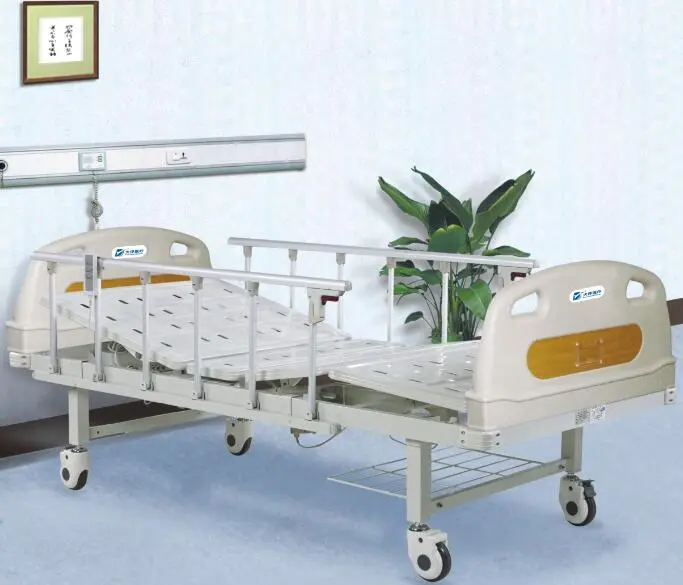
Manual vs. Electric Hospital Beds: What Are the Key Differences?
While both fall under the category of hospital beds, there are distinct differences in user experience and functional configuration.
Manual hospital beds rely primarily on mechanical cranks to adjust the backrest, leg section, and—to some extent—the bed height. Their advantages include simple construction, low procurement costs, ease of maintenance, and independence from a power supply, making them widely used in primary care facilities and general wards.
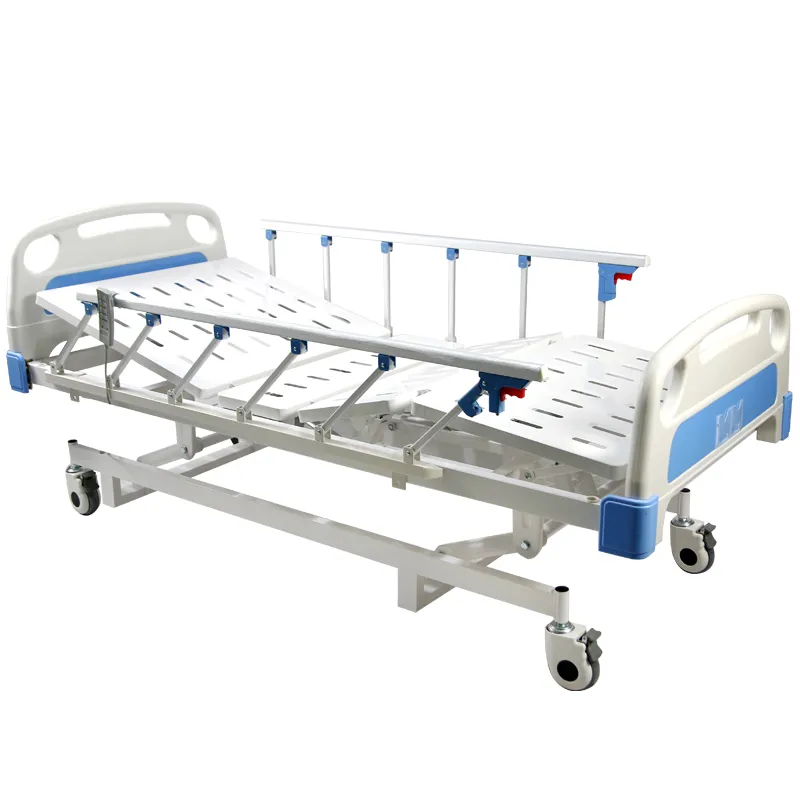
Electric hospital beds, in contrast, utilize motor-driven and electronic control systems for functional adjustments. Patients or caregivers can use control panels to raise or lower the backrest, adjust the leg section, raise or lower the entire bed, and adjust the tilt angle.
In terms of caregiving efficiency, electric hospital beds significantly reduce the physical strain on caregivers. Research data suggests that in intensive care settings, electric beds can cut the workload associated with patient repositioning by approximately 30% to 50%, thereby boosting overall care efficiency.
With the advancement of smart healthcare, an increasing number of hospitals are prioritizing the procurement of electric hospital beds to meet the demand for high-quality care.
Key Components Added to Electric Hospital Beds
Compared to traditional manual hospital beds, electric models incorporate several important additional modules.
First is the motor drive system. The motors power the various lifting and lowering movements, serving as the bed's source of motion.
Second is the control system. This includes devices such as bedside controls, handheld remotes, and nurse control terminals, all of which send commands to the motors.
Additionally, high-end models feature power management systems, battery backups, weighing systems, bed-exit alarm systems, and smart monitoring modules.
Some advanced electric hospital beds can even connect to hospital information systems to enable functions such as patient positioning logs, sleep monitoring, and care data analysis, paving the way for "smart wards."
FAQ
FAQ 1: Which is more suitable for hospital procurement—manual or electric hospital beds?
This depends largely on the hospital's positioning and budget. Primary care hospitals, community clinics, and general wards typically opt for manual hospital beds due to their lower cost and ease of maintenance; conversely, ICUs, premium wards, rehabilitation centers, and elderly care facilities tend to purchase electric hospital beds to enhance care efficiency and the patient experience.
FAQ 2: What is the typical weight capacity of a hospital bed?
Standard hospital beds usually have a safe working load of 200 to 250 kg, while high-end electric models can support 300 to over 450 kg; some specialized beds designed for bariatric patients can even support loads exceeding 500 kg.
FAQ 3: Can electric hospital beds still be used during a power outage?
Most electric hospital beds are equipped with a backup battery system, allowing for basic functional adjustments during power outages. Additionally, some models feature emergency manual override mechanisms to ensure patient safety.
FAQ 4: Are hospital bed side rails mandatory?
Side rails do not need to be raised in every situation; however, for elderly patients, post-operative patients, those with impaired consciousness, and patients at risk of falling, it is recommended to use side rails correctly in accordance with care protocols to enhance safety.
FAQ 5: What is the typical lifespan of an electric hospital bed?
With proper maintenance and correct usage, high-quality electric hospital beds generally have a lifespan of approximately 8 to 15 years. Key components such as motors, controllers, and casters can be replaced based on wear and tear, thereby extending the bed's overall service life.