

Electric hospital beds have become an indispensable piece of equipment in hospital wards. They not only improve patient comfort but also provide efficient and safe nursing support for medical staff. Many purchasing managers and nursing experts when selecting or planning wards ask the same question:
"What are the dimensions of electric hospital beds?"
This question seems simple, but it involves many factors, including standardized design, ward space layout, patient body size adaptation, and the integration of functional modules.
This article will systematically answer all the key questions about the dimensions of electric hospital beds from the perspectives of standard dimensions, functional types, structural differences, and usage scenarios.
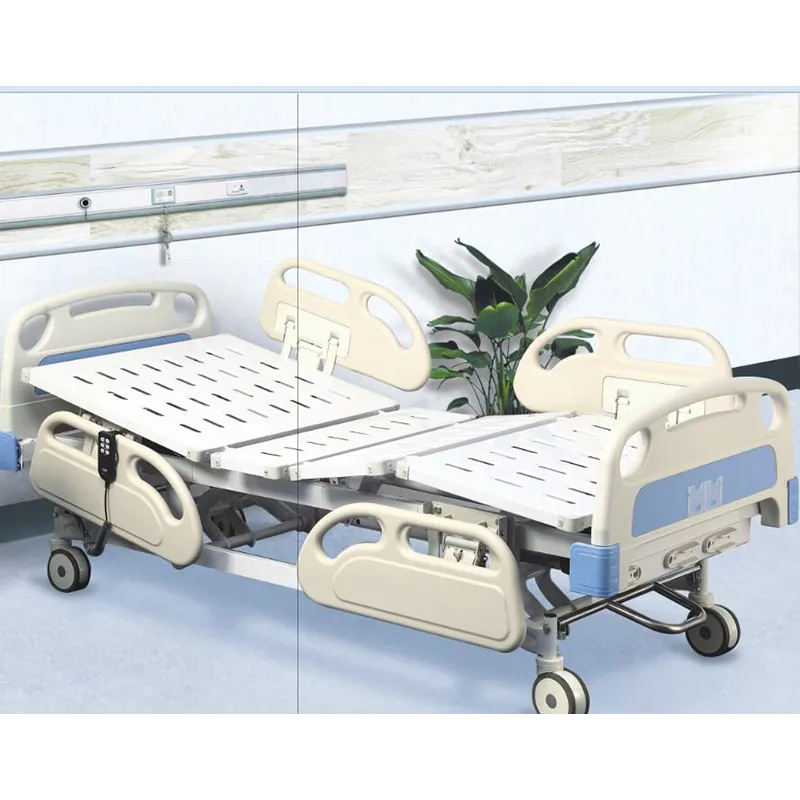
Why is the size design of electric hospital beds so important?
In a medical environment, the hospital bed is not only a platform for patient rest but also a core carrier for medical and nursing operations. The size of the electric hospital bed determines the following key factors:
1. Patient comfort and safety
The size of the electric hospital bed should match the patient's height and weight, providing sufficient support without being too large and affecting movement space.
2. Medical Staff Operating Space
Nursing, intravenous infusion, patient positioning, and emergency care all require sufficient space. Appropriately sized electric hospital beds ensure convenient operation for medical staff.
3. Ward Layout and Passage Efficiency
Hospital wards often accommodate multiple beds simultaneously, and the bed size design must consider both bed spacing and aisle width.
4. Equipment Compatibility
Electric hospital beds often require bedside tables, IV stands, monitor stands, etc., and their size design affects equipment compatibility and installation.
Therefore, the size of electric hospital beds not only affects patient comfort but also directly impacts the overall space planning and nursing efficiency of the hospital.
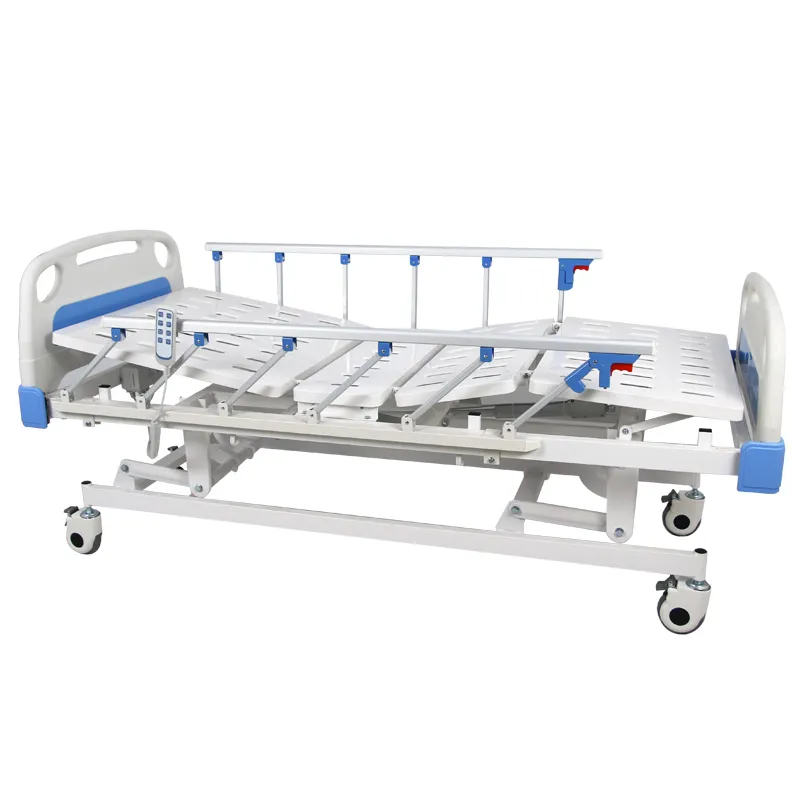
What are the standard dimensions of electric hospital beds?
Globally, the dimensions of electric hospital beds used in hospitals generally follow certain industry standards. Although there may be slight differences between different countries and manufacturers, the overall specifications are relatively similar.
1. Standard Adult Electric Hospital Bed Dimensions
Parameter Category | Standard range | Description |
| Total Length | 2100mm ~ 2250mm | Includes headboard and footboard structure |
Bed Surface Length | 1900mm ~ 2000mm | Parts that actually support the patient's body |
| Total Width | 900mm ~ 1050mm | Includes guardrails or control panel |
| Bed Surface Width | 830mm ~ 950mm | Parts that directly support the patient's body |
| Height Adjustment Range | 400mm ~ 750mm | Motorally adjustable for easy getting in and out of bed and for nursing care procedures |
As can be seen from the above data, a standard hospital electric hospital bed is typically approximately 2.1 meters long, 1 meter wide, and height-adjustable. This size meets the needs of most adult patients and is compatible with various medical mattresses.
2. Extended or Widened Electric Hospital Bed Sizes
For special body types or specific departments (such as orthopedics, ICU), there are also extended models:
• Extended: Length up to 2300mm, suitable for patients taller than 190cm.
• Widened: Width up to 1100mm, providing greater comfort and turning space.
However, extended electric hospital beds require sufficient room space; otherwise, they will affect passage and equipment placement.
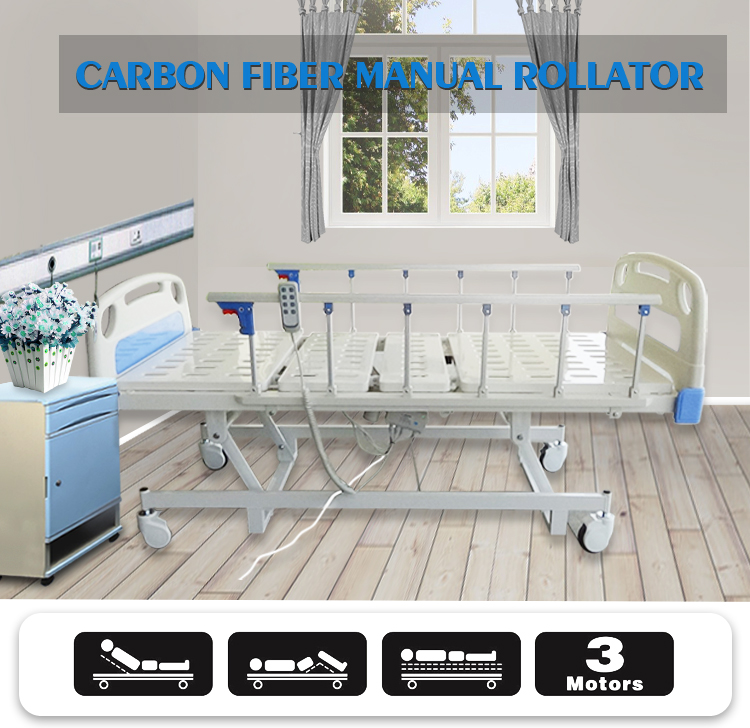
Do different types of electric hospital beds have different sizes?
The answer is—yes.
Electric hospital beds vary slightly in size depending on their purpose, functional configuration, and structural design. Below is a comparison of several common types.
1. Standard Nursing Electric Hospital Bed
This is the most common model, mainly used in general wards or long-term care facilities.
• Length: Approx. 2100mm
• Width: Approx. 950mm
• Height Adjustment: 400mm~700mm
Its structure is relatively compact, facilitating the arrangement of multiple beds.
2. ICU Electric Bed
ICU beds are equipped with more electric modules (such as side-turning, CPR positioning, weighing function, etc.), therefore their overall size is larger.
• Length: 2200mm~2300mm
• Width: 1000mm~1100mm
• Height Adjustment: 400mm~750mm
These electric beds are typically equipped with 360° casters, a removable headboard, and an IV stand.
3. Obstetrics/Rehabilitation Electric Bed
These beds often require multiple adjustable sections, and their structure differs slightly.
• Length: 2000mm~2100mm
• Width: 900mm~950mm
• Width adjustment range is wider (350mm~800mm)
4. Electric Hospital Beds for Children or Pediatrics
To accommodate children's height and safety requirements, their size is significantly reduced.
• Length: 1600mm~1800mm
• Width: 700mm~800mm
• Height adjustment: 400mm~650mm
They are usually equipped with raised guardrails to prevent falls.
In summary:
The size of an electric hospital bed is directly proportional to its functions; the more functions and the more complex the structure, the larger the size is usually.
What is the mattress size for an electric hospital bed?
The mattress size for an electric hospital bed needs to perfectly match the bed surface; otherwise, it will affect the position adjustment and patient safety.
Bed Types | Common mattress sizes (length × width × thickness) |
| Standard Adult Bed | 1900×900×80~100mm |
| Extra Wide Bed | 2000×1000×100mm |
| ICU Bed | 2000×1050×100mm |
| Pediatric Bed | 1700×750×70mm |
Most mattresses are between 80mm and 120mm thick. Mattresses that are too thick may interfere with the adjustment of the guardrail height and backrest angle. Medical mattresses typically use high-density foam or multi-layered structures to provide both support and prevent bedsores.
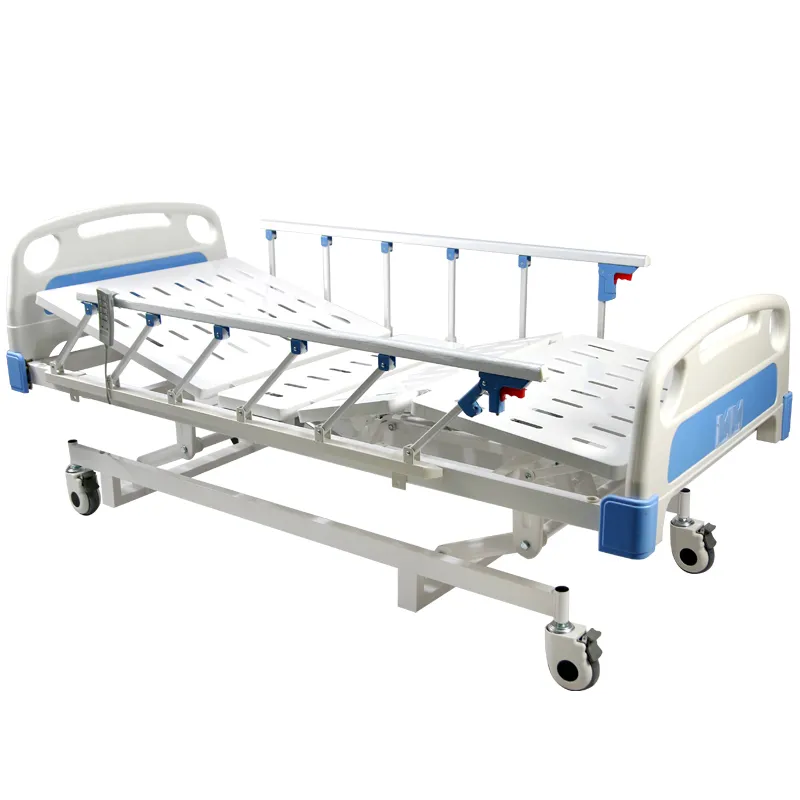
How do the dimensions of electric hospital beds affect ward layout?
The dimensions of electric hospital beds are one of the primary considerations when hospitals plan wards.
1. Bed Spacing and Aisle Space
According to medical building design codes:
• Minimum clear distance between beds: ≥900mm
• Aisle width at the foot of the bed: ≥1200mm
Therefore, if the width of the electric hospital bed is 1000mm, the minimum width of a double-bed room should be approximately 3 meters to ensure passage for medical staff and placement of equipment.
2. Impact of Electric Hospital Bed Height on Nursing Care
The electric height adjustment range allows medical staff to provide care at different heights, avoiding lumbar strain.
For example:
• The bed surface is lowered to 400mm when the patient gets in or out;
• It is raised to over 700mm during nursing care.
Appropriate height adjustment not only improves comfort but also optimizes nursing efficiency.
Can the dimensions of electric hospital beds be customized?
In the medical device industry, the size of electric hospital beds can be customized to meet specific needs, but must adhere to medical safety standards.
Common customization scenarios include:
• For patients with special body types (e.g., beds for obese patients)
• Wider than 1200mm
• Reinforced bed frame and motor load
• Special departmental uses (e.g., pre- and post-operative care)
• Extended bed surface length
• Added accessory interfaces
• Special space environments (e.g., ambulances or rehabilitation facilities)
• Shortened length or folding structure
However, customized electric hospital beds are generally more expensive and have longer delivery times, and it is essential to ensure they still comply with national medical device standards.
What are the differences in electric hospital bed size standards across different countries?
1. Chinese Standards
The commonly used electric hospital bed size in Chinese hospitals is approximately L2100×W960×H450~750mm, offering strong compatibility and adaptability to most ward designs.
2. European and American Standards
European and American medical institutions generally have larger beds, resulting in wider beds:
• US Standard: Approximately L2180×W1050×H400~760mm
• European Standard (EN60601-2-52): Approximately L2200×W1020mm
3. Asian Regions (Japan, South Korea)
The beds in these regions prioritize compactness, making them suitable for small wards:
• Average width is less than 900mm, and length is approximately 2000mm.
Therefore, if a hospital plans to import electric hospital beds, it should consider the differences in size standards to ensure compatibility with the ward structure.
The Relationship Between Electric Hospital Bed Size and Load-Bearing Capacity
The size design of electric hospital beds not only determines their space adaptability but also affects their load-bearing capacity.
The general guidelines are as follows:
• Standard electric hospital bed: Maximum load capacity 170-200kg;
• Widened and reinforced type: Up to 250-300kg;
• ICU-specific type: Some models can support over 350kg.
Larger size and thicker structure provide stronger support. However, this also means increased bed weight and motor power, slightly increasing the difficulty of transportation and installation.
How to choose the right electric hospital bed based on its size?
When choosing an electric hospital bed, in addition to functional configuration, size matching is equally crucial. Here are some purchasing recommendations:
1. Based on Ward Size
• Recommended bed width for single wards: 950~1000mm
• Recommended bed width for double wards: 900mm
• Recommended bed width for ICU single rooms: 1000~1100mm
2. Based on Patient Size
• Standard size for adults (2000×900mm)
• For larger patients, a wider size (2000×1050mm) is recommended.
3. Based on Nursing Needs
• For frequent maneuvers (ICU, rehabilitation wards), a model with a wider height adjustment range is recommended.
4. Based on Space Layout
• Ensure sufficient spacing between beds and aisles to avoid crowding and obstructing the passage of emergency trolleys.
Why should buyers choose Dayang Medical as their supplier?
Buyers choose Dayang Medical because we are both a manufacturer and a trusted supplier that integrates R&D, production and sales. Our approach prioritizes quality — we follow the 100-1=0 quality principle — and we invest continuously in electric product development and personalized high-end designs. .
For purchasing managers seeking factory-direct pricing, wholesale discounts or customized branding and OEM solutions from China, Dayang provides fair quotes, transparent pricing and professional after-sales support.