

In medical care, rehabilitation care, and long-term bedridden care scenarios, "how to safely, stably, and with low burden complete patient transfer" is always a core issue that cannot be avoided. Whether in hospital wards, nursing homes, or home care environments, every movement of a patient from bed to wheelchair, from wheelchair to toilet, or from bed to examination table carries significant safety risks.
Therefore, specialized patient transfer devices have emerged. So, what are these devices called? There isn't a single answer, but they mainly fall into two categories: patient lifter and patient transfer chair.
These two types of devices differ in their structure, working principle, and applicable scenarios, but their common goal is to reduce nursing risks, improve transfer efficiency, and protect the safety of both patients and caregivers.
This article will provide a systematic, in-depth, and professional analysis of "patient lifter" and "patient transfer chair," helping readers comprehensively understand these devices from multiple dimensions, including concepts, types, functions, and applicable targets.
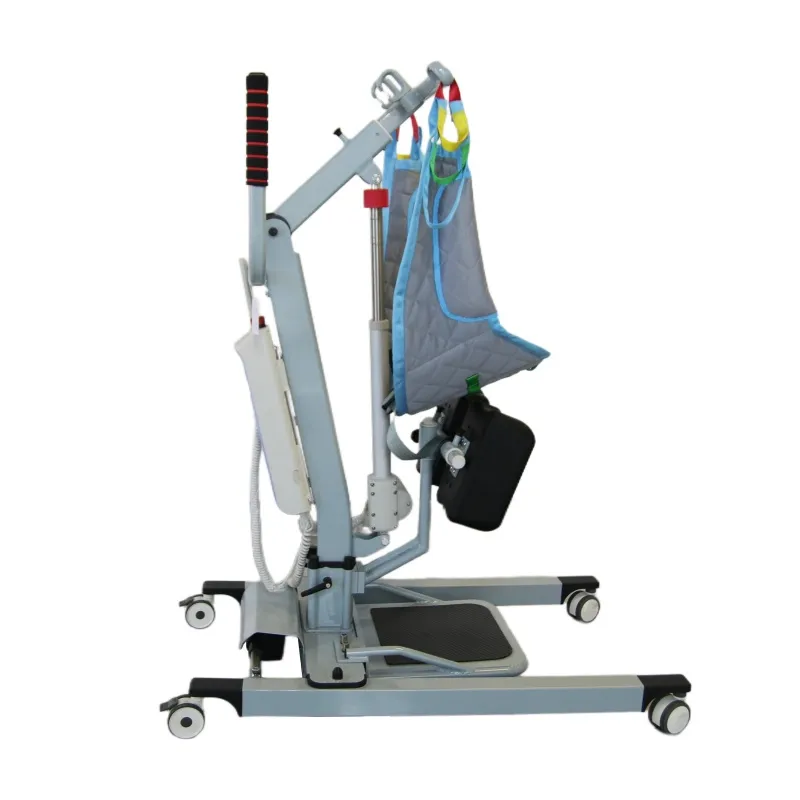
What is a patient lifter?
A patient lifter, or "patient hoist," is a specialized nursing device that uses mechanical or electric means to vertically lift and transfer patients.
Essentially, the core function of a patient lifter is not "pushing the patient around," but rather safely lifting the patient from one plane and smoothly placing them on another. This type of device plays an irreplaceable role when dealing with patients who are completely or severely immobile.
In the medical and nursing industry, the keyword "patient lifter" usually specifically refers to a sling-type patient lifter.
Is a patient lifter always a sling-type?
According to the mainstream definition, the answer is: yes, most patient lifters use a sling-type structure.
Basic Structure of a Sling-Type Patient Lifter
A typical patient lifter usually consists of the following parts:
• Main frame and base: Provides overall stability
• Lifting mechanism: Manual hydraulic or electric lifting
• Lifting arm: Supports the patient's weight
• Sling: Wraps and supports the patient's body
• Casters system: Facilitates short-distance movement
The patient lifter supports the patient's body with the sling, and then uses the lifting mechanism to complete the entire process of lifting, transferring, and lowering. This method can complete the transfer without the patient's active cooperation, making it particularly suitable for patients with severe care needs.
Who are patient lifters primarily suitable for?
Patient lifters are generally suitable for the following groups:
• Patients who have completely or nearly completely lost the ability to stand
• Patients who are bedridden for extended periods and unable to turn over or sit up independently
• Patients who require strict activity restriction in the early postoperative period
• Patients with severe neurological or muscular dysfunction
In these cases, manual assistance is not only dangerous but also highly likely to cause back injuries to caregivers. Therefore, patient lifters are considered an indispensable basic piece of equipment in a professional nursing care system.
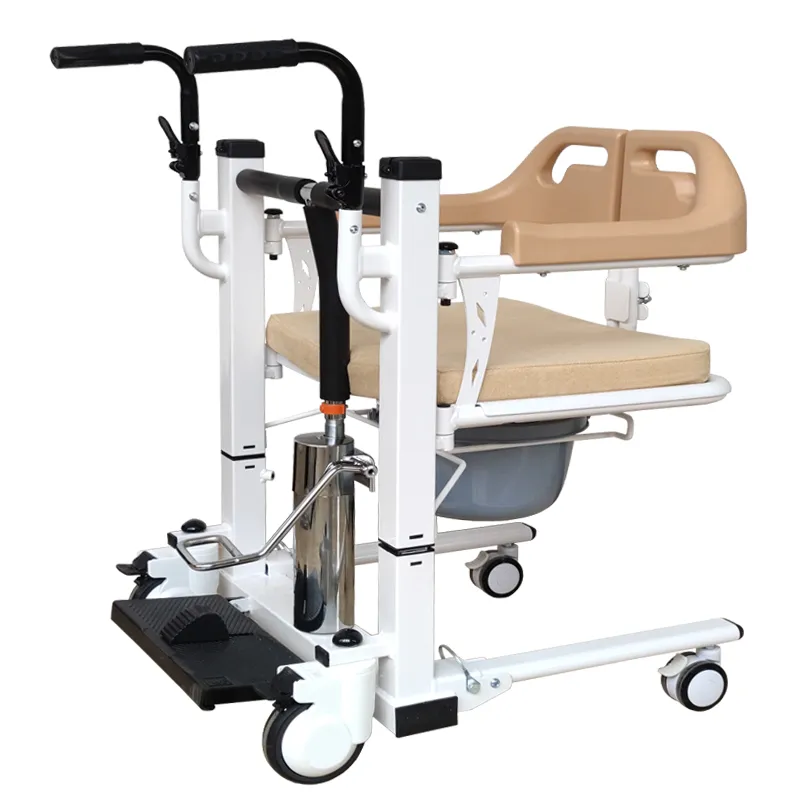
What is a patient transfer chair?
Unlike a patient lifter, a patient transfer chair is a transfer device based on the core concept of "sitting transfer."
A patient transfer chair typically presents as a height-adjustable, unfoldable, and pushable chair structure, primarily used to assist patients in:
• Bed ↔ Wheelchair
• Wheelchair ↔ Toilet
• Bed ↔ Shower chair
• Bed ↔ Examination equipment
In daily nursing environments, patient transfer chairs are used very frequently, especially for patients who still have some ability to sit or stand.
What is the difference between a patient transfer chair and a regular wheelchair?
This is a frequently asked question on search engines.
The core difference lies in "functional positioning."
The core function of a regular wheelchair is mobility and movement, while the core function of a patient transfer chair is transfer and transition.
Patient transfer chairs typically possess the following key features:
• Separable or openable seat for easy alignment with the bed edge
• Height adjustable to match the bed, toilet, etc.
• Designed for short-distance movement, not for prolonged walking
• Emphasis on stability and safety
Therefore, a patient transfer chair is not a substitute for a wheelchair, but rather a nursing device specifically designed for patient transfer.
Is a patient transfer chair a type of patient transfer equipment?
The answer is: Yes, but it belongs to a different technological approach to patient transfer equipment.
Broadly speaking, any equipment whose primary purpose is to assist patients in spatial repositioning can be categorized as "patient transfer equipment." Within this classification system:
• Patient lifter: Primarily uses a sling for lifting and lowering
• Patient transfer chair: Primarily uses seated lifting and pushing
The two are not interchangeable, but rather provide different solutions for patients with different physical conditions.
What are the core differences between a sling-type patient lifter and a seated patient transfer chair?
1. Different Requirements for Patient Physical Ability
• Patient lifter: Requires almost no active patient cooperation.
• Patient transfer chair: Usually requires the patient to be able to sit or stand briefly.
2. Different Transfer Methods
• Patient lifter: Suspended vertical transfer.
• Patient transfer chair: Sitting-standing horizontal transfer with height adjustment.
3. Different Usage Scenarios
• Patient lifter: Primarily used for critical care and long-term bedridden patients.
• Patient transfer chair: Primarily used for high-frequency transfer scenarios in daily care.
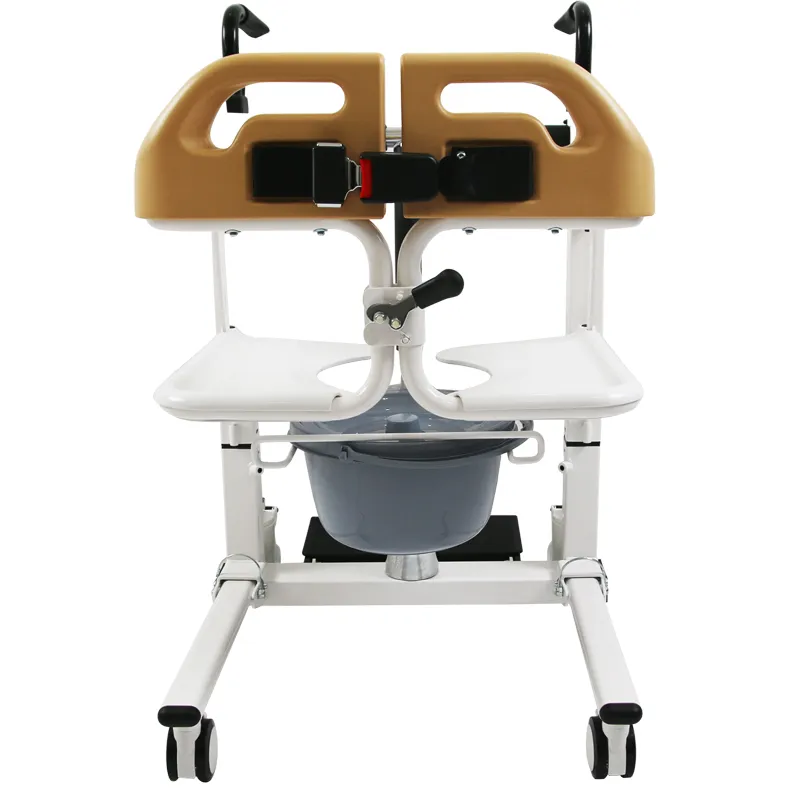
Why is it necessary to understand both patient lifters and patient transfer chairs in professional nursing?
In the nursing system, a patient's physical condition is often dynamic. The same patient may require different types of transfer equipment at different stages.
• When the patient is completely unable to cooperate, a patient lifter is safer.
• When the patient has some ability to sit or stand, a patient transfer chair is more efficient.
Therefore, understanding the differences between patient lifters and patient transfer chairs helps to construct a more scientific and safer nursing equipment configuration plan.
What is the significance of patient lifters and patient transfer chairs in nursing safety?
Both patient lifters and patient transfer chairs share core values in three aspects:
1. Reducing the risk of falls and secondary injuries
2. Reducing physical exertion and occupational injuries for nursing staff
3. Improving the controllability and stability of the transfer process
In modern nursing philosophy, safe patient transfer is considered a crucial component of quality care, and patient lifters and patient transfer chairs are key embodiments of this philosophy.
How to understand "equipment used for patient transfer" from a professional perspective?
From the perspective of professional nursing equipment classification:
• Patient lifter: Emphasizes "lifting and lowering"
• Patient transfer chair: Emphasizes "seated transition and short-distance transfer"
Both constitute the core components of the patient transfer equipment system. Understanding this will help obtain a more accurate and comprehensive answer when searching for "what is the equipment used for patient transfer called?"
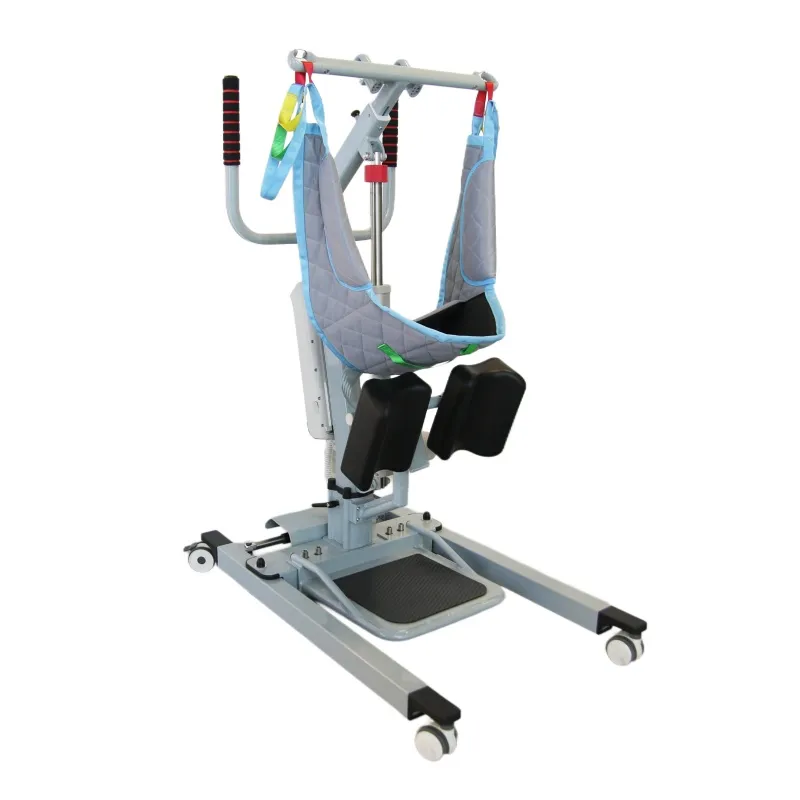
What is the equipment used for patient transfer called?
Equipment used for patient transfer is usually called a patient lifter or patient transfer chair.
Among them:
• Patient lifter mainly refers to a sling-type patient lifter
• Patient transfer chair mainly refers to a seated patient transfer chair
They serve different nursing needs with different structural forms, but their common goal remains the same—to make patient transfers safer and the nursing process more efficient.
Are Dayang Medical products compatible with international standards?
Yes, all our products are designed and tested to meet international safety, CE, FDA, and ISO standards. Buyers who purchase from our factory can confidently sell products in regulated markets worldwide. With factory quotes, low-price purchasing, and wholesale promotions, clients can access high-quality medical equipment at competitive costs.
This compliance makes Dayang Medical a trusted manufacturer and supplier for global distributors, hospitals, and brands.