

As people age, one of the most common physical changes seniors face is a decline in balance and lower limb strength. This can lead to instability, fatigue, or fear of falling while walking.
To maintain independence in daily activities, many seniors choose to use walking sticks or 4-wheeled rollator walkers to assist walking.
However, a key question remains:
Should seniors use walking sticks or assistive vehicles? Which is safer and more suitable?
This article will systematically analyze the functional differences, suitable user groups, advantages, and precautions of walking sticks and 4-wheeled rollators from a professional nursing and rehabilitation perspective.
Why Do Seniors Need Walking Assistive Devices?
The main reason seniors need walking sticks or 4-wheeled rollators is due to the natural decline in bodily functions and the degeneration of the motor system.
1. Decreased Balance
As nerve reaction speed slows down, seniors experience reduced body coordination, making them prone to swaying when standing and walking.
Walking assistive devices provide additional support points to help seniors maintain stability.
2. Weakened Lower Limb Strength
Deteriorating leg muscle strength makes it difficult for older adults to walk for extended periods, especially when going up or down slopes or stairs, leading to fatigue.
In this case, a walking stick or 4-wheeled rollator walker can reduce the burden.
3. Preventing Falls
Falls are a common and dangerous accident among older adults. Using assistive devices can effectively reduce the probability of falls.
4. Maintaining Independence
For many older adults, walking sticks and 4-wheeled rollator walkers are not only walking tools but also important supports for maintaining autonomy and self-esteem.
What are the differences between a walking stick and a 4-wheeled rollator?
When choosing walking aids, the design and function of walking sticks and 4-wheeled rollator walkers differ significantly:
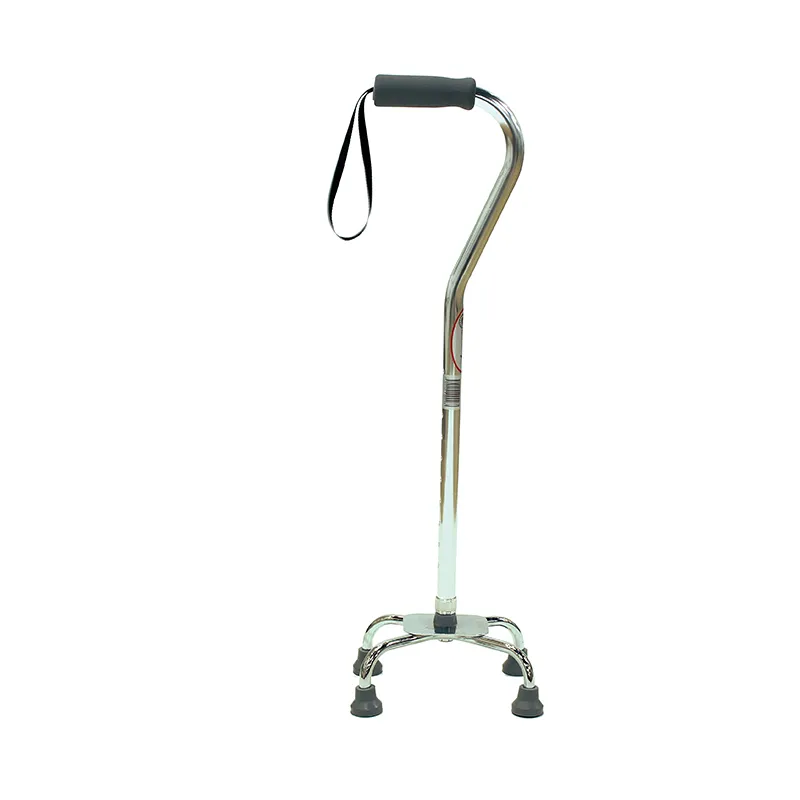
Walking sticks are mostly single-point support (though three- or four-legged versions are also available), with generally lower stability. They are lightweight and portable, providing only basic support, and are less expensive, suitable for people with good balance and only slight instability.
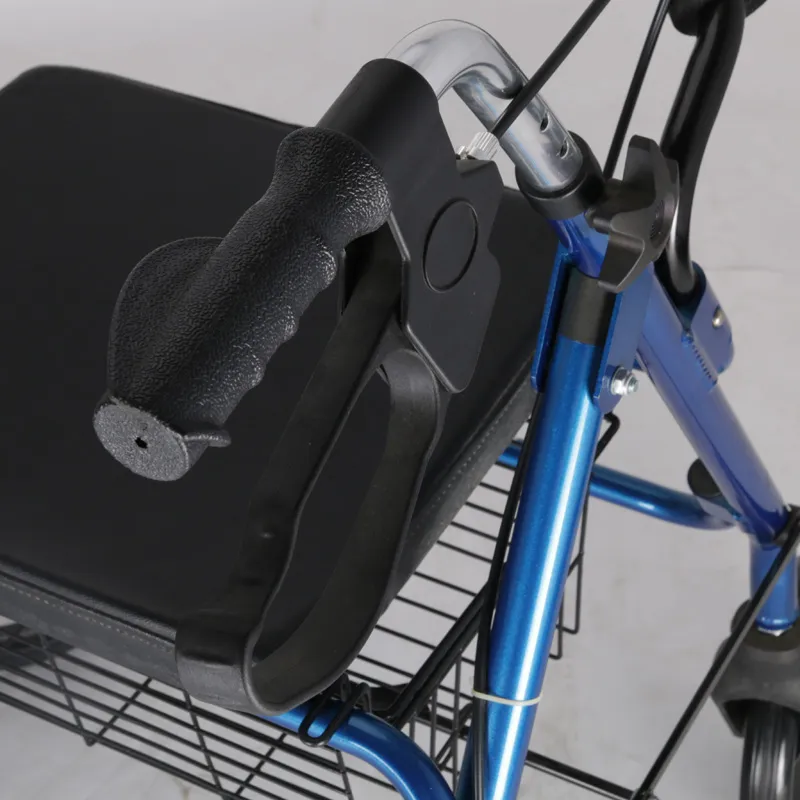
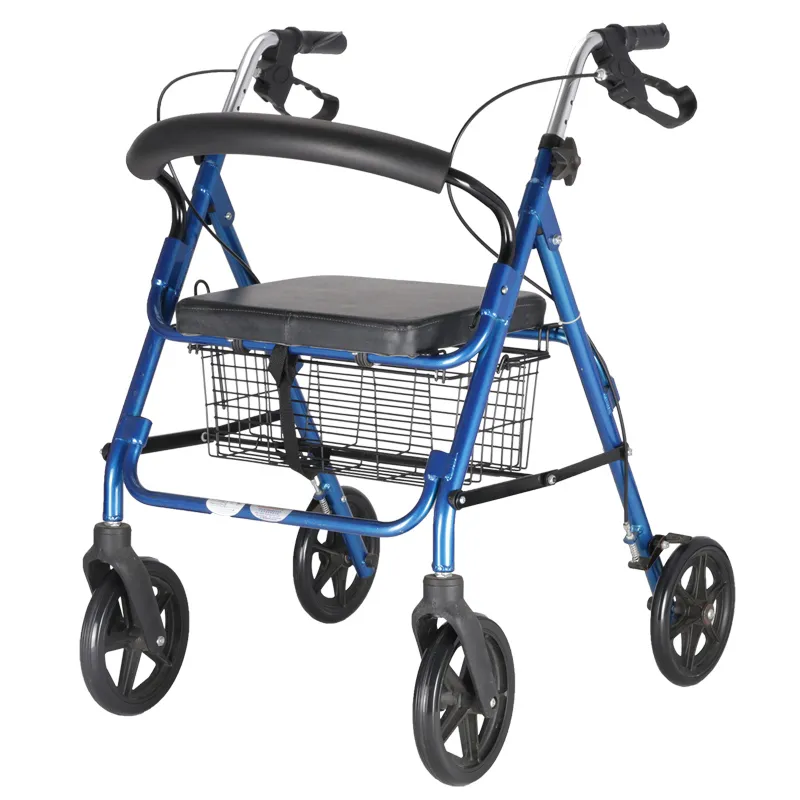
Four-wheeled walkers provide all-around support through their four wheels, offering exceptional stability. While larger, they are sturdier and often include features like a seat, basket, and brakes. They are more expensive and better suited for individuals with poor balance, prone to falls, or requiring prolonged support.
Overall, walking sticks are considered basic support tools, while 4-wheeled rollators are multi-functional, stable support devices.
When should you use a walking stick?
1. Elderly individuals with relatively good balance but occasional instability
If an elderly person only experiences slight instability or leg weakness occasionally while walking, a walking stick can provide adequate support without affecting their natural gait.
2. Early rehabilitation and mild gait disturbances
For patients recovering from surgery or with mild arthritis, using a walking stick can help distribute body weight and reduce the burden on the lower limbs.
3. Need for lightweight, short-term support
Walking sticks are small and lightweight, making them ideal for short-distance use, such as at home, indoors, or on flat surfaces.
4. Convenient to Carry When Out and About
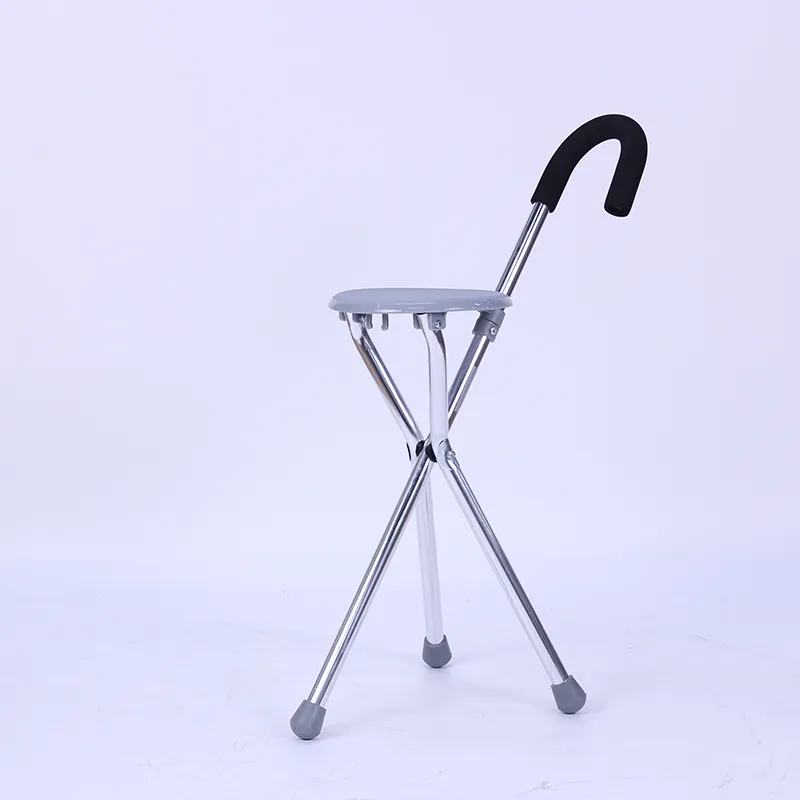
Walking sticks are foldable and height-adjustable, making them easy for seniors to carry when shopping or going to the doctor.
In summary: Walking sticks are more suitable for seniors who can walk independently but occasionally need support. Their advantages lie in portability and simplicity.
When Should You Choose a 4-Wheeled Roller?
1. Seniors with poor balance or prone to falls
For seniors with weak lower limbs or suffering from Parkinson's disease or cerebrovascular diseases, a 4-wheeled roller provides a larger stable support surface, preventing falls.
2. Seniors Who Walk Longer Distances
4-wheeled rollers come with a built-in seat, allowing seniors to sit down and rest when tired, extending their activity time.
3. Seniors Who Need to Carry Items
Walking sticks with storage baskets or trays can help seniors store personal items such as water bottles, medications, and mobile phones, freeing up their hands.
4. Spacious Homes
Due to the larger size of 4-wheeled rollators, they are suitable for use in spacious environments such as communities, courtyards, and parks. Use in confined spaces is not recommended.
Summary: 4-wheeled rollator walkers are more suitable for elderly people with weaker balance, unstable walking, and who require stable support and rest.
Comparison of Advantages and Disadvantages of Walking Sticks and 4-wheeled Rollators
1. Advantages of Walking Sticks
• Lightweight and portable: Can be carried easily, convenient for going out or climbing stairs.
• Affordable: Lower cost, suitable for short-term or assistive use.
• Simple operation: No adjustment or braking system required, low barrier to entry.
• Enhanced sense of security: Provides immediate support in cases of slight instability.
2. Disadvantages of Walking Sticks
• Limited stability, provides only single-point support;
• Cannot support the entire body weight;
• Prolonged use can lead to shoulder fatigue;
• Not suitable for elderly people with severe mobility impairments.
3. Advantages of a 4-wheeled rollator
• High stability: The four-wheel structure provides all-around support, making it less prone to tipping over.
• Can be used while sitting or walking: The built-in seat design allows seniors to easily switch between walking and resting.
• Equipped with a braking system: Enhances safety control when going downhill or stopping.
• Includes storage function: The basket design makes it more convenient for seniors to go out.
• Adjustable height: The handle can be adjusted according to height to maintain a correct posture.
4. Disadvantages of a 4-wheeled rollator walker
• Large size, inconvenient to carry;
• Not suitable for narrow spaces or stairwells;
• Higher price;
• First-time users need time to adapt to the braking and control system.
How to determine which type to choose for seniors?
The choice between a walking stick and a 4-wheeled rollator walker should be based on a comprehensive assessment of the senior's physical condition, living environment, and daily activity needs.
If the senior has only slight instability and is basically independent, a walking stick is sufficient.
For elderly individuals with poor balance, unsteady gait, or who require frequent rest, a 4-wheeled rollator is recommended.
Precautions for Using Walking Sticks and 4-Wheeled Rollator Walkers
1. Adjust to the appropriate height
Whether it's a walking stick or a scooter, the height must match the elderly person's height.
Ideally, the elderly person's arm should hang naturally, with their elbow slightly bent at approximately 15 degrees when gripping the handle.
2. Check anti-slip parts
Regularly check the anti-slip pads on the bottom of the walking stick and the tires of the scooter to prevent wear and tear that could lead to instability.
3. Correct usage sequence
The walking stick should always be placed on the side opposite to the injured or weaker leg; when using the scooter, maintain balance with both hands to prevent pushing it too far.
4. Slow turning and braking
Carefully turn the 4-wheeled rollator walker in confined spaces to avoid tipping over; always use the handbrake to secure it when stopped.
5. Keep the equipment clean
Regularly wipe down the device, check for loose screws, and lubricate joint components to ensure safety and comfort.
Regarding Psychological Considerations
Many seniors refuse to use walking sticks or 4-wheeled rollator walkers, not because they lack understanding, but because of psychological resistance.
They worry about being labeled "weak" or are afraid of becoming dependent on the devices.
In reality, using a walking stick or rollator is not a sign of weakness, but rather an embodiment of scientific protection and an active lifestyle.
Choosing appropriate assistive devices allows seniors to step out of their homes and participate in social activities, which can actually slow physical decline and boost self-confidence.
Should Seniors Choose Walking Sticks or Rollers?
In summary:
• Walking sticks are suitable for seniors with relatively good balance and stable walking, but who occasionally need support.
• 4-wheeled rollators are suitable for seniors with poor balance, prone to falls, or who need prolonged support and rest.
Regardless of the choice, the goal is the same—to enable seniors to live more safely, independently, and with greater dignity.
Correctly selecting and scientifically using walking aids, not only reduces the risk of falls but also improves the quality of life and psychological well-being of seniors.