

With an aging population and increasing rehabilitation needs, Rollator Walkers and Walking Frames have become essential mobility aids for many seniors, post-operative recoveries, and people with mobility impairments.
While similar in appearance and related in function, they differ significantly in usage, support stability, and target audience.
Many people wonder before purchasing: "What are the differences between a Rollator Walker and a Walking Frame? Which one is right for me?"
This article will comprehensively analyze the differences between the two devices from the perspectives of structure, function, intended use, and target audience, helping you scientifically determine which one best suits your individual needs.
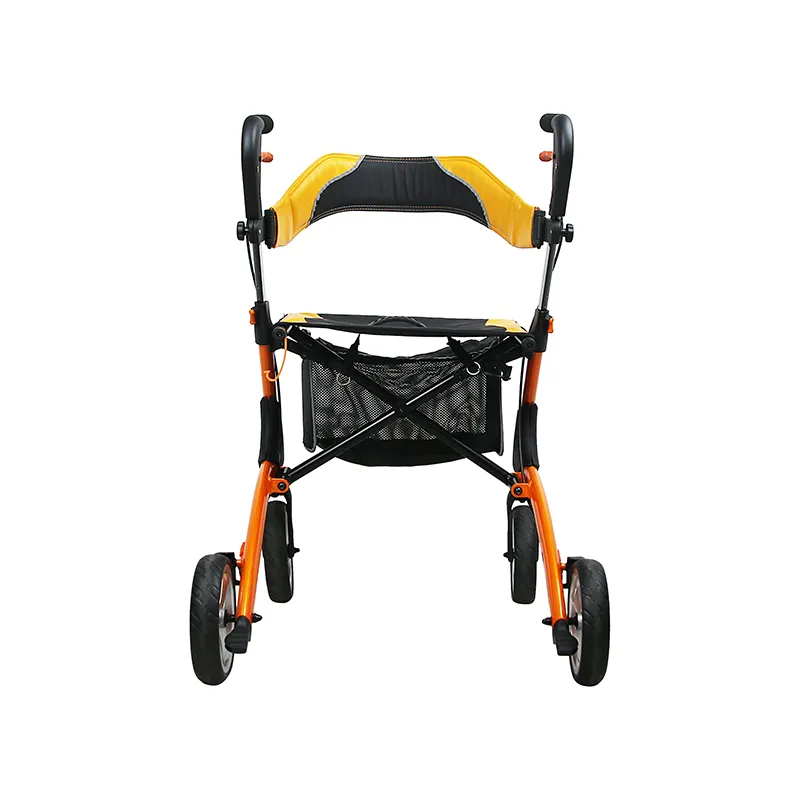
What are the differences between a Rollator Walker and a Walking Frame?
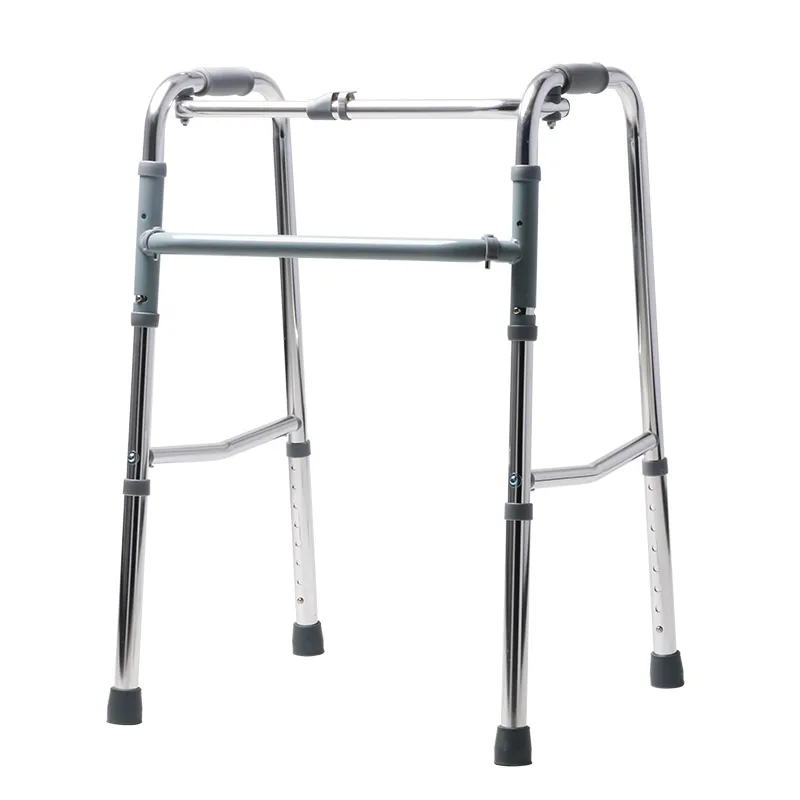
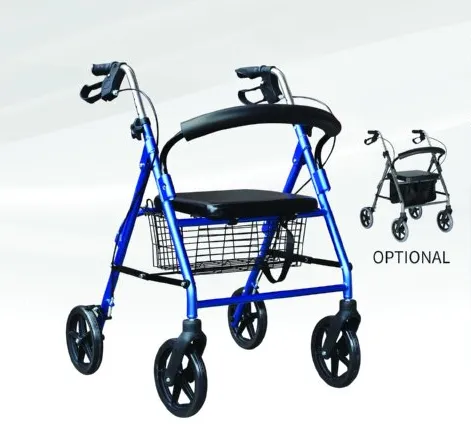
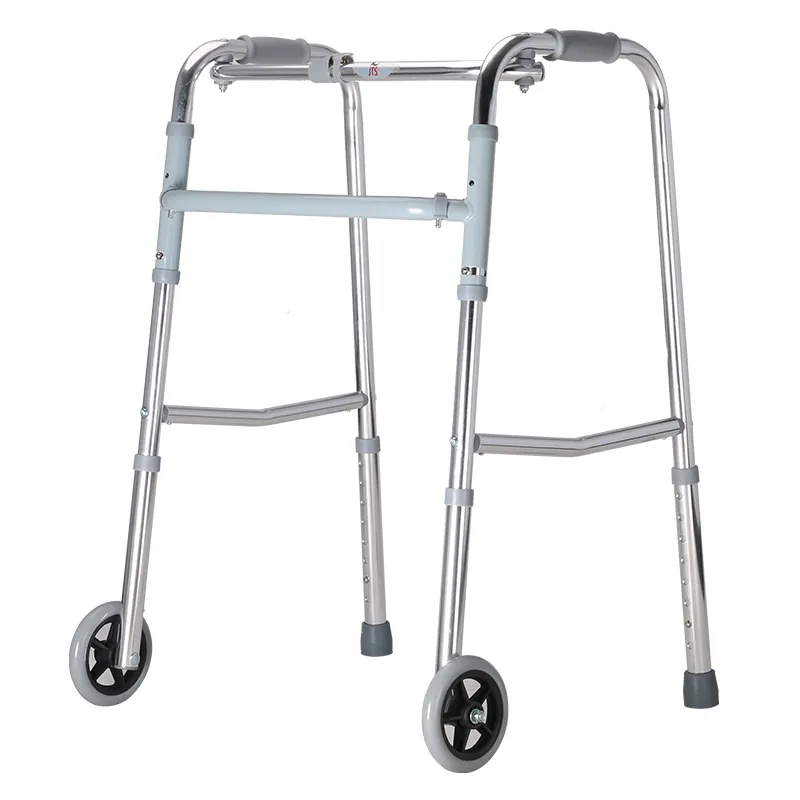
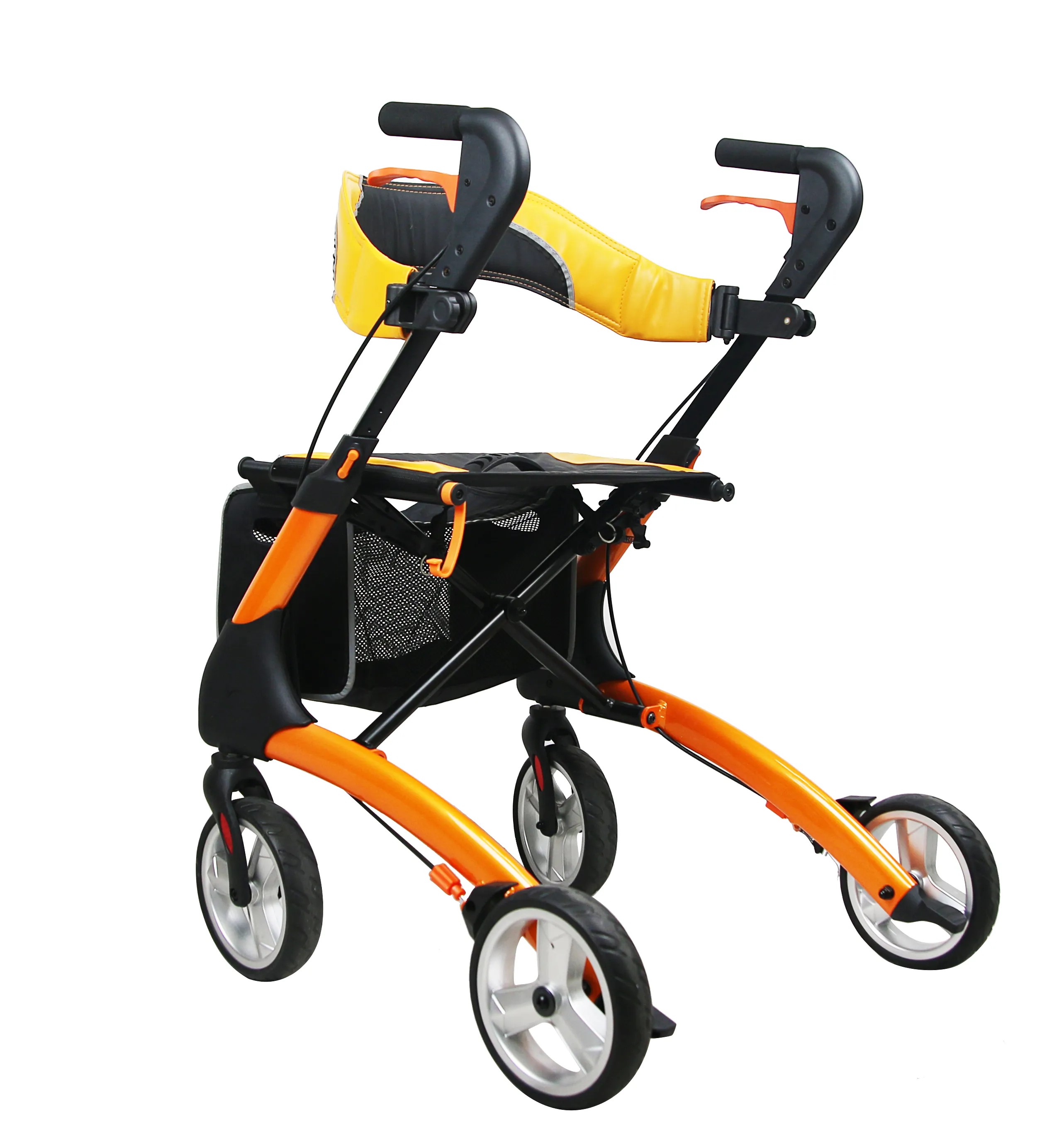
A Walking Frame is a wheelless or two-front-wheeled stable walking aid, typically constructed of metal, providing support and balance while walking. A Rollator Walker, on the other hand, usually features four wheels, a handbrake system, and a seat, enabling smoother and easier movement.
Project | Walking Frame | Rollator Walker |
| Number of wheels | No wheels or two wheels | Four wheels |
| Stability | High, stable support | Slightly lower than the Walking Frame |
| Mobility method | Lift, lower, move forward | For pushing and rolling |
| Target audience | Suitable for those with poor balance or weak physical strength | Suitable for those with strong walking ability |
| Whether it can be sat on | Not suitable for sitting | For temporary rest |
| Suitable scenarios | Indoors, on flat ground | Outdoors, long distances |
The Walking Frame is characterized by stability and safety; the Rollator Walker's advantage lies in ease and effortlessness. Therefore, the choice between these products depends primarily on an individual's physical condition and balance ability.
Who is the Walking Frame suitable for? Why is it more stable?
The Walking Frame is designed to "provide maximum stability," making it particularly suitable for the following groups:
• Post-operative recovery patients: Such as patients who have undergone hip or knee surgery, whose bodies have not fully recovered and whose gait is unstable. The Walking Frame provides solid support.
• Elderly individuals with poor balance: Older adults experience decreased muscle strength and reduced center of gravity control; the Walking Frame reduces the risk of falls.
• Individuals with insufficient lower limb strength: The Walking Frame can support more weight, helping users move slowly.
• Stroke patients and those with neurological disorders: They require extremely high stability support to prevent falls.
The advantage of the Walking Frame is that all four feet are in full contact with the ground, without relying on wheels for movement, thus providing extremely high stability.
During start-up, stopping, and turning, the Walking Frame provides continuous support, preventing inertial slippage and maximizing user safety.
Who is the Rollator Walker suitable for? Why is it easier?
Compared to the Walking Frame, the Rollator Walker is more suitable for people with stronger walking abilities who require mild assistance.
For example:
• People with mild gait instability: Still able to walk independently but wanting balance support.
• Elderly people with slow movement but still good physical condition: The Rollator Walker allows them to walk further and more easily.
• People with chronic arthritis or back pain: The Rollator Walker can help distribute body weight.
• People who need outdoor activities: The Rollator Walker is often equipped with a seat and basket, allowing users to rest or place items during walks.
The Rollator Walker's wheels make pushing easier, eliminating the need to lift the device with every step; and the braked structure allows for speed control at any time, preventing accidental slippage.
However, its stability is relatively weak, especially on slopes or uneven ground, requiring users to have a certain level of balance and reaction ability.
Which is safer, a Rollator Walker or a Walking Frame?
Safety depends on the balance between "equipment stability" and "user control ability."
In most cases:
• A Walking Frame is safer because it doesn't roll on its own and has a wider support surface. It's the preferred choice for those with severe balance problems.
• A Rollator Walker is less safe, but users with good coordination can still operate it safely as long as they master the use of the brakes.
It's important to note that if users cannot control the speed or brakes of a Rollator Walker well, they are more likely to slip and fall.
Therefore, the key to safety is not the equipment itself, but whether the choice matches the user's ability.
How to determine if a Rollator Walker or a Walking Frame is right for you?
The main criteria include the following:
1. How is your balance?
If you are unsteady on your feet and easily lose your balance, a Walking Frame should be the first choice.
If you have good balance and only need auxiliary support, the Rollator Walker is a good choice.
2. Do you have enough hand strength?
Walking Frames require frequent lifting and forward movement, so they require more upper body strength.
Rollator Walkers primarily rely on pushing and rolling, requiring less arm strength.
3. Where should you use it?
Walking Frames are more suitable for narrow indoor spaces (such as bedrooms and hallways).
Rollator Walkers are more suitable for outdoor activities or long-distance walking.
4. Do you need a resting seat?
Rollator Walkers are more suitable if you want to be able to sit down and rest at any time.
Lightweight Walking Frames are suitable if you only need to be active for short periods.
5. Medical advice
An assessment by a doctor or rehabilitation therapist is crucial. They can recommend a more suitable product based on data such as gait, muscle strength, and balance.
Which is easier to carry and store, the Rollator Walker or the Walking Frame?
From a structural and portability perspective:
• Walking Frames have a simple, foldable, and lightweight design, typically weighing 2-4 kg, making them easy to move and store indoors.
• RollatorWalkers have a more complex design, including brakes, wheels, and a seat, generally weighing 6-10 kg, but most models can also be folded for storage.
If your primary use case is short-distance, indoor activities, a Walking Frame is more flexible and convenient; if you need to go out for walks, shopping, or rehabilitation training, the comfort and storage features of a Rollator Walker offer greater convenience.
Is a Rollator Walker more likely to cause falls than a Walking Frame?
This is a concern for many first-time buyers.
In reality, the claim that Rollator Walkers are "more likely to cause falls" is not absolute, but depends on usage:
• Improper use of the brakes can cause the Rollator Walker to slip on slopes or downhill;
• If the user's center of gravity is too forward, they are prone to losing balance;
• On uneven or slippery surfaces, the wheels may slip.
In contrast, the Walking Frame, with its four feet on the ground and no wheels, virtually eliminates the problem of inertial slippage.
Therefore, if the user cannot react quickly or coordinate handbrake operation, the Walking Frame is safer.
However, with proper technique, the Rollator Walker remains a stable and reliable assistive tool.
From a price and maintenance perspective, which is more cost-effective: the Rollator Walker or the Walking Frame?
• Walking Frame: Simple structure, lower price, and almost zero maintenance costs; only periodic checks of rubber foot pad wear are required.
• Rollator Walker: Complex structure with more components, such as wheelsets, brake cables, and a seat; requires regular inspection and maintenance, and is generally more expensive.
If you have a limited budget or only need short-term use, the Walking Frame is an economical choice; if comfort is prioritized and outdoor activities are frequent, the Rollator Walker offers greater added value.
Can the Walking Frame completely replace the Rollator Walker?
The answer is no.
While both Walking Frames and Rollator Walkers fall under the category of "walking assistive devices," their functions differ:
• Walking Frames are assistive tools for the "early stages of rehabilitation," used to restore stable walking ability;
• Rollator Walkers are assistive tools for the "mid-to-late stages of rehabilitation," helping to extend walking distance.
Therefore, they are not substitutes for each other, but rather products for different stages of the rehabilitation process.
For many, using a Walking Frame to restore balance first, and then transitioning to a Rollator Walker, is a natural rehabilitation path.
Rollator Walker or Walking Frame: Which Should You Choose?
Usage Objectives | Recommended Equipment |
| For those seeking maximum stability and safety | Walking Frame |
| For those desiring easy walking and outdoor activities | Rollator Walker |
| For post-operative recovery and those with poor balance | Walking Frame |
| For those who can walk independently but tire easily | Rollator Walker |
| For those with limited budgets and short usage periods | Walking Frame |
| For long-term use and those prioritizing comfort | Rollator Walker |
In short, if you are in the early stages of rehabilitation, have poor balance, and move slowly, a Walking Frame is safer and more reliable;
If you can walk independently but want more effortless and freer movement, a Rollator Walker is more comfortable and convenient.
The correct choice depends on your physical condition, living environment, and activity needs, and it is recommended to select a device under the guidance of a doctor or rehabilitation therapist.
What pricing strategies and discounts does Dayang provide to bulk purchasers?
Dayang’s pricing strategy is built to support a range of buyers — from single-unit retail customers to large institutional purchasers. We provide competitive, low-price factory quotes for bulk orders and can offer tiered discounts based on order volume, repeat business and contract length. Promotional pricing and seasonal discounts are periodically available for distributors and wholesalers.
Request a formal quote and we will outline price breaks, lead times and any promotions applicable to your order.