

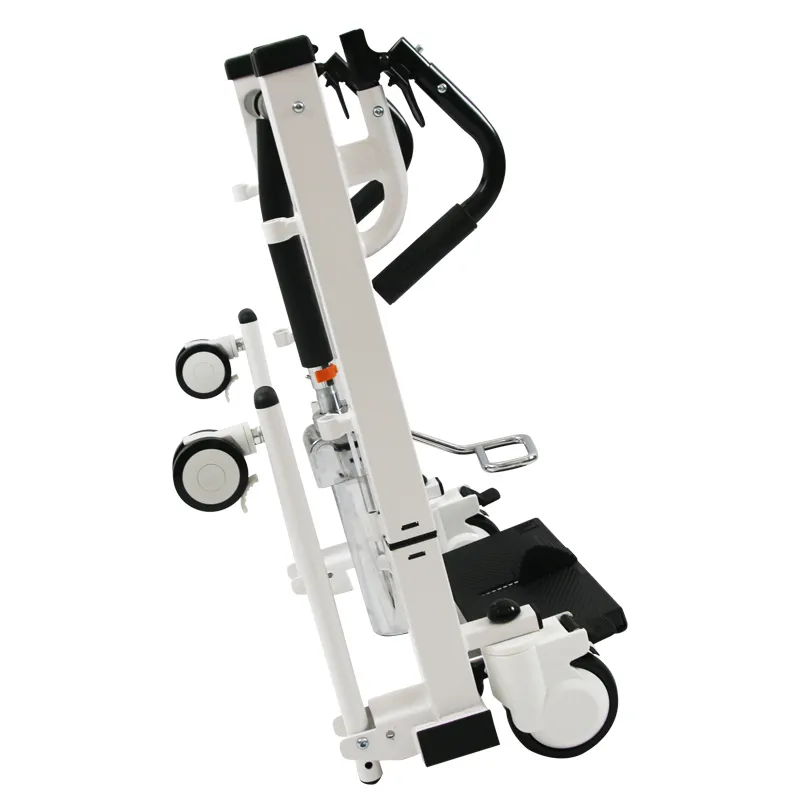
The use of assistive mobile devices is extremely common in hospitals, nursing homes, and home care settings.
However, many people easily confuse Patient Lift Transfer Chairs with manual wheelchairs, thinking they are only different in appearance. In reality, their design philosophies, functional focuses, and usage scenarios are completely different.
Patient Lift Transfer Chairs are primarily designed for patient transfer, solving the problem of "how to safely transfer a patient from bed to another location";
Manual wheelchairs, on the other hand, are designed for mobility, helping people with mobility impairments to move independently in various locations.
Therefore, understanding the differences between these two types of devices not only helps in making the right purchase but also improves the efficiency and safety of patient care.
What is a Patient Lift Transfer Chair?
A Patient Lift Transfer Chair is a medical assistive device specifically designed to assist caregivers in moving, transferring, and lifting patients.
It uses mechanical structures or electric devices to achieve height adjustment, posture adjustment, and transfer functions, reducing the risk of caregivers having to exert force to lift patients.
In simple terms, the primary purpose of a Patient Lift Transfer Chair is not to allow patients to "walk while sitting," but rather to safely move patients from one location to another, such as:
• Transferring from a hospital bed to a wheelchair or commode chair;
• Transferring from a chair to the bathroom, shower, or examination bed;
• Transferring from a hospital bed to outside the ward or to emergency equipment.
Key Structural Features of a Patient Lift Transfer Chair
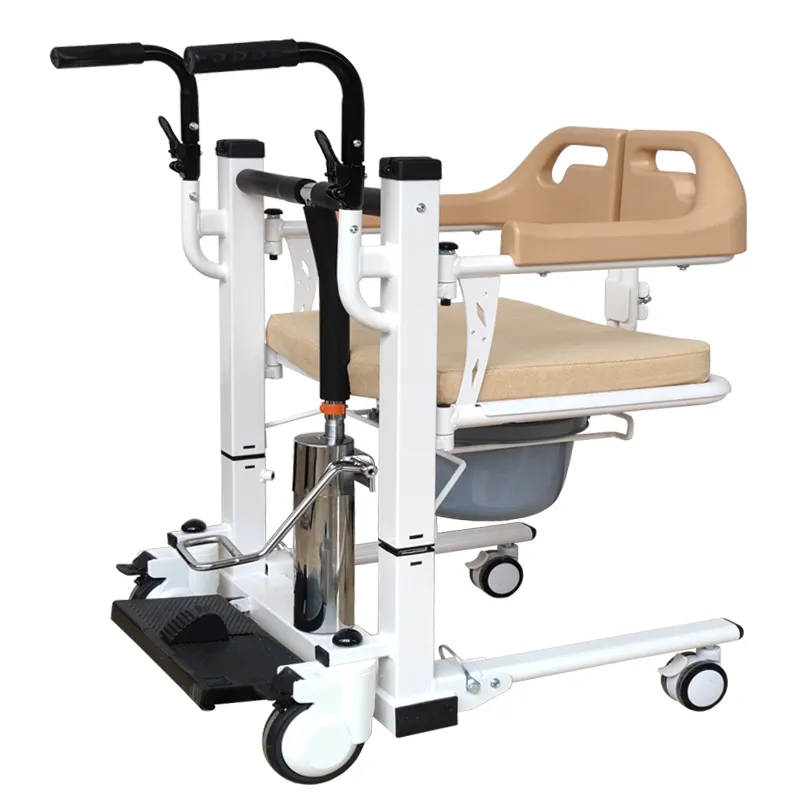
A Patient Lift Transfer Chair typically includes the following key components:
• Lifting system (manual hydraulic or electric lift)
• Removable seat or split seat plate
• Secure safety belts and locking system
• Casters and braking system
• High-strength steel or aluminum alloy frame
These structural elements collectively achieve a core objective:
"Safe, stable, and easy patient transfer and support."
What is a Manual Wheelchair?
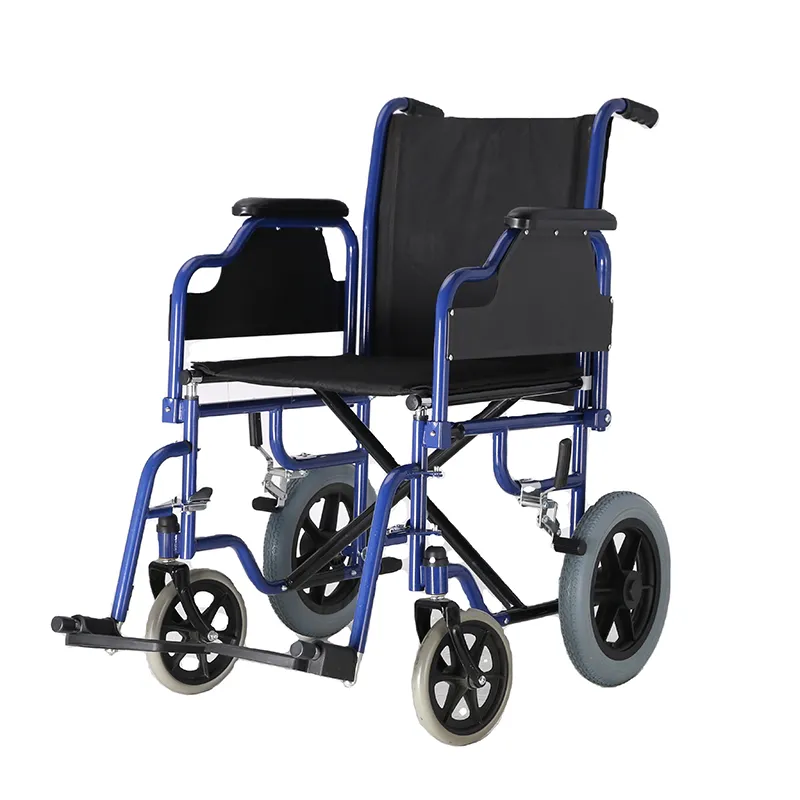
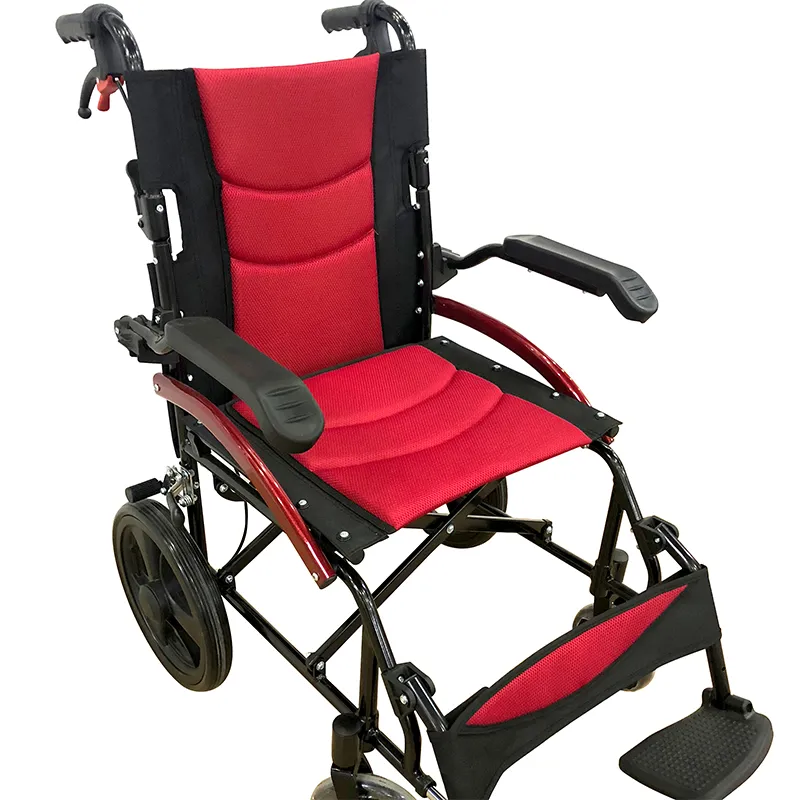
A manual wheelchair is a mobility aid used by a hand ring or caregiver to assist people with mobility impairments.
Its main function is to enable patients or the elderly to achieve basic mobility autonomy in daily life, such as walking indoors, seeking medical care, shopping, or engaging in other activities.
A manual wheelchair typically consists of the following components:
• Seat and backrest system (providing seating support)
• Rear large wheels and front small wheels (responsible for movement and steering)
• Handrails and braking system
• Folding or fixed frame structure
• Footrests and armrests
Its structural focus is on lightweight, stability, and maneuverability, rather than patient transfer.
In other words, a manual wheelchair is a "mobility tool," not a "lifting device."
Patient Lift Transfer Chair and Manual Wheelchair: What are the differences in design philosophy?
Comparison Dimensions | Patient Lift Transfer Chair | Manual wheelchair |
| Core Functions | Patient transfer and lifting | Mobility assistance |
| Operating Entity | For nursing staff | For the user or caregiver |
| Structural Design | Equipped with lifting mechanism, support frame, and fixation device | Primarily wheeled system |
| Load-bearing Method | Passive patient transfer | For patient use |
| Safety Priorities | Stability and anti-slip properties during transport | Balance and braking performance during use |
| Usage Scenarios | Hospital, nursing home, and home transfer | For home, community, and outdoor activities |
| Foldable? | Generally non-foldable, sturdy structure | Most are foldable for easy portability |
As shown in the table above:
• The Patient Lift Transfer Chair is a "nursing care tool";
• A manual wheelchair is a "mobility tool."
Their application scenarios and design goals are completely different, therefore they cannot be substituted for each other.
Why is the Patient Lift Transfer Chair safer in nursing care?
1. Reduced risk of injury to caregivers
Traditional nursing methods often rely on caregivers manually lifting or moving patients, which can easily cause lower back strain.
The Patient Lift Transfer Chair, equipped with a hydraulic lifting system or electric support mechanism, allows for easy height adjustment from bed to chair. Caregivers can easily transfer patients without the need for strenuous lifting.
2. Preventing Patient Falls
The Patient Lift Transfer Chair features safety locks, seat belts, and a double braking system to ensure the patient does not slip during movement or lifting.
Some models also feature a closed seat structure to prevent the body from sinking, providing greater stability.
3. Assisting with Multi-Directional Movement
Equipped with casters and a braking system, the Patient Lift Transfer Chair can maneuver flexibly in confined spaces, making it suitable for use in various locations such as wards, bathrooms, and rehabilitation areas.
What are the advantages of a manual wheelchair?
1. Convenient Mobility
Manual wheelchairs provide patients with independent mobility, allowing them to move forward autonomously by pushing the wheels, and can also be pushed from behind by caregivers, meeting short-distance or daily travel needs.
2. Lightweight and Flexible Storage
Most manual wheelchairs use a folding aluminum alloy frame, making them lightweight and easy to store, fitting easily into a car trunk.
Compared to the Patient Lift Transfer Chair, it is more suitable for carrying around and transportation.
3. Lower Maintenance Costs
Manual wheelchairs have a simple structure and do not involve electric or hydraulic systems, making them more economical to use and maintain, resulting in lower long-term operating costs.
What are the differences in usage scenarios between the Patient Lift Transfer Chair and a manual wheelchair?
Usage Environment | Patient Lift Transfer Chair | Manual wheelchair |
| Hospital Wards | ✔ Suitable for bed transfers and nursing care assistance | ✔ Suitable for patient mobility |
| Toilets | ✔ Can be moved directly to the commode location | ✖ Not suitable for confined spaces |
| Rehabilitation Centers | ✔ Suitable for transfer training | ✔ Suitable for independent mobility |
| Home Care | ✔ Used for moving between beds and for bathing | ✔ For daily mobility |
| Outdoor Activities | ✖ Not suitable for | ✔ Usable |
Conclusion:
• The Patient Lift Transfer Chair is geared towards "nursing care transfer function";
• A manual wheelchair is geared towards "daily mobility function".
Therefore, many families or medical institutions equip themselves with both in actual care, achieving a seamless transition between transfer and mobility.

From a material and structural perspective, is the Patient Lift Transfer Chair more robust?
Yes, the Patient Lift Transfer Chair is designed with "lifting load" and "center of gravity stability" in mind. It typically uses a thickened steel tubing structure or high-strength aluminum alloy and features a wide base to prevent tipping.
While manual wheelchairs also emphasize structural strength, they prioritize "lightweight and foldable" design.
Therefore, their frames are thinner, and stability relies primarily on wheel distribution and the user's center of gravity balance.
From a durability and structural stability perspective:
The Patient Lift Transfer Chair is generally more stable than a manual wheelchair.
What are the significant advantages of the Patient Lift Transfer Chair?
• Adjustable height – facilitates height matching between bed and chair;
• Easy operation – hydraulic or electric design reduces the burden of care;
• Versatile – can be used as a mobile chair, shower chair, or commode chair;
• Safe and slip-resistant – equipped with safety locks and anti-tipping mechanisms;
• Space-saving – multi-functional, suitable for home care scenarios.
The Patient Lift Transfer Chair is a highly safe and low-exertion care tool for patients who are bedridden, have limited mobility, or are in the recovery phase.
What are the limitations of manual wheelchairs?
While manual wheelchairs are simple to operate and affordable, they also have certain limitations in caregiving:
• They cannot be raised or lowered, requiring manual assistance for transfers between beds;
• They are not waterproof and cannot be used in bathrooms;
• The transfer process is unstable, and high-risk individuals should not be moved frequently;
• Prolonged use requires pushing by a caregiver, leaving the patient without passive transfer support.
Therefore, if the patient is completely unable to cooperate with movement, relying solely on a manual wheelchair is insufficient for safe care.
What factors should be considered when choosing a Patient Lift Transfer Chair?
When choosing a Patient Lift Transfer Chair, it is recommended to focus on the following points:
• Weight Capacity – Ensure it matches the patient's weight;
• Lifting Method – Available in hydraulic manual and electric versions;
• Seat Design – A split seat makes transfer easier;
• Wheel Material – Rubber or PU wheels are quieter and more durable;
• Safety Features – Does it include a seatbelt and braking system?
• Applicable Scenarios – Can it be used for bathing, toileting, or bedside transfers?
These parameters directly determine the comfort and safety of the equipment.
Patient Lift Transfer Chair or Manual Wheelchair: Which is Right for You?
If your primary need is patient transfer (e.g., getting in and out of bed, accessing the bathroom, bathing care), then choosing a Patient Lift Transfer Chair will be safer and more efficient.
If your primary need is daily mobility, a manual wheelchair is easier to operate and carry.
In short:
• Patient Lift Transfer Chair is a nursing tool;
• Manual wheelchair is a mobility tool.
The two should be regarded as complementary to each other in medical care, rather than replacing each other.
What procurement advantages does buying directly from Dayang offer?
Buying directly from Dayang delivers several procurement advantages: factory-direct pricing, transparent supplier communication, customization capability, and better control over lead times. Because Dayang is both manufacturer and supplier, there is no middleman markup — buyers can access competitive, low-price options while still receiving high quality and certified products.
For procurement teams, direct engagement with our factory streamlines quote requests, sample approvals and production scheduling.