

In winter or cold environments, many bedridden patients, the elderly, or those recovering from illness often want to use electric blankets on adjustable hospital beds to stay warm. However, while this practice may seem to improve comfort, it poses serious safety hazards.
This article will analyze this issue from multiple perspectives, including electrical safety, structural principles, human risks, bed materials, and alternatives:
• Why is it unsafe to use an electric blanket on an adjustable hospital bed?
• How does an electric blanket affect the operation and safety of an adjustable hospital bed?
• If warmth is indeed necessary, what are some safer alternatives?
Through this article, you will gain a comprehensive understanding of the potential conflicts and risks between electric blankets and adjustable hospital beds, avoiding unnecessary dangers due to improper use.
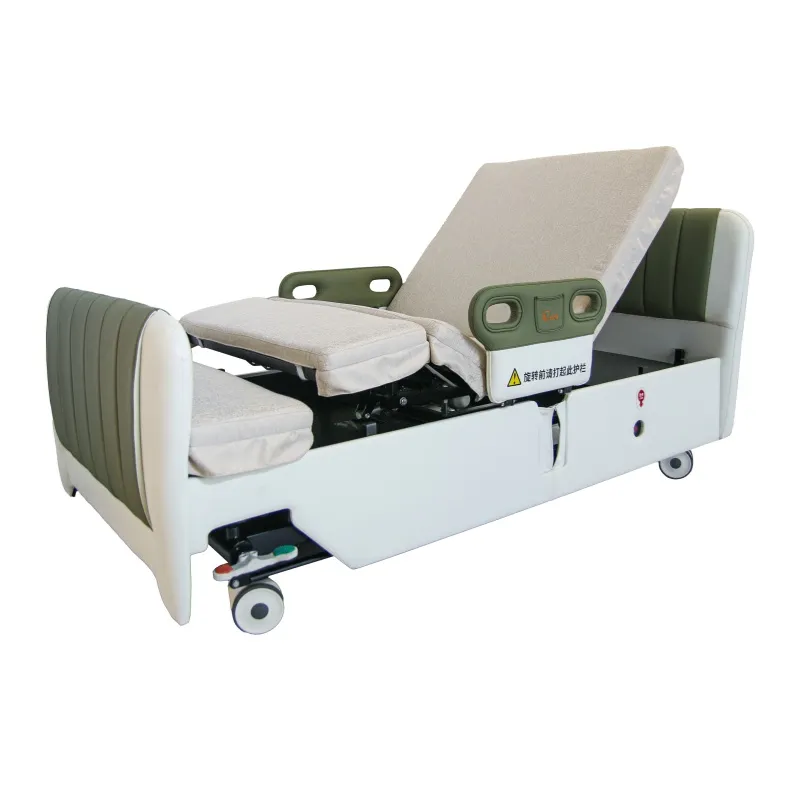
What is an adjustable hospital bed? Why is it different from a regular bed?
Before discussing safety, we must first clarify the structure and working principle of an "adjustable hospital bed."
An adjustable hospital bed is a medical care bed whose backrest, footrest, and bed height can be adjusted manually or electrically. It is commonly used in home care and medical facilities for the elderly, post-operative patients, or long-term bedridden patients.
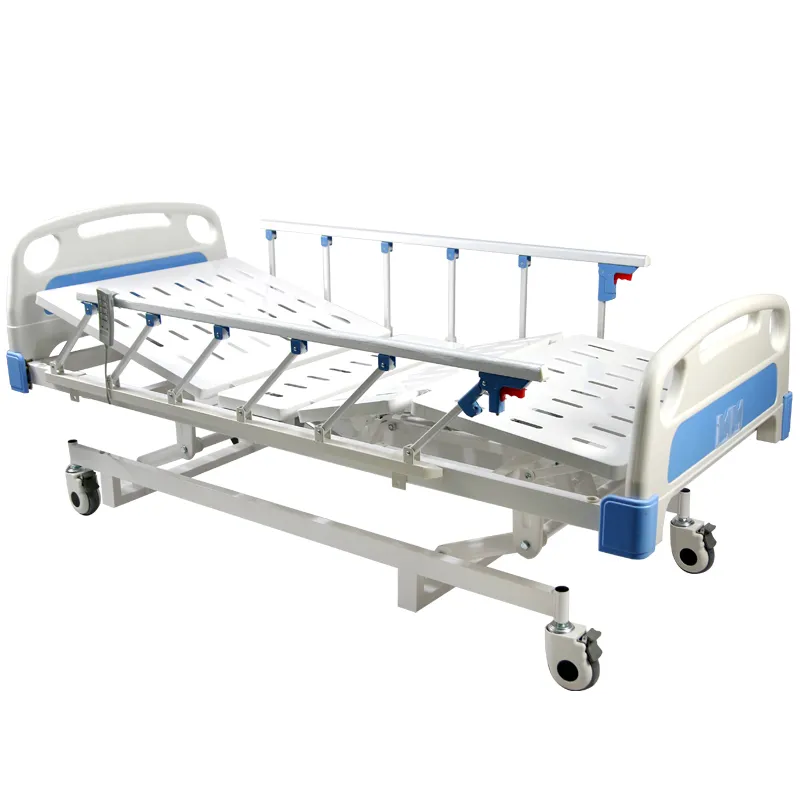
Typical adjustable hospital bed structures include:
• Powder-coated steel frame structure: sturdy and corrosion-resistant;
• Removable ABS headboard and footboard: easy to clean and move;
• Foldable aluminum alloy guardrails: improve fall safety;
• Electric push-rod system or hand crank: for adjusting angle and height;
• Backrest adjustment angle: 0°–70°;
• Foot pedal adjustment angle: 0°–30°;
• Maximum load capacity: approximately 175kg.
Because adjustable hospital beds contain motors, electrical control systems, metal structures, and moving parts, they differ from ordinary beds and have stricter safety requirements for electrical appliances.
Why is it considered "unsafe" to use an electric blanket on an adjustable hospital bed?
An electric blanket is a type of bedding that relies on electricity to generate heat, using internal heating wires. However, when used in conjunction with an adjustable hospital bed, multiple safety risks arise. The following are the most critical reasons:
1. Simultaneous operation of the electric system and heating element poses a risk of circuit interference and short circuits
Adjustable hospital beds typically have a motor system and control circuitry to drive the bed's height adjustment and angle adjustment. These components rely on low-voltage power (generally DC 24V) to operate.
Electronic blankets, on the other hand, are usually connected to 220V AC power and are high-power heating devices.
When both are used simultaneously, the following problems may occur:
• Electromagnetic interference may affect the adjustable hospital bed's electrical control system;
• If the bed's metal structure comes into contact with or conducts current, it may cause leakage;
• Increased load on the socket, posing a risk of short circuits or overheating.
Especially with low-quality or old electric blankets, the aging of their insulation layer makes them more prone to electrical accidents.
2. The metal structure of the adjustable hospital bed amplifies the risk of electric shock
Most adjustable hospital beds use a steel frame structure, and although some surfaces have powder coating, they are still conductive materials.
If the electric blanket's wiring is old, the insulation is damaged, or there is a leakage, the metal bed frame is highly conductive, posing a risk of electric shock.
Bedridden patients are often immobile, and in the event of an electric shock, it is difficult to disconnect from the power source in time, potentially leading to very serious consequences.
Therefore, from an electrical safety perspective, adjustable beds and electric blankets are a "high-risk combination."
3. Electric blankets may be folded or compressed by the bed, causing abnormal heating
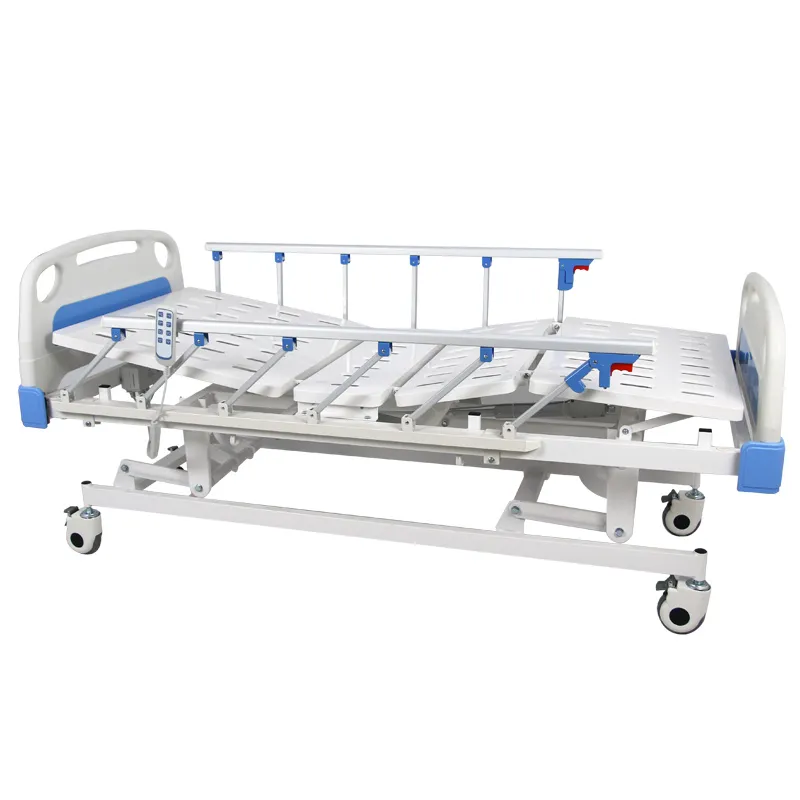
One characteristic of adjustable beds is that the bed surface can be bent at multiple angles.
The metal panels of the backrest, legroom, and middle section constantly change angle during height adjustment.
If an electric blanket is placed on the bed surface, the heating wires may be compressed, bent, or even broken when the bed is raised, lowered, or folded, leading to the following problems:
• Localized overheating, causing burning or fire;
• Damaged wires, resulting in leakage;
• Uneven heating, leading to abnormally high temperatures.
Therefore, electric blankets are not suitable for use on deformable bed surfaces.
4. Heat buildup between the mattress and electric blanket may pose a fire hazard
Adjustable hospital bed mattresses are often made of waterproof medical materials or foam composite layers.
These materials have poor breathability and slow heat dissipation.
When the electric blanket is heated for an extended period, the heat cannot be effectively dissipated, leading to heat buildup between the mattress and the blanket, causing:
• Abnormal temperature increase;
• Softening or melting of the material;
• In severe cases, combustion.
This risk is significantly increased, especially during prolonged use of electric blankets in winter.
5. Threatens the safety of bedridden patients
Long-term bedridden patients have sensitive skin, poor blood circulation, and are less sensitive to temperature changes.
During the heating process of an electric blanket, if the temperature is too high or the heating is uneven, it can easily cause:
• Burns or redness and swelling of the skin;
• Worsening of bedsores;
• Imbalance in body temperature regulation.
This is especially true for patients with diabetes, Alzheimer's disease, or paralysis, who may not be able to perceive the burning sensation in time, resulting in irreversible damage.
Which parts of an adjustable hospital bed will be damaged by an electric blanket?
Using an electric blanket on an adjustable hospital bed not only endangers personal safety but may also damage the bed's structure.
1. Overheating or malfunction of the motor system
The continuous high temperature generated by the electric blanket will affect the heat dissipation space under the motor, causing the motor's operating temperature to rise, leading to a shortened lifespan or even burnout.
2. Electromagnetic interference to the control circuitry
The electromagnetic radiation from high-power heating equipment can interfere with the control circuitry of the electric bed, potentially causing controller malfunctions, button failures, or accidental operation.
3. Deformation of the ABS headboard and footboard
The heat buildup from the electric blanket may soften and deform the plastic material, affecting the bed's stability and appearance.
4. Aging of mattress materials
Prolonged high temperatures will accelerate the aging of the foam or PVC waterproof layer, causing it to lose elasticity and support.
Therefore, electric blankets are not only unsafe but also reduce the lifespan of an adjustable hospital bed.
Why should electric blankets never be used on electrically adjustable hospital beds?
Compared to manually adjustable hospital beds, electrically adjustable hospital beds are more sensitive to electrical interference.
1. The electric system relies on a stable current
The motor, power controller, and sensors inside an electrically adjustable hospital bed all rely on low-voltage direct current (DC) (typically DC 24V).
Electric blankets are AC 220V heating devices; simultaneous operation of both can cause voltage fluctuations, damaging the control module.
2. Complex cable layout, susceptible to heat damage
The area under an electrically adjustable hospital bed is usually filled with control cables and connectors. If the heat from an electric blanket is concentrated at the bottom, it will accelerate cable aging.
3. Electronic components are not heat-resistant
Motors and controllers have an upper operating temperature limit (usually not exceeding 50°C). Continuous heating may cause circuit boards to deform or burn out.
Therefore, the use of electric blankets on electrically adjustable hospital beds is strictly prohibited, even for short periods, as it carries an extremely high risk.
What are some safer alternatives for keeping warm on an adjustable hospital bed?
While electric blankets are unsafe, there are still many safe and effective ways to keep warm.
1. Use a medical hot water bottle or hand warmer
Under a doctor's guidance, a hot water bottle wrapped in a towel can be placed on the patient's feet, avoiding direct skin contact.
2. Choose a low-voltage electric heating pad (safety certified)
If electric heating products must be used, choose a low-voltage (12V–24V) electric heating pad and ensure it has safety certifications (such as CE, CCC).
These products have low power consumption, precise temperature control, and comprehensive automatic power-off protection.
3. Use a temperature-controlled blanket or a thicker insulating blanket
Passive insulation is achieved by increasing the thickness of the insulation layer on the bed, requiring no electricity.
4. Regulate the room temperature
Use temperature-controlled heating devices (such as air heaters or far-infrared heating lamps) to improve the temperature at the environmental level, which is safer and more reliable.
5. Keep the mattress dry and ventilated
Avoid using heating devices in damp environments to prevent electrical conductivity or short circuits.
These methods ensure warmth while also considering the safety and lifespan of the adjustable hospital bed.
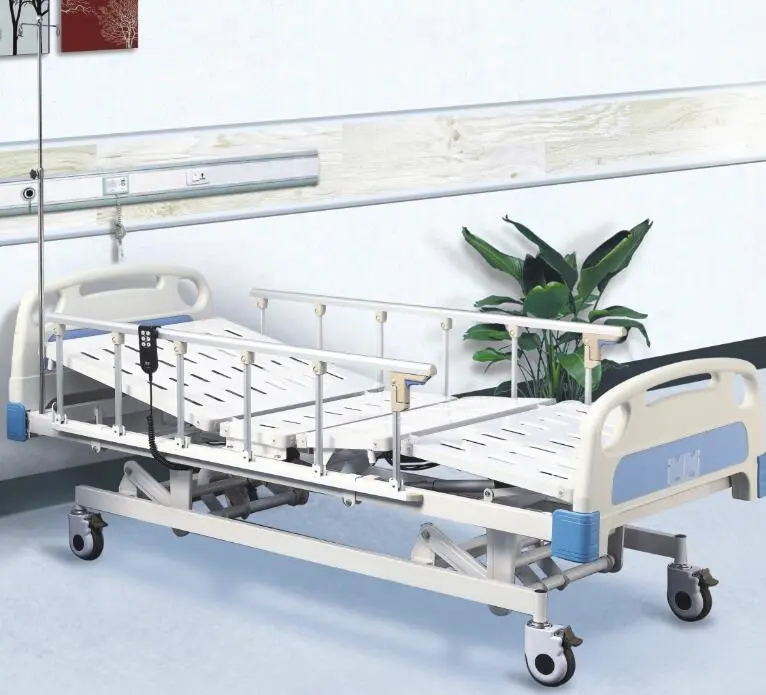
How to determine the compatibility of an adjustable hospital bed and an electric blanket?
If users still wish to know if both can be used simultaneously, they should focus on checking the following three items:
• Does the bed's instruction manual explicitly prohibit the use of an electric blanket?
• Does the power system have insulation protection and grounding design?
• Does it have overheat protection and temperature control devices?
Most reputable manufacturers will clearly state in their product manuals: "The use of electric blankets or other heating devices is strictly prohibited." This is not only a safety warning but also a physical limitation of the product design.
Therefore, if this warning appears in the instruction manual, it should be strictly followed.
Why should the use of electric blankets be avoided in nursing settings?
In home or elderly care environments, bedridden individuals are often in weaker physical condition and have reduced sensitivity to temperature and pain.
This makes the risks of electric blankets higher, mainly for the following reasons:
• Inability to detect overheated areas, leading to low-temperature burns;
• Increased risk of static electricity after the sheets dry from the heat;
• Caregivers may pull on the power cord when adjusting the bed, causing a short circuit;
• Prolonged operation at night may cause excessive heat buildup.
Safety is paramount in the nursing environment; therefore, the use of electric blankets on adjustable hospital beds should be a fundamental principle.
Does Dayang Medical provide competitive prices for medical equipment?
Yes. Guangdong Dayang Medical Technology Co., Ltd. offers high-quality medical devices at competitive prices, including electric wheelchairs, manual wheelchairs, sports wheelchairs, hospital beds, shower chairs, commodes, walking aids, and canes. Established in 2009, our company is a professional manufacturer and supplier in China with two R&D and production bases. Products are certified under ISO13485, ISO9001, FDA, TUV, and CE standards.