

- - - Why would someone try to use a rollator as a wheelchair?
A rollator is a mobility aid that provides support and balance for people with mobility impairments. Compared to traditional walkers, rollator walkers usually have four wheels, handbrakes, armrests, adjustable height supports, and sometimes a seat. Because of its "seating" feature, some users may have a misconception:
"Since the rollator has a seat, can I just sit on it and have someone push me around?"
This idea, while common, poses serious safety risks. The rollator walker is not designed to bear the full weight of a seated person, nor is it intended for pushing or as a substitute for a wheelchair.
To understand the risks, we must comprehensively analyze why using a rollator walker as a wheelchair is unsafe from the perspectives of structural design, weight capacity, intended use, and safety performance.
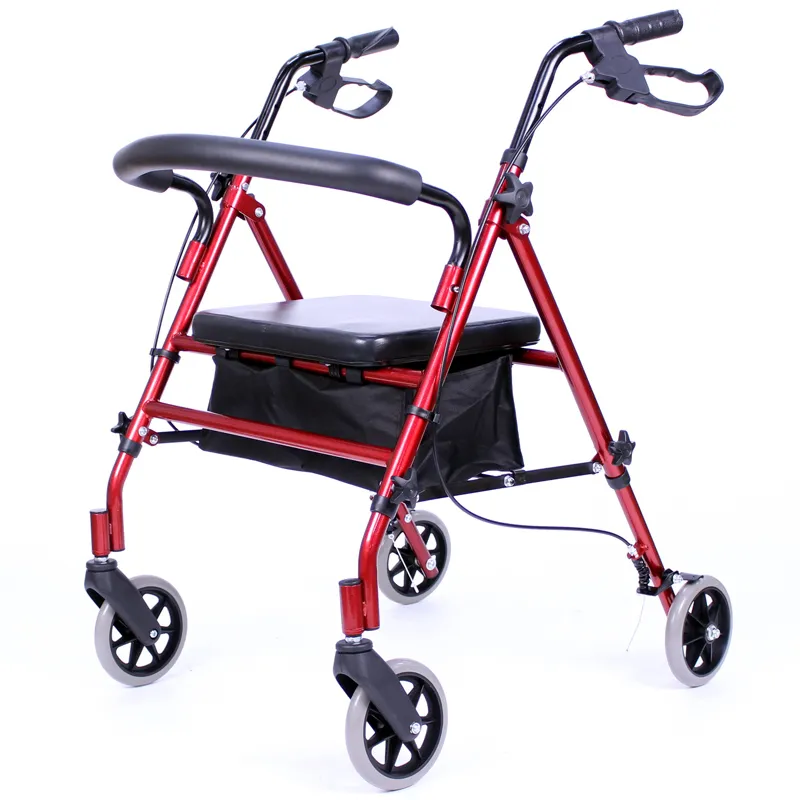
How do the design intentions of rollators and wheelchairs differ?
Although rollators and wheelchairs share some similarities in appearance, they have fundamental differences in their core design concepts:
Project | Rollator | Wheelchair |
| Main functions | Assists with walking, providing balance and support | Provides seated mobility support |
| Load-bearing direction | Primarily provides vertical support for the user's weight | Fully supports the user's body weight |
| Movement method | The user walks independently while pushing the device | Propelled by the user or another person while seated |
| Braking system | Provides temporary braking or assistance on inclines | Continuous and stable braking system |
| Structural strength | Lightweight structure, easy to carry and fold | High-strength structure for high load capacity and stability |
| Center of gravity design | High center of gravity, facilitating walking | Low center of gravity for enhanced stability |
The table clearly shows that the design principles of rollators and wheelchairs are completely different.
The main function of a rollator is to "assist walking," not to "replace walking."
Therefore, attempting to use a rollator as a wheelchair is essentially operating the device outside its safe design parameters.
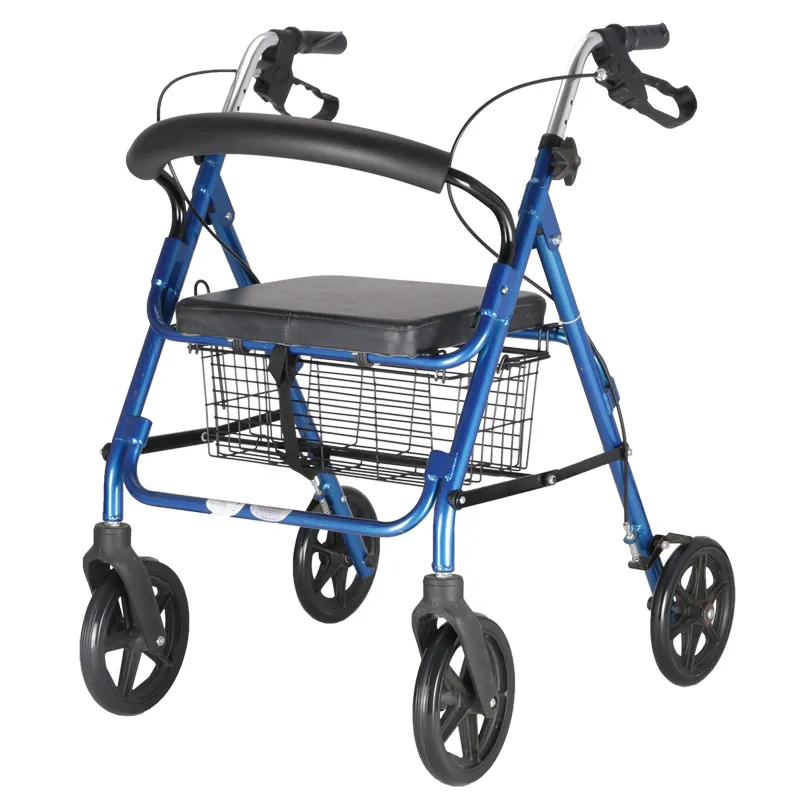
Why can't a rollator safely bear the full weight of a seated person?
1. The structural stress distribution of a rollator is different
The force on a rollator is vertical and distributed. When a person uses a rollator walker, most of their body weight is still borne by their feet; the rollator walker only bears a portion of the pressure for balance and support.
However, when a user sits on a rollator, the entire person's weight is concentrated on the frame and axles, which can lead to:
• Frame deformation or breakage
• Loosening of screws and pivot points
• Wheel detachment or inability to rotate smoothly
These structural problems are highly likely to occur during movement, especially on uneven ground or during turns, potentially causing the rollator walker to suddenly tip over and seriously injure the user.
2. The materials of a rollator are not designed for "carrying" weight
Most rollator walkers use lightweight aluminum alloy or thin steel tubing to reduce weight and facilitate movement. This structure is beneficial for walking support, but it is not suitable for withstanding prolonged static sitting pressure.
In contrast, wheelchairs use thick-walled steel tubes or high-strength aluminum alloys, possessing a complete load-bearing frame that can stably support a seated position.
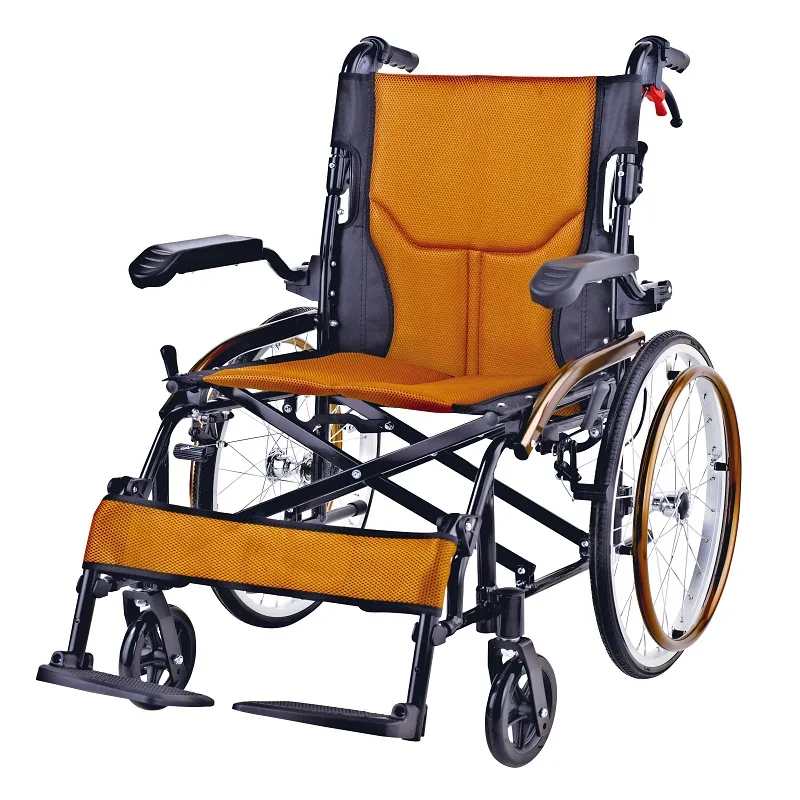
Why can't a rollator's seat be used as a "pushing chair"?
Many rollators are equipped with small folding seats, leading to the misconception that they can be used to "replace a wheelchair."
However, this seat is not designed for being pushed while moving.
1. The seat is only for brief rest
The purpose of the seat is for the user to sit down and rest temporarily while walking, not for riding while in motion.
Manufacturing standards clearly state that rollator walker seats are only suitable for static load-bearing, not for mobile use.
2. Seat position leads to instability
The rollator's seat is usually located directly above the wheel axle; when a user sits on it, the overall center of gravity is high.
When someone pushes the device, any slight turning or bumping can cause it to tip over sideways or backward.
3. Lack of necessary safety features
Unlike wheelchairs, rollators lack the following key safety components:
• Safety belts or restraints
• Anti-tipping devices
• Stable braking system
This means that even when being pushed on flat ground, there is a very high risk.
What are the common risks of misusing a rollator as a wheelchair?
Incorrectly using a rollator walker as a wheelchair poses the following serious safety hazards:
• Structural failure risk: The seat or connecting rods may break, causing falls and injuries.
• Tipping risk: High center of gravity and insufficient brakes can lead to forward or backward tipping.
• Pinching injury risk: The frame may bend during pushing, causing pinching injuries to hands and feet.
• Wheel axle loosening or detachment: Prolonged overloading can cause connecting parts to loosen.
• Caregiver injury risk: Instability during pushing can cause the caregiver to fall or be injured.
These risks are especially dangerous for the elderly or frail individuals. Minor injuries can result in abrasions, while more serious consequences include fractures or severe falls.
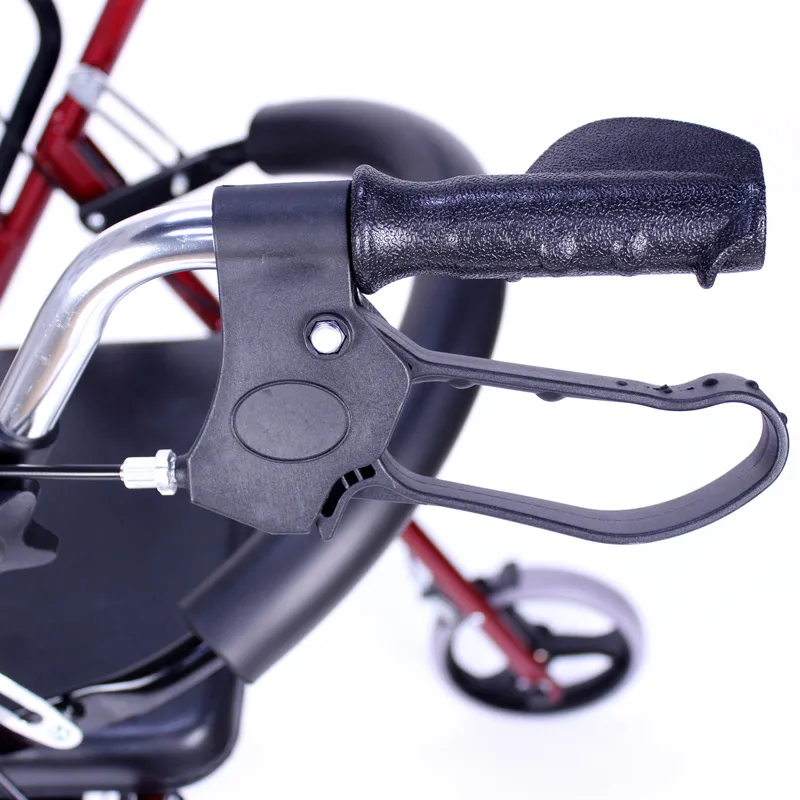
What are the differences in safety standards between rollators and wheelchairs?
From a safety certification perspective, rollator walkers and wheelchairs belong to two different categories of medical assistive devices.
Project | Rollator | Wheelchairs |
| Safety Standards | EN ISO 11199 (Walking aids) | EN ISO 12183/12184 (Manual/Electric Wheelchairs) |
| Structural Testing | Static support load test | Withstands dynamic driving and drop tests |
| Braking System Requirements | Basic parking function | Includes continuous braking and anti-tipping devices |
| Stability Testing | For walking support only | Includes safety tests for riding and pushing |
This indicates that rollators do not possess the safety certification and design safeguards of wheelchairs. At the design and standards level, it has never been considered a substitute for a wheelchair.
If mobility assistance is needed, which option is safer?
When the user needs to be pushed or sit for extended periods, the correct choice should be a wheelchair, not a rollator walker.
1. Reasons for choosing a wheelchair
• Designed specifically for seated mobility, with a low center of gravity for greater stability;
• Equipped with anti-tip systems and non-slip brakes;
• Reinforced frame for high load-bearing capacity and safety;
• Can be used with comfortable accessories such as cushions and pressure-relieving pads.
2. The correct use of a rollator
A rollator is only suitable for:
• Individuals who can walk but have an unsteady gait;
• People who need short-term balance support;
• Walking assistance indoors or on flat surfaces.
The main function of a rollator walker is "walking support," not "seated mobility."
Why is the misuse of rollators so common?
• Misunderstanding the purpose of the seat: Seeing that the rollator has a seat, people mistakenly assume it can be used for seated transportation;
• Lack of product instruction awareness: Some users do not carefully read the instruction manual;
• Convenience for caregivers: Family members want to reduce the burden of assisting the user;
• Price and portability considerations: Rollators are lightweight and inexpensive, easily mistaken for "lightweight wheelchairs."
This shows that raising public awareness of the "correct use of rollator walkers" is crucial.
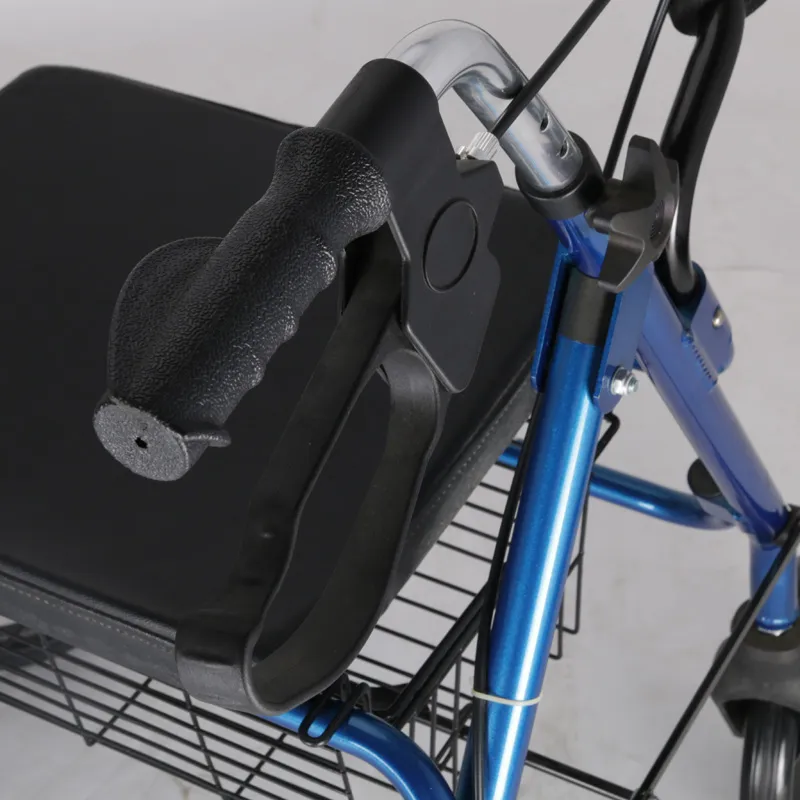
Key Points For the Safe Use of a Rollator
To use a rollator safely and correctly, the following principles should be followed:
• Never sit on a rollator walker to be pushed;
• Check the brakes and frame stability before use;
• Maintain a natural walking posture with a slight forward lean;
• Reduce speed when going uphill, downhill, or turning;
• Avoid using the rollator as a tool to support or carry objects;
• Regularly check the connecting parts, screws, and tire wear.
These basic operations can maximize user safety and equipment lifespan.
A Rollator Walker Cannot Replace a Wheelchair
The conclusion is very clear: a rollator cannot be safely used as a wheelchair.
Reasons include:
• The rollator structure is lightweight and lacks the load-bearing capacity and stability for pushing;
• It lacks safety restraints and anti-tip devices;
• The seat is only for temporary rest;
• It violates the original design intent and safety standards of the equipment.
The correct approach is:
• For those who need walking support → choose a rollator walker;
• For those who need to be pushed while seated → choose a wheelchair.
Regardless of the device used, product instructions and professional guidance should always be followed. Safe and rational use is the best way to protect the elderly and those with mobility impairments.
Can Dayang Medical provide insurance for shipped goods?
Yes, we offer shipping insurance options for buyers concerned about transit risks. Distributors and hospitals who purchase from our factory can safeguard their wholesale orders. Insurance covers damages or losses during transport, giving clients peace of mind. Coupled with factory quotes, low-price purchasing, and high-quality products, this makes Dayang Medical a reliable supplier in China for international medical equipment sales.