

Lift transfer devices are crucial nursing aids when caring for patients with limited mobility, weakened strength, or inability to stand independently. The two most commonly mentioned mainstream types are hydraulic lift transfer chairs and electric lift transfer chairs.
While they are similar in appearance and basic function, they differ significantly in their drive mechanism, user experience, target population, cost, and maintenance requirements.
To choose the most suitable device, it's essential to understand their differences.
This article will provide a professional perspective, systematically analyzing the characteristics, advantages, disadvantages, and selection criteria of both types of devices to help you clearly answer: Which is better, a hydraulic lift transfer chair or an electric lift transfer chair?
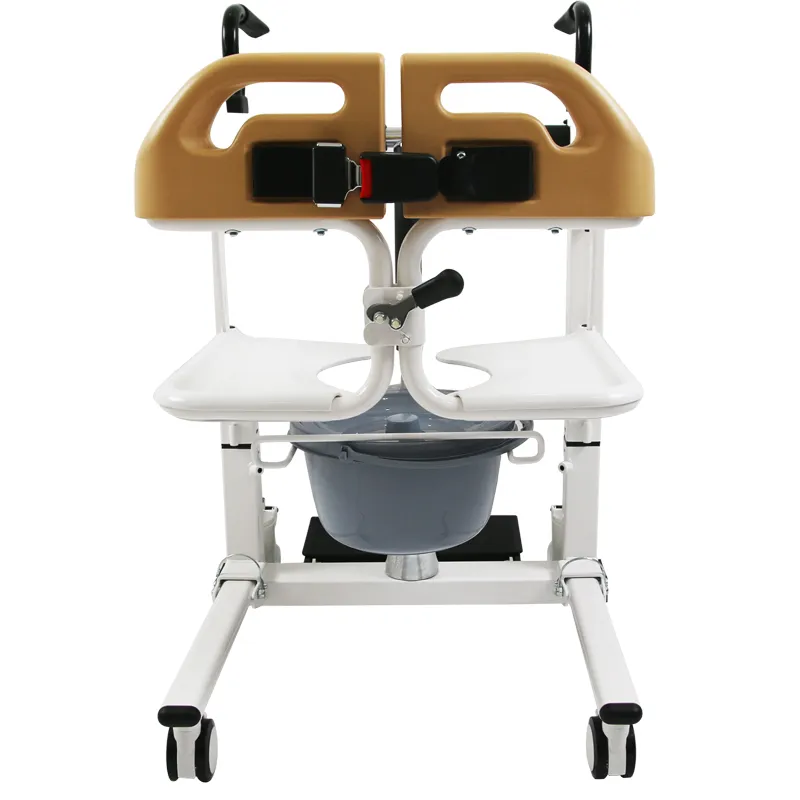
Hydraulic Lift Transfer Chair vs. Electric Lift Transfer Chair: What are the Differences?
Although both assist patients in transferring from sitting to standing and from bed to chair, their lifting mechanisms differ significantly.
1. Hydraulic Lift Transfer Chair
• Lifting is driven by a hydraulic pump system.
• Caregivers need to step on the pedals or operate manually to lift and lower the chair.
• Lifting and lowering movements are affected by the caregiver's strength and rhythm.
2. Electric Lift Transfer Chair
• Lifting and lowering is achieved using a motor, electric cylinder, or electric actuator.
• Operation is as simple as pressing a button.
• Lifting speed is stable and the force is even, unaffected by the operator's physical strength.
The difference in lifting methods determines significant differences in user experience, safety, price, and maintenance.
Is a hydraulic lift transfer chair more durable and simpler in structure?
Generally speaking, yes.
Hydraulic lift transfer chairs are primarily mechanical, therefore:
• Fewer parts
• Relatively simple structure
• No electrical system
• Lower probability of failure
With proper maintenance, the hydraulic system itself is very reliable, which is an important reason why it is still widely used in some institutions with limited budgets.
Is a hydraulic lift transfer chair cheaper?
Hydraulic systems do not require electric motors and control modules, therefore, the cost is indeed lower.
Hydraulic lift transfer chairs typically offer the following advantages:
• Lower purchase cost
• Lower maintenance costs
• No need for charging equipment
• More manageable overall operating costs
If budget is limited, a hydraulic lift transfer chair is often a common choice for initial purchases.
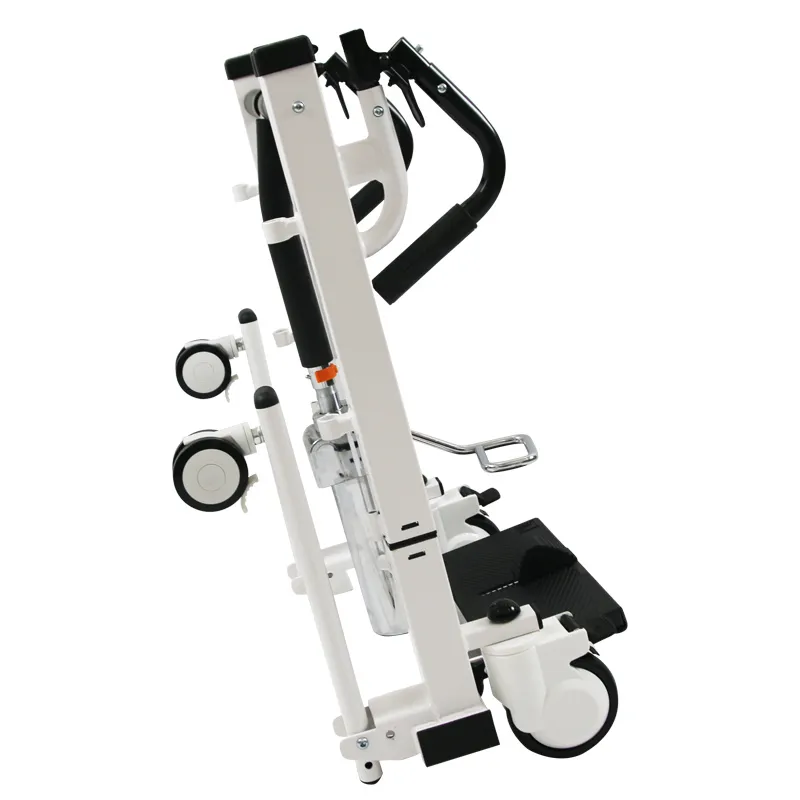
Is operating a hydraulic lift transfer chair more strenuous?
This is one of the biggest limitations of hydraulic systems.
Because lifting and lowering requires caregivers to step on or crank the hydraulic components, therefore:
• Higher physical demands on caregivers
• Less smooth lifting and lowering compared to electric systems
• Operational rhythm is manually controlled
• Increased caregiver fatigue with prolonged use
This physical burden increases significantly, especially in situations requiring frequent lifting and lowering.
Does increased use of a hydraulic lift transfer chair affect the user experience?
With increased use:
• The hydraulic fluid may slightly degrade
• The foot pedals or levers may become stiffer or more resistant
• Lifting and lowering may feel slightly uneven
While this doesn't affect overall functionality, it does make daily operation slightly more strenuous.
Are electric lift transfer chairs more effortless and automated?
Yes, its biggest advantage is that it requires "completely no manual lifting."
An electric lift transfer chair only requires the press of a button to complete the movement, therefore:
• Caregivers do not need to exert force
• Lifting and lowering are more stable and smooth
• The speed is consistent, and operation is not affected by physical strength
• The care process is easier
• Multiple transfers can be completed more quickly
This is a crucial advantage for long-term caregivers.
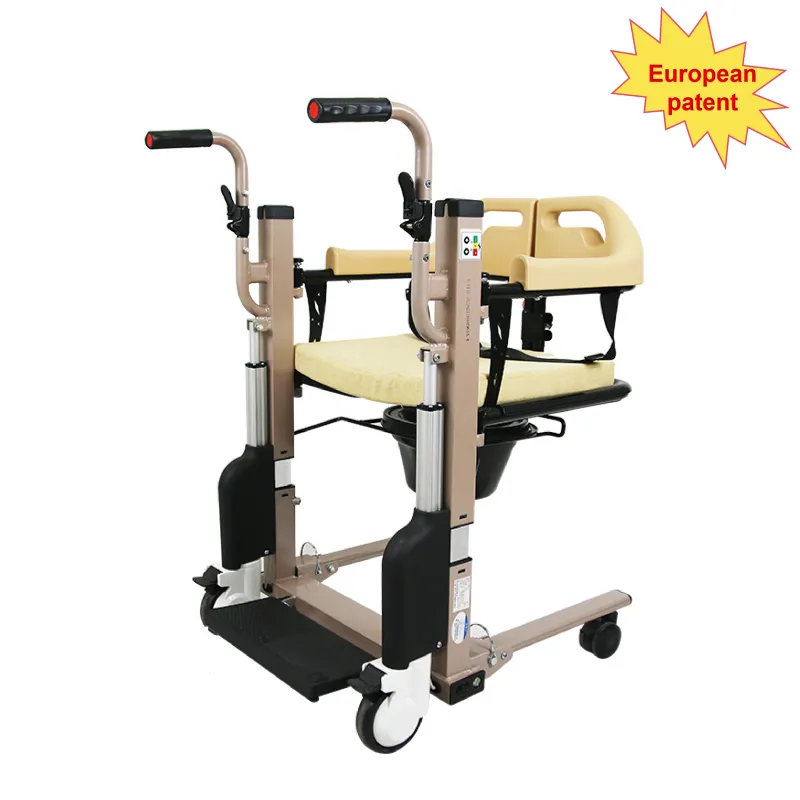
Does an electric lift transfer chair improve safety?
An electric lift transfer chair provides more even force control during lifting and lowering, avoiding:
• Sudden falls due to unstable operation
• Accidents due to insufficient physical strength
• Fear or discomfort caused by uneven lifting and lowering
Electric lifting is especially important for patients with weak strength who require high stability.
Does an electric lift transfer chair require a higher budget?
Electric lift transfer chairs are generally more expensive and typically include:
• Motor
• Control system
• Battery module
• Wiring system
Therefore:
• Higher initial purchase cost
• Potentially higher maintenance costs
• Batteries require regular replacement
• Control units may require maintenance
While the cost is higher, the effort savings, safety, and convenience they offer are often worthwhile.
Do electric lift transfer chairs require more maintenance?
Yes, due to their more complex structure:
• Batteries need regular charging
• Motors need to be kept in good condition
• Controllers and wiring need to be checked
• Chargers must be intact and safe
Maintenance is even more important if the equipment is used frequently.
Which patients are suitable for hydraulic lift transfer chairs?
Hydraulic lift transfer chairs are more suitable for:
• Homes or institutions with limited budgets
• Users who do not require frequent use
• Caregivers with good physical strength and a willingness to operate manually
• Patients who are not heavy and whose operation is relatively easy
Its focus is on "basic functionality and price advantage".
Which patients are suitable for electric lift transfer chairs?
Electric lift transfer chairs are particularly suitable for:
• Patients requiring multiple transfers daily
• Heavier patients who are difficult to lift manually
• Caregivers with limited physical strength or single-person care environments
• Users requiring a smoother, gentler lifting process
• Families with high safety and comfort requirements
Its focus is on "efficiency, safety, and improved efficiency."
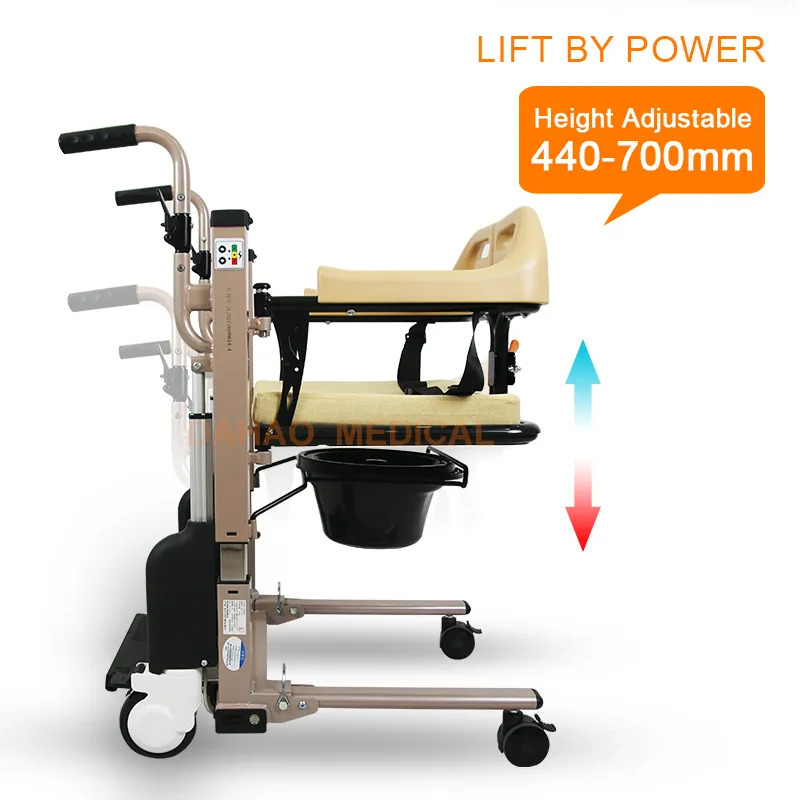
Which type offers better stability during lifting?
Electric lift transfer chairs are more stable.
Reasons:
• Stable motor drive
• Consistent speed
• No uneven movement due to differences in operator strength
• Less psychological stress on the patient
Hydraulic lifting stability depends on the operator's skill and strength, therefore it is slightly less stable than electric.
Which offers better risk control during operation?
Electric lift transfer chairs typically feature:
• Limiting design
• Electric slow-rise and slow-lowering
• Cross-motion limitation protection
• Automatic pause mechanism
These are all more comprehensive than hydraulic systems.
Therefore, from the perspective of "safe operation control," electric equipment is superior.
How to Choose the Best Choice Between a Hydraulic and Electric Lift Transfer Chair?
1. How frequently do you provide care?
• High-frequency use → Electric lift transfer chair is better.
• Low-frequency use → Hydraulic lift transfer chair is sufficient.
2. What is the caregiver's physical condition?
• Insufficient physical strength or single caregiver → Electric is a must.
• Caregiver in good physical condition → Hydraulic can be considered.
3. Is the patient overweight?
• Higher weight → Electric lift transfer chair recommended.
• Lighter weight → Hydraulic lift transfer chair is also sufficient.
4. Is higher smoothness required?
• High smoothness requirement → Electric is better.
• No special need for smoothness → Hydraulic is also acceptable.
5. Is your budget limited?
• Limited budget → Hydraulic lift transfer chair is a cost-effective choice.
• Sufficient budget → Electric lift transfer chair offers a better experience.
Which is better, a hydraulic or electric lift transfer chair?
In short:
Budget priority → Choose a hydraulic lift transfer chair.
Effortless, safe, and stable priority → Choose an electric lift transfer chair.
There is no absolute good or bad, only what suits your nursing needs and usage environment.
By comprehensively evaluating factors such as usage frequency, patient weight, caregiver's physical strength, space, and budget, you can choose the most suitable type of lift transfer chair.
What types of wheelchairs does Dayang Medical manufacture?
Dayang Medical produces a comprehensive range of wheelchairs, including electric wheelchairs, manual wheelchairs, sports wheelchairs, and commode wheelchairs. As a leading manufacturer and supplier, the company focuses on high-quality materials and ergonomic design.